The recent 15th round of the IndyCar season at Gateway Motorsports Park provided a stark demonstration of dedication to racing, going the full distance thanks to exceptional preparation and unwavering perseverance from the organizers. This event served as a compelling example, highlighting how certain other major racing series, most notably Formula 1, might struggle to navigate similar challenges posed by adverse weather conditions at the two-kilometer oval in Illinois.
Advert | Become a Supporter & go ad-free
While both Formula 1 and IndyCar are accustomed to racing in the rain on road and street courses, oval tracks present a distinctly different and more perilous scenario. The inherent risks associated with a sudden loss of adhesion on an oval, particularly at high speeds, are simply too profound. Even the slightest hint of moisture on the track surface necessitates an immediate cessation of proceedings, underscoring the critical importance of dry conditions for driver safety.
Anticipating the ominous weather radar readings ahead of Saturday’s IndyCar race, organizers took decisive action. Their initial response was to strategically bring the start time forward by a crucial half-hour. This adjustment represented the earliest possible commencement within the rigid window allocated for television broadcasts, a proactive measure that Formula 1 has not typically adopted when its races have faced severe weather threats. This immediate and flexible approach by IndyCar demonstrated a commitment to getting the race run, even before the first drops fell.
Initially, good fortune seemed to favor the organizers, as a succession of rain showers skirted the vicinity of the speedway without significantly disrupting the scheduled proceedings. However, by lap 217 of the planned 260, the inevitable dreaded drops began to fall, prompting the display of red flags and bringing the race to a temporary halt. At this juncture, more than 80% of the race distance had been completed, which, according to regulations, would have been more than sufficient for an official result to be declared. Yet, IndyCar’s commitment to delivering a full race for its fans and competitors was resolute. The series persevered with its considerable efforts, determined to ensure the race ran its entire intended course, regardless of the significant delay.
After a substantial two-hour and nineteen-minute interlude, during which track drying efforts were undoubtedly intense, the cars once again roared back into action. As it transpired, only a mere quarter of an hour of racing remained. However, this short burst of action provided spectators with an electrifying and unforgettable conclusion. Josef Newgarden skillfully executed a last-gasp pass on his teammate Scott McLaughlin to snatch victory, all while the formidable rookie David Malukas aggressively hunted them down, ultimately splitting the pair just before the checkered flag fell. The entire event, from start to dramatic finish, concluded an impressive four hours and forty minutes after proceedings originally began, a testament to resilience and dedication.
The F1 Conundrum: Time Limits and Their Origin
Such an outcome – a race significantly delayed but ultimately completed – is almost unimaginable in Formula 1. Indeed, under current regulations, it simply could not happen. The sport’s rules, specifically concerning time limits, impose strict constraints once a race has officially commenced. Since 2012, once an F1 race starts, the checkered flag must fall before a predetermined amount of time has elapsed. Initially, this limit was set at four hours, a significant cap designed to prevent excessively prolonged events.
Advert | Become a RaceFans supporter andgo ad-free
This four-hour limit was notably prompted by the epic 2011 Canadian Grand Prix, a race that was severely disrupted by torrential rain and famously lasted over four hours. It remains a curious paradox that such a celebrated event – one that currently ranks as high as fourth in RaceFans’ readers’ Top 100 races, and was ultimately decided by a breathtaking last-lap pass in its 244th minute – became the very catalyst for the introduction of an arbitrary time cap on race durations. One must question whose interests such a restrictive rule truly serves. It certainly doesn’t benefit the passionate fans who invest significant sums to buy tickets and then endure hours sitting in adverse weather, only to potentially see a truncated event.
The situation only worsened in 2021, when the time cap was further reduced from four hours to a more stringent three hours. This tighter regulation now means that any serious mid-race downpour carries a much higher risk of prematurely curtailing the contest, denying fans the full spectacle they paid for. While it’s true that no amount of regulatory adjustment could have salvaged last year’s Belgian Grand Prix, which saw continuous heavy rain throughout Sunday, those in charge should have exercised better judgment. Awarding (half) points for what was officially a single lap of running behind the Safety Car was a decision widely criticized, and the compensation subsequently offered to disillusioned spectators was, to say the least, meager.
Monaco’s Missed Opportunity: A Flaw in the System
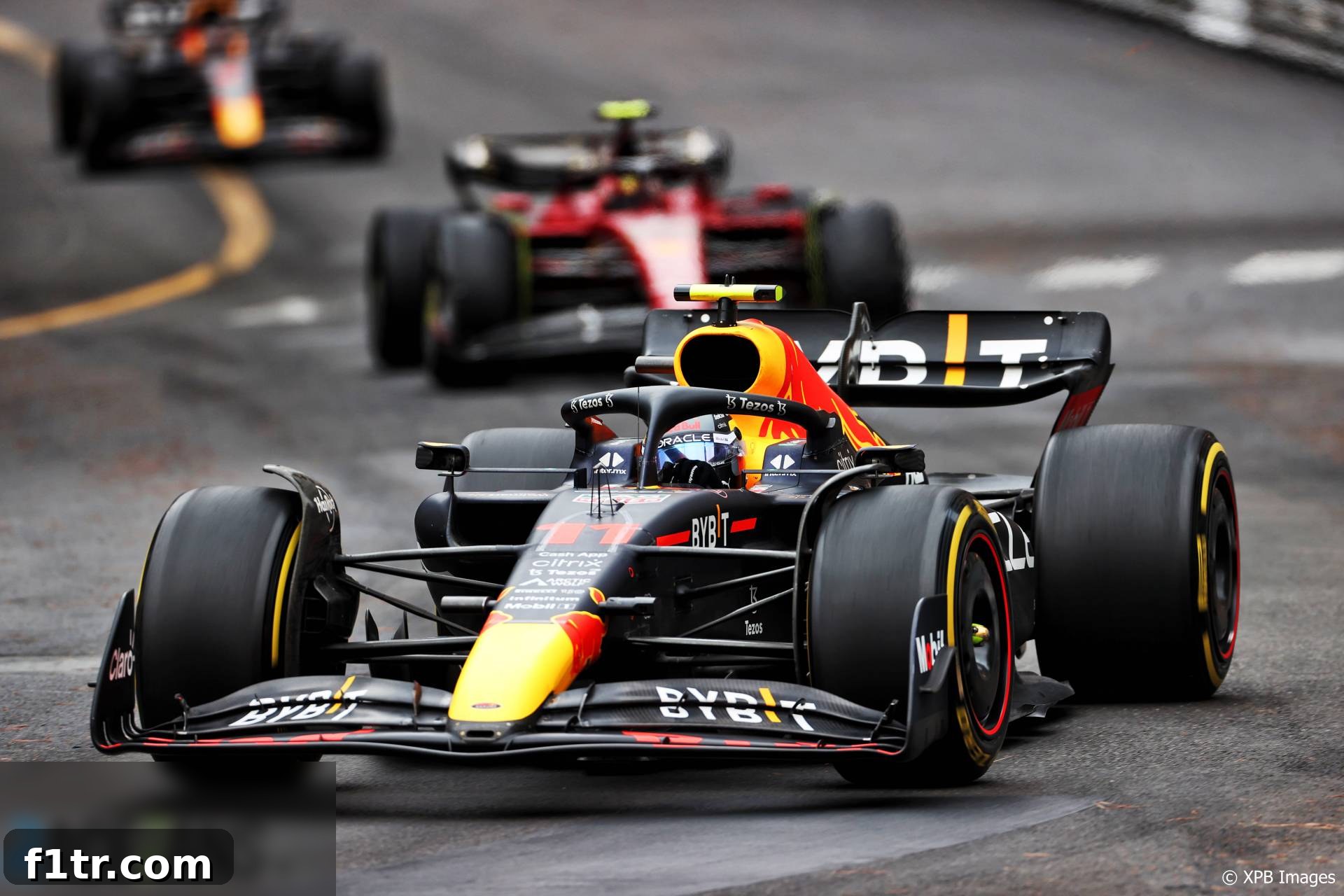
The shortcomings and inherent inflexibility of F1’s time limit rules were perhaps most starkly exposed earlier this year at the Monaco Grand Prix. In a race that could have, and arguably should have, easily continued to its full conclusion, the checkered flag fell prematurely. A sudden cloudburst shortly after the scheduled start time meant that approximately an hour of valuable race time was lost before any genuine competitive action could commence. Even more critically, as the cars were eventually sent out for two formation laps behind the Safety Car, the official race clock began ticking, rapidly consuming the allocated time long before any green flag racing began. A subsequent second red flag, triggered by Mick Schumacher’s significant crash, further compounded the time loss, ultimately leaving too little time within the three-hour window to complete the full race distance.
Advert | Become a RaceFans supporter andgo ad-free
It’s important to note that Monaco’s uniquely short race distance – 260 kilometers compared to the standard 305 kilometers for most other Grand Prix circuits – somewhat disguised the full implications and severity of F1’s time limit rule. The race ultimately ran to 64 laps instead of the originally scheduled 78. However, had this scenario unfolded at any other track on the calendar, the distance deficit would have been far more significant, potentially resulting in a loss of 92 laps, a truly substantial portion of the event. Consequently, with race leader Sergio Perez visibly struggling with his deteriorating tires and facing escalating pressure from the cars behind, instead of spectators being treated to 28, or even 14, laps of intense, rising tension and strategic battles, the race simply ended. The track was clear, the conditions were good, daylight was ample, and the vast number of paying spectators were still eagerly watching, yet the checkered flag was dropped, bringing an anticlimactic conclusion to a potentially thrilling contest.
Regulations Versus Spectacle: A Call for Reassessment
It is crucial to emphasize that the premature conclusion of the Monaco Grand Prix did not arise from the arbitrary whim of the race director. Rather, it was a direct consequence of the rule book, specifically Article 5.4 (b) of the Formula 1 Sporting Regulations, dictating that the race must end once the three-hour timer expires. This highlights a fundamental difference in approach compared to previous instances. For example, at the Azerbaijan Grand Prix just last year, former FIA F1 race director Michael Masi ordered a restart with only two laps remaining. He explained his decision, stating, “Going back many, many years ago when a race was red-flagged after a certain distance, it would go back two laps [to determine the result] and so forth. But obviously, with the race suspension elements, there is an option to not restart, but within the timeframe and within the format of the regulations, we can restart and there was no reason not to.” In stark contrast, there was, arguably, no legitimate reason not to continue May’s Monaco Grand Prix, except for the rigid adherence to this poorly considered article of the Formula 1 Sporting Regulations.
The contrast in philosophy and execution between these two premier single-seater series is striking. Spectators attending IndyCar races can generally feel confident that the series will go to extraordinary lengths to ensure their races proceed and reach their full conclusion, even when faced with the most challenging weather conditions. This same assurance, unfortunately, cannot be extended to Formula 1 fans, a fact made even more egregious given the considerably higher ticket prices and premium associated with attending an F1 event. The expectation for a full, uncompromised spectacle is understandably higher.
IndyCar as a Model for Fan Engagement and Growth
As Formula 1 actively seeks to make greater inroads and expand its presence within the crucial American market, it would be prudent for the sport to take careful note of the immense efforts its domestic single-seater counterpart undertakes. IndyCar’s unwavering commitment to ensuring that those who purchase tickets truly receive the full show they pay for—a complete and thrilling race, irrespective of temporary delays—is a benchmark for fan engagement. This dedication resonates deeply with the American sporting ethos, where the integrity of the contest and the value for money are paramount. F1’s current time limit regulations inadvertently undermine this principle, potentially alienating a segment of the very audience it aims to capture.
Advert | Become a RaceFans supporter andgo ad-free
The lessons from IndyCar are clear: while safety is, and must always remain, paramount, regulations should also strike a better balance between operational efficiency and delivering a complete, uncompromised sporting spectacle. For those heading to Spa-Francorchamps this weekend, a track that has seen its own share of weather-induced controversies, even a single racing lap would undoubtedly offer more action and satisfaction than many endured last year. Reconsidering and potentially revising Article 5.4 (b) and similar time-related rules could significantly enhance the Formula 1 fan experience, foster greater loyalty, and better align the sport with its ambitious global growth objectives. The goal should always be to ensure that every Grand Prix is remembered for its racing, not for its regulatory limitations.
Comment
- The shadow of motorsport’s worst tragedy hangs over F1’s latest safety debate
- F1 got lucky three ways. But now it has a difficult and urgent problem to solve
- Verstappen’s overreaction shows he knows he cost himself the 2025 title
- F1’s sticking-plaster fix for Qatar tyre failures is an embarrassment
- The FIA’s stewards grabbed the chance to correct their mistake – unlike last time
Browse all comment articles