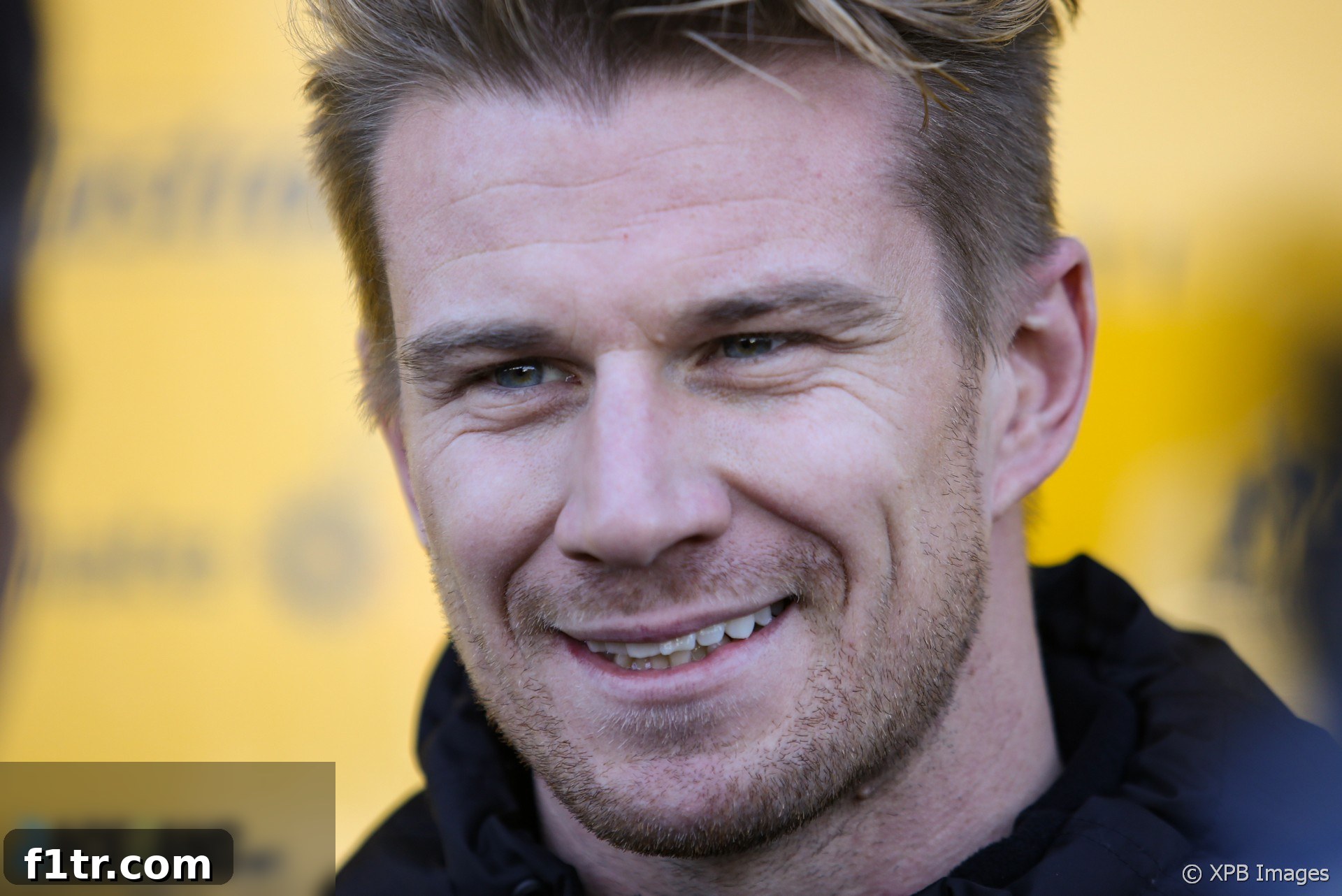
The exhilarating and often cutthroat world of Formula 1 is a constant carousel of talent, where driver futures can shift in the blink of an eye. For seasoned German driver Nico Hulkenberg, the horizon for the 2020 F1 season appears increasingly cloudy. Despite being one of the most experienced and respected figures on the grid, with a career spanning over a decade, Hulkenberg finds himself precariously positioned as he navigates a shrinking pool of available seats. His tenure with the Renault F1 team is drawing to a close, with French prodigy Esteban Ocon set to take his place, leaving the ‘Hulk’ in a critical search for a new home in motorsport’s pinnacle category. Among the few remaining opportunities, a return to his debut team, Williams, has been a topic of speculation, yet Hulkenberg himself casts significant doubt on this possibility, suggesting a deeper mismatch than meets the eye.
The Looming Uncertainty: Nico Hulkenberg’s F1 Future Beyond 2019
As the 2019 Formula 1 season neared its conclusion, the driver market entered a phase of intense activity and speculation. Nico Hulkenberg, a driver celebrated for his consistent performance and often regarded as one of the most underrated talents in Formula 1, became a central figure in these discussions. His departure from Renault, a team he had helped to build and develop over several seasons, was a clear signal that he needed to secure a new drive to continue his impressive F1 career. With a reputation for strong qualifying pace and robust race craft, Hulkenberg has consistently proven his capabilities, often extracting the maximum from the machinery at his disposal. However, in a sport increasingly influenced by financial backing and the promotion of younger talent, even a driver of his caliber faces immense pressure to secure a competitive seat.
The urgency of his situation was palpable, with limited options available across the ten teams. The prospect of a driver with 170+ Grand Prix starts, a pole position, and numerous strong points finishes being without a drive for the subsequent season underscored the brutal reality of Formula 1. Hulkenberg’s objective was clear: to find a team where he could not only continue to compete but also truly contribute to their development and challenge for meaningful results. This ambition shaped his perspective on every potential opportunity, leading to a candid assessment of what he believed would be the right fit for his next chapter in Formula 1, or indeed, if one would materialize at all.
Advert | Become a Supporter & go ad-free
Williams: A Closed Chapter for the Hulk?
A Return to Roots, But Not a Fit for the Future
Nico Hulkenberg’s Formula 1 journey began with Williams in 2010, a memorable debut season that saw him claim a stunning pole position at the Brazilian Grand Prix. This connection sparked rumors of a potential return to Grove for 2020, as Williams had an open seat. However, Hulkenberg himself swiftly moved to temper these expectations, articulating a nuanced perspective on why a reunion with his former team was highly improbable. Speaking to RaceFans, he stated, “I think they need somebody else. I think I’m not the right person, the right driver for them.” This candid assessment highlights a significant shift in both Hulkenberg’s career stage and Williams’ challenging circumstances.
At this point in his career, Hulkenberg is a seasoned veteran seeking to compete at the sharp end of the midfield, if not higher. He aims for consistent points finishes and perhaps even a maiden podium – a notable omission from his impressive CV. Williams, conversely, was entrenched at the very back of the grid, battling profound performance issues and navigating a difficult financial landscape. Their focus was largely on rebuilding, often relying on drivers who could bring crucial sponsorship or were young talents in need of development. Hulkenberg’s experience and salary expectations likely didn’t align with the team’s immediate operational model or long-term strategy. He elaborated on this misalignment, explaining, “It’s just where I am in my career, where they are, and the timings, I just don’t think it’s the right timing for us.” This mutual respect, coupled with a pragmatic understanding of differing objectives, painted a clear picture of why a return, despite the sentimental appeal, was unlikely.
The Dynamic Shift: Why Timing is Everything
The chasm between Hulkenberg’s ambitions and Williams’ reality was simply too wide to bridge. For a driver who has consistently performed at a high level, the prospect of joining a team battling for last place, rather than points, was not an exciting challenge but potentially a career setback. Williams, a team with a storied history and multiple championships, was in a phase of fundamental reconstruction, a process that typically requires patience, long-term commitment, and often, significant financial investment from its drivers or their backers. Hulkenberg, on the other hand, was looking for immediate competitive opportunities, a chance to leverage his experience and prove his enduring speed.
His decision was not a slight against Williams but a recognition of differing trajectories. While he expressed “all due respect to the team,” acknowledging his history with them, he remained firm: “I don’t think that’s going to happen.” This stance underscored his commitment to finding a meaningful role in Formula 1, one that aligned with his professional aspirations and offered a genuine prospect of competitive racing. It was a clear indication that for Hulkenberg, securing any seat was not enough; it had to be the right seat, offering a clear pathway to performance and satisfaction.
Exploring Viable Alternatives: Alfa Romeo in the Spotlight
The Alfa Romeo Conundrum: A Potential Path Forward
With Williams seemingly off the table, the focus of Hulkenberg’s attention naturally shifted to the other remaining realistic opportunity: a seat at Alfa Romeo Racing. Specifically, the potential vacancy alongside Kimi Raikkonen, currently occupied by Antonio Giovinazzi, presented itself as a far more appealing prospect. Alfa Romeo, closely linked with Ferrari, offered a midfield package that occasionally showed flashes of strong performance, a stark contrast to Williams’ struggles. For Hulkenberg, this team represented a chance to join a solid, established outfit with a rich racing heritage and the potential to challenge for points on a regular basis. His experience and technical feedback would be invaluable to a team looking to consistently move up the constructor standings.
Giovinazzi, while showing glimpses of improvement, had not consistently delivered performances that entirely solidified his position. This created a window of opportunity for an experienced and proven driver like Hulkenberg. The German driver confirmed his interest in the team, suggesting he could “see himself driving for them.” This expressed willingness highlighted the perceived compatibility between Hulkenberg’s driving style and the car, as well as the team’s ambitions. Joining Alfa Romeo would place him in a competitive environment, allowing him to demonstrate his enduring speed and contribute to the team’s development, a role he relished during his time at Force India and Renault.
No Room for Reserve Roles: A Driver’s Ambition
While exploring race seat options, Hulkenberg was unequivocal about one aspect of his future: he would not accept a reserve or test driver role. This firm stance reflected his deep-seated desire to actively compete and his belief in his own abilities as a full-time F1 driver. “That’s not an option,” he stated emphatically, leaving no room for ambiguity. For a driver of his experience and competitive spirit, being relegated to the sidelines, even within a top team, would be a step backward rather than a viable career progression.
Reserve roles, while offering a foot in the door, often lead to a gradual fading from the active racing scene. Hulkenberg, still in his prime as a racer, was clearly not ready to transition into such a supportive capacity. His ambition remained focused on the thrill of competition, the challenge of Grand Prix weekends, and the pursuit of that elusive podium finish. This clear demarcation of what he would and would not consider underscored his determination to maintain a principal driving role in Formula 1, or explore other avenues if suitable opportunities did not arise.
The Broader F1 Driver Market: A Tight Squeeze
The Formula 1 driver market for the 2020 season was particularly challenging, marked by limited movement among the top teams and a general preference for established lineups or financially backed junior drivers. The Red Bull stable, for instance, had already committed to retaining its four drivers across its two teams, Red Bull Racing and Toro Rosso, effectively closing off any potential avenues there for Hulkenberg. This stability at the front and mid-pack meant that the few available seats were fiercely contested, making the landscape incredibly competitive for any driver looking to secure a spot. The scarcity of openings amplified the pressure on drivers like Hulkenberg, who, despite their proven talent and experience, found themselves navigating a market increasingly dictated by factors beyond pure performance.
With several teams opting for continuity or promoting their academy drivers, the opportunities for a seasoned free agent were drastically reduced. This environment forced drivers to carefully weigh their options, balancing competitive aspirations with the harsh realities of the sport’s commercial demands. Hulkenberg’s situation was a prime example of how even a highly respected and competent driver could find themselves on the periphery when the stars of the driver market did not align perfectly.
A Potential Sabbatical: The Right Opportunity Over Any Opportunity
“Maybe Not Race for a While”: A Strategic Pause?
Faced with the daunting prospect of a highly restricted driver market and unwilling to settle for an uninspiring or non-racing role, Nico Hulkenberg candidly admitted that a sabbatical from Formula 1 was a distinct possibility. This wasn’t a threat or an ultimatum, but rather a reflective and pragmatic outlook on his future. He suggested he could “maybe not race for a while” if the right opportunity for the upcoming season didn’t materialize. This statement showcased a maturity and a long-term perspective on his career, prioritizing a meaningful challenge over simply occupying a seat.
For Hulkenberg, merely being on the grid was not enough; the drive had to be motivating, competitive, and offer a genuine chance for him to demonstrate his skills. “Honestly, I don’t know right now. It depends on what happens, what unfolds here,” he conveyed, underlining the fluidity of his situation. This openness to taking a break, rather than rushing into a suboptimal deal, spoke volumes about his self-respect and his desire to preserve his reputation as a top-tier racing driver. A sabbatical, while risky, could also be a strategic move, allowing him to wait for better opportunities in subsequent seasons, or to explore other racing categories that might ignite his passion.
The Waiting Game: Patience in a High-Stakes Environment
Hulkenberg’s unwillingness to commit prematurely to any available seat highlighted a critical philosophy: “I don’t want to rush into something and just jump on something to race. It needs to be something that I like, a challenge that excites me.” This demonstrates his discerning approach to his career. After years of hard racing, he was not prepared to compromise on his professional satisfaction or the quality of the challenge presented. The decision to potentially step away, even temporarily, rather than accept a less-than-ideal drive, underscored his commitment to his personal and professional standards.
His patience in a high-stakes environment where drivers are often eager to secure any position available was remarkable. He concluded, “So I have no conclusion, no perfect answer for that yet.” This statement perfectly encapsulated the delicate balance between hope, uncertainty, and a firm resolve to make the right choice for his future, whether that meant continuing in Formula 1, taking a break, or exploring entirely new racing ventures. For a driver who has dedicated his life to F1, such a crossroads moment is not just a career decision, but a deeply personal one.
Conclusion: A Veteran Driver at a Crossroads
Nico Hulkenberg’s situation heading into the 2020 F1 season was a poignant illustration of the demanding nature of Formula 1. A driver of undeniable talent, experience, and consistent performance found himself at a crossroads, with limited avenues for continuing his journey in the sport. His pragmatic assessment of a potential return to Williams and his resolute refusal of a reserve role showcased a clear understanding of his professional value and his unwavering ambition to compete at the highest level. While the driver market presented formidable challenges, Hulkenberg’s deliberate approach, prioritizing a genuinely exciting challenge over simply securing a seat, resonated deeply within the motorsport community.
As the curtains drew on a chapter with Renault, the ‘Hulk’ faced a future that was anything but certain, yet his determination to find the right path remained undimmed. Whether he would find a new home in Formula 1, pursue opportunities elsewhere, or take a strategic break, his journey served as a powerful reminder of the relentless competition and critical decisions that define a career at the pinnacle of motorsport.
View the current list of 2020 F1 drivers and teams
Advert | Become a RaceFans supporter andgo ad-free
2019 F1 season
- Crying in the Melbourne car park at 2019 grand prix was my career low – Ocon
- McLaren Racing reports reduced £71 million loss in 2019
- Kvyat: Hockenheim podium last year was “my biggest achievement” so far
- How the FIA’s new encrypted fuel flow meter targets Ferrari’s suspected ‘aliasing’ trick
- “He smashed my office door”: 23 must-see moments from ‘Drive to Survive’ season two
Browse all 2019 F1 season articles