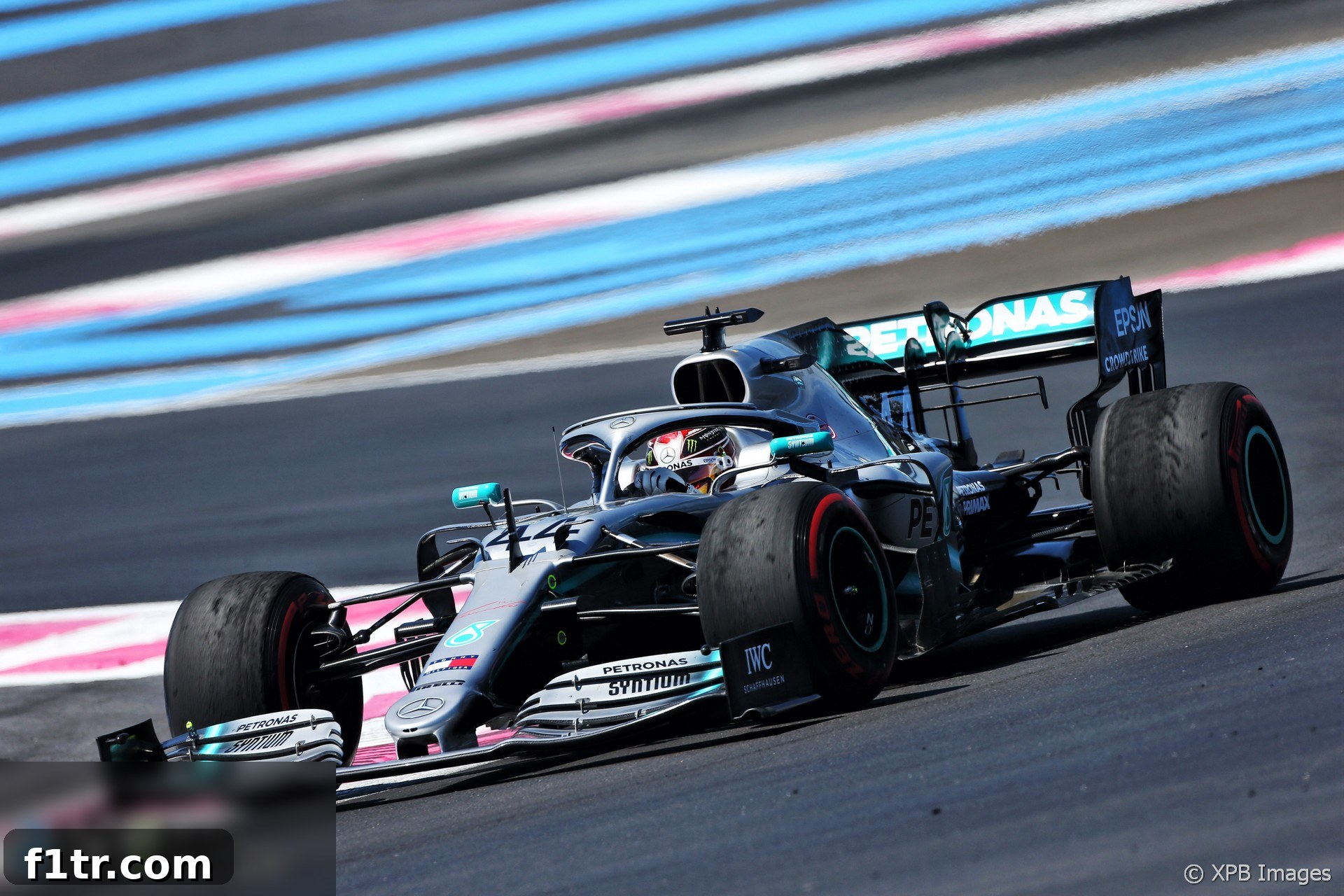
The highly anticipated qualifying session for the French Grand Prix at Paul Ricard delivered a thrilling spectacle, culminating in a dominant display by Mercedes. While Valtteri Bottas initially set the pace, leading both Q1 and Q2, it was his teammate Lewis Hamilton who ultimately clinched a sensational pole position. Hamilton produced two immaculate laps in the crucial Q3 segment, securing his third pole of the season and putting Mercedes in a prime position for race day.
Behind the Silver Arrows, Ferrari’s Charles Leclerc impressed by securing third place on the grid, demonstrating the raw pace of his Scuderia machine. However, his teammate Sebastian Vettel faced a challenging end to the session, managing only seventh place, unexpectedly trailing both McLarens. This outcome highlighted the evolving dynamics and intense competition at the forefront of Formula 1.
Q1: Navigating the Evolving Paul Ricard Circuit
The recently resurfaced Paul Ricard circuit proved to be a significant factor throughout the weekend, with track conditions evolving rapidly. This constant change in grip levels and lap times nearly caught out several front-runners during the first qualifying session, Q1, adding an extra layer of tension to the initial runs. The track’s rapid evolution meant that drivers who went out later often found more grip, allowing for quicker lap times.
One notable driver who came perilously close to an early exit was Max Verstappen. Opting for a single run, the Red Bull driver initially found himself slipping down the order as other competitors improved their times, landing him in a precarious 14th position. Memories of his Q2 elimination in Canada, caused by a red flag, might have flashed through his mind. Fortunately for Verstappen, fate was on his side as Romain Grosjean aborted his final attempt after a critical mistake at Turn 9, failing to improve. Simultaneously, Lance Stroll struggled to match his Racing Point teammate Sergio Perez’s pace, consistently lapping a significant seven-tenths of a second slower. This disparity saw Stroll continue his unwelcome streak of Q1 eliminations, while Perez comfortably advanced to Q2 in an impressive sixth place.
Joining Stroll in the list of eliminated drivers was Daniil Kvyat, who, despite his efforts, also failed to make the cut. Kvyat was already facing a grid penalty for a power unit change, meaning he was destined to start last regardless of his qualifying performance. The two Williams drivers, George Russell and Robert Kubica, once again found themselves at the back of the pack. Russell maintained his usual advantage over his Polish teammate, though he too would start behind Kubica due to a power unit penalty, highlighting the ongoing struggles for the British outfit.
Drivers Eliminated in Q1: The First Casualties
| 16 | Daniil Kvyat | Toro Rosso-Honda | 1’31.564 |
| 17 | Romain Grosjean | Haas-Ferrari | 1’31.626 |
| 18 | Lance Stroll | Racing Point-Mercedes | 1’31.726 |
| 19 | George Russell | Williams-Mercedes | 1’32.789 |
| 20 | Robert Kubica | Williams-Mercedes | 1’33.205 |
Q2: Strategic Battles and Tyre Choices
As qualifying progressed into Q2, Valtteri Bottas continued to assert his strong form. Having narrowly edged out Lewis Hamilton in Q1, Bottas once again topped the timesheets in the second segment, signaling his intent for pole position. This time, however, the Ferraris were much closer, with Sebastian Vettel getting within a tenth of a second of Bottas’s time, a feat also matched by Hamilton. The intensity was palpable as teams began to fine-tune their strategies.
Ferrari, ever keen to extract every possible advantage, engaged in a fascinating strategic maneuver by organizing their drivers to give each other slipstreams. This team effort was not without its moments, as Vettel humorously reassured his engineers, “I’m not trying to kill him so don’t worry,” after being instructed to maintain a suitable distance ahead of Charles Leclerc. This brief radio exchange offered a glimpse into the internal dynamics and trust between the Scuderia teammates as they pushed for optimal performance.
Crucially, all four drivers from Mercedes and Ferrari, along with Max Verstappen, successfully navigated Q2 using the medium compound tyres. This strategic choice was paramount, as it meant they would begin the race on this more durable rubber, potentially offering a significant advantage over those starting on softer, less enduring compounds. In contrast, Max Verstappen’s Red Bull teammate, Pierre Gasly, stuck with the soft tyres and only just scraped his way into Q3 with a last-gasp effort, demonstrating the fine margins at play.
The midfield battle was equally fierce. Nico Hulkenberg and Carlos Sainz Jnr initially started the session on medium tyres. After noting their impressive progress, their respective teammates, Daniel Ricciardo and Lando Norris, followed suit. Both McLaren drivers, Norris and Sainz, displayed outstanding pace and duly claimed their places in Q3, showcasing the strong upward trajectory of the Woking-based team. However, Hulkenberg ultimately missed out on a spot in the top 10 as his teammate Daniel Ricciardo secured his place in the final qualifying segment. Along with Gasly, Antonio Giovinazzi was the only other driver to reach Q3 on soft tyres, managing to outperform his more experienced Alfa Romeo teammate, Kimi Raikkonen, who was eliminated.
Drivers Eliminated in Q2: The Midfield Showdown
| 11 | Alexander Albon | Toro Rosso-Honda | 1’30.461 |
| 12 | Kimi Raikkonen | Alfa Romeo-Ferrari | 1’30.533 |
| 13 | Nico Hulkenberg | Renault | 1’30.544 |
| 14 | Sergio Perez | Racing Point-Mercedes | 1’30.738 |
| 15 | Kevin Magnussen | Haas-Ferrari | 1’31.440 |
Q3: Hamilton’s Masterclass and Ferrari’s Frustration
The final qualifying session, Q3, commenced with an unexpected moment as Valtteri Bottas’s Mercedes appeared to emit a small wisp of smoke as he headed out for his first flying lap. Despite this momentary concern, it did not hinder his performance, and he completed his run. However, it was Lewis Hamilton who immediately set the benchmark, laying down an blistering 1’28.448 to lead the initial lap times, demonstrating his formidable pace from the outset.
Charles Leclerc positioned his Ferrari as third quickest behind the Mercedes duo, though he expressed some bewilderment over the radio, questioning why he had lost so much time on the straights. His team quickly responded, informing him that a change in wind direction was a significant factor, affecting aerodynamic balance and straight-line speed. Meanwhile, Sebastian Vettel’s first run was compromised and he was forced to abort his lap after reporting a critical missed up-shift, a mechanical or driver error that would prove costly.
This aborted lap would ultimately haunt Vettel. Despite his best efforts on his final run, he could only manage the seventh-fastest time. A visibly frustrated Vettel complained about a lack of grip from his tyres, indicating that he couldn’t find the same level of performance he had experienced earlier in the session. This struggle resulted in him ending up a significant eight-tenths of a second slower than his teammate, Charles Leclerc, a substantial margin in Formula 1 terms.
Leclerc, who was positioned at the back of the queue for his final run, found himself unable to close the gap to the dominant Mercedes cars. The Silver Arrows strategically led the queue at the end of Q3, with Bottas ahead of Hamilton, meaning Bottas did not benefit from a slipstream. Hamilton, however, delivered another truly superb lap, pushing his Mercedes to the absolute limit. Although he lost a fraction of time in the final two corners, he still managed to shave another tenth of a second off his previous best time, securing pole position with a stunning display of skill and precision.
Max Verstappen continued his consistent performance, securing fourth place on the grid. He found himself just ahead of two incredibly quick McLarens, a testament to their improved form. Lando Norris was a mere nine-thousandths of a second slower than Verstappen, showcasing the immense potential of the young Briton. Both Norris and his teammate Carlos Sainz pushed Vettel further down the order, highlighting McLaren’s impressive step forward. They were followed by Daniel Ricciardo in the Renault, Pierre Gasly for Red Bull, and Antonio Giovinazzi, who rounded out the top ten for Alfa Romeo, completing a hard-fought qualifying session.
Top Ten in Q3: The Battle for Pole
| 1 | Lewis Hamilton | Mercedes | 1’28.319 |
| 2 | Valtteri Bottas | Mercedes | 1’28.605 |
| 3 | Charles Leclerc | Ferrari | 1’28.965 |
| 4 | Max Verstappen | Red Bull-Honda | 1’29.409 |
| 5 | Lando Norris | McLaren-Renault | 1’29.418 |
| 6 | Carlos Sainz Jnr | McLaren-Renault | 1’29.522 |
| 7 | Sebastian Vettel | Ferrari | 1’29.799 |
| 8 | Daniel Ricciardo | Renault | 1’29.918 |
| 9 | Pierre Gasly | Red Bull-Honda | 1’30.184 |
| 10 | Antonio Giovinazzi | Alfa Romeo-Ferrari | 1’33.420 |
Related Content: 2019 French Grand Prix
- 2019 French Grand Prix Star Performers
- Top ten pictures from the 2019 French Grand Prix
- Hamilton urges change in F1 after supreme display in France
- Mercedes poised to equal McLaren’s 31-year-old consecutive wins record
- Paddock Diary: French Grand Prix day four
Browse all 2019 French Grand Prix articles