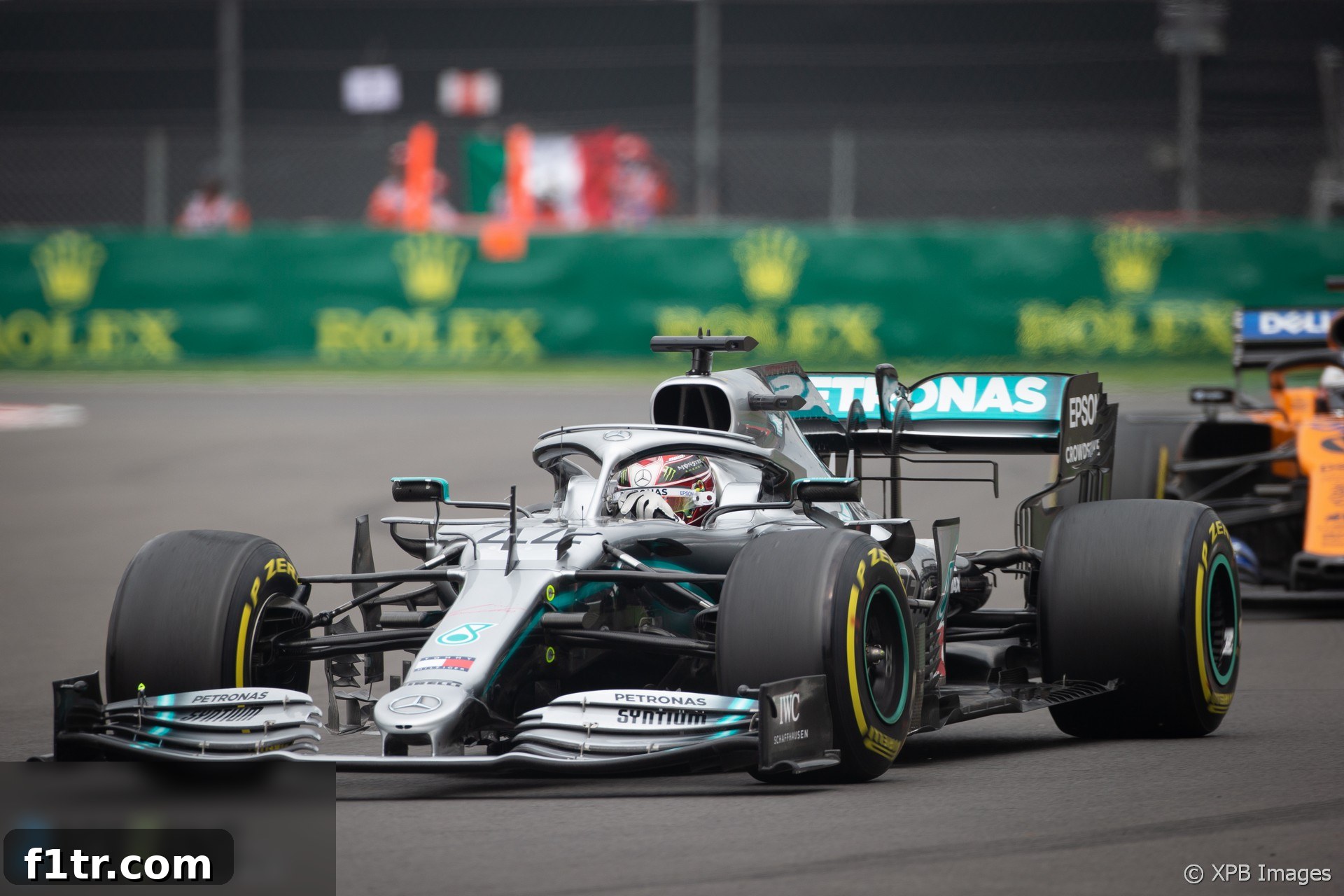
In the high-stakes environment of Formula 1 qualifying, where milliseconds dictate grid positions and future race outcomes, adherence to safety regulations is paramount. A particularly intense moment unfolded during a crucial qualifying session, sparking a sharp reaction from seven-time world champion Lewis Hamilton concerning a perceived infraction by competitor Max Verstappen. Hamilton publicly stated his expectation for the FIA (Fédération Internationale de l’Automobile) to take a “very strict” stance on Verstappen’s alleged failure to adequately slow down for yellow flags.
The controversy emerged at the close of Q3, the final and most critical segment of qualifying, following a significant incident involving Valtteri Bottas. Bottas, then a Mercedes driver, crashed his car, leading to the deployment of yellow flags to signal a hazardous situation on track. Despite these visible warnings, Max Verstappen, who would ultimately secure pole position for the upcoming race, found himself under investigation for a potential breach of the regulations. His lap time during this period, notably an improvement, further intensified the scrutiny from race stewards and fellow drivers alike.
Lewis Hamilton, who was directly behind Bottas on track, offered a vivid account of the unfolding scene. “Valtteri was just ahead of me,” Hamilton explained. “So I came around the corner and I saw bits on the ground.” Hamilton’s immediate response was one of caution, despite an initial absence of official flag signals. “There was no flag at the time and I saw bits on the ground and I was quite hesitant because obviously something had happened ahead. And so I wasn’t, I hesitated getting back on power. And by the time I realised that there was a crash, I was basically past it.” This narrative highlights the instinctual caution of an experienced driver when confronted with debris, even before official warnings are displayed, underscoring the severe implications of potential dangers on track.
The core of the issue revolved around Verstappen’s actions. The Red Bull driver openly admitted that he did not back off or lift the throttle as he passed the scene of Bottas’s accident. This admission, coupled with his improved lap time, fueled Hamilton’s belief that the FIA must adopt a firm position. Hamilton articulated the gravity of the situation, linking it directly to driver and marshal safety, which remains a cornerstone of Formula 1’s operational philosophy. “I think it’s very important that the FIA are very, very strict with the double yellow flags,” Hamilton urged, emphasizing the critical nature of these signals.
Hamilton drew parallels to historical incidents to underscore his point about the dangers of disregarding yellow flags. He recalled a specific instance in motorsport, though mistakenly attributing it to GP2 in Monaco, where a driver (Pastor Maldonado in World Series by Renault) lost control and caused an accident involving a marshal. “We’ve seen experiences in the past – I remember like Monaco, for example, where you see the GP2 driver [Pastor Maldonado in World Series by Renault] take out a marshal, a volunteer who puts their lives on the line to make sure the driver is safe on the road.” This reference served as a stark reminder of the potentially catastrophic consequences when drivers fail to respect trackside warnings, directly jeopardizing the lives of those working to ensure event safety.
The seven-time champion further elaborated on the lack of justification for Verstappen’s actions. “If you’ve got people who are just being careless and not abiding by the rules… He actually didn’t even need to stay flat out. He’d already got pole, basically. I think the FIA need to be very, very strict on that.” Hamilton’s statement highlighted the competitive intensity but also suggested a moral dimension: even if a driver feels their lap is compromised, safety must always take precedence, especially when a coveted pole position might have already been secured. The implication was that competitive gain should never override the fundamental principles of safety, particularly in such a high-risk sport.
“I don’t know what else to say it but luckily there were no marshals on the track,” Hamilton continued, expressing relief but also concern. “For all he knew Valtteri could have been in the middle of the circuit and the marshals could have been there. That’s what a double yellow flag generally means, it could be a massive incident ahead. So the fact that he ignored it means is not great, but it’s done. Hopefully the right calls are made and put in place. The drivers need to know to respect those things.” This commentary clearly outlines the definition and purpose of double yellow flags: they signify a significant hazard, often a car stopped on or near the track, or marshals potentially entering the circuit, necessitating a substantial speed reduction or even preparedness to stop.
A point of discussion during the investigation was whether Verstappen had received a yellow light signal on his steering wheel, which complements the physical flags waved by marshals. Verstappen’s defense hinted at this potential absence. However, Hamilton was unequivocal in dismissing this as an excuse. “It doesn’t matter where the yellow is. You can see double yellow flags waving in general but I don’t think that’s a good enough excuse. The fact is he said he saw it. So he saw the flags and then decided not to react to it.” Hamilton’s argument underscores the principle that visual confirmation of flags, regardless of electronic dashboard indicators, is sufficient and binding. Driver awareness and adherence to visible signals are fundamental requirements, and any failure to respond carries serious implications for track safety and fair play.
The FIA’s regulations surrounding yellow flags are meticulously designed to prevent accidents and protect all personnel on track. A single yellow flag indicates a hazard, requiring drivers to slow down and be prepared to change direction. Double yellow flags, as encountered in Bottas’s incident, signify a more severe obstruction or danger, often necessitating a significant reduction in speed and the expectation that drivers could be required to stop. Ignoring these signals is not merely a competitive advantage but a direct challenge to the safety framework that underpins modern motorsport. Penalties for such infringements can range from grid penalties in the subsequent race to penalty points on a driver’s super licence, or even disqualification, reflecting the FIA’s commitment to upholding these rules.
Historical precedents further solidify the FIA’s stringent stance. Numerous drivers throughout Formula 1’s history have faced sanctions for failing to respect yellow flags during qualifying or practice sessions. These penalties are not arbitrary but serve as crucial deterrents, reinforcing the message that safety is non-negotiable. The Maldonado incident, while misattributed in Hamilton’s initial quote, perfectly illustrates the inherent dangers for marshals, who are often volunteers putting their lives at risk to manage incidents and ensure the safety of both drivers and spectators. Their vulnerability demands absolute diligence from drivers navigating a hazardous zone.
Ultimately, the incident involving Max Verstappen and the ensuing comments from Lewis Hamilton underscore a perpetual tension in Formula 1: the relentless pursuit of competitive advantage versus the absolute imperative of safety. While every driver pushes the limits, the sport’s governing body, the FIA, bears the responsibility of drawing clear lines, especially when human lives are at stake. The outcome of the investigation into Verstappen’s actions would not only impact his immediate pole position but also send a powerful message to the entire paddock about the consequences of disregarding safety protocols. It reinforces that respecting yellow flags is not merely about avoiding a penalty, but about upholding the fundamental values of safety and responsibility within the pinnacle of motorsport.
2019 F1 Season Insights
- Crying in the Melbourne car park at 2019 grand prix was my career low – Ocon
- McLaren Racing reports reduced £71 million loss in 2019
- Kvyat: Hockenheim podium last year was “my biggest achievement” so far
- How the FIA’s new encrypted fuel flow meter targets Ferrari’s suspected ‘aliasing’ trick
- “He smashed my office door”: 23 must-see moments from ‘Drive to Survive’ season two
Browse all 2019 F1 season articles