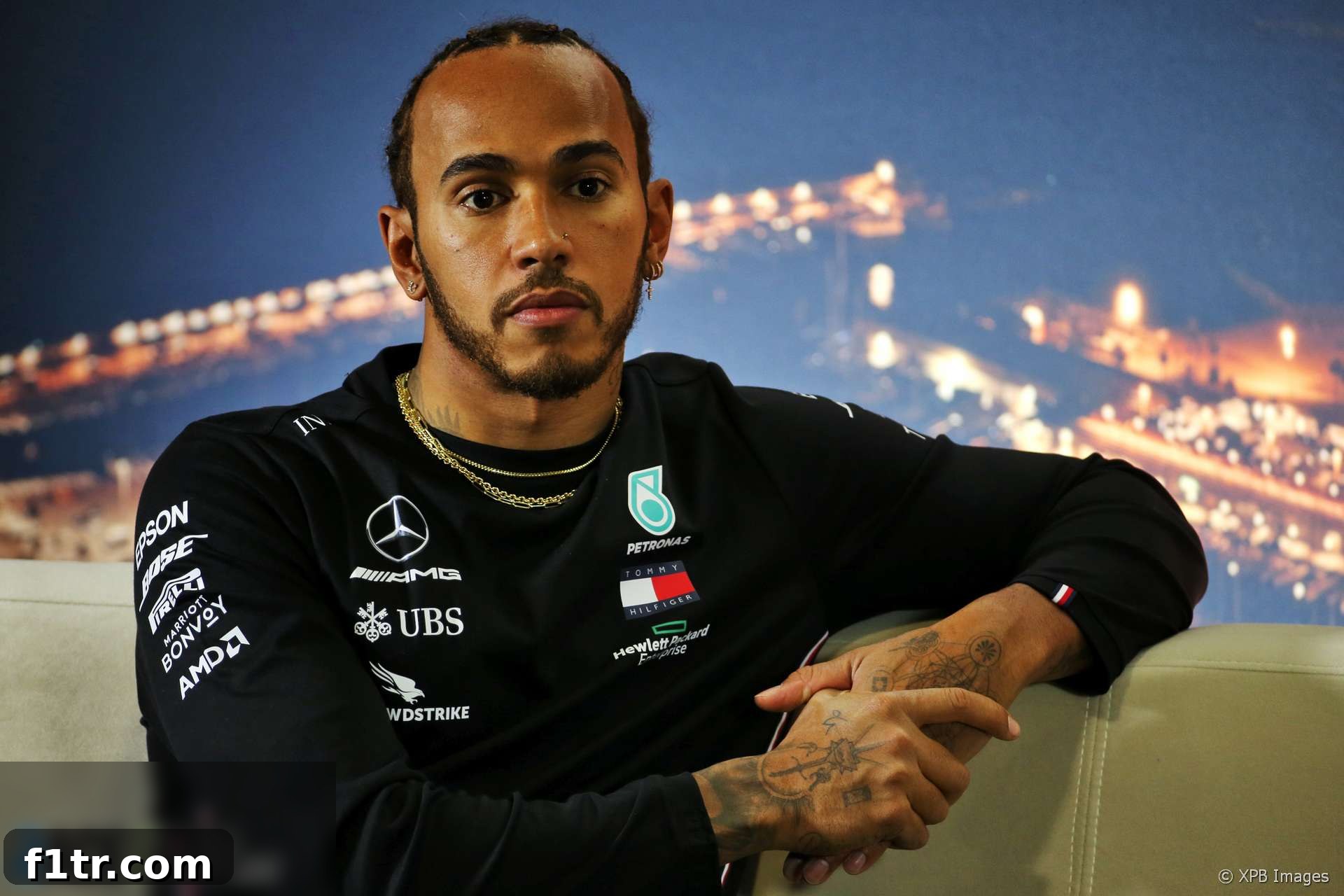
In a powerful and poignant moment that transcended the world of motorsport, six-time Formula 1 world champion Lewis Hamilton issued a stirring challenge to his fellow drivers and the broader Formula 1 community. His impassioned call for action followed the tragic death of George Floyd in the United States, an event that sparked global outrage and ignited widespread protests against racial injustice and police brutality. Hamilton’s outspoken stance underscored a critical moment for the sport, urging those with influence to break their silence and join the fight for equality.
Lewis Hamilton: A Solitary Voice in Motorsport’s Fight Against Injustice
The days following George Floyd’s death saw cities across America and indeed the world erupt in demonstrations, drawing unprecedented attention to systemic racism. Amidst this global upheaval, Lewis Hamilton, a prominent figure not only in Formula 1 but also as one of the few Black athletes at the pinnacle of his sport, used his significant platform to voice his distress and demand accountability. He posted repeatedly on social media, expressing his anguish over the latest instance of a Black man dying at the hands of a white police officer in the USA, and critically, questioning the silence from within his own industry.
In a particularly direct and memorable social media post, Hamilton declared that he “stands alone” in the motorsport community for taking a definitive stand on such vital matters. This statement resonated deeply, highlighting the stark reality of racial diversity within Formula 1 and the often-unspoken pressures faced by athletes of color in predominantly white sports. His words were not just a lament but a pointed challenge to his peers, many of whom are global superstars with immense reach and influence.
“I see those of you who are staying silent, some of you the biggest of stars yet you stay silent in the midst of injustice,” Hamilton wrote. “Not a sign from anybody in my industry which of course is a white dominated sport. I’m one of the only people of colour there yet I stand alone. I would have thought by now you would see why this happens and say something about it but you can’t stand alongside us. Just know I know who you are and I see you…”
This direct appeal was a significant moment, forcing many within the sport to confront their own positions on social justice. Hamilton’s unwavering conviction that silence is complicity underscored the urgent need for solidarity. His words were a powerful reminder that while racing tracks are diverse geographically, the paddocks and boardrooms of Formula 1 have historically lacked true representation, making his voice all the more crucial and, at times, isolating.
The Power of Athlete Advocacy: Breaking the Silence in a Global Sport
Hamilton’s challenge sparked a vital conversation about the role of athletes in social and political issues. For years, the conventional wisdom in sports often suggested that athletes should “stick to sports.” However, the events of 2020, particularly the widespread protests against racial injustice, demonstrated a growing expectation for public figures, including sports stars, to use their platforms responsibly. Hamilton, with his global reach and undeniable influence, became a leading voice in this movement, pushing back against the notion that athletes should remain apolitical.
His pointed call-out to “the biggest of stars” who remained silent put a spotlight on the potential impact that collective action could have. In a sport followed by hundreds of millions worldwide, the unified voice of its most celebrated figures could significantly amplify messages of equality and justice. Hamilton recognized this potential, and his frustration stemmed from the apparent reluctance of others to engage, even in the face of such profound injustice. His readiness to stand alone, despite the potential professional or personal repercussions, showcased a profound commitment to his principles.
The six-time champion’s statement was a stark reminder of the historical context of racial inequality, emphasizing that these issues are not new but deeply entrenched. By calling out the predominantly white nature of Formula 1, he brought to the forefront the broader conversation about diversity and inclusion within the sport itself, from grassroots karting to the highest echelons of grand prix racing. His message extended beyond merely condemning racism; it was an urgent plea for introspection and systemic change, not just in society, but within the very institutions that govern his profession.
A Global Perspective: Racism Beyond Borders and the Call for Education
In a subsequent addition to his original statement, Lewis Hamilton further clarified his stance, drawing a crucial distinction between peaceful protest and acts of violence or looting. “I do not stand with those looting and burning buildings but those who are protesting peacefully,” he asserted. This clarification was essential in framing the narrative around the protests, ensuring that the focus remained on the legitimate grievances and demands for justice rather than on the isolated incidents of unrest.
Moreover, Hamilton broadened the scope of the discussion, emphasizing that racial injustice is not solely an American problem. “There can be no peace until our so called leaders make change. This is not just America, this is the UK, this is Spain, this is Italy and all over,” he declared. This global perspective was a powerful reminder that systemic racism, prejudice, and discrimination are prevalent worldwide, manifesting in various forms and impacting minority communities in countless countries.
He underlined the imperative for societal transformation, stating, “The way minorities are treated has to change, how you educate those in your country of equality, racism, classism and that we are all the same.” This highlights his belief in the transformative power of education, advocating for curricula and societal norms that instill values of equality and respect from a young age. Hamilton firmly believes that racism and hate are not innate but are learned behaviors, passed down through generations and perpetuated by societal structures. His message was a call to dismantle these structures and foster a more inclusive and equitable world through conscious effort and education.
Lewis Hamilton’s Consistent Legacy of Activism and Social Conscience
Lewis Hamilton’s outspokenness on racial injustice was not an isolated incident but rather the latest chapter in a long-standing commitment to social activism. Over recent years, he has become an increasingly vocal advocate for various social causes, using his unparalleled global platform to draw attention to issues he deeply cares about. This consistent pattern of advocacy distinguishes him as a sports icon who is not afraid to engage with complex societal challenges, often taking personal risks to champion his beliefs.
His support for protesters in America’s National Football League back in 2017 serves as a clear precedent. At that time, Hamilton indicated his solidarity with athletes who kneeled during pre-match performances of the national anthem, a gesture intended to protest civil rights abuses against Black people in America. This action, met with both praise and controversy, demonstrated his early willingness to align himself with movements fighting for racial equality, even when it meant defying conventional sports decorum.
Furthermore, Hamilton has consistently highlighted the glaring lack of diversity within the Formula 1 paddock. Two years prior to his George Floyd statements, he openly discussed the homogenous nature of the sport, calling for greater representation across all levels, from mechanics and engineers to drivers and management. He often spoke about the barriers to entry for individuals from diverse backgrounds and the need for proactive measures to create a more inclusive environment within motorsport. This commitment was not just theoretical; he later established the Hamilton Commission to address these very issues head-on, seeking to identify and overcome the obstacles that limit minority participation in STEM and motorsport.
Last year, Hamilton also articulated his profound sense of responsibility to use social media as a tool for change. He spoke about how he feels the need to draw attention to social issues, recognizing the immense power of his online presence to reach millions globally. This deliberate choice to leverage his platform for public good, rather than solely for self-promotion, showcases a maturity and social conscience that few athletes of his caliber possess. His activism is not merely reactive; it is a proactive and integral part of his identity as a champion both on and off the track.
Beyond the Track: Formula 1’s Evolving Stance on Social Responsibility
Lewis Hamilton’s powerful statements following George Floyd’s death served as a catalyst, prompting a broader reckoning within Formula 1 itself. The sport, traditionally perceived as being apolitical and primarily focused on technological advancement and sporting competition, was compelled to confront its own role in promoting diversity and addressing racial injustice. Hamilton’s outspokenness spurred F1 and its governing body, the FIA, to launch initiatives aimed at increasing diversity and combating racism, most notably the “We Race As One” campaign.
This campaign, introduced shortly after Hamilton’s challenge, saw drivers, teams, and the sport as a whole adopt a unified stance against racism and inequality. Black Lives Matter imagery became visible on cars and race suits, and drivers collectively knelt before races in a powerful display of solidarity. While some argued these gestures were performative, they undeniably brought global attention to the issues Hamilton had consistently championed, marking a significant shift in the sport’s public posture.
Hamilton’s advocacy not only pressured the sport to take concrete steps but also inspired other drivers to speak out, breaking the silence he had initially lamented. More athletes across various sports began to recognize the moral imperative to use their platforms to address social inequalities. His courage in standing alone ultimately paved the way for others to find their voice, demonstrating the profound impact one individual can have in challenging the status quo and fostering collective change.
The journey towards true diversity and inclusion in Formula 1 is ongoing, but Hamilton’s unwavering commitment has undeniably accelerated this process. His legacy will not only be defined by his record-breaking achievements on the track but also by his courageous and consistent fight for a more just and equitable world, proving that true championship extends far beyond the checkered flag.
Further Reading and Related Articles
- Grosjean to make F1 test return tomorrow for first time since Bahrain horror crash
- Pictures: Wrecked chassis from Grosjean’s Bahrain fireball crash to go on display
- Bottas vs Rosberg: Hamilton’s Mercedes team mates compared after 78 races each
- F1 revenues fell by $877 million in Covid-struck 2020 season
- Hamilton and Mercedes finally announce new deal for 2021 season
Browse all 2020 F1 season articles