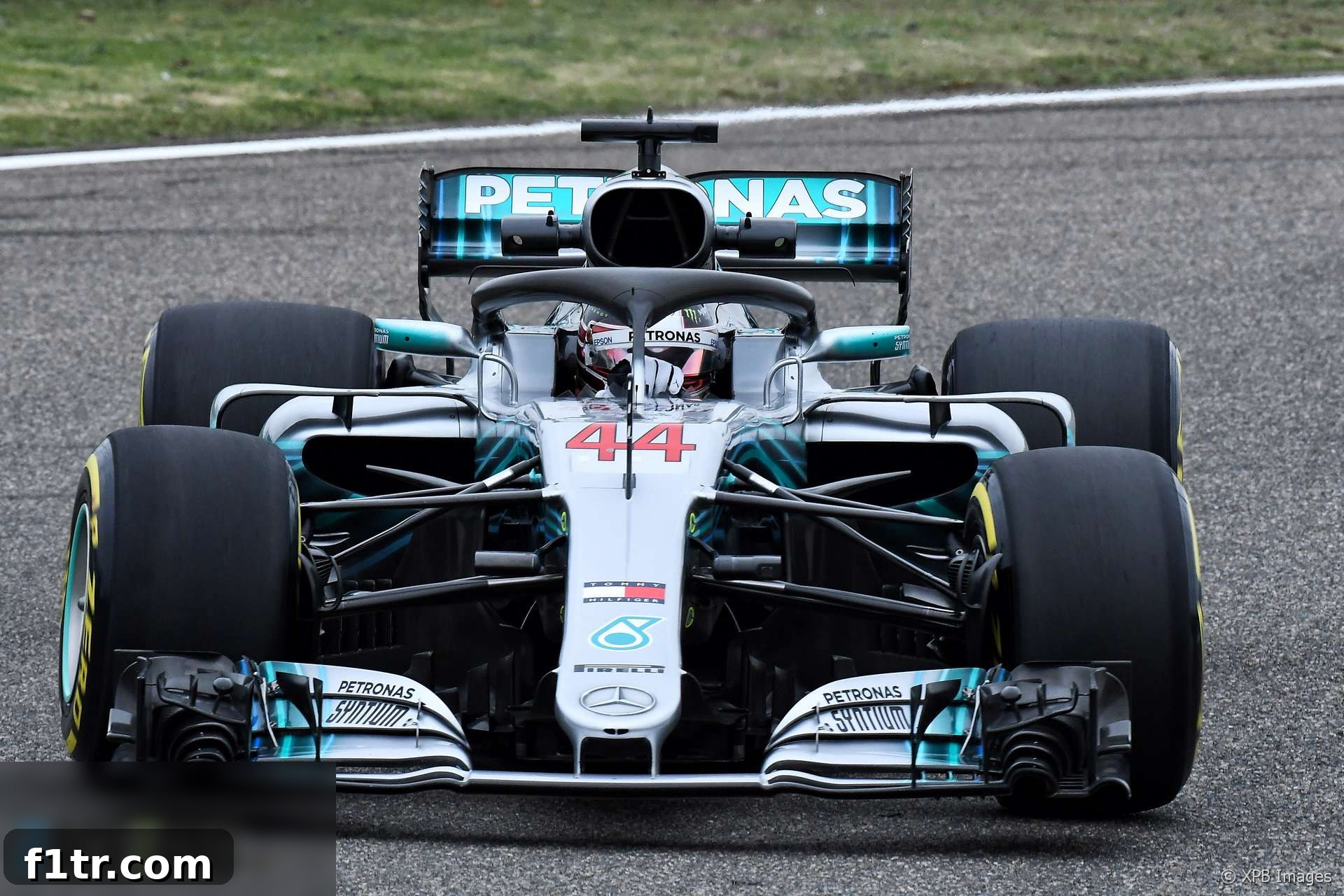
In a candid reflection following the qualifying session for the Chinese Grand Prix, Mercedes-AMG Petronas Formula 1 driver Lewis Hamilton expressed a realistic outlook on his prospects from fourth on the grid. Having secured a P4 start, the reigning world champion admitted that advancing further up the field would be a formidable challenge, emphasizing the intense competition at the pinnacle of motorsport. His comments underscored the fine margins that define success and failure in Formula 1, especially when battling for victory against formidable rivals.
Lewis Hamilton’s Chinese GP Qualifying: A P4 Challenge
The Shanghai International Circuit, renowned for its long straights and challenging corners, set the stage for another thrilling qualifying battle. Lewis Hamilton, a multiple winner at this venue, found himself starting from the second row, a position he acknowledged would be difficult to improve upon. “I’m confident I can stay where I am,” Hamilton stated, reflecting a pragmatic assessment of his pace relative to the cars ahead. However, he quickly tempered this by adding, “Moving forwards is going to be tough.” This sentiment highlighted the tight competitive landscape, particularly with both Ferrari cars occupying the front row and his teammate, Valtteri Bottas, demonstrating strong form.
Hamilton specifically pointed to the long-run pace of his competitors: “Valtteri Bottas did a good long run, the two [Ferrari] guys ahead did a long run.” This observation is crucial in Formula 1, as qualifying speed doesn’t always translate directly to race pace. Long-run simulations in practice sessions provide valuable insights into tire degradation and fuel efficiency, factors that become paramount over a Grand Prix distance. The strong showing from both Ferrari drivers and Bottas indicated a challenging race ahead for Hamilton, where strategic brilliance and relentless driving would be essential to maintain his position or, against the odds, gain ground.
The Overtaking Dilemma at Shanghai
The prospect of overtaking at the Shanghai International Circuit often sparks debate among drivers and fans alike. While the circuit boasts long straights, making it appear conducive to passing, Hamilton emphasized the significant performance differential required to execute a move. “It’s a second [performance advantage you need] to overtake here,” he explained. This substantial margin underscores the aerodynamic efficiency of modern F1 cars, which, while incredible for speed, often make it challenging to follow closely and pass without a considerable pace advantage or strategic intervention. The start of the race, therefore, loomed as the most significant opportunity for position changes, a moment often fraught with high risk and high reward. “I think the start is an opportunity,” Hamilton acknowledged, pointing to the crucial first few corners where drivers jockey for position.
Strategic Tightrope: Tire Compounds and One-Stop Races
Beyond raw pace and overtaking challenges, race strategy plays an indispensable role in Formula 1 outcomes. Hamilton expressed his skepticism about the breadth of strategic options available, primarily due to the characteristics of the Pirelli tire compounds. “On strategy, the tyres are still quite hard this year,” he remarked. Despite Pirelli’s efforts to introduce softer compounds to encourage more varied strategies, the underlying durability of the tires often leads to single-stop races. Hamilton cited a recent example: “Even with the one step softer everywhere we’re still doing one-stops. The fact that in Bahrain, such an aggressive circuit, we can still do one-stops that easily just says they’re still too hard, the tyres.”
This frustration is a recurring theme among drivers, as limited tire degradation can lead to predictable races where strategy windows are narrow. For Mercedes, a team often lauded for its strategic prowess, the lack of tire-induced variables could potentially blunt their edge. Hamilton’s observations suggested that teams would likely converge on a single optimal strategy, placing even greater emphasis on track position, clean pit stops, and raw pace rather than creative multi-stop gambits.
Ferrari’s Unsettling Pace: A Season-Defining Threat
Perhaps the most pressing concern for Lewis Hamilton and Mercedes-AMG Petronas was the disconcerting pace of their rivals, Scuderia Ferrari. The Italian team’s performance throughout the weekend had been remarkably consistent, leading Hamilton to reflect on their unexpected strength across diverse conditions. “For some reason their car is working everywhere,” he mused, highlighting a significant competitive shift. He contrasted Ferrari’s performance in Bahrain, a hot and abrasive circuit, with their speed in the cooler conditions of Shanghai.
“You go to Bahrain where it’s really hot, you would expect Ferrari to be strong but they’re even stronger than we expected. But then in the race we actually weren’t too bad which also wasn’t expected.” The unpredictability of performance swings added another layer of complexity to the championship battle. Then, moving to China, Hamilton noted, “And then we come here in the cooler conditions people expected we would be doing and their car, a bit like last year, their car works everywhere. And we’re seeing that again right now.” This suggested a fundamental strength in the Ferrari package, allowing it to adapt seamlessly to varying track temperatures and layouts, a trait that makes them a potent threat across the entire season.
Mercedes’ Struggles and Hamilton’s Resolve
While acknowledging Ferrari’s prowess, Hamilton did not shy away from admitting the challenges faced by his own team. He described his car as “wasn’t enjoyable to drive” during the qualifying session, indicating a struggle to find the optimal balance and performance window. This sentiment is rarely expressed by Hamilton, underscoring the severity of the setup issues Mercedes was grappling with. The car feeling “completely different” in FP3 without any changes being made further compounded the mystery, suggesting underlying inconsistencies that were difficult to diagnose and rectify on the fly.
“There was definitely a shock when we got into [third practice] and the car was completely different and I didn’t make any changes,” he explained. Such unforeseen shifts in car behavior can be incredibly disruptive for a driver trying to build confidence and fine-tune their approach. Despite these frustrations, Hamilton emphasized his personal commitment and discipline: “How long it’ll last, I don’t know, there’s nothing I can do, all I can do is try and do the best job I can. I’ve definitely been disciplined all week, I’ve done the best I can with the set-up.” This statement speaks volumes about his professional ethos, focusing on maximizing his own performance even when the machinery isn’t perfectly aligned with his preferences. His unwavering focus would be key to navigating the Chinese Grand Prix and extracting every ounce of performance from his Mercedes.
The Broader Narrative of the 2018 F1 Season
The Chinese Grand Prix of the 2018 season unfolded against a backdrop of an intensifying championship rivalry. Ferrari, with its unexpectedly strong and adaptable car, had signaled its intent to challenge Mercedes’ long-standing dominance. This race, coming early in the season, was crucial in setting the tone for the battles to come. Hamilton’s observations about Ferrari’s “working everywhere” car were not just isolated remarks about one event but rather an early indicator of a season-long fight. The shifts in competitive advantage between hot and cool circuits, and the struggle to understand and unlock the full potential of their respective packages, became defining characteristics of the championship narrative. For Mercedes, overcoming these challenges required deep analysis, rapid development, and strategic brilliance. The 2018 season would ultimately be a test of resilience, engineering excellence, and driver fortitude, with every point and every position fiercely contested.
Anticipating the Chinese Grand Prix Race Day
As the teams prepared for race day, the strategic landscape appeared constrained by the hardier tire compounds, making the start even more critical. Hamilton’s P4 position meant he had a clear view of the leading Ferraris, but also the pressure of Valtteri Bottas close behind. The long run down to Turn 1 at Shanghai offers a prime opportunity for slipstreaming and bold overtakes, and every driver on the grid would be keenly aware of its potential. While the difficulty of passing during the race proper was a concern, the initial scramble off the line remained a significant variable. For Hamilton, converting his P4 into a podium finish or even a victory would require a flawless start, astute tire management, and perhaps a touch of good fortune, all while battling a seemingly resurgent Ferrari.
The Chinese Grand Prix promised a captivating blend of speed, strategy, and high-stakes racing. Lewis Hamilton, despite his candid concerns, remained a formidable competitor, ready to exploit any opportunity. His reflections painted a clear picture of the immense challenges facing Mercedes, not just from the performance of their rivals but also from the evolving dynamics of tire strategy and circuit characteristics. As the lights prepared to go out, the outcome of the race would not only add another chapter to the 2018 season but also offer crucial insights into the ongoing battle for Formula 1 supremacy.
2018 F1 Season Insights
Explore More: Insights from the 2018 Formula 1 Season