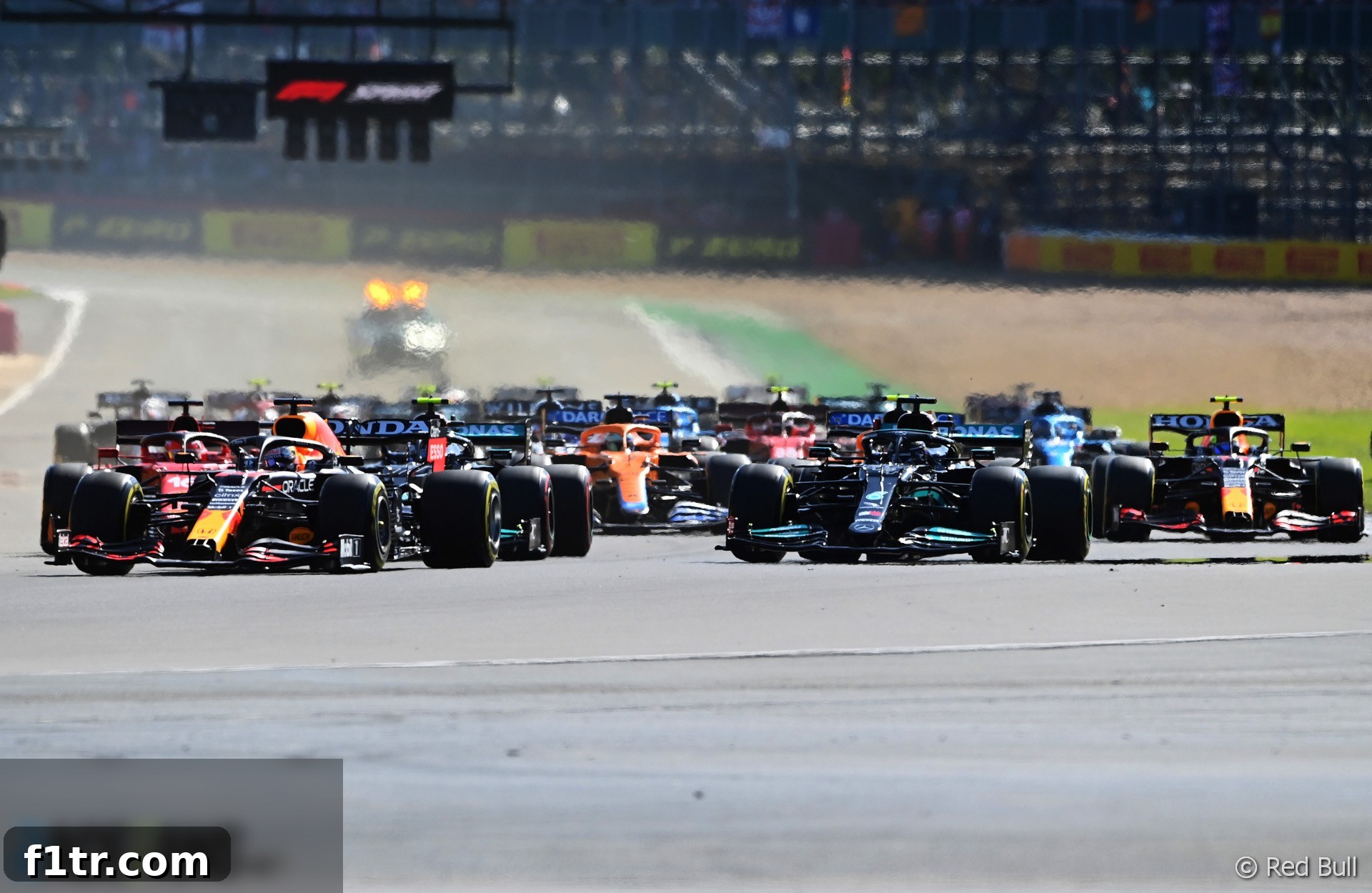
Lewis Hamilton expressed palpable disappointment after concluding the inaugural Formula 1 Sprint Qualifying race at Silverstone in second place, having been outmaneuvered off the line by his fierce championship rival, Max Verstappen.
Advert | Become a Supporter & go ad-free
The British seven-time world champion had initially electrified the home crowd by securing pole position during Friday’s traditional qualifying session, setting the stage for what many hoped would be a dominant performance. However, destiny, in the form of Verstappen’s explosive start, had other plans. Despite Hamilton’s best efforts throughout the 17-lap sprint, he was unable to reclaim the lead, ultimately finishing behind the Red Bull driver and conceding crucial championship points.
Hamilton’s Sprint Frustration and the Crucial Start
Speaking after the race, a visibly frustrated Hamilton reflected on a performance that, while solid, wasn’t the victory he had envisioned. He conveyed his regret to the legion of fans, estimated at 100,000 strong, who had gathered at Silverstone, expressing his apologies for not being able to convert his pole position into a win. “I gave it everything I had during those 17 laps,” Hamilton stated, acknowledging the immense effort put into chasing Verstappen.
Elaborating on the critical moment at the start, Hamilton explained his perspective. “I hit target on my start. It’s just not a good feeling when you lose from P1, especially at home. But we have to try and turn this negative into a positive tomorrow.” His comments underscored the fine margins at the pinnacle of motorsport, where even a perfectly executed start can sometimes be overshadowed by a rival’s superior getaway. The loss of the lead within mere meters of the starting grid effectively dictated the outcome of the short sprint event, making the importance of an instantaneous reaction paramount.
Despite the setback, Hamilton’s fighting spirit remained undimmed. “I’m grateful to have finished the race safely, and tomorrow, we’ll fight again,” he affirmed, already shifting his focus to the main event. His immediate challenge was clear: understanding and overcoming the formidable race pace and starting prowess demonstrated by the Red Bull challenger.
Red Bull’s Ascendancy: Starts and Race Pace
Hamilton didn’t mince words regarding Red Bull’s current strengths, particularly their performance off the line. “They’re just so strong in the race. He [Verstappen] was pulling away, and there was nothing I could do to hold onto him. So we’ve really got to try and be in front somehow.” This candid assessment highlights Mercedes’ struggle to match Red Bull’s outright pace in race conditions, a recurring theme throughout the intense 2021 season. The aerodynamic efficiency and raw power delivery of the Red Bull package have consistently given Verstappen an edge, especially on circuits where track position and straight-line speed are paramount.
The Mercedes driver believes that Red Bull has made significant strides with their starts this season, a domain where Mercedes previously held a notable advantage. “They’ve done a great job with their engine, their starts are really great this year,” Hamilton observed. “We’ve lost a bit of performance on our start, so we’ve got to work a bit harder to try and improve that because losing positions right at the beginning is never a great thing, especially in such a short race format.” This tactical analysis points to the constant development battle between the two top teams, where even fractional improvements in one area can translate into decisive gains on track. The ability to manage tire degradation, optimize pit stops, and execute flawless starts will be crucial in the upcoming Grand Prix.
Championship Implications and the Grand Prix Ahead
Verstappen’s victory in the sprint race extended his lead over Hamilton in the Drivers’ Championship by an additional point, a small but significant gain in what promised to be one of the most tightly contested seasons in recent memory. While the sprint itself awarded fewer points than a traditional Grand Prix, every single point was vital in the high-stakes battle. However, the structure of the weekend’s new format meant that Hamilton had an immediate opportunity for redemption in Sunday’s British Grand Prix, where the true spoils of victory awaited.
“I wish we could redo the start again,” Hamilton mused, a sentiment undoubtedly shared by many Mercedes strategists. “Luckily, we have it tomorrow, and that’s where the real fight begins.” The sprint race served as a crucial warm-up, offering valuable data and insights into race pace, tire wear, and strategic options for the main event. Both teams would spend the intervening hours meticulously analyzing every detail to gain a fractional advantage for Sunday.
F1’s Sprint Experiment: A Developing Perspective
Despite his personal disappointment with the sprint result, Hamilton offered a remarkably positive appraisal of Formula 1’s experimental new format. This stood in contrast to his earlier pre-weekend reservations, where he had publicly expressed pessimism about the sprint’s potential for success, suggesting it might become a mere “procession.”
“I don’t know how it was to watch for the fans, but from inside the cockpit, I think this weekend has been awesome,” Hamilton said, his view evolving significantly. “Yesterday was such a fun day to have qualifying on the Friday, way more enjoyable.” His endorsement of Friday qualifying highlighted a desire for more dynamic and engaging weekend structures. The traditional format often left Friday practice sessions feeling less impactful for spectators, whereas moving qualifying forward immediately injected high-stakes drama into the start of the race weekend.
He continued, “I don’t know whether that was the most exciting race or not, but we should do more like that, maybe a different version of it in future, because this makes the weekend more enjoyable, I think.” Hamilton’s constructive feedback suggests that while the current sprint format might need refinement, the core idea of experimenting with the weekend structure holds merit. The aim is to create more competitive sessions, increase spectator engagement, and introduce elements of unpredictability that can challenge teams and drivers alike. The debate around the ideal sprint format, including aspects like reverse grids or different point structures, would undoubtedly continue, but Hamilton’s post-race comments provided a significant boost to the concept’s long-term viability.
The Iconic Silverstone Stage
Silverstone, the spiritual home of British motorsport and a circuit steeped in history, provided a fitting backdrop for this groundbreaking moment in Formula 1. Its fast, sweeping corners and challenging layout demand precision and bravery from drivers. For Lewis Hamilton, racing at Silverstone is always a special occasion, an opportunity to perform in front of an adoring home crowd that has witnessed many of his career milestones. The atmosphere generated by the passionate British fans adds an extra layer of pressure and motivation, making any setback, even in a sprint race, feel particularly poignant.
The F1 Sprint experiment at Silverstone was more than just a trial run; it was a testament to Formula 1’s ongoing quest to innovate and enhance the spectacle for a global audience. While the results might not have favored Hamilton on this particular Saturday, the stage was now perfectly set for a dramatic main event on Sunday, promising an enthralling battle between the championship’s leading protagonists.
Anticipation for the Main Event: Strategy and Redemption
As the teams prepared for Sunday’s British Grand Prix, the sprint race offered a tactical preview. The grid for the main race would now be set according to the sprint results, meaning Verstappen would start from pole, with Hamilton alongside him on the front row. This positioning immediately heightened the stakes, ensuring another direct confrontation from the very first corner. Both Mercedes and Red Bull would analyze the sprint’s data meticulously, scrutinizing tire degradation, fuel consumption, and potential overtaking zones.
The longer distance of the Grand Prix, coupled with mandatory pit stops and a wider array of tire strategies, promised a far more complex and dynamic race. Hamilton, known for his relentless pursuit and strategic brilliance in longer races, would be eager to exact his revenge and reclaim the advantage. The capacity crowd, having witnessed the initial skirmish, would now be on the edge of their seats, anticipating a full-scale championship battle where every decision, every overtake, and every lap would be critical. The 2021 British Grand Prix was shaping up to be an unforgettable chapter in a season already rich with drama and intense rivalry.
Advert | Become a RaceFans supporter andgo ad-free
2021 British Grand Prix Related Articles
- Verstappen reveals “vision problems” since 2021 Silverstone crash with Hamilton
- Who was to blame for Verstappen and Hamilton’s collision at Silverstone?
- Hamilton penalty “harsh” for move within FIA’s overtaking guidance – Allison
- Why Hamilton “wasn’t seen as wholly to blame” for the Verstappen crash
- Sainz convinced he had pace to challenge for podium without British GP setbacks
Browse all 2021 British Grand Prix articles