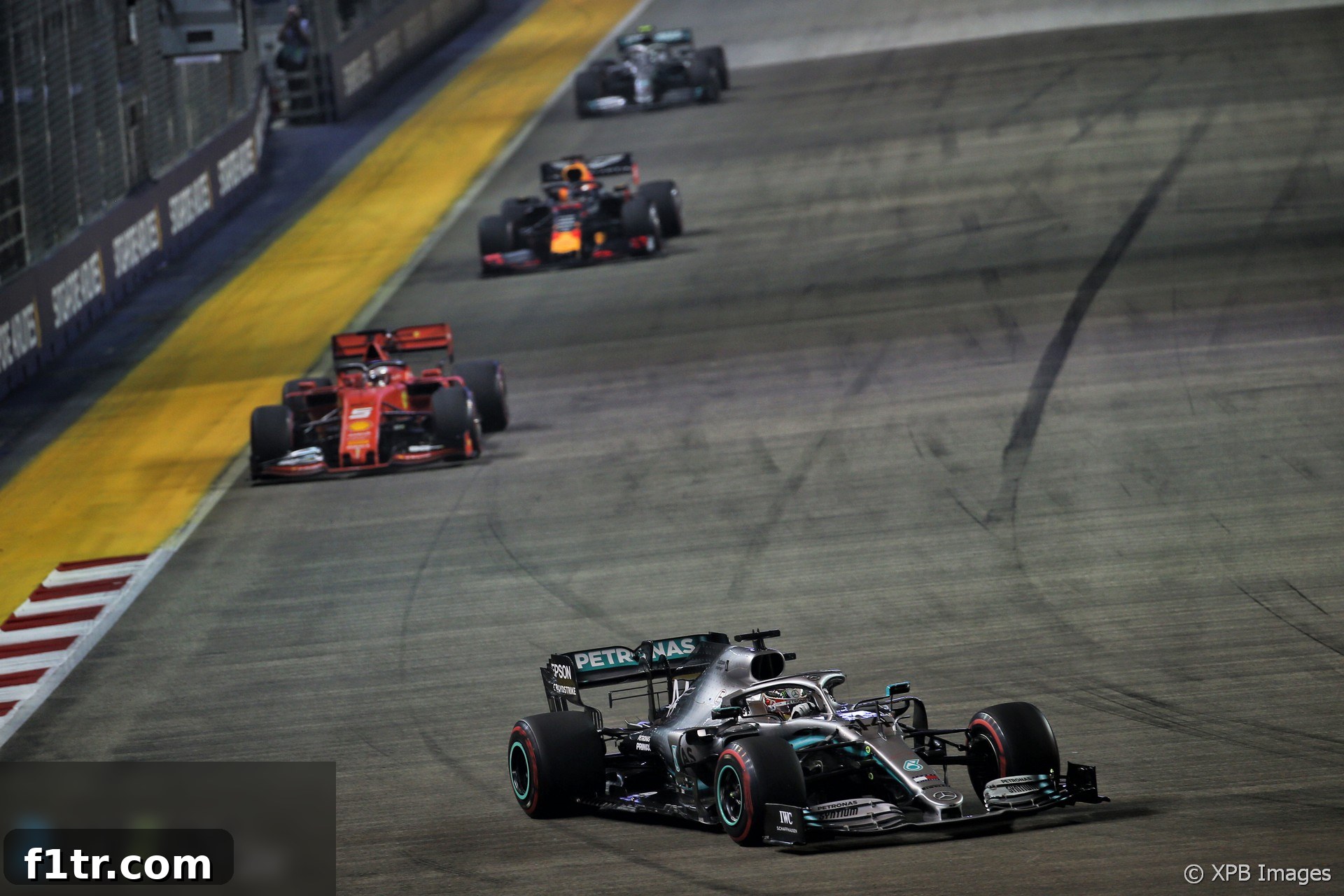
F1 Drivers and Constructors Championships: A Deep Dive After the 2019 Singapore Grand Prix
The 2019 Formula 1 season delivered intense competition and strategic battles, with the Singapore Grand Prix proving to be a pivotal race in both the Drivers’ and Constructors’ Championships. As the season moved into its final stages, the Marina Bay Street Circuit presented a unique challenge, under the floodlights, setting the stage for unexpected outcomes and significant shifts in the standings. This comprehensive review breaks down the championship situation for both drivers and teams immediately following the dramatic events in Singapore, offering a detailed look at who stood where and what it meant for the remainder of the season.
Lewis Hamilton, piloting the dominant Mercedes, had built a substantial lead in the drivers’ championship, showcasing a masterclass of consistency and speed throughout the season. However, the chasing pack, led by his teammate Valtteri Bottas, and the resurgent Ferrari and Red Bull drivers, kept the pressure high. The Singapore Grand Prix itself was a race of strategic intrigue, where Ferrari unexpectedly secured a memorable 1-2 finish, adding a fresh dynamic to the championship narratives. This result was not just a victory but a statement, particularly for Sebastian Vettel, who claimed his first win of the season amidst growing scrutiny. Meanwhile, the constructors’ battle saw Mercedes maintain a formidable lead, yet Ferrari’s recent uplift injected renewed hope for challenging their supremacy in the remaining races. The midfield, as always, provided some of the most exciting on-track action, with teams like McLaren and Renault vying for crucial points, highlighting the depth of talent across the grid.
F1 Drivers’ Championship: The State of Play After Singapore
Following the captivating action under the Singapore lights, the F1 Drivers’ Championship picture took on clearer contours, even as some battles remained incredibly tight. Lewis Hamilton, despite not winning in Singapore, still held a commanding lead, a testament to his consistent performance and the formidable package provided by Mercedes-AMG Petronas Motorsport. His strategic approach and ability to extract maximum performance week in, week out had positioned him firmly at the top.
Valtteri Bottas, Hamilton’s teammate, occupied a solid second place, playing a crucial role in Mercedes’ constructors’ campaign. While his personal championship aspirations had dwindled, his points contribution was vital. The real fight for third place, however, was a nail-biting affair between two of Formula 1’s brightest young stars: Charles Leclerc of Ferrari and Max Verstappen of Red Bull Racing. Both drivers were locked in a tie for points after Singapore, showcasing their exceptional talent and fighting spirit. Leclerc had been on a sensational run, securing back-to-back victories before Singapore and demonstrating Ferrari’s newfound pace. Verstappen, with his aggressive driving style and Red Bull’s strong chassis, was a constant threat, often punching above his car’s weight.
Sebastian Vettel’s victory in Singapore was a significant moment for the four-time world champion. It was his first win of the 2019 season and came at a critical juncture, boosting his confidence and proving his enduring class. This result propelled him to fifth in the standings, closing the gap to the younger generation ahead of him. The midfield battle remained as fierce as ever, with drivers like Pierre Gasly (who had recently moved from Red Bull to Toro Rosso), Carlos Sainz Jnr of McLaren, and Alexander Albon (who replaced Gasly at Red Bull) consistently scoring points and making headlines. Sainz, in particular, was enjoying a stellar season with McLaren, proving to be a revelation for the British outfit.
Further down the order, a host of seasoned veterans and promising rookies fought for every available point. Daniel Ricciardo, despite Renault’s inconsistent form, demonstrated flashes of brilliance, while Daniil Kvyat and Nico Hulkenberg found themselves tied on points, highlighting the competitiveness even outside the top teams. Lando Norris, Sainz’s teammate at McLaren, and Kimi Raikkonen for Alfa Romeo, also contributed valuable points, demonstrating their ability to capitalize on opportunities. The lower end of the grid saw drivers like Sergio Perez, Lance Stroll, Kevin Magnussen, Romain Grosjean, Antonio Giovinazzi, and Robert Kubica valiantly battling, with Kubica notably securing the solitary point for Williams, underscoring the monumental challenge faced by the struggling team. George Russell, despite impressive qualifying performances, had yet to score, reflecting Williams’ car performance limitations.
F1 Drivers’ Championship Standings After the 2019 Singapore Grand Prix
| Position | Driver | Total Points |
|---|---|---|
| 1 | Lewis Hamilton | 296 |
| 2 | Valtteri Bottas | 231 |
| 3 | Charles Leclerc | 200 |
| 3 | Max Verstappen | 200 |
| 5 | Sebastian Vettel | 194 |
| 6 | Pierre Gasly | 69 |
| 7 | Carlos Sainz Jnr | 58 |
| 8 | Alexander Albon | 42 |
| 9 | Daniel Ricciardo | 34 |
| 10 | Daniil Kvyat | 33 |
| 10 | Nico Hulkenberg | 33 |
| 12 | Lando Norris | 31 |
| 12 | Kimi Raikkonen | 31 |
| 14 | Sergio Perez | 27 |
| 15 | Lance Stroll | 19 |
| 15 | Kevin Magnussen | 19 |
| 17 | Romain Grosjean | 8 |
| 18 | Antonio Giovinazzi | 4 |
| 19 | Robert Kubica | 1 |
| 20 | George Russell | 0 |
Advert | Become a RaceFans supporter andgo ad-free
F1 Constructors’ Championship: Team Dynamics and Battles
The Constructors’ Championship is often seen as the truest measure of a team’s overall performance, encompassing car design, engine power, strategy, and driver capabilities. After the 2019 Singapore Grand Prix, the hierarchy was well-established at the top, but exciting battles continued to unfold throughout the grid.
Mercedes-AMG Petronas Motorsport maintained a seemingly unassailable lead in the constructors’ standings. Their consistent performance, reliability, and the combined talent of Lewis Hamilton and Valtteri Bottas had allowed them to rack up an impressive points tally. Their focus was clearly shifting towards wrapping up another championship title, a testament to their engineering prowess and operational excellence.
Ferrari, however, had shown a significant resurgence, particularly in the races leading up to and including Singapore. Their 1-2 finish at Marina Bay was a huge boost, demonstrating that their car had found its stride, especially on power-sensitive circuits and those requiring strong traction. This improved form helped them consolidate their second position, putting some distance between themselves and third-placed Red Bull Racing. The internal competition between Charles Leclerc and Sebastian Vettel, while intense, ultimately served to push the team forward.
Red Bull Racing, powered by Honda, occupied a strong third place. Max Verstappen’s stellar performances were the backbone of their points haul, frequently challenging the Mercedes and Ferraris. The team’s chassis was often lauded for its aerodynamic efficiency, and the progress of the Honda power unit was a major storyline of the season, promising an even stronger challenge in future years. Alexander Albon’s integration into the team following his mid-season swap with Pierre Gasly added another layer to their strategic considerations.
The fight for ‘best of the rest’ in the midfield was incredibly tight and provided some of the most compelling narratives. McLaren, with their revitalized performance and dynamic driver pairing of Carlos Sainz Jnr and Lando Norris, had emerged as the clear leaders of the midfield pack. Their consistent points finishes positioned them comfortably in fourth, a significant improvement from previous seasons and a sign of their promising future. Renault, despite their ambitions, found themselves struggling to match McLaren’s pace, sitting in fifth. Their season was marked by flashes of speed but also by frustrating inconsistencies.
Toro Rosso, Red Bull’s sister team, continued to punch above their weight, often capitalizing on opportunities and benefiting from the strong performances of Daniil Kvyat and Pierre Gasly (before and after his move). Racing Point and Alfa Romeo were locked in a close battle for points, with both teams showing glimpses of potential but struggling for consistent top-ten finishes. Haas, despite a strong engine package, had a perplexing season with their car often underperforming, leading to frustrations within the team. Finally, Williams, with their solitary point, faced immense challenges throughout the year, highlighting the stark realities of competition in Formula 1.
F1 Constructors’ Championship Standings After the 2019 Singapore Grand Prix
| Position | Team | Total Points |
|---|---|---|
| 1 | Mercedes | 527 |
| 2 | Ferrari | 394 |
| 3 | Red Bull | 289 |
| 4 | McLaren | 89 |
| 5 | Renault | 67 |
| 6 | Toro Rosso | 55 |
| 7 | Racing Point | 46 |
| 8 | Alfa Romeo | 35 |
| 9 | Haas | 27 |
| 10 | Williams | 1 |
Advert | Become a RaceFans supporter andgo ad-free
The 2019 Singapore Grand Prix: A Race of Strategy and Surprise
The 2019 Singapore Grand Prix delivered an exhilarating night race that defied pre-race predictions and significantly impacted the championship narratives. Ferrari, having shown strong pace in qualifying, managed to convert their potential into a stunning 1-2 finish. Sebastian Vettel, starting third, expertly managed his tyres and strategy to emerge ahead of teammate Charles Leclerc, who had started from pole. This victory was particularly sweet for Vettel, marking his first win in over a year and providing a much-needed morale boost for both him and the Scuderia. It was Ferrari’s first hat-trick of wins in more than a decade, underscoring their impressive turnaround in form.
The race was not without its strategic intricacies and talking points. Mercedes, typically dominant, found themselves on the back foot. Lewis Hamilton, despite a strong qualifying, struggled to find the ultimate pace required for victory, finishing fourth. There were also strategic discussions within Mercedes, with reports suggesting that Valtteri Bottas was slowed to protect Hamilton from Alexander Albon, highlighting the team-first approach. Red Bull’s Max Verstappen completed the podium, demonstrating his unwavering determination and the car’s competitive edge on the challenging street circuit.
Beyond the top three teams, the midfield battle was equally captivating. Drivers like Lando Norris delivered strong performances, showcasing their talent and securing valuable points for their respective teams. The unique nature of the Singapore circuit, with its demanding conditions and high probability of safety cars, often led to unexpected results and strategic gambles, keeping fans on the edge of their seats until the very end. This particular Grand Prix served as a stark reminder that in Formula 1, strategy and execution on race day can sometimes override raw pace, creating moments of pure racing theatre.
2019 Singapore Grand Prix Related Articles and Insights
Dive deeper into the thrilling action and expert analysis of the 2019 Singapore Grand Prix with our curated selection of articles, offering various perspectives on the race’s most significant moments and standout performances:
- Top ten pictures from the 2019 Singapore Grand Prix
- 2019 Singapore Grand Prix Star Performers
- Vettel lights up Singapore again as Ferrari keep Leclerc in the dark
- Ferrari score first hat-trick of wins for more than a decade
- Mercedes slowed Bottas to protect Hamilton from Albon
Browse all 2019 Singapore Grand Prix articles