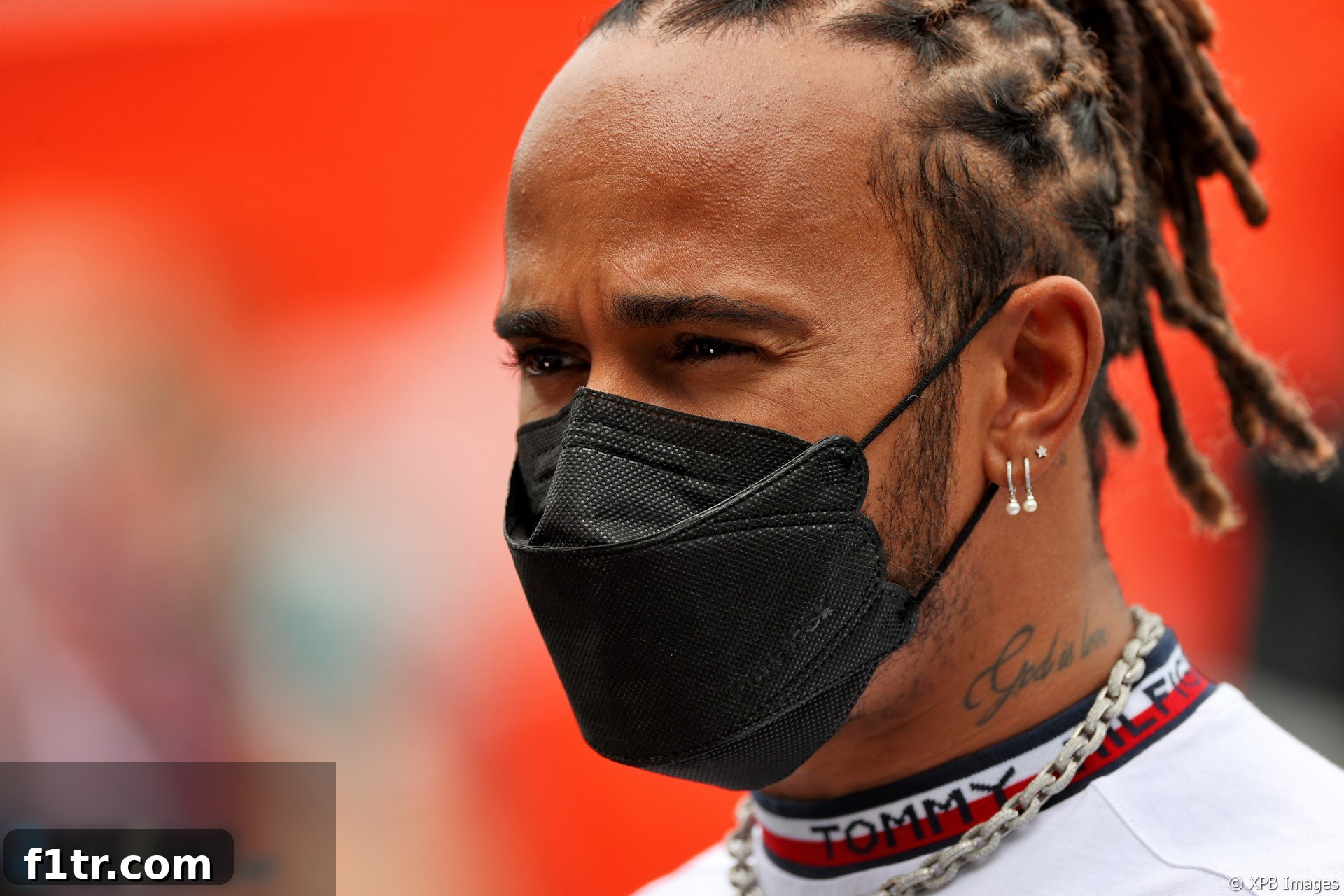
In a surprising turn of events that underscores the relentless and often secretive world of Formula 1 development, seven-time world champion Lewis Hamilton has acknowledged his prior knowledge of an impending upgrade for Mercedes’ 2021 car, the W12, despite earlier public statements suggesting otherwise. This admission came amidst intense scrutiny following a challenging Styrian Grand Prix, where Hamilton finished second to his fierce championship rival, Max Verstappen, and the dominant Red Bull Racing team.
Just days before his revelation, Hamilton had expressed a public longing for performance improvements, stating, “We need an upgrade of some sort to close the gaps to our rivals.” He added, perhaps strategically, “We would love an upgrade, but I don’t think it’s in the pipeline at the moment.” These comments naturally sparked concern among Mercedes fans and fueled speculation about the Silver Arrows’ ability to combat Red Bull’s seemingly superior pace in the early part of the season. However, the narrative shifted dramatically when Mercedes’ chief technical officer, James Allison, confirmed the imminent arrival of new parts for their car, prompting Hamilton’s subsequent clarification.
Speaking to the media at the Red Bull Ring, the venue for the upcoming Austrian Grand Prix, Hamilton directly addressed his previous remarks. “I knew that we had that upgrade coming,” he admitted, cutting through the prior ambiguity. He elaborated on the immense effort behind the scenes at Mercedes, highlighting the collective drive for improvement. “At the end of the day, everyone is working absolutely flat-out. We’re learning more and more about this car. We’re discovering more things – where we need to push more and extract more and I have all the confidence in the team that we will do over the course of time.” This statement provided a vital glimpse into the meticulous and continuous development process that underpins success in Formula 1, where every fraction of a second is meticulously chased through engineering innovation and data analysis.
The strategic nature of such public statements in F1 cannot be underestimated. Teams often employ a degree of secrecy around car development to avoid giving rivals an advantage or to manage expectations. Hamilton’s initial comments, while seemingly downplaying immediate upgrades, could have been a deliberate tactic to deflect pressure or keep competitors guessing. His later admission, once the news was confirmed by a technical authority within the team, illustrates the delicate balance between transparency and competitive advantage that teams and drivers must constantly navigate.
Beyond the upgrades, Mercedes has been actively exploring different avenues to unlock performance from their W12. At the preceding Styrian Grand Prix, the team experimented with what they internally referred to as a “wacky” set-up direction. This unconventional approach was born out of extensive work Hamilton himself conducted in the team’s sophisticated driver-in-the-loop simulator. The simulator is a crucial tool in modern F1, allowing drivers to virtually test new parts, explore different car setups, and learn track characteristics without the cost and logistical challenges of real-world testing. It provides invaluable data that engineers use to refine car performance, predict behavior, and identify optimal configurations for various circuits.
Hamilton has, on several occasions, openly confessed his lack of enthusiasm for simulator work, often finding the repetitive and artificial nature of the environment less engaging than actual track time. “I still wasn’t necessarily enjoying it at the moment,” he candidly admitted regarding his recent simulator sessions. Despite this personal preference, his dedication to the team’s performance overrides his discomfort. “But particularly after those few difficult races we had, I went in to try and see if there’s any way I can try and help the team be better prepared.” This highlights the immense commitment required from a top-tier F1 driver, pushing past personal preferences for the collective good of the team and the pursuit of championship glory.
The outcome of his simulator efforts, while not “life-changing,” as he put it, has been largely positive. “I think there’s been a couple of good things from it, but not life-changing, and so I’ll continue to work with it,” Hamilton explained. He also shed light on the collaborative effort involving dedicated simulator drivers and the importance of streamlined communication. “We’ve got drivers in there who do a lot of work, just working on the processes of how we communicate with them on their programme so we’re getting the right things tested. So I think overall it’s been positive.” This intricate interplay between simulator drivers, race drivers, and engineering teams is fundamental to modern F1 car development, ensuring that virtual insights translate effectively into real-world performance gains.
The championship narrative adds another layer of intrigue to Mercedes’ ongoing efforts. Having fallen 18 points behind Max Verstappen in the drivers’ standings, Hamilton faces one of his toughest challenges in recent memory. Yet, true to his character, he remains remarkably unfazed by the current points deficit. “We’re all pushing as hard as we can. Of course, we’d love to have more pace at the moment to be able to really challenge not only within qualifying but the race,” he acknowledged, recognizing Red Bull’s undeniable strength.
However, Hamilton’s vast experience and mental fortitude shine through in his approach to the championship battle. “Obviously, they’re continuing to take steps forward. But I can’t get tied up and get into that negative bubble of worrying,” he asserted. This philosophy of maintaining a positive mindset and channeling energy into constructive action has been a hallmark of his illustrious career. Instead of succumbing to pressure or frustration, Hamilton focuses on what he can control: “All I can do right now is put all that energy into making sure I’m best prepared, helping the engineers be better prepared, lots of great conversations.”
His confidence in Mercedes’ ability to rebound is unwavering, rooted in years of shared success and collective resilience. “This is the time when we just come together and unite and work as hard as we can to rectify whatever issues we have. That’s what we do, that’s why we’re world champions and I have confidence in the team that we can do that,” Hamilton declared. This unwavering belief in his team’s capabilities speaks volumes about the strong bond and culture of excellence fostered within Mercedes-AMG Petronas F1 Team. Their track record, including an unprecedented eight consecutive constructors’ championships, stands as a testament to their ability to overcome adversity and consistently deliver at the highest level of motorsport.
The 2021 season has proven to be an exhilarating rollercoaster, marking a genuine and intense rivalry not seen in Formula 1 for many years. The dynamic battle between Lewis Hamilton and Max Verstappen, and between Mercedes and Red Bull, has captivated fans worldwide. Every race weekend becomes a pivotal chapter in this unfolding drama, with tiny gains or losses having significant implications for the championship outcome. The upcoming upgrades, Hamilton’s continued commitment to simulator work, and the team’s collective drive to improve suggest that Mercedes is far from surrendering their title defense. The championship fight is poised to intensify, promising more thrilling twists and turns as the season progresses.
2021 Austrian Grand Prix
- Vasseur on Alfa’s “huge step forward” and why he’s vexed by technical directives
- How Ricciardo “got some enjoyment back” after “really low” first race in Austria
- F1’s penalty points are not “harsh” and won’t be reviewed this year – Masi
- Austrian double showed Sainz found his feet faster than 2021’s other big-name moves
- 2021 Austrian Grand Prix Star Performers
Browse all 2021 Austrian Grand Prix articles