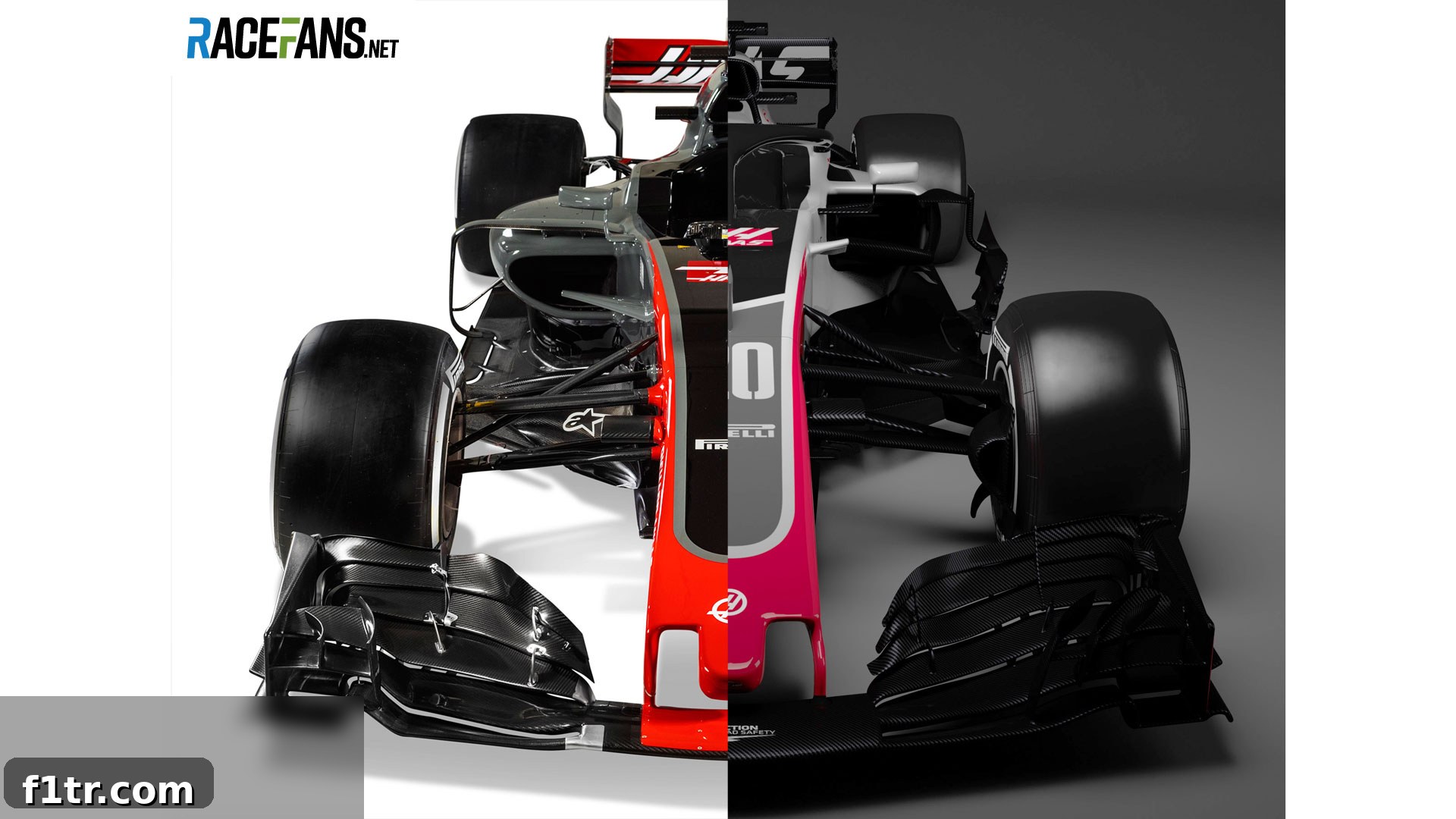
The dawn of a new Formula 1 season always brings with it a wave of excitement, none more so than with the highly anticipated car reveals. Haas F1 Team, in particular, generated considerable buzz with the initial unveiling of their 2018 contender, the VF-18. While the team was careful to offer only a glimpse through its first official images, enough details emerged to highlight significant evolutionary steps from its predecessor, the VF-17, and even more starkly, from the 2016 VF-16 model referenced in the original comparison. This detailed analysis delves into the most striking visual and conceptual differences, offering an in-depth look at how Haas approached the challenging 2018 regulations and sought to leverage its unique technical partnership with Ferrari.
The introduction of the VF-18 was not just about aesthetics; it was a clear statement of intent from the American team, signaling their ambition to solidify their position in the highly competitive midfield. The subtle shifts in design philosophy, particularly evident when contrasting it with earlier iterations, speak volumes about the relentless pursuit of aerodynamic efficiency and performance gains that define Formula 1. These interactive comparisons, while illustrative and not for precise measurement, serve as an invaluable tool for fans and analysts alike to appreciate the intricate engineering evolution year-on-year.
Utilize the dynamic slider functionality below to seamlessly transition between detailed views of Haas’s impressive new 2018 VF-18 and its predecessor, the 2016 VF-16. Please note that certain images may have been digitally adjusted or cropped to facilitate clearer visual comparisons and should therefore not be relied upon for exact dimensional or scale references. This tool is designed purely for illustrating design philosophy and evolutionary changes.
Front View: A Symphony of Aerodynamic Complexity
The most immediately apparent and arguably the most aerodynamically critical change on the VF-18’s front end is its significantly more intricate and sophisticated front wing. Compared to the relatively simpler designs of previous seasons, the 2018 wing on the VF-18 is a marvel of multi-element engineering. Modern Formula 1 front wings are not merely about generating downforce directly; they are the initial point of contact for the airflow, meticulously sculpted to condition the air that then travels over, under, and around the rest of the car. This intricate design suggests Haas has invested heavily in understanding and manipulating airflow, aiming to optimize the car’s overall aerodynamic performance, reduce drag, and more effectively manage the turbulent wake generated by the front tires – a crucial factor in achieving consistent performance.
The complexity of the front wing typically involves a cascade of precisely angled elements, endplates designed to create specific vortex structures, and intricate slot gaps. Each of these components works in concert to direct airflow towards key areas like the bargeboards, sidepods, and eventually, the rear diffuser. A more refined front wing often indicates a deeper understanding of the entire car’s aerodynamic package, suggesting a more cohesive and aggressive approach to performance development for the 2018 season. This level of detail is a clear indicator that Haas is maturing as a team, moving beyond simpler designs to embrace cutting-edge aerodynamic principles.
Further back, but no less significant, is the introduction of the Halo cockpit protection device. Mandatory for the 2018 season across all F1 cars, the Halo represents a monumental shift in driver safety. Its robust, three-pronged titanium structure is designed to deflect large debris and prevent head injuries, a direct response to tragic incidents in motorsport. While initially met with mixed reactions regarding its aesthetic impact and potential obstruction of driver visibility, its primary purpose is paramount. On the VF-18, as with all other cars on the grid, the Halo is an unavoidable and immediately obvious addition, fundamentally altering the visual profile of the single-seater from the driver’s perspective upwards. Teams had to ingeniously integrate this structure into the chassis without compromising aerodynamic performance or adding excessive weight, a challenge Haas appears to have tackled effectively.
Side View: Ferrari’s Influence and Aerodynamic Innovation
Turning our attention to the side profile of the VF-18 reveals a compelling narrative of technical collaboration and strategic design adaptation. The influence of Haas’s technology sharing arrangement with Ferrari is strikingly evident, particularly in the design of the sidepods. Ferrari made significant strides in the 2017 season with a groundbreaking sidepod concept that proved highly effective, earning them praise and a competitive edge. This pioneering design, characterized by its tightly packaged, high-waisted, and undercut profile, is clearly reflected in the new Haas VF-18.
Ferrari’s 2017 sidepod philosophy centered on maximizing the undercut beneath the sidepod body, allowing more clean, high-energy airflow to pass towards the rear of the car, particularly benefiting the diffuser and the rear wing. This creates more efficient downforce and reduces drag. By adopting a similar design, Haas aims to replicate these aerodynamic advantages. The tightly sculpted bodywork around the engine and cooling elements is a testament to sophisticated packaging and a deep understanding of airflow management around the car’s mid-section. This strategy, enabled by their technical partnership, allows Haas to leverage Ferrari’s extensive research and development without having to start from scratch, offering a significant performance shortcut and cost efficiency.
Beyond the sidepods, the intricate array of aerodynamic furniture surrounding them – including bargeboards, turning vanes, and floor edges – works in conjunction to manage airflow. These components are critical in sealing the underfloor, preventing turbulent air from entering the crucial area beneath the car and ensuring the diffuser operates at maximum efficiency. The VF-18’s side profile indicates a concerted effort to create a stable and powerful aerodynamic platform, channeling air effectively to optimize rear downforce and stability.
The collaboration extends to the power unit. As Haas will continue to utilize the current-specification Ferrari power unit, the design of the rear end of the VF-18 may offer intriguing hints about the packaging solutions that the 2018 Ferrari factory car, the SF71H, might adopt. While Haas benefits from a proven, powerful engine and hybrid system, a works team like Ferrari possesses a distinct advantage. Ferrari has greater opportunity and resources to integrate the engine, turbocharger, energy recovery systems (ERS), and ancillary components more effectively and compactly within the chassis. This allows for a more aggressive and aerodynamically optimized rear bodywork, which can translate into superior overall performance and a smaller aerodynamic footprint. Nonetheless, Haas’s seamless integration of the Ferrari power unit components into its own chassis design demonstrates a high level of engineering capability and a strong working relationship with its technical partner.
The 2018 season was a period of intense aerodynamic development and regulation adaptation. The design choices made by Haas with the VF-18, particularly regarding the front wing and sidepods, were crucial for their performance. These elements, combined with the mandatory Halo, fundamentally shaped the car’s identity. The team’s philosophy of outsourcing non-aerodynamic elements and focusing internal resources on understanding and optimizing airflow, particularly with Ferrari’s intellectual property as a foundation, positioned them uniquely on the grid. This approach allowed them to quickly adapt to new regulations and produce a competitive package right out of the box, often surprising larger, more established teams.
Experience RaceFans Ad-Free: Become a Supporter Today!>> Discover the benefits and join our community
Related Coverage: Exploring the 2018 F1 Season and Beyond
To further contextualize the advancements seen in the Haas VF-18 and the broader landscape of Formula 1 during that era, explore these insightful articles from the 2018 F1 season and related topics:
- F1 feared “death knell” for Drive to Survive after Ferrari and Mercedes snub
- McLaren staff told us we were “totally crazy” to take Honda engines in 2018 – Tost
- ‘It doesn’t matter if we start last’: How Red Bull’s junior team aided Honda’s leap forward
- Honda’s jet division helped F1 engineers solve power unit problem
- McLaren Racing losses rise after Honda split
Browse all articles covering the thrilling 2018 F1 season