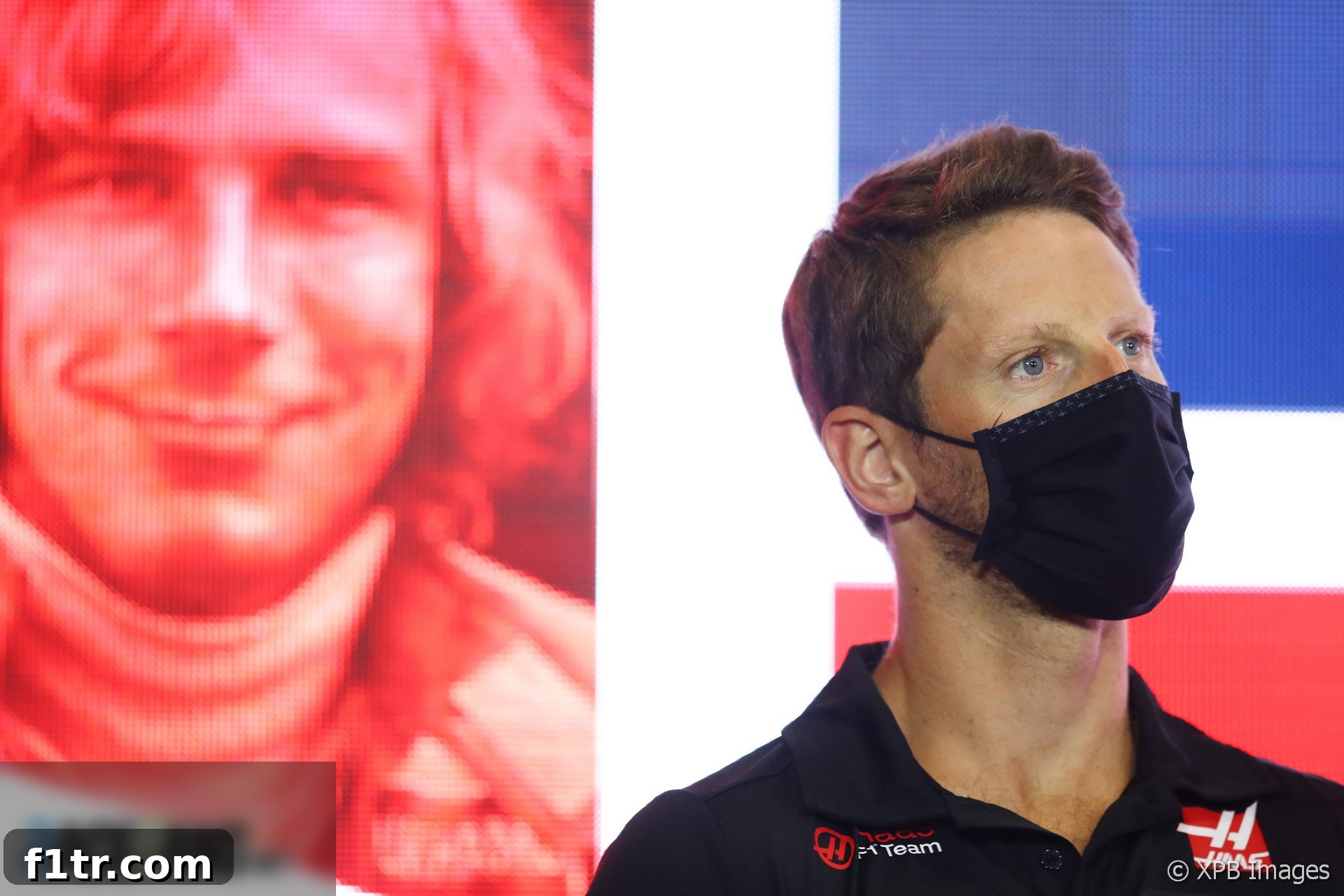
Romain Grosjean and Lewis Hamilton Clear the Air Over F1’s Anti-Racism Stance
In a candid and revealing development within Formula 1, Romain Grosjean has confirmed a crucial conversation with Mercedes-AMG Petronas F1 Team driver Lewis Hamilton. The extensive dialogue was held to address and resolve a public disagreement stemming from Hamilton’s accusations that Grosjean had not adequately supported efforts to organize a consistent anti-racism ceremony before the Hungarian Grand Prix. This incident brought into sharp focus the diverse perspectives within the sport regarding collective social statements and the challenges of ensuring unified action amidst a global movement.
Advert | Become a Supporter & go ad-free
The Controversy Unfolds: Hamilton’s Concerns After Hungary
The origins of the misunderstanding trace back to the aftermath of the Hungarian Grand Prix, where Lewis Hamilton, a leading voice in Formula 1’s push for diversity and inclusion, expressed his disappointment. Speaking to reporters, Hamilton criticized what he perceived as a wavering commitment to repeating the impactful anti-racism protest witnessed at the season’s inaugural race in Austria. He specifically cited Grosjean’s stance, remarking, “He’s one of them that thinks it was done once and that’s all we need to do.” This comment quickly resonated through the F1 community, prompting debate about the drivers’ collective responsibility and the sincerity of the sport’s “We Race As One” initiative.
The “We Race As One” platform, launched by Formula 1 and the FIA, aimed to unite the sport against racism and discrimination, fostering a more inclusive environment. Key elements included drivers wearing “End Racism” t-shirts and taking a knee on the grid before races. While the initial spectacle in Austria saw a majority of drivers participating in the kneeling gesture, subsequent events revealed a less uniform approach, sparking concerns from Hamilton and others about diluted messaging and inconsistent solidarity.
Grosjean’s Role as GPDA Director: Balancing Driver Views
During a subsequent FIA press conference, Romain Grosjean, a director of the Grand Prix Drivers’ Association (GPDA), offered his perspective on the events. He explained that a group of “seven or eight drivers” had voiced their discomfort with simply replicating the exact ceremony from the Austrian Grand Prix. As a representative within the GPDA, a body dedicated to promoting the interests and safety of F1 drivers, Grosjean felt it was his duty to convey these diverse opinions during their internal meetings. The GPDA serves as an essential forum for drivers to discuss collective issues, ranging from safety protocols to their involvement in social initiatives.
Grosjean’s initial intention was to ensure that all viewpoints were acknowledged, especially those drivers who might have preferred an alternative or more refined approach to the pre-race ceremonies. However, upon reflection and further consideration, Grosjean conceded that his actions might have been misconstrued or poorly executed. He admitted, “it was probably the wrong thing to do,” acknowledging the broader implications of his stance in a movement striving for universal solidarity. This self-assessment underscores the complex pressures on drivers, who are often expected to represent both their individual convictions and a unified front on sensitive global issues.
The Pivotal 45-Minute Conversation: Hamilton and Grosjean Reconcile
The turning point in this public disagreement was a private, in-depth conversation held between Lewis Hamilton and Romain Grosjean. On the Tuesday following the Hungarian Grand Prix, the two drivers engaged in a 45-minute discussion, a testament to their professionalism and commitment to resolving the tension constructively. Grosjean openly shared the details of their talk: “I explained to Lewis that maybe I did it wrong, maybe I did it right, I don’t know. It felt right at the time that we are two directors in the GPDA and we had, I’ll say, seven or eight drivers that were not happy to carry on the ceremony as it was done – I don’t know if it’s name is ‘ceremony’ – but as it was done in race one in Austria.”
He further clarified his rationale to Hamilton: “I said to Lewis, look, maybe I did it wrong, but I felt that as one of the directors, because Sebastian [Vettel] was pushing on in the direction of carrying on ‘end racism’, which is the right approach, I was speaking for the drivers that were not happy to carry on to express their voice as the director of the GPDA.” This insight highlights the internal dynamics and differing ideas on the best methods for expressing solidarity against racism, even among those who fundamentally support the cause. Ultimately, Grosjean concluded his reflection by stating, “Now, thinking about it, it was probably the wrong thing to do. Lewis had some good arguments, I had some also but I think it was the wrong thing to do.” This acknowledgement signifies a profound understanding of the need for a unified and unequivocal message in the fight against racism.
Forging a Unified Path: GPDA, FIA, and F1 Collaborate
The incident between Hamilton and Grosjean served as a catalyst for broader, high-level discussions aimed at establishing clearer and more consistent protocols for Formula 1’s anti-racism demonstrations. Recognizing the need for improved coordination, key representatives from the Grand Prix Drivers’ Association, the FIA, and Formula 1 management convened to chart a more unified course. GPDA chairman Alexander Wurz, alongside the GPDA’s lawyer, Anastasia, engaged in constructive dialogue with FIA President Jean Todt and Formula 1 Chairman and CEO Chase Carey. These discussions were specifically geared towards developing a precise and standardized procedure for the “end racism” gestures that had become a regular fixture before each Grand Prix.
Grosjean underscored the practical difficulties drivers face in self-organizing such significant gestures amidst their intense race weekends. “Later in the week, Alexander Wurz and myself and Anastasia from the GPDA, we had another conf[erence] call with Jean Todt and Chase Carey and making sure that we do things in the right way,” he explained. “It’s hard for us drivers to organise things over an event because we’ve got many things to look at. So we wanted more guidance from Liberty and a clear procedure before the race, as we did in Austria race one. And I think that’s going to happen and that’s going to be more clear for all of us to know exactly what to do.” This collaborative effort demonstrates a collective commitment from all stakeholders to ensure Formula 1’s powerful message of inclusivity and anti-racism is delivered with maximum impact and without ambiguity in future events.
Advert | Become a RaceFans supporter andgo ad-free
Grosjean’s Personal Stance and Media Scrutiny
Despite the initial miscommunication and the subsequent public debate, Romain Grosjean emphatically reinforced his unwavering personal commitment to the anti-racism cause. He conveyed his deep displeasure to Hamilton, and subsequently to the media, regarding his portrayal as someone who considered anti-racism demonstrations unimportant. “I said I wasn’t very happy that in the media it came out,” Grosjean stated. The public narrative had a tangible, negative impact, leading to severe personal attacks: “On my social media [there’s been a] lot of things about racism and that I’m a racist or whatever, which is absolutely wrong.” He vehemently denied such accusations, asserting, “I don’t think you will find anyone on the world saying that I started something wrong in that aspect. So I wasn’t very happy about about being treated that way.”
Grosjean highlighted his consistent support for the movement, emphasizing his early advocacy for the gesture of taking a knee. This powerful act of solidarity against racial injustice has become a global symbol. “I was one of the first ones to support and to push to that we take the knee,” he declared with conviction. His ultimate aspiration remains to see complete unity among his fellow drivers on this issue: “I’m still hopeful that one day we get 20 drivers to take the knee on the grid and that it will happen at one point.” He believes in the transformative power of ongoing education and persuasion to achieve this goal, urging his peers to recognize the profound significance of their collective actions. “But we need to keep the education, keep pushing the guys and telling them that this is a sportsman gesture and a way to support a cause and something that shouldn’t exist,” Grosjean concluded, reinforcing the moral imperative behind the demonstrations and F1’s role in promoting fundamental human values.
Formula 1’s Evolving Role in Social Justice and Unity
The entire episode involving Romain Grosjean and Lewis Hamilton serves as a critical reflection point for Formula 1 regarding its evolving engagement with social justice movements. As a globally televised sport with an enormous reach and a diverse fanbase, F1 holds a unique and powerful platform to champion significant causes. The “We Race As One” initiative is a clear demonstration of this commitment, yet the nuances of achieving collective action among a grid of individual athletes, each with their own national backgrounds, beliefs, and pressures, undeniably present complex challenges. This event illustrates the delicate balance between individual expression and the necessity of a unified message in the face of systemic issues like racism.
The resolution achieved between Grosjean and Hamilton, founded on open communication and mutual understanding, establishes a positive precedent for constructively addressing disagreements within the high-pressure environment of elite sports. It reinforces the idea that while there may be differing views on the precise *methods* of expressing solidarity, the underlying commitment to anti-racism should remain universal and unwavering. Furthermore, the proactive involvement of the GPDA, FIA, and F1 management in establishing clear guidelines underscores a genuine and ongoing effort to foster a more inclusive and equitable environment, not only within the paddock but also as an influential example to the global community. Formula 1’s continuous efforts to educate, unify, and empower its drivers to speak out against injustice solidify its evolving identity as more than just a thrilling racing spectacle, but also a significant force for positive social change and an advocate for human dignity.
Latest from the 2020 F1 Season
- Grosjean to make F1 test return tomorrow for first time since Bahrain horror crash
- Pictures: Wrecked chassis from Grosjean’s Bahrain fireball crash to go on display
- Bottas vs Rosberg: Hamilton’s Mercedes team mates compared after 78 races each
- F1 revenues fell by $877 million in Covid-struck 2020 season
- Hamilton and Mercedes finally announce new deal for 2021 season
Browse all 2020 F1 season articles