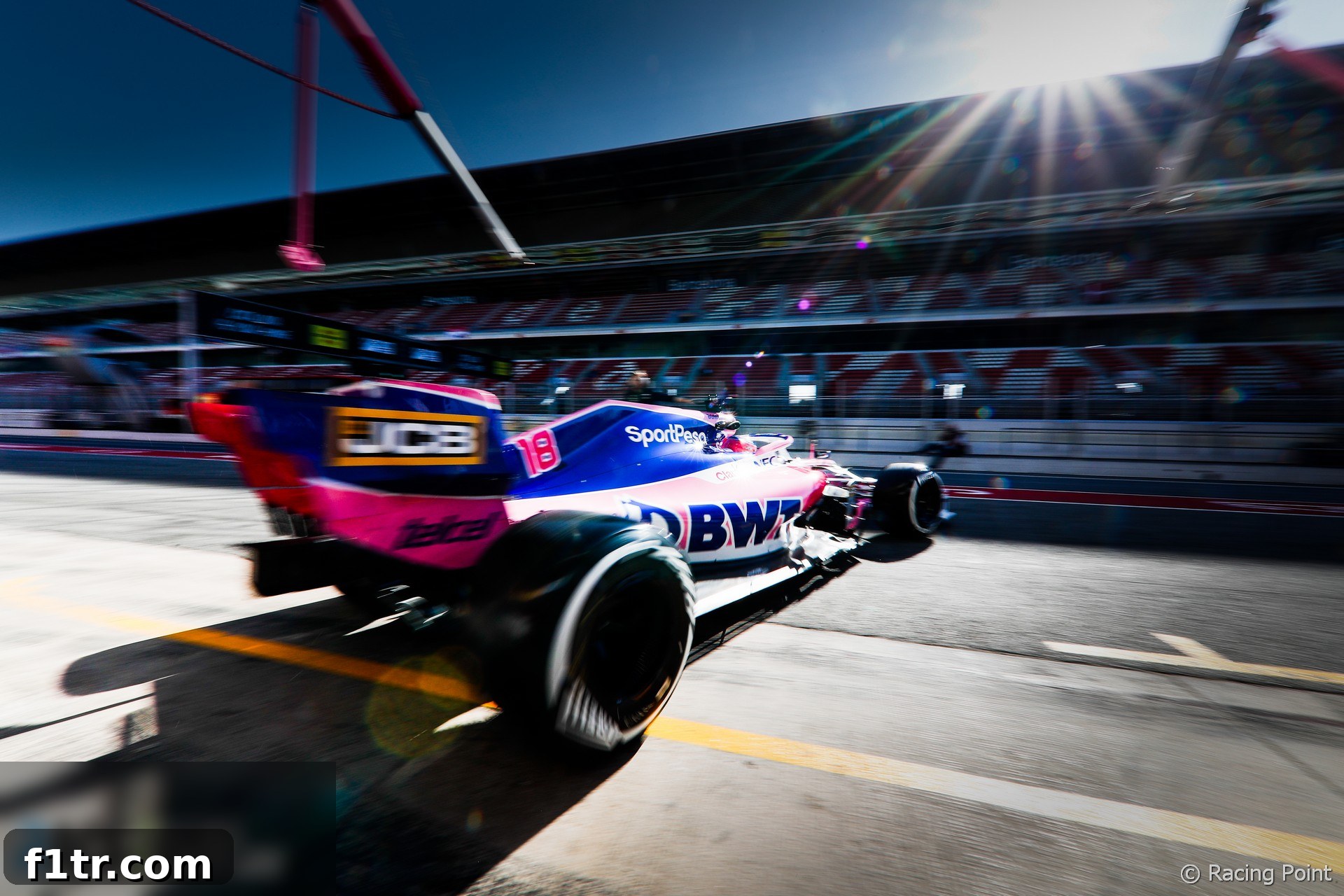
In the latest Formula 1 roundup, a significant discussion point emerged from the paddock, with Racing Point technical director Andrew Green weighing in on the potential impact of reduced pre-season testing. Green suggests that cutting down on testing days could inject a much-needed dose of unpredictability into the F1 racing calendar, a sentiment that resonates with many fans and stakeholders eager for more dynamic and less predictable outcomes on race weekends.
The sport of Formula 1 is constantly evolving, with regulatory changes frequently introduced to enhance competition, manage costs, and improve safety. Among these proposed changes, the reduction of pre-season testing has been a recurring theme. While traditionalists might argue for extensive testing to ensure car reliability and performance, modern F1, armed with advanced simulation technologies, presents a compelling case for re-evaluating the necessity of prolonged track time before the season officially begins.
Expert Opinion: The Case for Less Testing
Andrew Green, a veteran in the F1 engineering world, offered his candid thoughts on the ongoing discussions about limiting pre-season testing. When questioned about plans to potentially reduce pre-season testing to just two three-day sessions, his perspective was clear and insightful:
I’m of the opinion that we probably do too much pre-season testing anyway. I think with all the dynos and simulators that we have, the cars are relatively pretty reliable. And the places where we can go to test pre-season don’t really represent the majority of the tracks that we go to. And if you really wanted to mix things up a bit then reducing the amount of testing pre-season would help. So I think that’s a good idea.
Green’s comments highlight several critical aspects of modern Formula 1 car development. Firstly, the reliance on state-of-the-art simulation tools and engine dynos means that teams can achieve a high level of car reliability and performance optimization long before hitting the track. This technological advancement has fundamentally altered the role of physical testing, making extensive mileage less about basic systems checks and more about fine-tuning.
Secondly, the technical director points out a crucial geographical and representational issue: the limited availability of diverse testing venues. F1 teams often conduct pre-season tests at circuits like Circuit de Barcelona-Catalunya or Bahrain International Circuit. While these are excellent facilities, they don’t encompass the broad spectrum of track characteristics encountered over a full F1 season, from high-speed circuits to tight street tracks. This disparity means that data gathered from testing may not always translate perfectly to every race weekend, adding an element of uncertainty.
The most compelling argument from Green, and one that resonates strongly with F1’s overarching goal of improving the spectacle, is the idea of introducing unpredictability. Less testing could mean that teams arrive at the opening Grand Prix with a less refined understanding of their car’s absolute limits and performance envelope across various conditions. This lack of complete data could lead to more varied strategies, unexpected performances, and potentially more thrilling, less processional races. It could level the playing field, at least in the initial races, as teams scramble to optimize their packages under real race pressure, rather than through exhaustive pre-season data gathering. For fans, this could translate to a more engaging and exciting start to the championship, filled with genuine surprises and fierce competition.
Quotes: Dieter Rencken
Advert | Become a RaceFans supporter andgo ad-free
Social Media Highlights: Connecting F1 with Fans
Formula 1 teams are increasingly leveraging social media platforms to engage with their global fanbase, offering glimpses into their operations, promotions, and off-track activities. Here’s a look at some notable posts that recently captured attention across Twitter and Instagram:
This weekend we will be at the @GammaRacingDay in Assen for some demo fun, with @JaitkenRacer at the wheel of the R.S.17!#RSspirit pic.twitter.com/G8hTPslUuG
— BWT Alpine F1 Team (@AlpineF1Team) August 16, 2019
The BWT Alpine F1 Team, formerly Renault, consistently seeks innovative ways to connect with racing enthusiasts beyond the Grand Prix circuit. A recent highlight involved showcasing their R.S.17 car at the Gamma Racing Day in Assen, Netherlands. This event provided a fantastic opportunity for fans to witness a genuine Formula 1 car in action, driven by talented reserve driver Jack Aitken. Such demo runs are crucial for bringing the thrilling experience of F1 closer to the public, fostering a deeper appreciation for the sport’s engineering marvels and the skill required to pilot them. The team’s use of the #RSspirit hashtag effectively reinforces their brand identity and engagement with their community.
View this post on InstagramEver wondered what happens to @f1 cars once they retire from racing… 🤔 We sent @paulripke to find out and he had a nice surprise! 👀 • #MercedesAMGF1 #Mercedes #AMG #F1 #PETRONASmotorsports #DrivenByEachOther
A post shared by Mercedes-AMG F1 (@mercedesamgf1) on
Mercedes-AMG F1 also captured fan imagination with an intriguing Instagram post. It posed the question: “Ever wondered what happens to F1 cars once they retire from racing?” and featured filmmaker and photographer Paul Ripke uncovering a “nice surprise.” This type of content is incredibly effective for building brand loyalty and fostering a sense of community among F1 followers. It taps into the natural curiosity about the inner workings and life cycle of these complex machines, providing behind-the-scenes insights that are often elusive. Mercedes’ storytelling approach, using visuals and a narrative hook, demonstrates the power of social media to tell a deeper story about the sport and its heritage.
- Find more official F1 accounts to follow in the F1 Twitter Directory
Further Reading: Motor Racing Insights
For those eager to dive deeper into the world of motor racing, here are some thought-provoking articles and quotes that provide additional insights into the sport’s personalities and strategic aspirations:
Advert | Become a Supporter & go ad-free
Inside the house that Checo built (Racer)
“I certainly know I will not stay here for many more years – certainly less than what I’ve done in Formula 1 already. I’ve been here a while.” This excerpt from an interview with Sergio “Checo” Perez offers a reflective look at his long and successful career in Formula 1. Perez, known for his consistent performances and ability to maximize opportunities, spent a significant portion of his career with the Force India/Racing Point team, making it his home in F1. The phrase “the house that Checo built” speaks to his integral role in the team’s development and his enduring presence. His contemplation on the remaining years in his F1 journey hints at the intense demands of the sport and a driver’s perspective on career longevity, a topic of constant discussion among fans and pundits.
‘Not much more’ (Autosport)
“We didn’t say we want to win five races but we want to exceed the points Red Bull scored last year and maybe five wins is possible.” This quote, likely from a key figure within the Red Bull Racing team, reflects the ambitious mindset prevalent in Formula 1. It showcases a team’s drive to continuously improve upon previous seasons, setting clear, measurable targets that push the boundaries of performance. Exceeding past points totals and aspiring for multiple race victories demonstrates the competitive fire that fuels F1. This kind of declaration often sets the stage for intra-team and inter-team rivalries, making the championship battle even more compelling for fans.
We always endeavour to credit original sources. If you have a tip for a link to feature in the next RaceFans round-up please send it in via the contact form. Community contributions are vital in curating the most relevant and interesting news from across the motorsport landscape.
Advert | Become a RaceFans supporter andgo ad-free
Fan Debate: George Russell’s Untapped Potential
The performance and future trajectory of young talents like George Russell are always hot topics among Formula 1 enthusiasts. The “Comment of the Day” section often captures the pulse of the fan community, and one recent submission delved into the promising yet challenging path of George Russell:
I find it hard to judge whether Russell has the potential to be a Bottas-level driver or whether he is more talented than that. Kubica seems to have severe problems extracting speed from his car. The other cars that Russell has been racing have also been piloted by second or third-rate drivers, like Giovinazzi and Stroll. I want to see him race drivers like Ricciardo and Raikkonen to see how he deals with that level of racecraft.
Russell gets a lot of credit for being mature, but Bottas is mature as well and that doesn’t prevent people from criticising him harshly when his pace is lacking. Actual results always matter more than personality. I don’t think it makes sense for Mercedes to replace Bottas with Russell, rather than let Russell prove himself more.
I hope that Russell either moves to a better team or Williams get their act together again, so he gets the chance to show his true talents and gets challenged in a way that will teach him a lot.
@Aapje
This insightful comment from @Aapje encapsulates a widespread sentiment among F1 followers regarding George Russell’s potential. Evaluating a driver’s true capabilities, especially when they are in a backmarker car like the Williams, is notoriously difficult. Russell consistently outperformed his then-teammate Robert Kubica, yet Kubica’s own struggles with the car’s characteristics clouded a direct comparison. Furthermore, the comment points out that Russell’s other direct competitors, such as Antonio Giovinazzi and Lance Stroll at the time, were not universally regarded as top-tier, making a definitive assessment of Russell’s racecraft against the very best challenging.
The comparison to Valtteri Bottas is particularly pertinent. While Russell has been lauded for his maturity and professionalism, @Aapje rightly argues that maturity alone does not guarantee a top-tier F1 career. Performance and tangible results ultimately carry more weight than personality. The comment suggests that while Bottas is a solid, mature driver, he still faces significant criticism when his pace falters. This highlights the ruthless meritocracy of Formula 1, where every tenth of a second and every championship point is scrutinized.
The debate around whether Mercedes should replace Bottas with Russell is a recurring one, reflecting the intense competition for seats at top teams. The consensus, as articulated by @Aapje, is often that Russell needs more time and a more competitive environment to truly demonstrate his full potential. For any young driver, being stuck in a perpetually uncompetitive car is a significant hurdle. The hope is that Russell will eventually secure a drive with a team capable of challenging for points, or that Williams themselves will improve, allowing him to showcase his talents on a more level playing field. Only then can his true racecraft, adaptability, and ultimate potential be accurately measured against the sport’s elite, offering a clearer picture of his future in F1.
From the Forum: What’s Next for ‘Drive to Survive’?
- What storylines do you want to see in the new series of Drive to Survive?
The popular Netflix documentary series ‘Drive to Survive’ has been a game-changer for Formula 1, attracting a new generation of fans and providing an unprecedented behind-the-scenes look at the sport. As anticipation builds for future seasons, discussions on fan forums often revolve around desired storylines and deeper insights. The forum topic “What storylines do you want to see in the new series of Drive to Survive?” invites fans to share their hopes and expectations for upcoming episodes. This ongoing dialogue highlights the series’ impact on fan engagement and the desire for authentic, compelling narratives that go beyond mere race results, focusing on team dynamics, driver rivalries, and the human drama inherent in elite-level motorsport.
Community Celebrations: Happy Birthday!
We love celebrating milestones with our dedicated community! A very happy birthday goes out to Luts and Electrolite!
It’s always a pleasure to acknowledge the special days of our readers and contributors. If you’d like to receive a birthday shout-out in our future round-ups, please don’t hesitate to let us know when yours is via the contact form. Alternatively, you can always contribute by adding your date to our dedicated list here. Your participation makes our community vibrant and engaging!
F1 History: On This Day – Nelson Piquet’s Legacy
- Born today in 1952: Nelson Piquet
On this day in 1952, the world of Formula 1 welcomed one of its most charismatic and formidable competitors: Nelson Piquet. A true legend of the sport, Piquet etched his name into the annals of F1 history as a three-time World Champion, securing titles in 1981, 1983, and 1987. His career was marked by an aggressive driving style, tactical brilliance, and often-controversial personality that captivated audiences worldwide.
Piquet began his F1 journey in 1978 and quickly rose through the ranks, becoming a dominant force with the Brabham team under the guidance of engineering maestro Gordon Murray. His first championship in 1981, narrowly beating Carlos Reutemann, showcased his raw speed and determination. He followed this with another title in 1983, driving the BMW-powered Brabham, making him the first driver to win a world championship with a turbocharged engine. Later in his career, Piquet moved to Williams, where he famously engaged in a fierce rivalry with teammate Nigel Mansell. This intense internal battle culminated in his third and final championship in 1987, a testament to his enduring talent and mental fortitude.
Beyond his championships, Piquet was known for his blunt opinions and willingness to speak his mind, which often led to memorable quotes and heated exchanges with rivals and media alike. He was a pivotal figure during an incredibly competitive era of F1, racing against icons such as Alain Prost, Ayrton Senna, and Mansell. His impact on Formula 1, particularly in establishing Brazil’s presence in motorsport alongside Emerson Fittipaldi and later Senna, is immense. Piquet’s legacy is one of a fearless competitor, a shrewd strategist, and a memorable character who left an indelible mark on the sport, making his birthday a perfect occasion to reflect on his extraordinary contributions to F1.