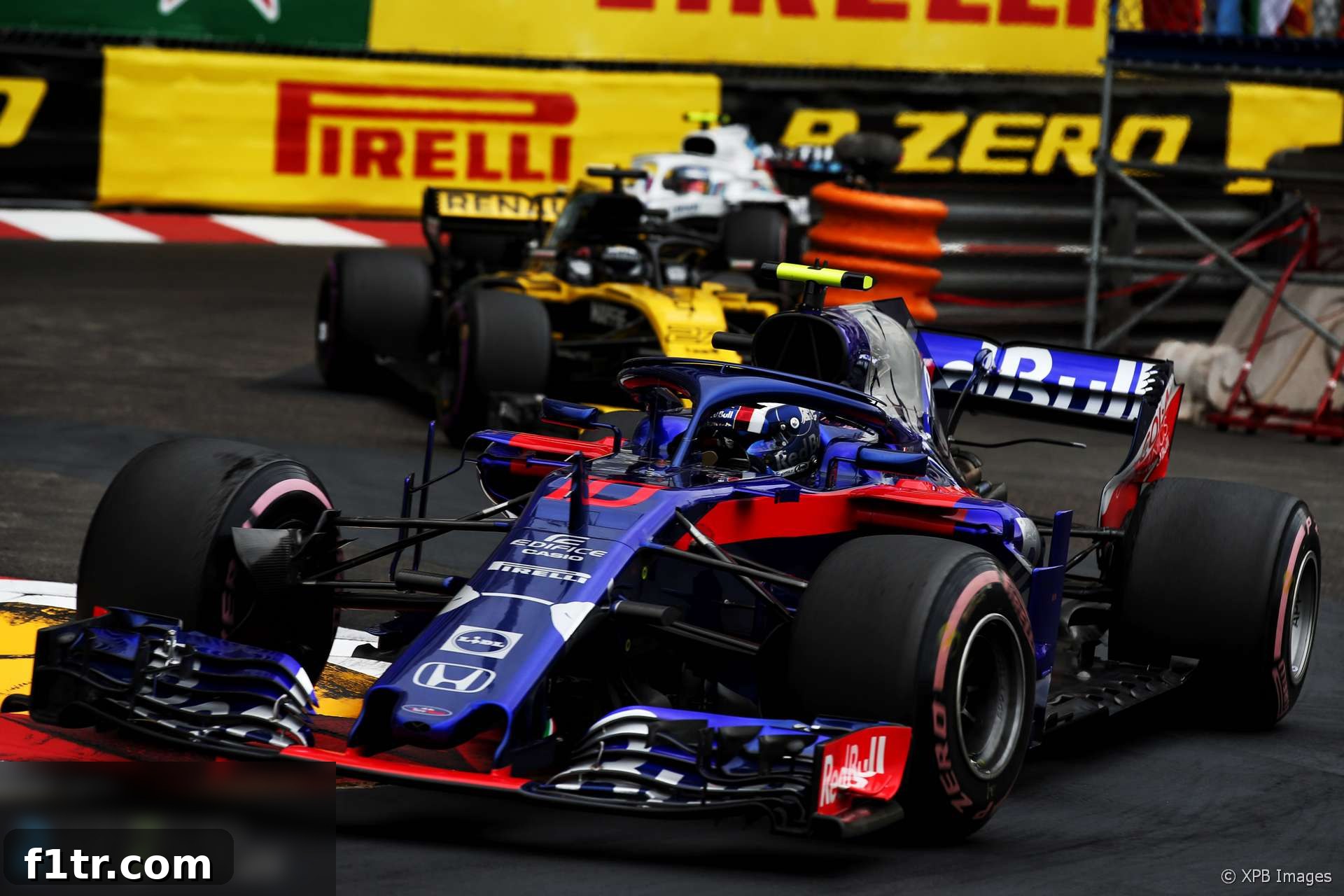
In the thrilling world of Formula 1, where every fraction of a second and every strategic decision can alter destiny, few elements are as critical, or as challenging to master, as tire management. For Pierre Gasly, his performance at the 2018 Monaco Grand Prix served as a profound testament to his evolving skill in this demanding art. The then-Toro Rosso driver achieved what many considered “unbelievable,” managing to extend the lifespan of his hyper-soft tires for an astonishing period, delivering a strategic masterclass that defied expectations on one of the calendar’s most notoriously unforgiving circuits.
The Hyper-Soft Gamble: A Strategy Defying Expectations
The Monaco Grand Prix is renowned for its tight, winding streets, high-speed corners, and demanding nature, which collectively make it a unique challenge for both drivers and engineers. Tire degradation is often a major concern, particularly with the softer compounds. In 2018, Pirelli introduced the hyper-soft compound, the softest tire in its range, designed for ultimate grip but with an expectedly short lifespan. Most teams and drivers anticipated very limited stints on these pink-marked tires, making Gasly’s performance all the more remarkable.
Gasly embarked on the race having already put six laps on his initial set of hyper-softs during qualifying. Despite this prior wear, he managed to extend their usage to an incredible 37 laps in the race itself. This lengthy stint made him the driver who completed the most laps on the softest compound, far exceeding the expectations of his team and rivals alike. Reflecting on this extraordinary feat, Gasly openly admitted, “It’s quite unbelievable how many laps we did with the hyper-soft in the first stint.”
The confidence in the tires was initially low, even for Gasly himself. He elaborated on his pre-race apprehension: “Before the race, I wasn’t confident at all with the tyres because we saw in practice that the degradation was massive.” This apprehension fueled a disciplined approach from the outset. Gasly understood that his only chance to make this strategy work was to treat the tires with extreme care, especially during the initial phase of the race. This meticulous management allowed him to preserve the integrity of the compound, laying the groundwork for what would become a pivotal strategic advantage.
Capitalizing on Pace: Gaining Ground in the Principality
As the race unfolded, Gasly’s careful tire management began to pay dividends. While many of his competitors opted for earlier pit stops, switching to more durable, but often slower, super-soft or ultra-soft compounds, Gasly continued his relentless pace on the hyper-softs. This created a fascinating dynamic where he found himself in an increasingly competitive position against drivers on fresher, harder tires.
“I tried to take really good care of the tyres at the beginning of the race and when everyone pitted I started to push and we were just faster than all the guys who had pitted, who put the super-softs or ultra-softs on,” Gasly explained. This ability to maintain and even improve his lap times while others struggled on their new, colder tires was a critical factor in his success. The Toro Rosso driver showcased exceptional judgment, understanding precisely when to conserve and when to unleash the full potential of his machinery. His strategic brilliance allowed him to carve out precious time and track position.
Gaining positions in Monaco is notoriously difficult due to the narrow track and limited overtaking opportunities. Yet, Gasly managed to make significant progress. “We were really fast and we managed to make some positions with the pace we had. To gain three positions – two without Alonso – in Monaco we know is really tough,” he stated, underscoring the magnitude of his achievement. This move up the order, largely orchestrated through superior tire management and a well-executed strategy, was a highlight of his first-ever Monaco Grand Prix in Formula 1. He concluded, “I’m really pleased about it, especially for my first Monaco race in Formula One.” His seventh-place finish was not just a personal best but also a significant points haul for Toro Rosso, demonstrating the potential of both driver and team.
Navigating the Second Stint: A Virtual Safety Car Challenge
Upon finally making his pit stop, Gasly switched from the hyper-softs to the super-soft compound. However, the race was not without its further challenges. In the closing laps, the deployment of a Virtual Safety Car (VSC) introduced an element of uncertainty, particularly regarding the battle brewing behind him. With the VSC in effect, car speeds are reduced, which in turn leads to a drop in tire temperatures. This scenario can be particularly tricky for tires like the super-softs, which require a certain temperature window to perform optimally.
Gasly admitted he was concerned about the threat posed by Nico Hulkenberg, who was behind him and on the faster hyper-soft compound. “After the Virtual Safety Car I was a bit worried because with lower temperature the super-soft takes a bit longer to warm up, and he had the hyper,” Gasly recounted. The difference in tire compounds and their respective temperature requirements could have easily allowed Hulkenberg to close the gap and challenge for position. However, Gasly’s experience and race craft came to the fore.
Knowing the unique characteristics of the Monaco circuit, where overtaking is almost impossible without a significant speed advantage or a driver error, Gasly used the track to his advantage. “But we’re in Monaco so I knew if I go a bit in the middle of the track he could not do anything, so I just try to focus not to do any mistake and then it was fine,” he explained. This tactical defensive driving, combined with a flawless execution, allowed him to hold off Hulkenberg and secure his well-deserved seventh-place finish, adding another layer of impressive performance to his Monaco debut.
The Art of Tire Preservation: A Skill Forged Through Experience
Gasly’s exceptional tire management at Monaco was not an innate talent but rather a skill he meticulously developed over his racing career. He openly admitted that initially, he “wasn’t good at” making the Pirelli tires last, a common challenge for many young drivers transitioning through the motorsport ladder.
His learning curve was steep and deliberate. “Until my second year in GP2 I had to learn a lot with the Pirelli tyres and I changed a bit my way of driving, and my approach in the race,” he revealed. This period in GP2, now known as Formula 2, was crucial for him to adapt his driving style to the unique demands of Pirelli’s compounds. Unlike tires from other manufacturers, Pirellis are highly sensitive to thermal degradation, requiring a nuanced approach to prevent overheating, blistering, or graining, all of which compromise performance and longevity.
The dedication to understanding and mastering tire behavior clearly paid off. Gasly succinctly summarized the philosophy behind his success: “On a day like today it paid off. You just need to be as smooth as possible with the tyres and the way you drive.” This smoothness translates into a series of precise and controlled actions behind the wheel, minimizing any unnecessary stress on the rubber.
He further elaborated on the specific techniques required: “You need to be really careful on braking, not to have any locking.” Locking up wheels under braking generates flat spots, destroying the tire’s integrity and balance. “Try to be as smooth as possible with the steering not to scrub the front axle in the middle of the corner,” he continued. Scrubbing occurs when the tire slides sideways across the track surface, generating heat and wear without contributing to grip. And finally, “be gentle with the throttle.” Abrupt throttle applications can cause wheelspin, rapidly degrading the rear tires.
The challenge, however, is not just about being gentle; it’s about maintaining speed simultaneously. “You need to do that and at the same time be fast. It’s not easy,” Gasly concluded. This paradoxical requirement—to be both gentle and aggressive—is at the heart of modern Formula 1 tire management. It demands exceptional feel, anticipation, and an almost intuitive understanding of how the car interacts with its tires under every condition. Gasly’s ability to strike this delicate balance not only secured him a strong result in Monaco but also marked him as a driver with a profound understanding of race craft, signaling a promising future in the upper echelons of motorsport.
The 2018 Monaco Grand Prix: A Defining Moment for Gasly
The 2018 Monaco Grand Prix proved to be a pivotal race in Pierre Gasly’s fledgling Formula 1 career. His P7 finish, coupled with the strategic brilliance and tire management masterclass he displayed, highlighted his immense potential and adaptability. On a circuit where driver skill is paramount and strategic gambles often fail, Gasly’s measured yet aggressive drive stood out. It demonstrated that he possessed not only the raw speed but also the intelligence and finesse required to succeed at the highest level of motorsport. This performance solidified his reputation and set a strong precedent for his future endeavors within the sport, earning him plaudits from across the paddock and establishing him as a rising star to watch in Formula 1.
2018 F1 season
- F1 feared “death knell” for Drive to Survive after Ferrari and Mercedes snub
- McLaren staff told us we were “totally crazy” to take Honda engines in 2018 – Tost
- ‘It doesn’t matter if we start last’: How Red Bull’s junior team aided Honda’s leap forward
- Honda’s jet division helped F1 engineers solve power unit problem
- McLaren Racing losses rise after Honda split
Browse all 2018 F1 season articles