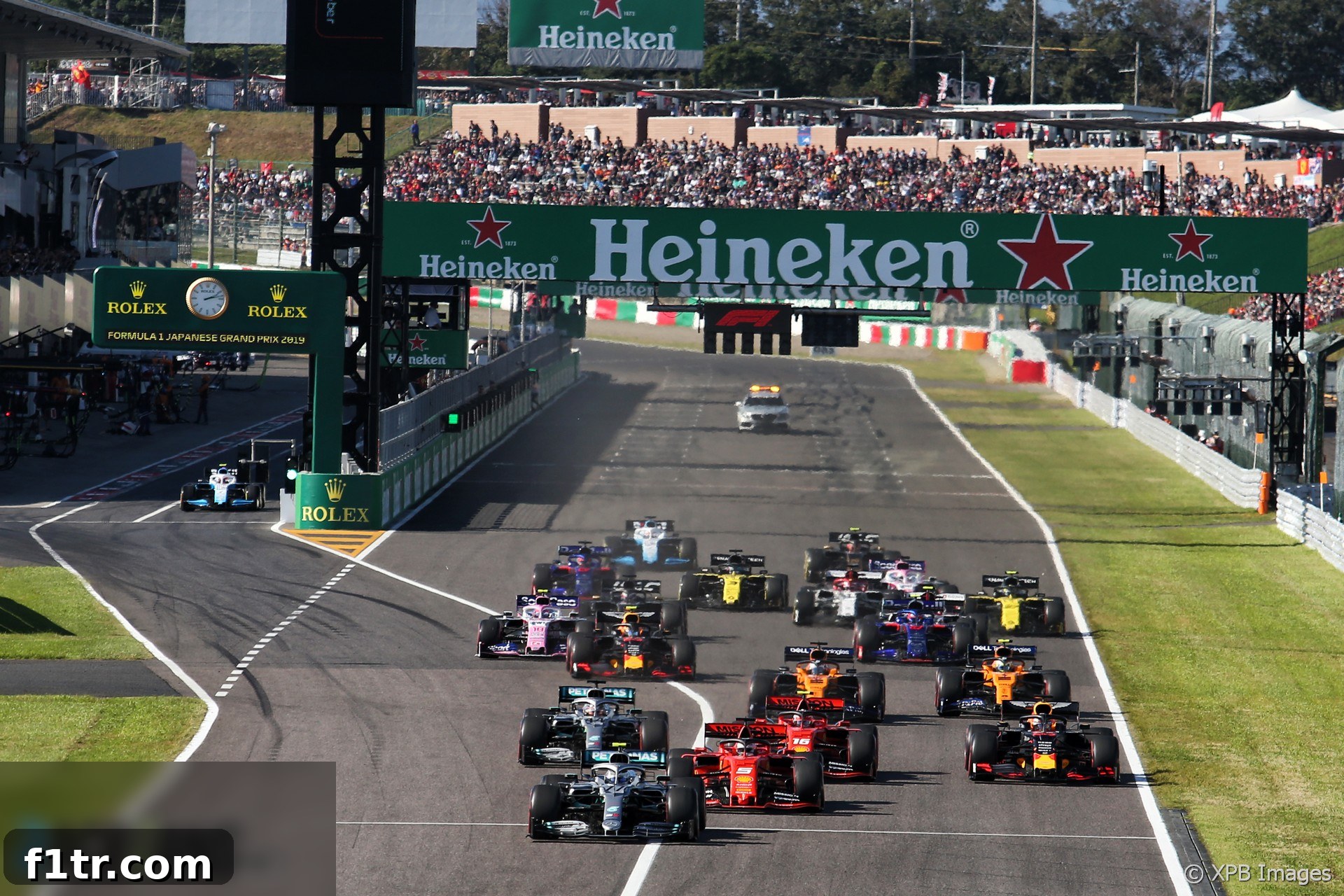
In a significant development for Formula 1’s regulatory landscape, the FIA is reportedly considering a comprehensive review of its procedures for monitoring jump starts. This comes after widespread confusion and debate surrounding Sebastian Vettel’s near-false start at the Japanese Grand Prix. The incident reignited discussions about the precision and consistency of the current system, prompting officials to evaluate potential enhancements to ensure fairness and clarity in the sport’s most critical moments: the race start.
FIA to Review Jump Start Rules Following Sebastian Vettel Controversy in Japan
The world of Formula 1 thrives on precision, consistency, and the unwavering application of rules. However, recent events have cast a spotlight on the intricacies of the race start procedure, specifically the detection of jump starts. The FIA, the sport’s governing body, is now poised to undertake a thorough examination of its monitoring protocols in the wake of a contentious incident involving Sebastian Vettel at the Japanese Grand Prix. This potential overhaul signifies a proactive step towards refining the regulations that define a fair start, aiming to eliminate ambiguity and uphold the integrity of competition.
The Controversy: Vettel’s Near-Miss and Raikkonen’s Penalty
The catalyst for this impending review was Sebastian Vettel’s much-debated movement on the grid before the lights went out in Japan. Despite clearly creeping forward, Vettel ultimately escaped a penalty. This decision stood in stark contrast to Kimi Raikkonen’s experience in Russia, where the Finn was handed a penalty for a similar, albeit perhaps less pronounced, transgression. This disparity in judgment sparked considerable debate among fans, pundits, and even within the paddock, highlighting a perceived inconsistency in how jump starts are identified and penalized.
Vettel’s car was observed to move slightly forward before the final red light extinguished, a moment captured vividly by on-board cameras and trackside footage. While the movement was minimal, it was undeniably present. The stewards, after deliberation, deemed that the car had not gained an advantage or crossed a specific detection threshold, thus no penalty was issued. This ruling, while technically within the existing framework, created an impression of arbitrary enforcement when juxtaposed with Raikkonen’s earlier penalty, where the movement was deemed sufficient to warrant a sanction. The core of the issue lies not just in the letter of the law, but in its practical interpretation and the technological capabilities used for enforcement, leading to calls for greater transparency and stricter guidelines.
FIA Race Director Acknowledges Room for Improvement
What They Say
Following the Japanese Grand Prix and the subsequent discussions, FIA Race Director Michael Masi openly acknowledged that the current system could benefit from improvements. His comments suggest a willingness to adapt the regulations and technology to modern standards:
“The current system is the system that we’ve had in place for a number of years. I think the advent of technology has got better over the years with in-car cameras, the ability to see things better and all that.
Is it something that we can look at for the future? Absolutely. But [right] now it is the determining factor that we have and the one that we use.”
Quotes: Dieter Rencken
Masi’s statement underscores the tension between established procedures and evolving technological capabilities. While the current system has served F1 for years, the fidelity of modern in-car cameras and trackside sensors provides unprecedented levels of detail. This heightened visibility inevitably leads to closer scrutiny and raises questions about the “allowable tolerances” in a driver’s initial movement before the start lights change. The challenge for the FIA is to define these tolerances precisely, ensuring that minor, unintentional movements are differentiated from deliberate, advantageous jumps. This is not merely a technical exercise but a philosophical one, balancing driver reaction times with the absolute stillness expected before a race begins, while maintaining the excitement and human element of a F1 start.
The “determining factor” Masi refers to likely involves a combination of pressure sensors embedded beneath each grid slot and meticulous visual observation by race control. These sensors are designed to detect if a car has moved off its designated position before the start signal. However, the sensitivity of these sensors and the precise moment they trigger a “jump start” warning are critical. If the threshold is too strict, unintentional micro-movements caused by clutch engagement or brake release might be unfairly penalized. Conversely, if the system is too lenient, drivers could subtly exploit the grey area to gain a fraction of a second, an advantage that is invaluable in the fiercely competitive world of Formula 1. The inconsistency perceived between Vettel’s and Raikkonen’s incidents suggests that these tolerances, or their application, might need re-evaluation.
Considering the “advent of technology,” the FIA could explore several avenues to enhance the detection process. More sophisticated, multi-point pressure sensors across the grid slot, high-speed cameras synchronized with the start lights at an incredibly granular level, or even AI-assisted analysis of multiple data streams could provide more objective and indisputable evidence. The goal would be to create a system that is not only accurate and fair but also transparent and consistently applied across all races and drivers, regardless of their standing or team. This move towards greater precision reflects the sport’s ongoing commitment to fairness and adapting to the cutting-edge technology that defines Formula 1. Such advancements would reduce the reliance on subjective interpretation, offering a clearer, more definitive ruling in those crucial milliseconds.
A revised system would need to address the nuances of a race start with a meticulous approach. Drivers are under immense pressure, anticipating the lights to go out and executing a perfect launch. A slight roll backward, an imperceptible forward creep due to the car’s natural tendency to ‘clutch-bite’, or even the slightest vibration from the engine could be misinterpreted as an intentional jump. The FIA’s review will likely aim to differentiate these minute, often inconsequential movements from genuine attempts to gain an unfair advantage. By refining the criteria and leveraging advanced technology, the governing body hopes to eliminate the subjective element that currently fuels much of the controversy, thus ensuring that every start is judged impartially and understood clearly by all stakeholders.
Advert | Become a RaceFans supporter andgo ad-free
Social Media Pulse from the Paddock
Social Media Highlights
Catch up on some of the notable posts from drivers and teams across social media platforms, offering glimpses into their lives and insights:
👀⬇️ 👀⬇️ pic.twitter.com/TTnalwPC1T
— Pato O’Ward (@PatricioOWard) October 18, 2019
Fan questions + @LewisHamilton = part one of @PET_Motorsports’ Question Master series! Find out if your question got picked! 👇pic.twitter.com/UDx9psqZ2u
— Mercedes-AMG PETRONAS F1 Team (@MercedesAMGF1) October 19, 2019
🗣️ You asked, he answered!
What’s the hardest bit about being an F1 driver and what’s @KevinMagnussen’s favorite hobby? All is revealed here! 👇 pic.twitter.com/S0N0ZoxchK
— MoneyGram Haas F1 Team (@HaasF1Team) October 19, 2019
- Find more official F1 accounts to follow in the F1 Twitter Directory
F1 and Motorsport Headlines Around the Web
More Motorsport Insights
Beyond the immediate F1 grid, the broader motorsport world is buzzing with significant developments and intriguing opinions. Here’s a deeper look at some of the key stories shaping the landscape:
Advert | Become a Supporter & go ad-free
O’Ward Splits with Red Bull – and Enters the McLaren IndyCar Frame (Racer)
Pato O’Ward’s journey through the notoriously cut-throat Red Bull junior program has taken an unexpected turn, with the promising young Mexican talent parting ways with the energy drink giant. The primary sticking point, as candidly revealed by O’Ward himself, was the elusive Super Licence points required for a Formula 1 entry. Dr. Helmut Marko, notorious for his blunt assessment of driver talent and often referred to as “Potato” by the young driver, reportedly delivered the news directly: “Potato, it’s very hard because you have no Super Licence points,” indicating a clear and insurmountable roadblock to his F1 aspirations within the Red Bull system. This split opens a significant new chapter for O’Ward, who is now being strongly linked to McLaren’s burgeoning IndyCar efforts. McLaren’s strategic expansion into North American open-wheel racing offers a viable and high-profile alternative for drivers who, despite their evident talent, face the rigid F1 entry barriers. This move underscores the immense competitiveness of the F1 ladder and the critical role of the Super Licence system in shaping young drivers’ careers. For O’Ward, a move to IndyCar with a top-tier team like McLaren could provide the ideal platform to showcase his abilities on a global stage, potentially keeping his F1 dreams alive through a different pathway or establishing him as a major force in American motorsport.
‘Logical’ for Hamilton to Try Formula E – Vergne (Autosport)
Two-time Formula E champion Jean-Eric Vergne has put forth an intriguing and thought-provoking proposition: a potential future foray for Lewis Hamilton into Formula E. Vergne argues that such a move would be “logical” for the seven-time F1 world champion, particularly given his increasingly vocal stance on environmental issues, sustainability, and climate change. Hamilton has often faced criticism for advocating ecological responsibility while simultaneously competing in a petrol-powered sport, leading to charges of hypocrisy from some quarters. Vergne suggests that a venture into the all-electric racing series could not only invigorate Hamilton’s career with a fresh challenge but also align his professional life more closely with his personal values and activism. Formula E, positioned as a pioneer in sustainable motorsport, offers a compelling narrative for a global icon like Hamilton to demonstrate his commitment to environmental causes directly. Such a high-profile switch would be a monumental event for both Formula 1 and Formula E, potentially attracting a new wave of fans to electric racing and further legitimizing its place on the global motorsport stage. It raises profound questions about the future trajectory of top-tier drivers and the evolving role of motorsport in addressing wider societal concerns beyond the racetrack.
Sport Thought: Rebooting Hamilton and Easing His Eco Worries (The Sydney Morning Herald)
Echoing Jean-Eric Vergne’s sentiments, The Sydney Morning Herald further explores the compelling idea of Lewis Hamilton joining Formula E as a profound means to “reboot” his career and alleviate his well-documented ecological concerns. The article posits that an “experiment in Formula E” could serve multiple, highly impactful purposes: it could reignite his competitive fire with a new challenge, effectively silence critics who frequently point to the substantial carbon footprint of Formula 1, and ultimately solidify his public image as a genuine and unwavering environmental advocate. In an era where athlete activism is increasingly prominent and influential, Hamilton’s outspokenness on climate change and sustainability has made him a unique and sometimes controversial figure in the F1 paddock. A move to Formula E would be a powerful, tangible statement, demonstrating a direct and undeniable commitment to a more sustainable future for motorsport. It could offer him a fresh, inspiring challenge away from the intense pressures and historical expectations of Formula 1, allowing him to explore a different facet of elite racing while staying profoundly true to his deeply held personal ethos. This ongoing discussion highlights the growing and increasingly significant intersection of sport, celebrity, and urgent global issues, with top athletes increasingly using their powerful platforms to drive meaningful change and influence public opinion.
- Analysis: Will Hamilton’s ‘wokening’ bring his F1 career to an early end?
We always endeavour to credit original sources. If you have a tip for a link to feature in the next RaceFans round-up please send it in via the contact form.
Advert | Become a RaceFans supporter andgo ad-free
Driver Spotlight: Pierre Gasly’s F1 Future
Fan Debate: What’s Next for Pierre Gasly?
Pierre Gasly’s 2019 Formula 1 season has been a true rollercoaster of highs and lows, starkly marked by a challenging and ultimately disappointing stint at Red Bull Racing followed by a remarkable resurgence and impressive performances at Toro Rosso (now AlphaTauri). His unpredictable trajectory has consequently become a major focal point of discussion and speculation among dedicated fans and motorsport experts alike, prompting critical questions about his long-term future and career path in the pinnacle of motorsport. A recent, particularly insightful fan comment perfectly encapsulates the complexity and strategic importance of Gasly’s current situation:
Gasly is an interesting case study. The difference between his almost disastrous appearances in a Red Bull stands in stark contrast to his comfortably good performances in the Toro Rosso.
There is a small chance it will be an interesting conundrum for Dr. Marko to decide between Albon and Gasly (the former of whom is doing decently well), but I think the bigger concern will be for Gasly, in terms of his F1 future.
It seems unlikely they’ll give him a shot at the big team, so where does he go? To another midfield team? Or does he just suck it up and hold station at Toro Rosso until the RB pipeline fills up with young talent, at which point either Kvyat or he is dropped?
@Phylyp
This insightful comment from @Phylyp highlights the unique and challenging predicament Gasly finds himself in. His struggles at Red Bull, where he seemed conspicuously unable to consistently extract peak performance from the RB15 in the same dominant way that his highly-rated teammate Max Verstappen did, were well-documented and widely observed. However, his subsequent return to Toro Rosso saw him almost immediately regain his lost confidence and impressive form, delivering strong points finishes and showcasing the inherent talent and speed that initially earned him the coveted Red Bull promotion. This stark contrast in performance strongly suggests that Gasly either thrives more effectively in a less high-pressure, more supportive environment, or perhaps with a car chassis that is inherently better suited to his specific driving style and preferences.
The “conundrum for Dr. Marko” is indeed pressing and complex. With Alexander Albon now seemingly more comfortable and consistently performing at a decent level within the senior Red Bull team, and a host of eager young drivers continually vying for a spot within the Red Bull driver development ecosystem, Gasly’s path back to the senior team appears effectively blocked, at least for the immediate future. The critical and most pressing question for Gasly himself is whether remaining indefinitely at Toro Rosso (now AlphaTauri) truly provides a sustainable long-term career solution, or if it is merely a temporary holding pattern that could ultimately stifle his ambitions. Should he actively seek out alternative opportunities elsewhere in the highly competitive midfield, potentially with a different team where he could realistically become a lead driver and build a new legacy? Or does he patiently wait, hoping against hope for another chance at Red Bull that might, in all likelihood, never materialize, thereby risking being ultimately overshadowed and displaced by the next wave of exceptionally talented Red Bull juniors rapidly emerging from feeder series like Formula 2? His upcoming decisions will be absolutely crucial and career-defining for the entire trajectory of his Formula 1 career.
Celebrations and Historical Moments
Happy Birthday!
Wishing a very happy birthday to our fellow RaceFans community members: Danthorn, Shaggymike, F1Yankee, and The Abbinator! We hope you all have a fantastic day filled with joy and celebration, perhaps with a touch of motorsport excitement.
If you’d like a birthday shout-out in a future round-up, be sure to let us know your special day via the contact form or by adding your name to our comprehensive birthday list here. We love celebrating with our community!
On This Day in F1 History
- 35 Years Ago: On this very day in 1984, the legendary French racing driver Alain Prost secured a crucial pole position at the Estoril circuit in Portugal. This momentous achievement set the dramatic stage for his intense and unforgettable championship showdown against his McLaren team mate, the iconic Niki Lauda. The 1984 Formula 1 season finale remains one of the sport’s most iconic and nail-biting battles, ultimately decided by the narrowest of margins – a mere half-point – highlighting the incredible pressure and skill of both drivers.