The world of motorsport, long dominated by male athletes, is currently experiencing a significant shift as the debate surrounding gender diversity and inclusion intensifies. At the heart of a recent discussion lies Ferrari, one of Formula 1’s most iconic teams, whose stated commitment to fostering female talent has drawn both praise and skepticism. Amidst this evolving landscape, Catherine Bond Muir, CEO of the all-female racing championship W Series, has stepped forward to staunchly defend the Italian powerhouse against criticisms regarding their approach to supporting women racers.
Advert | Become a Supporter & go ad-free
The controversy ignited following comments from Ferrari Team Principal Mattia Binotto, who expressed a clear vision for the future of the prestigious Ferrari Driver Academy (FDA). Binotto articulated his desire for the academy, a critical pipeline for nurturing future Formula 1 stars, to eventually include women. However, the current composition of the FDA, featuring nine promising male racers and conspicuously absent of any female counterparts, led to immediate questions and a wave of criticism across social media platforms. Critics were quick to point out the apparent disparity between Binotto’s progressive statements and the current reality within the academy.
Despite the backlash, Catherine Bond Muir offered a robust defense of Ferrari. Addressing the social media ‘flak’ directly, she urged observers to consider the broader trajectory of women in motorsport. “What we all have to remember is if we cast our minds back to a year ago, there weren’t very many women involved in motorsport at a high level,” Bond Muir remarked. Her perspective emphasizes the rapid evolution of the sport’s attitude towards female participation, suggesting that the current focus on Ferrari, while critical, should also acknowledge the significant progress being made across the industry.
Bond Muir continued by highlighting the dramatic increase in media attention and discussion surrounding women in motorsport. “If you look back to the amount of time that [the media] were writing about women in motorsport it was much, much less than it is now,” she noted. This observation underscores a pivotal point: the rising visibility and conversation are themselves indicators of positive change. For Bond Muir, the appropriate response is to celebrate this momentum. “I think what we have to applaud is that the tide is rising for all women in motorsport. And I think what Ferrari is trying to do is to help that tide to rise.” This viewpoint frames Ferrari’s initiative not as a standalone act, but as a supportive force within a larger, transformative movement towards greater inclusion.
Dispelling notions that Ferrari’s intentions might be purely commercial, Bond Muir passionately argued for the genuine nature of their commitment. “I don’t think it is just a marketing plan, I think that they really, genuinely want to see if they can get a woman into Formula 1,” she asserted. The aspiration, in her view, goes beyond public relations; it is about finding and developing extraordinary talent. “If they can attract a young superstar and take them through their academy and be the team to get a driver into Formula 1 then frankly, hats off to them.” This sentiment reflects a profound appreciation for any team willing to invest the resources and effort required to break down historical barriers in the elite echelons of racing.
Bond Muir further articulated her hopes that if Ferrari were to successfully promote a female driver into the demanding world of Formula 1, that talent would ideally emerge from the W Series ranks. This connection highlights the W Series’ critical role as a proven platform for identifying and honing the skills of top female racing drivers. The championship itself is gaining significant traction and visibility, evidenced by its upcoming support slots at two high-profile Formula 1 races this year in Mexico and the USA. These events not only elevate the W Series’ profile but also offer invaluable exposure for its drivers, placing them directly within the F1 ecosystem and under the watchful eye of teams like Ferrari.
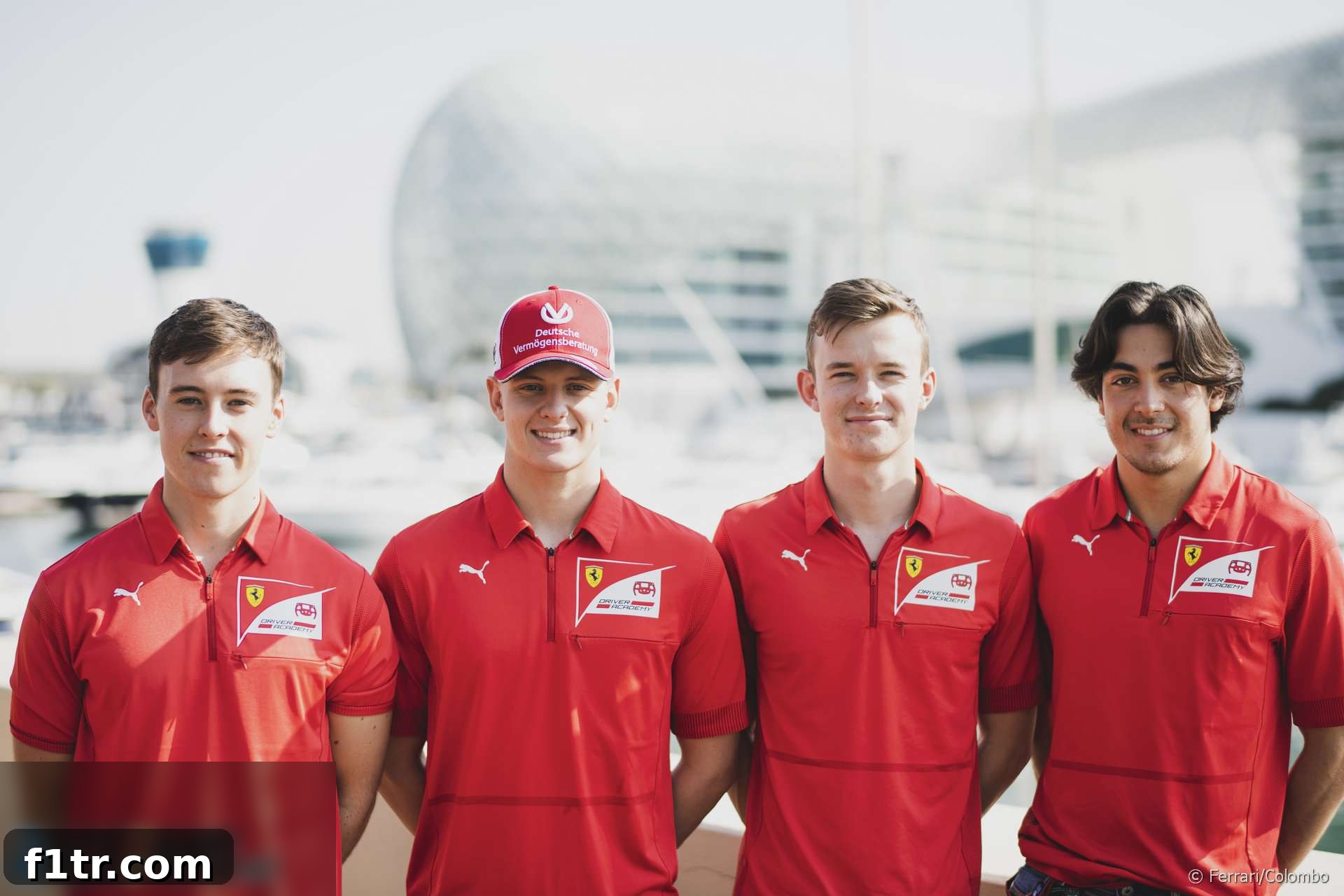
The Ferrari Driver Academy’s current roster, a collection of promising male talents, exemplifies the intensive development pathways available within top-tier motorsport. This year’s line-up includes a diverse mix of international drivers such as Marcus Armstrong, Mick Schumacher, Callum Ilott, and Giuliano Alesi (whose image accompanied the original report). They are joined by Robert Shwarzman, Enzo Fittipaldi, Gianluca Petecof, Arthur Leclerc, and Dino Beganovic. Each of these individuals represents a significant investment by Ferrari, underscoring the formidable challenge and immense competition faced by any driver, male or female, aspiring to reach Formula 1 through such a prestigious academy.
However, not all within the motorsport community share Bond Muir’s optimistic perspective regarding Ferrari’s approach. Formula Regional European racer Sophia Floersch was among the prominent voices who publicly criticized Mattia Binotto’s comments. Taking to social media, Floersch expressed a more cynical view, writing: “What a discussion. Is this the spirit of modern people? As long as we are just marketing stuff in racing nothing will change. We have to show that we are equal. Proof of concept. Like Michele Mouton.”
Floersch’s poignant remarks cut to the core of a widely held concern: the fear that initiatives promoting women in motorsport might be reduced to mere tokenism or superficial marketing ploys, rather than genuine, systemic change. Her call for “proof of concept” is a demand for tangible results – actual female drivers being given equal opportunities and resources to compete at the highest levels, not just verbal commitments. By invoking the name of Michele Mouton, a legendary figure who achieved remarkable success in rallying during the 1980s, Floersch powerfully illustrates that historical precedent for female excellence exists and should serve as an inspiration for current efforts, emphasizing that true equality means demonstrating capability through action, not just aspiration.
Advert | Become a RaceFans supporter andgo ad-free
Charting the Course: The Future of Women in Motorsport
The spirited debate ignited by Ferrari’s comments and the subsequent defenses and criticisms underscores a critical juncture for women in motorsport. While there is undeniable enthusiasm and a palpable sense of momentum, the path to true equality remains fraught with challenges. Financial backing, pervasive stereotypes, and the historical lack of clear pathways for female talent have long been significant hurdles. Organizations like the W Series have been instrumental in addressing some of these issues, providing a dedicated stage for women to showcase their skills, attract sponsors, and build a career progression that was previously almost non-existent.
Ferrari, with its immense influence and resources, has the potential to be a powerful catalyst for change. The integration of a female driver into the FDA would not merely be a symbolic gesture; it would signify a profound commitment to investing in, developing, and ultimately launching a woman into the pinnacle of motorsport. Such a move would undoubtedly inspire a new generation of girls and young women globally to pursue their racing dreams, seeing a clear and attainable pathway to Formula 1.
The success of this endeavor, however, hinges on more than just good intentions. It requires meticulous planning, dedicated resources, and an unwavering commitment to treating female talent with the same rigor and opportunity as their male counterparts. The “tide is rising,” as Catherine Bond Muir eloquently puts it, but its ascent must be supported by concrete actions from influential entities like Ferrari. The eyes of the motorsport world will remain fixed on the FDA, awaiting the day when a young female superstar not only joins its ranks but also progresses through to achieve the ultimate dream of competing in Formula 1.
Ultimately, the discussion surrounding Ferrari and its Driver Academy is a microcosm of the broader movement towards greater diversity and inclusion in sport. It highlights the tension between aspirational statements and the immediate demand for tangible results. The voices of leaders like Bond Muir and drivers like Floersch are crucial in shaping this conversation, pushing for both celebration of progress and continued accountability. As the 2020 F1 season, and indeed future seasons, unfold, the true measure of commitment to women in motorsport will be seen not just in words, but in the composition of driver academies, the opportunities provided, and ultimately, the sight of female talent competing at the highest echelons of racing.
Related F1 Content & Updates
- Grosjean to make F1 test return tomorrow for first time since Bahrain horror crash
- Pictures: Wrecked chassis from Grosjean’s Bahrain fireball crash to go on display
- Bottas vs Rosberg: Hamilton’s Mercedes team mates compared after 78 races each
- F1 revenues fell by $877 million in Covid-struck 2020 season
- Hamilton and Mercedes finally announce new deal for 2021 season
Browse all 2020 F1 season articles