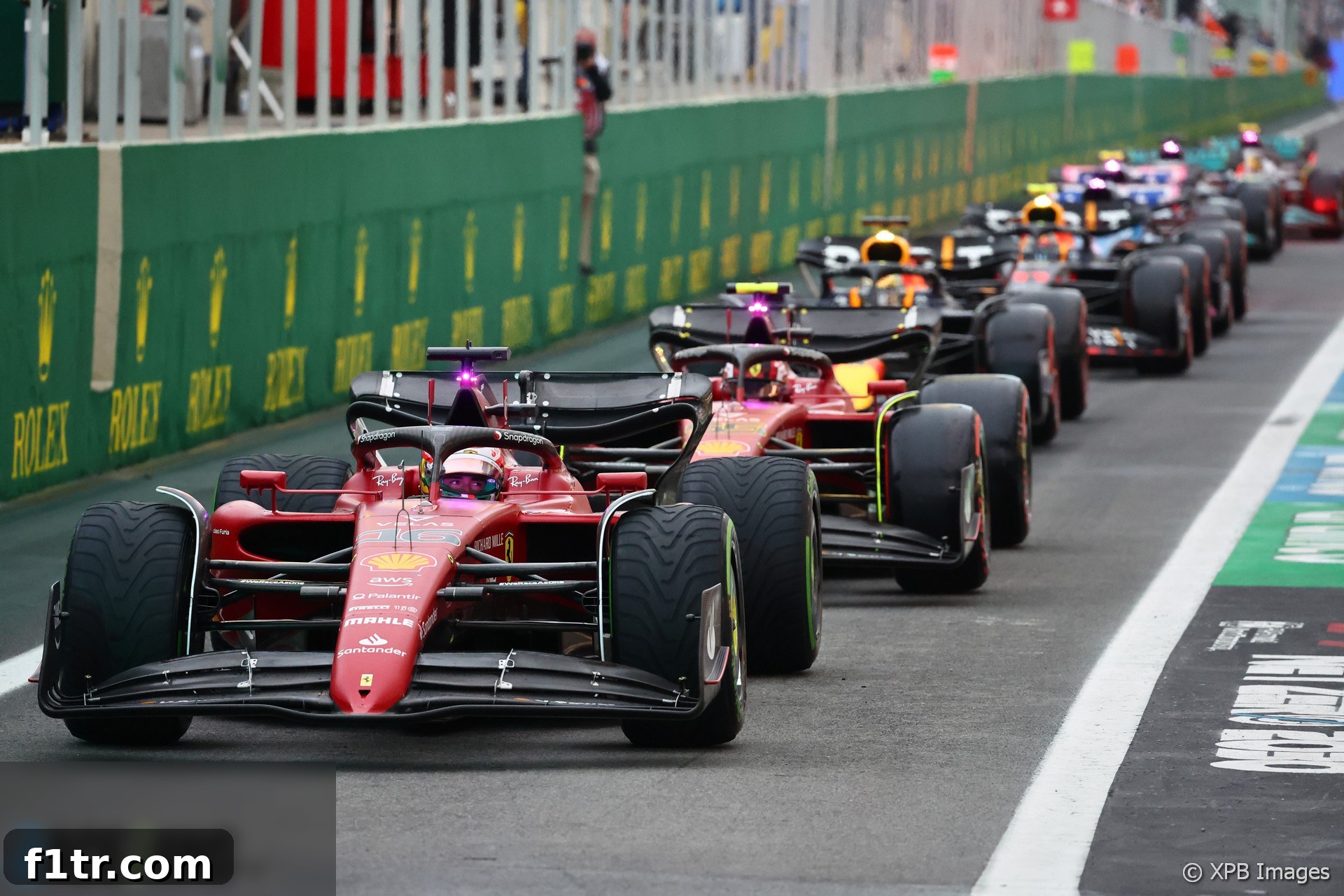
The exhilarating world of Formula 1 often boils down to split-second decisions and strategic gambles, especially during the high-stakes qualifying sessions. For Scuderia Ferrari driver Charles Leclerc, the Brazilian Grand Prix qualifying session at Interlagos delivered yet another painful lesson in strategy, leaving him reeling from a questionable team call that robbed him of a chance to compete at the sharp end of the grid. In a dramatic Q3 session marked by rapidly changing weather conditions, Leclerc found himself on the wrong side of a crucial tyre choice, failing to set a representative lap time on slick tyres as his rivals capitalized on a fleeting dry window.
The stage was set for a thrilling final qualifying segment at Interlagos, a circuit renowned for its unpredictable weather. As Q3 commenced, the track surface was dry, but the looming threat of rain dominated pre-session discussions. Ferrari’s weather radar indicated rain was imminent, a prediction that had, ironically, failed to materialize earlier in Q1. Despite this previous misjudgment, the team once again held firm in their belief that heavy rain was just moments away as the final qualifying shootout began.
Faced with uncertainty regarding the exact timing and intensity of the impending downpour, Ferrari opted for a highly contentious split-strategy. Laurent Mekies, Ferrari’s Sporting Director, later articulated the rationale: “We split the strategies because we knew rain was imminent.” This decision saw Charles Leclerc dispatched from the garage on a set of intermediate tyres, designed for damp conditions, in anticipation of the forecasted rain. His teammate, Carlos Sainz Jnr, meanwhile, headed out on soft, slick tyres, a choice that ultimately mirrored almost every other competitor on the grid. Crucially, all other teams had sent their cars out on slicks, underscoring Ferrari’s isolation in their tyre call for Leclerc.
Ferrari had shrewdly positioned both their cars at the front of the pit lane queue, a move that proved vital given the rapidly deteriorating conditions. However, as Leclerc joined the track, a growing sense of unease settled over him. A quick glance in his mirrors confirmed his worst fears: he was the sole driver on intermediate tyres. This immediate realization sparked a series of increasingly urgent radio communications with his race engineer, Marcos Padros, highlighting the escalating tension and confusion within the Ferrari camp.
Leclerc’s Frustration Unfolds: Key Radio Messages from Q3
Reflecting on the session, Leclerc expressed his deep disappointment: “I accepted the decision to go on intermediates, and then I just waited for the rain that never came.” His initial compliance quickly gave way to concern as he surveyed the scene from his cockpit, noting his rivals’ unanimous decision to run on dry weather tyres. The following radio exchanges paint a vivid picture of the unfolding drama and Leclerc’s mounting frustration:
| Marcos Padros | 10 seconds for the green. Sainz is on soft, Verstappen and both Mercedes on soft. |
| Marcos Padros | One minute. One minute. |
| Leclerc | Where is the rain? |
| Marcos Padros | Coming towards turn one, main straight. |
| Leclerc | A lot? |
| Marcos Padros | In one minute, we expect more rain. And SOC reminder, 30 seconds for the green. |
| Leclerc | Am I the only car on inters? |
| Marcos Padros | Yes, we believe you are the only one on inters. |
As Leclerc continued his out-lap, he was instructed to yield to Sainz, who was already on slicks and pushing hard. He complied, allowing his teammate through at Descida do Lago, Turn Four. The critical window for setting a competitive lap time was rapidly closing, yet Leclerc remained trapped on the wrong tyres. He desperately sought updates from his team, questioning the conditions and whether he should pit at the end of the lap to switch to the more appropriate slick rubber.
The team’s responses, however, were inconclusive, prolonging Leclerc’s time on the intermediates while precious seconds ticked by. The communication breakdown and the delayed decision-making further compounded Ferrari’s initial error, pushing Leclerc closer to a no-lap scenario.
| Marcos Padros | And green light. |
| Marcos Padros | And let Sainz by. |
| Leclerc | Ferradura, turn six What do we do? Do you want me to push for the lap if the rain is not coming? |
| Marcos Padros | We’ll come back to you. |
| Marcos Padros | Pinheirinho, turn nine I will come back to you. |
| Leclerc | There is absolutely no rain for now. |
| Marcos Padros | Raining at turn 12, we believe. |
| Leclerc | Yes but not enough. Let me know. |
| Marcos Padros | Push, I will let you know. |
The confusion reached a critical point when Ferrari finally decided to call Leclerc in for a tyre change, but the instruction came too late. By the time the call was made, Leclerc had already passed the pit lane entrance, committing him to another full lap on the increasingly irrelevant intermediate tyres. This communication error, a momentary lapse in timing, proved to be a fatal blow to his qualifying hopes. The frustration was palpable, a stark reminder of how quickly fortunes can change in Formula 1 when strategy falters.
As he reached the end of that lap, Ferrari’s pit wall again instructed him to box, this time early enough for him to make the turn into the pit lane. The delay, however, had already cost him dearly, as the weather was now on the cusp of an irreversible change.
| Leclerc | Turn 13 [Unclear] |
| Marcos Padros | Box now, box now! Box, box, box! |
| Leclerc | Leclerc has already passed the pit lane entrance Nice. Nice one. Let me push now. |
| Leclerc | Mergulho, turn 11 What do I do? |
| Marcos Padros | Box now, box. Box now, box. Watch for traffic. |
| Marcos Padros | So box now box, pit confirm. |
| Marcos Padros | And we need multifunction tyre position two. Multifunction tyre position two. |
Leclerc eventually returned to the track on a fresh set of soft tyres, but by this point, the heavens had opened. The rain, initially a distant threat, was now intensifying, turning the Interlagos circuit into a slippery challenge. Just as he intended to push for a crucial lap time, yellow flags were waved at Descida do Lago, where George Russell had spun off, a testament to the treacherous conditions. Leclerc himself ran wide at the corner exit, radioing his team to confirm that the conditions were simply too adverse to continue. The session was promptly red-flagged to recover Russell’s stricken car, sealing Leclerc’s fate.
The Red Flag and Lingering Disappointment
The red flag not only brought an end to Q3 but also extinguished any remaining hope for Leclerc to record a meaningful lap time. The frustration and raw emotion were evident in his final radio exchanges:
| Leclerc | Tell me about the rain. Is it going to calm down? |
| Marcos Padros | Rain will be increasing intensity. |
| Leclerc | For fuck’s sake. [Unclear] |
| Marcos Padros | Copy. |
| Leclerc | I’m going to take risks. |
| Marcos Padros | So pushing behind. We have Norris. So Norris slow. Single yellow turn four. Single yellow turn four. |
| Leclerc | I think it’s raining too much. |
| Automated message | Red flag, stay positive. |
| Marcos Padros | Red flag. |
| Leclerc | Did everybody complete a lap on slicks? |
| Marcos Padros | Yes, they did. |
| Leclerc | Fucking beautiful. |
| Marcos Padros | And box now box. |
| Leclerc | Yeah don’t worry, red flag. |
The implications of this strategic misstep were profound. Leclerc would start the sprint race from a disappointing 10th position, severely hampering his prospects for the main Grand Prix. Speaking after the session, Leclerc did not mince words, stating he was “extremely disappointed” with how Q3 had unfolded, especially given that “the pace was there.” This sentiment resonated deeply, as many believed Leclerc had the potential to challenge for pole position had the strategy been flawless.
Laurent Mekies, while acknowledging the frustration, offered a broader perspective: “It was clearly frustrating for Charles and for all of us because, this season, we have had some great qualifying sessions in equally difficult conditions.” He also highlighted that Ferrari was “weren’t the only team to have had mixed fortunes in qualifying, with one car towards the front and another further back,” a subtle nod to the challenging nature of the conditions, though it offered little solace to Leclerc.
This incident at Interlagos adds another chapter to Ferrari’s often-criticized strategic decision-making. In a season where they had shown flashes of brilliance, particularly in qualifying, such blunders serve as a painful reminder of the fine margins in Formula 1. The choice of intermediate tyres when the track was clearly dry, coupled with the delayed pit call, underscores a deeper issue within the team’s operational framework or their interpretation of crucial data. While weather forecasting is inherently complex, the unanimous decision of other teams to start on slicks suggests a misjudgment on Ferrari’s part that proved incredibly costly.
For Leclerc, starting 10th means a tough battle ahead. Interlagos, while offering some overtaking opportunities, can be a challenging circuit to move through the field, especially in the compact sprint race format. His focus will now shift to damage limitation and a spirited charge through the pack to secure a stronger grid position for Sunday’s main race. “We still have the car but now we need to to get on it and obviously do everything good for the rest of the weekend,” he added, indicating a renewed determination to overcome this setback.
The incident not only impacted Leclerc’s immediate prospects but also fueled ongoing discussions about Ferrari’s ability to consistently execute optimal race strategies. In a sport where every decision is scrutinized, and championships are often decided by fractions of a second and strategic brilliance, such missteps can carry significant weight, both on track and in the court of public opinion. As the Brazilian Grand Prix weekend progresses, all eyes will be on Leclerc and Ferrari to see if they can turn this disappointment into a valuable lesson and stage a resilient comeback.
2022 Brazilian Grand Prix: Further Analysis and Updates
Browse all 2022 Brazilian Grand Prix articles for more insights and race weekend coverage.