The FIA World Endurance Championship (WEC) stands on the cusp of a new golden era, having successfully navigated the turbulent waters that followed the formidable LMP1 Hybrid period. A sweeping overhaul of its regulations has paved the way for an unprecedented influx of manufacturers and teams, promising a thrilling resurgence in endurance sports car racing. The 2023 season marks a pivotal moment, with a burgeoning grid and the tantalizing prospect of even more global automotive giants joining the fray in the years to come.
At the heart of this revitalization is the ingenious convergence of two distinct yet complementary prototype regulations: Le Mans Hypercar (LMH) and Le Mans Daytona hybrid (LMDh). LMH, conceived by the FIA and the Automobile Club de l’Ouest (ACO) as the successor to LMP1, offers a broad canvas for major automakers and privateer constructors to engineer bespoke chassis, engines, and optional hybrid systems. In contrast, LMDh provides a more cost-effective pathway, allowing manufacturers to build their unique bodywork and powertrains around customer LMP2 chassis “spines,” all standardized with a control hybrid system.
This innovative regulatory framework, coupled with a meticulously implemented ‘Balance of Performance’ (BoP) system, ensures that these diverse prototype platforms can compete on an equal footing at the world’s most prestigious endurance races. From the demanding Daytona 24 Hours and the iconic Sebring 12 Hours to the legendary 24 Hours of Le Mans, manufacturers now have the freedom to choose their preferred engineering path while vying for overall victory. This unprecedented liberty has genuinely ignited the interest of top automotive brands, leading to a fiercely competitive grid. The 2023 WEC season kicks off with five factory-backed manufacturer teams battling for supremacy in the Hypercar class, starting with the challenging 1,000 Miles of Sebring.
Cadillac: American Muscle on the Global Stage
General Motors’ luxury marque, Cadillac, arrives in the WEC with a formidable pedigree forged during the DPi (Daytona Prototype International) era of IMSA’s premier prototype racing, where they enjoyed tremendous success from 2017 to 2022. Their new challenger, the Cadillac V-Series.R, is a worthy successor to the highly decorated DPi-V.R. Built by the renowned Italian constructor Dallara, using their robust LMP2 chassis as a foundation, the V-Series.R is powered by a purpose-built, naturally-aspirated 5.5-litre V8 engine. This potent powerplant is seamlessly integrated with the spec LMDh battery and Motor Generator Unit (MGU) components, delivering an imposing presence and a thunderously loud engine note – a signature characteristic reminiscent of classic large-displacement American muscle cars.
The factory Cadillac Racing effort is meticulously managed by Chip Ganassi Racing, campaigning one full-time entry in the WEC and another in IMSA. To support their expanding global aspirations, new European headquarters are set to be operational later this year. The “blue deuce” driven by two-time Le Mans winner Earl Bamber, two-time Sebring 12 Hours victor Alex Lynn, and endurance racing stalwart Richard Westbrook made a strong showing at the Daytona 24 Hours earlier in the year, finishing a commendable fourth overall. This performance was particularly notable as it was the only car, apart from the dominant Toyota GR010 Hybrid, to lead any session during the WEC Prologue pre-season tests held at Sebring, signaling Cadillac’s immediate competitiveness on the world stage.
Vanwall: The Privateer’s Unyielding Spirit
For the past decade, Colin Kolles has steadfastly pursued his vision as a privateer prototype constructor, often swimming against the formidable currents of manufacturer-backed giants. While his team’s efforts have historically encountered significant challenges, the spirit of the privateer endures. After a period of dormancy, the outfit formerly known as ByKolles acquired the trademark of the storied British constructor Vanwall and rebranded as Vanwall Racing Team. However, this rebranding has recently come under scrutiny following an EU Intellectual Property Office court case ruling against them, adding another layer of complexity to their ambitious return.
Their new prototype, currently known as the Vanwall Vandervell 680, embodies a no-frills, pure racing philosophy. Eschewing a hybrid system, it relies on a robust 4.5-litre naturally-aspirated engine expertly crafted by Gibson, renowned builders of endurance racing power units. The driver line-up features the most prolific name, Jacques Villeneuve, the 1997 Formula 1 world champion. However, with minimal testing and a considerable layoff from top-level endurance racing, Villeneuve’s individual pace at the Prologue suggested he might be a liability unless he rapidly improves. Formula V8 3.5 champion Tom Dillmann and WTCR race winner Esteban Guerrieri have demonstrated the capability to bring the Vandervell 680 within striking distance of the manufacturer prototypes. For Vanwall, however, the primary objective for the season, including the grueling Le Mans 24 Hours, should realistically be to simply finish most races without encountering major mechanical issues, a testament to the immense challenges faced by privateer entries in the Hypercar class.
Porsche: A Legendary Return to Endurance Supremacy
Six years after the reverberations of the Dieselgate scandal led to the premature demise of their triple WEC and Le Mans-winning 919 Hybrid program, Porsche makes a triumphant return to top-tier endurance racing with the Porsche 963. This evocative nomenclature immediately conjures memories of the all-conquering Porsche 962, setting exceptionally high expectations for the new machine. The chassis for the 963 was meticulously designed by the Canadian-American constructor Multimatic, a firm with a track record of innovative designs, including the striking and at times controversial Ford GTE car. Powering the 963 is a potent 4.6-litre twin-turbo V8 engine, a powerplant whose lineage can be traced back to the formidable Porsche RS Spyder – an LMP2 car that famously outmaneuvered more powerful LMP1s in the American Le Mans Series. The 963’s design pushes the boundaries of innovation within the LMDh platform, transcending the notion of being merely an LMP2 car adorned with Porsche branding and an engine swap; it is a meticulously engineered racing machine.
Penske Motorsport, a powerhouse in international motorsport, is entrusted with the formidable task of managing the factory Porsche team’s operations, fielding two-car efforts on both sides of the Atlantic. No expense has been spared in assembling an elite roster of drivers, handpicking the best talent from within their ranks to pilot the 963 in its inaugural full WEC season. The formidable line-up includes Michael Christensen, Frédéric Makowiecki, Kévin Estre, and Laurens Vanthoor, each boasting multiple GTE class victories at Le Mans. Dane Cameron brings his experience as a three-time IMSA series champion, while the ageless André Lotterer, a three-time overall winner at Le Mans during his illustrious tenure with Audi, adds invaluable expertise. The 963’s debut at Daytona showcased flashes of immense promise but was ultimately hampered by mechanical gremlins. While it didn’t top the time sheets at Sebring, its consistent pace was close enough to send a clear message to rivals, establishing Porsche as a formidable contender in anticipation of its highly anticipated WEC debut.
Toyota: The Unwavering Standard Bearer
Toyota Gazoo Racing’s unwavering commitment to the FIA World Endurance Championship during its most challenging period, when stalwarts like Audi, Porsche, and Nissan withdrew, was instrumental in saving the series from potential extinction. They were the pioneering manufacturer to fully commit to the new LMH regulations, launching the groundbreaking GR010 Hybrid in 2021. For the 2023 season, the GR010 Hybrid has undergone a significant raft of aerodynamic upgrades, a direct response to the emergence of its first genuine competition from other manufacturers in quite some time. With its bespoke hybrid system seamlessly integrated with a potent 3.5-litre twin-turbo V6 engine, the GR010 Hybrid stands as a powerful testament to the transformative journey of Toyota’s international racing endeavors since its ultimately fruitless Formula 1 campaigns.
Where Toyota once spent years in pursuit of Audi and Porsche, they now occupy the undisputed position of the benchmark against which every new challenger will be measured. Their unparalleled experience and meticulous preparation were vividly reflected in the Prologue pre-season tests, where the GR010 Hybrid consistently set the fastest times, leading three out of four sessions without encountering any major dramas. The driver line-up for both cars is nothing short of exceptional, with every member having claimed the World Endurance Hypercar Drivers’ Championship and the coveted overall victory at the 24 Hours of Le Mans. The number seven car, piloted by Mike Conway, Jose Maria Lopez, and the formidable driver/manager Kamui Kobayashi, secured the GR010 Hybrid’s inaugural Le Mans victory in 2021 and has since achieved back-to-back world titles with both the GR010 and its predecessor, the TS050. In the number eight car, former teenage prodigy Ryo Hirakawa immediately stepped into the shoes of Kazuki Nakajima, winning both Le Mans and the World Endurance Hypercar Championship alongside Brendon Hartley, now a three-time world champion and Le Mans winner, and Sébastien Buemi, a four-time Le Mans victor. Despite facing the most intense competition in their history, Toyota remains the clear favorite to repeat as champions, a testament to their enduring dominance and expertise.
Ferrari: The Illustrious Fifty-Year Return
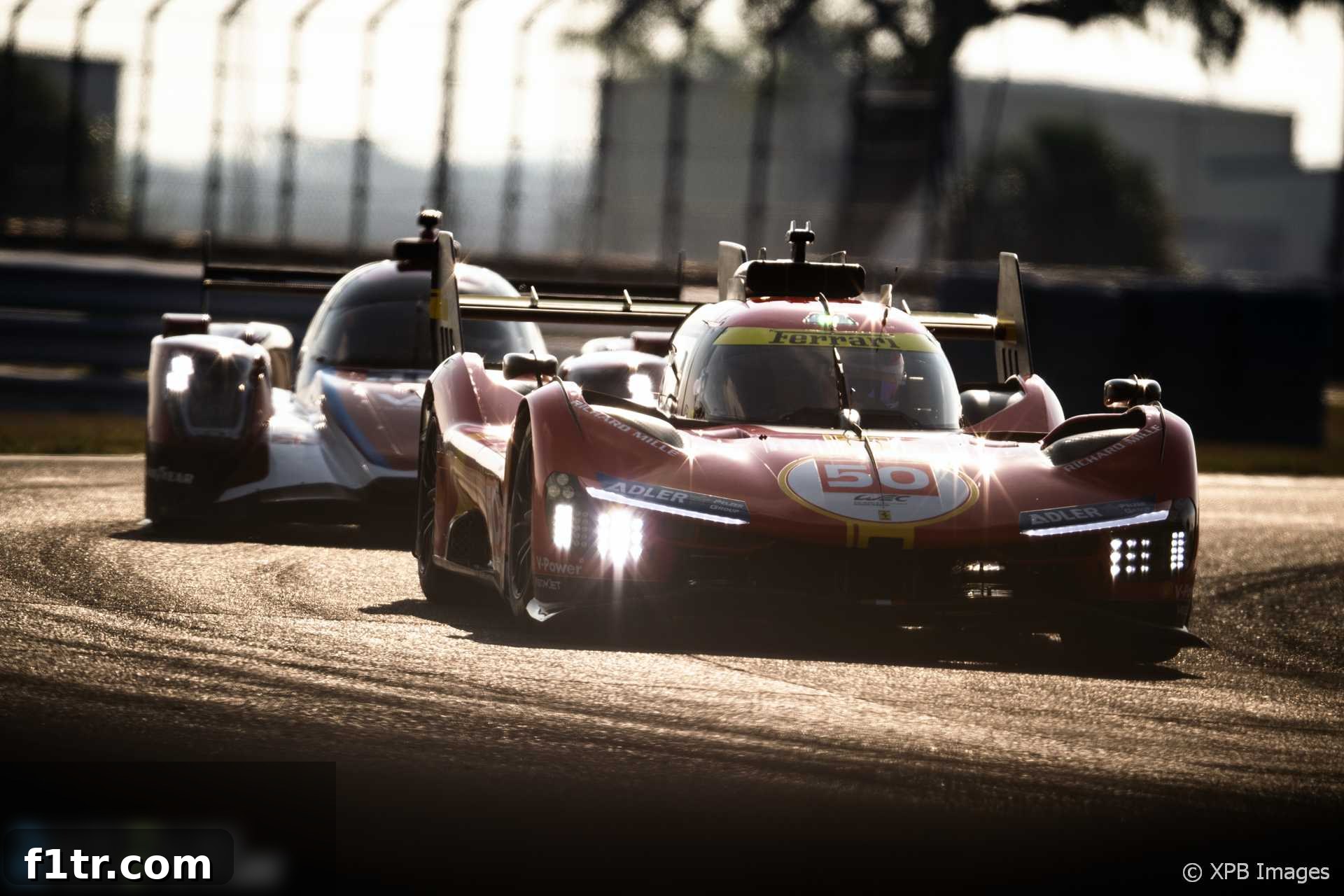
The unveiling of the Ferrari 499P prototype racer marks a moment 50 years in the making, signifying Maranello’s official return to the pinnacle of endurance sports car racing. While Ferrari as a manufacturer boasts an impressive nine victories at the 24 Hours of Le Mans, they have not entered the top-tier prototype category with their full factory force since 1973. A stunning commitment to the Hypercar class in the spring of 2021 eventually culminated in the breathtaking world premiere of the 499P last autumn. It is a car that embodies grace and aerodynamic elegance, sharing its potent three-litre turbo V6 engine with the acclaimed 296 GTB sports car, yet featuring its own originally designed chassis, bodywork, and sophisticated hybrid system, making it a true bespoke racing machine.
To spearhead this landmark program, Ferrari has entrusted AF Corse, their premier GT racing clients and long-standing partners, with the crucial responsibility of trackside operations. The team has embarked on an exhaustive testing regime, logging upwards of 20,000 kilometers in preparation for the 499P’s highly anticipated debut race. This extensive preparation included the WEC Prologue, where the 499P demonstrated promising pace, albeit with a minor setback when James Calado crashed the number 51 car on Sunday morning. While testing provides invaluable data, the true test will come when the first Ferrari sports prototype in many generations makes its proper competitive debut. The formidable driver line-up is a collection of Ferrari’s most trusted and successful GT drivers, each with a proven track record of triumph: double World Endurance GT Champions Alessandro Pier Guidi and James Calado (himself an accomplished single-seater racer), Antonio Fuoco (a distinguished Ferrari Driver Academy alumnus), Miguel Molina, and Nicklas Nielsen. Adding further depth, Antonio Giovinazzi joins the team after six seasons primarily associated with Ferrari as a Formula One race and reserve driver, bringing invaluable top-level motorsport experience to the project.
Peugeot: The Audacious Wingless Maverick
When it made its highly anticipated debut after Le Mans last year, Peugeot’s 9X8 prototype immediately captivated the motorsport world with its audacious and radical wingless design. This innovative approach relied solely on ground effect aerodynamics generated beneath the car to produce the necessary downforce, marking a truly distinctive re-entry into the sport for Peugeot after a tumultuous exit a decade prior. It was hailed as a bold statement, showcasing Peugeot’s commitment to pushing design boundaries.
However, despite the 9X8’s distinctive aesthetics and a driver line-up boasting the talent required to compete for victories, its initial partial season proved to be a troubled one. The car notably lacked both outright pace and reliability, suffering from significant porpoising issues that hindered its performance. Even at the WEC Prologue this year, Peugeot continued to demonstrate a sizeable deficit to the front-running Toyota entries and encountered persistent mechanical problems, which unfortunately cost them valuable testing mileage. With a crew headlined by the likes of Le Mans overall winner Loïc Duval, two-time Formula E champion Jean-Éric Vergne, DTM champion Paul di Resta, and runner-up Nico Müller, complemented by underrated youngsters Gustavo Menezes and Mikkel Jensen, the sheer talent within the team is undeniable. The crucial question that remains is whether Peugeot’s radical design concept can ultimately translate its theoretical advantages into practical, consistent success on the track, proving that innovation can truly conquer convention.
Glickenhaus: The Privateer’s Passion Project
Jim Glickenhaus, a visionary filmmaker and passionate car designer, is known for being as brazen and bombastic as privateer team principals come. Yet, Glickenhaus Racing has benefited from serious backers since the inception of their Hypercar endeavors. A testament to their ambition and credibility, Joest Racing, the formidable force behind Audi’s unparalleled Le Mans dominance in the 21st century, is in charge of trackside operations for this third-year program. The Glickenhaus 007 itself is a fascinating machine: an Italian design and construction housing a potent French-built engine – a 3.5-litre twin-turbo V8, notably without a hybrid system, embracing a purist approach to speed.
The driver trio is exceptionally strong, comprising veteran prototype racer Olivier Pla, Daytona 24 Hours winner Ryan Briscoe, and two-time Le Mans winner Romain Dumas – a line-up that any factory team would covet for their own cars. Here, they represent this iconoclastic American upstart team that impressively secured an overall podium finish at Le Mans just last season. However, their pace during the Prologue has been below par, suggesting that for Glickenhaus Racing, expectations for the upcoming season might need to be tempered compared to their factory-backed rivals. Despite the challenges, their presence injects a unique, underdog narrative into the Hypercar class, reminding everyone of the spirit of independent racing.
Future Horizons: Expanding the Hypercar Grid
The excitement surrounding the FIA World Endurance Championship is set to intensify even further, with a multitude of new Hypercar and LMDh programs already confirmed or strongly anticipated in the coming seasons. Many of these future entries have strong ties to teams currently competing in the LMP2 and GTE classes at Sebring and throughout the 2023 WEC calendar, serving as fertile ground for future top-tier campaigns.
Porsche, for instance, has two prominent customer teams eagerly awaiting deliveries of their highly anticipated 963 LMDh machines. Team JOTA, a proven LMP2 powerhouse, will campaign two cars in the LMP2 category until their Porsche 963s arrive, signaling their eventual step up. Proton Competition, a stalwart in the WEC’s Pro-Am GT category, is currently running two cars under its own banner and two more in conjunction with Iron Lynx and their inspiring all-female Iron Dames team, before planning to integrate their LMH Porsche into an already loaded racing effort. This phased approach allows teams to build experience and infrastructure.
Further bolstering the future grid, junior formula racing powerhouse Prema is deeply involved with the upcoming Lamborghini LMDh project, which is slated to launch next year. Prema is already fielding two LMP2 entries as a preparatory step for this exciting collaboration. Alpine, after campaigning a grandfathered LMP1 car for the past few seasons, is strategically stepping down to LMP2 before the grand launch of their own bespoke Hypercar in 2024. Team WRT, widely regarded as the most successful outfit in contemporary GT racing, is meticulously preparing to run the new BMW M Hybrid V8 in the WEC next season, another significant two-car effort set to join the fray. Meanwhile, Vector Sport is also operating an LMP2 car as they turn their attention to the brand-new Isotta Fraschini Tipo 6, a privateer hypercar recently revealed and currently undergoing rigorous testing, showcasing the diverse approaches to Hypercar entry. McLaren, a global motorsport icon, has maintained a non-committal stance regarding prototype sports car racing, but the continued presence of CEO Zak Brown’s first racing project – United Autosports – fuels persistent rumors that he will ultimately bring the sportscar brand, already competing in Formula 1, IndyCar, Formula E, and Extreme E, into the WEC Hypercar class. Finally, the dominant Acura ARX-06, which finished a commanding first and second in the Daytona 24 Hours (notwithstanding the recent cheating revelations surrounding declared winners Meyer Shank Racing), will not race this year. However, Michael Andretti of Andretti Autosport has formed an alliance with Wayne Taylor Racing in IMSA and has publicly expressed significant interest in entering Le Mans with Honda’s luxury brand in the near future, even against Cadillac, the technical partners of his prospective F1 team, highlighting the intriguing inter-brand rivalries developing across global motorsport.
2023 FIA World Endurance Championship Calendar
The 2023 FIA World Endurance Championship schedule promises a captivating tour of the world’s most iconic racing venues, delivering thrilling endurance challenges across seven rounds:
| Round | Date | Circuit | Duration |
|---|---|---|---|
| 1 | 17th March | Sebring | 1,000 miles |
| 2 | 16th April | Algarve | Six hours |
| 3 | 29th April | Spa-Francorchamps | Six hours |
| 4 | 10-11th June | Le Mans | 24 hours |
| 5 | 9th July | Monza | Six hours |
| 6 | 10th September | Fuji Speedway | Six hours |
| 7 | 4th November | Bahrain | Eight hours |
Further Insights into the World Endurance Championship
- WEC cancels its Qatar season-opener due to US-Iran war
- Porsche to end WEC Hypercar programme after just three seasons
- Mercedes won’t return to Le Mans because “we don’t like Balance of Performance” – Wolff
- “Luck” needed to win Le Mans because of Balance of Performance – Verstappen
- McLaren finally confirms it will enter the World Endurance Championship in 2027
Browse all World Endurance Championship articles