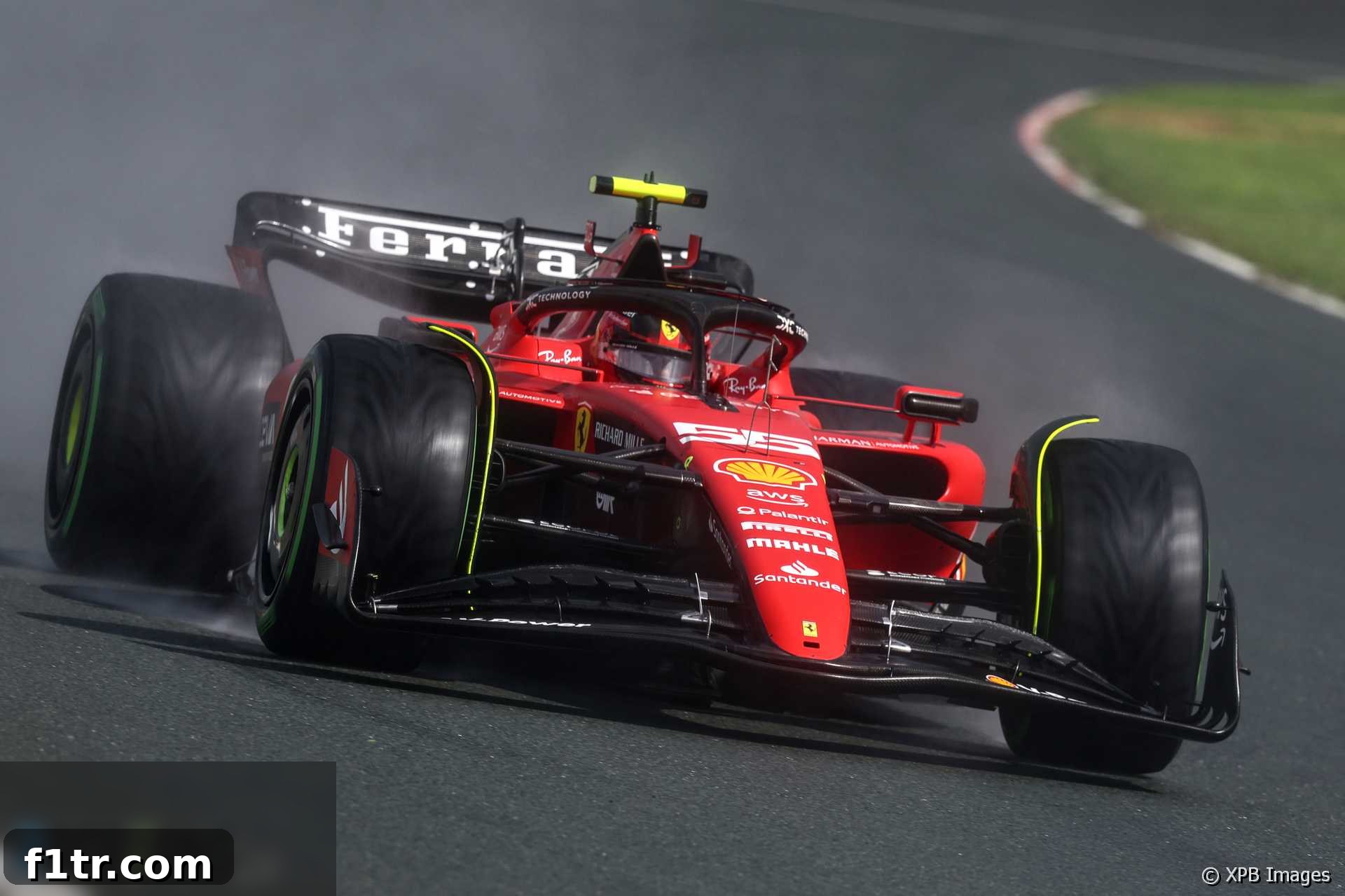
Zandvoort Qualifying Incident: Carlos Sainz, Ferrari, and the Perilous Pit Exit
The thrilling atmosphere of the Dutch Grand Prix qualifying at Zandvoort was momentarily overshadowed by a contentious incident involving Ferrari driver Carlos Sainz Jnr and McLaren’s rising star, Oscar Piastri. This on-track encounter, which saw Piastri forced onto the grass, resulted in minor but significant penalties for both Sainz and his Ferrari team, highlighting the critical importance of safety and communication in the high-stakes world of Formula 1.
The Close Call: A Detailed Account of the Zandvoort Incident
The dramatic events unfolded during the intense Q1 session, where every driver was pushing to secure a coveted spot in the next stage of qualifying. With just under six minutes remaining, Oscar Piastri, having just set an impressive fastest time, was on a cool-down lap, carefully navigating the challenging Zandvoort circuit. As he rounded Tarzan, the circuit’s iconic first corner, anticipation was building.
Simultaneously, Carlos Sainz was making his exit from the pit lane, eager to commence a fresh flying lap. The Ferrari was positioned directly behind Valtteri Bottas’s Alfa Romeo, a common scenario in qualifying where drivers often jostle for track position and clear air. As Sainz merged onto the circuit, his race engineer, Riccardo Adami, issued a directive: “Watch the white line” – a standard instruction regarding the pit exit boundary. However, a crucial piece of information seemed to be missing or delayed. Regarding the rapidly approaching McLaren of Piastri, Adami’s communication was notably vague: “Piastri behind, I don’t know what he’s doing.”
This ambiguity proved costly. As Sainz fully joined the track, he drifted to the left, inadvertently squeezing Piastri’s McLaren onto the grass on the approach to Turn Three. The young Australian driver, reacting instantly to avoid a potentially severe collision, had to take evasive action. His immediate radio message to his team conveyed the gravity of the situation: “Sainz just completely ran me onto the grass. It would’ve been a crash if I didn’t avoid him there.” This stark warning underscored the dangerous proximity of the two F1 machines and the split-second decisions that define F1 safety.
The Stewards’ Scrutiny: Investigation and Verdict
Following the session, the Dutch Grand Prix stewards initiated a thorough investigation into the incident, a standard procedure for any potentially dangerous maneuver on track. Their meticulous examination involved reviewing telemetry data, onboard camera footage from both cars, and, crucially, the team radio communications. The objective was clear: determine if any regulations were breached and assign appropriate penalties to ensure fair play and driver safety.
The stewards’ findings were unequivocal. They determined that Sainz’s action constituted a “potentially dangerous” manoeuvre, emphasizing that a collision was only averted due to Piastri’s quick thinking and defensive driving. Their analysis of the team radio revealed a significant discrepancy in the information provided to drivers exiting the pits. Valtteri Bottas, who had exited just ahead of Sainz, received ample warning about Piastri’s approach. In stark contrast, Sainz was primarily instructed about the white line at pit exit, receiving insufficient and delayed information about Piastri until the McLaren was already alongside him. This lack of precise and timely communication from the Ferrari pit wall was deemed a critical contributing factor to the incident.
Sainz offered his perspective to the stewards, explaining that he had only briefly caught sight of Piastri as he rounded Turn One at the pit exit and had gauged that Piastri was on a slow lap. He further explained that due to the relative angle of the cars, combined with the prevalent spray from the track, he subsequently lost sight of the McLaren. His priority, he stated, was to quickly get to the drying line on the track. While the stewards acknowledged Sainz’s explanation, they concluded that his rapid move to the racing line, while unable to clearly see a car he knew was in the vicinity, created an undeniably dangerous situation. Consequently, Carlos Sainz received his first driving reprimand of the 2023 season, and Ferrari was issued a fine of €5,000 (£4,290) for their lapse in team communication.
Sainz’s Defense: Navigating Limited Visibility and Team Communication
Speaking after the qualifying session, Carlos Sainz offered his immediate thoughts on the incident, suggesting he didn’t believe it was overly egregious. His defense centered on two primary points: the lack of comprehensive information from his team and the challenging visibility conditions on track. “I basically left the pit lane and they didn’t tell me he was coming,” Sainz explained. He also noted Piastri was on an in-lap, which drivers often take at a reduced pace, potentially leading to a misjudgment of speed or intent.
Furthermore, Sainz highlighted the significant challenge posed by “the spray,” which severely impedes visibility in the mirrors, particularly when joining the circuit from the pit lane. “You are basically blind and if they don’t tell you on the radio, it’s very, very difficult to see anything,” he elaborated. He expressed hope that the incident had not adversely affected Piastri’s qualifying performance, noting that Piastri had progressed to Q2 and then Q3. Sainz also suggested that stewards tend to be “a bit more lenient when that happens,” implying that if a driver’s session isn’t significantly compromised, the penalties might be less severe, though this clearly did not negate the safety concerns. This perspective sheds light on the intense pressure and split-second decision-making required from drivers, often relying heavily on precise information from their engineers.
Ferrari’s Recurring Communication Challenges
This incident at Zandvoort wasn’t an isolated event for the Scuderia. Ferrari has a documented history of facing penalties related to communication failures with Carlos Sainz. A notable precedent occurred during the 2022 Monaco Grand Prix. On that occasion, the team was fined a substantial €25,000 (£21,452) by the FIA stewards. The penalty was imposed after Ferrari provided Sainz with “grossly incorrect messages” regarding the position and speed of Lance Stroll during a practice session, which ultimately resulted in Sainz impeding the Aston Martin driver. This pattern raises questions about Ferrari’s internal communication protocols and their effectiveness in high-pressure racing scenarios.
In Formula 1, where milliseconds define success and failure, accurate and timely radio communication between the pit wall and the driver is paramount. It ensures driver safety, facilitates strategic decisions, and prevents on-track incidents. The recurring nature of these communication breakdowns suggests a systemic issue that Ferrari may need to address more comprehensively to avoid future penalties and, more importantly, to safeguard their drivers and competitors.
McLaren’s Stance: Sportsmanship Amidst Competition
Adding a layer of sportsmanship to the competitive rivalry, McLaren team principal Andrea Stella offered a measured and understanding perspective on the incident. Stella, who has a history with Sainz from his time at McLaren, expressed confidence in the Spanish driver’s character and intent. “We like Carlos,” Stella stated, “We know he’s a very fair, good person.”
Stella firmly believed that if an incident occurred, it was certainly not intentional on Sainz’s part. “Certainly if there was a situation, it was not intentional,” he affirmed, suggesting that any obstruction was likely a consequence of misjudgment or poor information rather than malicious intent. He concluded by accepting the stewards’ decision, indicating a respect for the regulatory process: “I guess the stewards will take that into account, but in terms of outcome I just take what they decide.” This respectful approach from a competing team principal underscores the camaraderie that can still exist within the cut-throat world of Formula 1, even after a controversial on-track event.
The Broader Implications: Safety, Communication, and F1 Regulations
The incident at Zandvoort serves as a critical reminder of the unwavering importance of safety protocols and robust team communication in Formula 1. F1 regulations, particularly those concerning track entry and impeding other drivers (such as Article 37.5 of the FIA Formula 1 Sporting Regulations), are designed to prevent such dangerous scenarios. Drivers are expected to be aware of their surroundings and to avoid impeding competitors, especially when rejoining the track after a pit stop or from the pit lane.
However, the incident also highlights the immense reliance drivers have on their race engineers for a complete picture of track conditions, especially when visibility is compromised by weather or the sheer speed of other cars. The stewards’ decision to penalize Ferrari underscores the team’s responsibility in providing their drivers with all necessary information to ensure safe navigation on track. A driver’s ability to “react” is only as good as the “information” they possess. In a sport where inches and milliseconds determine outcomes, a clear radio signal and precise data are as crucial as horsepower and aerodynamic efficiency.
This episode will undoubtedly prompt further internal reviews at Ferrari regarding their communication procedures, aiming to prevent a recurrence of such misjudgments. For the broader F1 community, it reinforces the ongoing dialogue about pit lane safety, track etiquette, and the delicate balance between competitive aggression and responsible driving. As Formula 1 continues to push the boundaries of speed and technology, the human element of communication and vigilance remains a cornerstone of driver and team success, and, most importantly, safety.
The 2023 Dutch Grand Prix qualifying incident, while resulting in minor penalties, offered significant lessons. It highlighted the ever-present dangers in F1, the critical role of precise team communication, and the stewards’ dedication to maintaining a safe racing environment. As the F1 season progresses, the scrutiny on pit lane exits and team radio accuracy will likely remain elevated, ensuring that all teams and drivers continue to uphold the highest standards of safety and fair play.