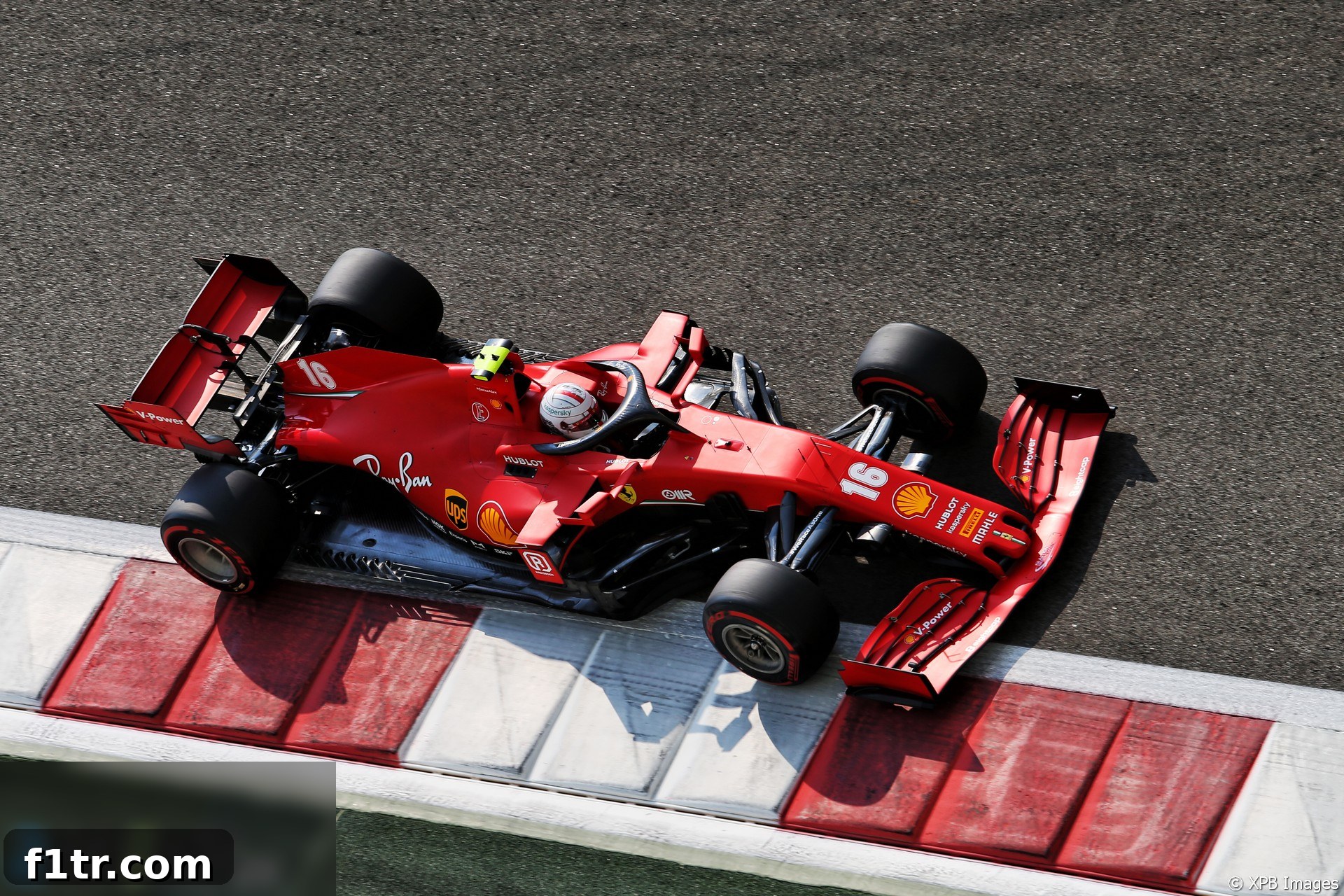
Ferrari’s Strategic Shift: Binotto Explains New Technical Leadership Amidst 2022 Preparations
In a significant strategic move, Ferrari team principal Mattia Binotto has clarified the Scuderia’s new technical leadership structure, confirming that the team will not appoint a direct replacement for the outgoing technical director, Simone Resta. This decision marks a pivotal moment for Ferrari as it navigates the complex challenges of the current Formula 1 season while simultaneously laying the groundwork for the radical new regulations set to debut in 2022.
The restructuring comes at a crucial juncture for the Italian giants, who are not only striving to regain their competitive edge but also playing a key role in the development of customer teams. The details provided by Binotto offer insight into a more distributed technical management approach, signalling a departure from the traditional singular technical director role that has long been a staple in Formula 1’s top echelons.
Binotto on Ferrari’s Evolving Technical Structure
The departure of Simone Resta, a highly respected figure in Ferrari’s technical department, to lead the development of Haas F1’s 2022 car, represents a strategic alignment within the Ferrari family of teams. This move underscores Ferrari’s commitment to supporting its customer teams, ensuring they have access to top-tier technical expertise for the upcoming regulatory overhaul. However, his former title will remain vacant at Maranello, as Mattia Binotto explained in detail.
“There will not be a technical director in the traditional sense. With Simone Resta moving out of our organisation, his vital responsibilities will now be comprehensively covered by Enrico Cardile, who currently oversees the entire chassis area. It’s important to understand that we are not seeking a single technical director to encompass all technical departments at Ferrari, such as our power unit division or the intricate supply chain. Instead, Enrico Cardile will effectively assume and manage the responsibilities previously held by Simone Resta, leading the chassis development with an expanded scope.”
Binotto further elaborated on Ferrari’s continuous pursuit of talent and innovation: “If you are asking me whether we are actively looking for more individuals to potentially join and strengthen our organisation, I can confirm that this is something Ferrari is always fully open and open-minded about. We operate in a highly competitive and rapidly evolving environment, and continuous improvement is paramount.”
He emphasised the importance of external perspectives: “Certainly, with humility, I believe it is crucial for us to look outside our immediate circle. We must ensure that if we identify one or several persons, they are truly bringing significant added value and fresh perspectives to Ferrari. Our goal is to enhance our capabilities across the board, and this includes strategically recruiting the best talent available to complement our existing formidable team.”
Quotes: Dieter Rencken
This restructuring suggests a move towards a more collaborative and potentially horizontal leadership model within Ferrari’s technical division. By empowering Enrico Cardile with broader responsibilities in the chassis domain, Ferrari aims to streamline decision-making and enhance efficiency as it prepares for one of the most significant rule changes in modern Formula 1 history. The emphasis on seeking external talent also highlights Ferrari’s recognition of the need for diverse expertise to tackle the multifaceted challenges of contemporary F1.
The 2022 regulations, designed to promote closer racing and provide a more level playing field, demand an entirely fresh approach to car design and development. Resta’s assignment to Haas for this critical period demonstrates a resource-sharing strategy that could benefit both teams, allowing Ferrari to focus its core technical resources while still influencing the broader F1 grid through its customer relationships. The success of this decentralized model will be keenly watched by analysts and fans alike, as Ferrari endeavors to reclaim its position at the pinnacle of motorsport.
Advert | Become a RaceFans supporter andgo ad-free
Social Media Insights from the F1 World
Stay updated with key happenings and notable posts from across Twitter, Instagram, and other social media platforms, offering glimpses into the F1 community’s pulse:
Very happy to share that JYS is now back home and resting. https://t.co/5QQN6jWTyk
— Fritz-Dieter Rencken (@RacingLines) December 23, 2020
Journalist Fritz-Dieter Rencken shared positive news regarding the recovery and return home of JYS, indicating a moment of relief and well-wishes from the motorsport community.
LΛP LΛND will remain open ⛄
It’s been a crazy few days for us all! We’ve been working closely with the Government (DCMS) and are happy to announce our Covid-19 secure Drive-Through event is permitted to go ahead in Tiers 1, 2, 3 and 4. pic.twitter.com/et8a7dnrGW— Silverstone (@SilverstoneUK) December 23, 2020
Silverstone Circuit provided an update on its “LAP LAND” event, confirming its continuation across various COVID-19 restriction tiers. This news brought festive cheer to many, showcasing the adaptability of sporting venues during challenging times.
- For more official F1 accounts and key personalities to follow, explore the comprehensive F1 Twitter Directory.
Further Motor Racing Insights: News and Analysis
A collection of other compelling motor racing links and stories that have captured attention recently:
Advert | Become a Supporter & go ad-free
Formula 1 in talks with Amazon to stream Grands Prix (FT – subscription required)
Reports from the Financial Times indicate that Formula 1 is engaged in discussions with Amazon regarding the streaming rights for Grands Prix. This development highlights the evolving media landscape and the sport’s push to diversify its broadcasting platforms. While traditional broadcasters like Sky in the UK have secured substantial long-term deals, worth an estimated $250 million annually until 2024, the potential entry of tech giants like Amazon could signal a new era for how F1 content is consumed globally. Such a move could significantly broaden F1’s reach, especially among younger, digitally-native audiences, despite historical reluctance from these companies to match traditional broadcast expenditures.
Marko: ‘Ora la Red Bull ha due piloti forti. Se la Honda ci aiuta lotteremo per il mondiale’ (La Gazzetta dello Sport)
Helmut Marko, a key figure at Red Bull Racing, expressed strong optimism following the signing of Sergio Perez. In an interview with La Gazzetta dello Sport, Marko emphasized that “now Red Bull has two strong drivers.” He attributed Perez’s recruitment to his consistent “excellent results” throughout the season and his “thorough knowledge of the Mercedes engine” accumulated during his years at Racing Point. This strategic driver pairing, according to Marko, significantly bolsters Red Bull’s ambitions, suggesting that with continued support from Honda, the team is poised to mount a robust challenge for the world championship in the upcoming season.
F1 can’t punish Mazepin while paddock remains sleazy (Motorsport Magazine)
Motorsport Magazine presented a critical commentary on the Nikita Mazepin controversy, arguing that Formula 1’s ability to effectively penalize drivers for inappropriate conduct is undermined by a broader “sleazy” culture within the paddock. The article highlights concerns raised by women working in motorsport, who often warn each other about “predators” who face few, if any, consequences for their actions. It starkly points out that “more women who’ve left the sport after harassment, by far, than men who’ve got even a stern email about doing it.” This piece calls for a more systemic change in culture and accountability within F1.
Fernandez takes us on a tour of his hometown, Caracas (Formula 3)
Formula 3 driver Manuel Fernandez provided a personal and insightful tour of his hometown, Caracas, offering fans a glimpse into his unique upbringing. He described his initial experience coming to Europe as “crazy… like a different world,” acknowledging Caracas as “a rough place, I won’t lie, but it also has a lot of nice parts.” Fernandez highlighted that his formative years in Caracas taught him “a lot of things there that I would not have learned if I had grown up in Europe,” underscoring the diverse paths drivers take to reach the pinnacle of motorsport.
We always endeavour to credit original sources. If you have a tip for a link to feature in the next RaceFans round-up, please send it in via the contact form.
Advert | Become a RaceFans supporter andgo ad-free
Featured Discussion: The Retreat of Manufacturers from Formula 1
Today’s top comment delves into a critical issue facing Formula 1: the apparent struggle to attract and retain major car manufacturers. This ongoing debate is central to the sport’s long-term health and competitive balance.
The pattern of multiple manufacturers leaving the sport is repeated every so often, usually as a response to wider changes in the global economy and motoring industry. The last major withdrawal event was in the wake of the 2008-09 financial crash, where Honda, Toyota and BMW all pulled out in short order, with Renault giving up their works team a couple of years later (although it’s fair to point out that Mercedes joined as a works manufacturer within the same period).
Normally these things come in cycles, with manufacturers increasing their involvement again as times improve – but we’ve had no new entrants in the turbo/hybrid era besides Honda, and they’re leaving again at the end of next year. Renault also upgraded their involvement to works status but, likewise, are scaling back. The issue now is that any further withdrawals would leave the sport in a precarious state as far as competition is concerned. Other brands (Aston Martin, Alfa Romeo) are happy to be associated with F1 as a branding exercise but not to actually provide any kit.
The current engine formula has failed in its objective to attract new manufacturers into the sport. It’s worth remembering that the original proposals for four-cylinder hybrid engines were changed to placate the existing teams. Perhaps, with hindsight, that was a mistake.
@Red-andy
The observation by @Red-andy highlights a concerning trend. Historically, Formula 1 has experienced cycles of manufacturer involvement, often mirroring global economic shifts. The post-2008 financial crisis saw a significant exodus, including high-profile names like Honda, Toyota, and BMW, only to be partially offset by Mercedes’ entry. However, the current era presents a more persistent challenge.
The turbo-hybrid regulations, introduced in 2014, were ostensibly designed to attract new manufacturers by emphasizing road-relevant technology and sustainability. Yet, the reality has been starkly different. Beyond Honda’s return – which is now set to conclude at the end of next year – no other major manufacturer has committed to a full-works team entry. Even existing players like Renault have adjusted their involvement, scaling back their factory efforts. While brands such as Aston Martin and Alfa Romeo leverage F1 for marketing and branding, their engagement doesn’t extend to the costly and resource-intensive development of power units, leaving the sport reliant on a shrinking pool of engine suppliers.
The core issue, as pointed out, is the failure of the current engine formula to meet its stated objective. The complexity, exorbitant costs, and perceived lack of direct relevance to mass-market automotive technology have acted as significant deterrents. The initial vision for simpler, four-cylinder hybrid engines was reportedly modified to appease existing teams, potentially sacrificing the very elements that might have enticed new entrants. This raises questions about F1’s strategic foresight and its ability to balance the interests of current participants with the long-term health and growth of the championship.
Without a diverse range of manufacturers, the sport faces several risks. Competition could stagnate, innovation might slow if there’s less external pressure, and the global appeal of F1 as a technological showcase could diminish. Attracting new power unit suppliers is not merely a matter of prestige; it is fundamental to ensuring a competitive, resilient, and technologically advanced Formula 1 for the future. The conversation around the next generation of engine regulations, therefore, becomes even more critical, with a clear imperative to create a framework that is both technologically compelling and financially accessible to a broader spectrum of global automotive players.
Season’s Greetings from RaceFans!
RaceFans extends its warmest wishes to all its dedicated readers for the festive season! Whatever your traditions, whenever (and if) you’re celebrating, we hope you find joy and peace. The past 12 months have presented immense challenges for many, and we sincerely hope that brighter times are ahead for everyone.
While we’ll continue to bring you engaging content on the site over the next few days, please note that the RaceFans Round-up will take a brief pause and return refreshed on December 28th. In the meantime, here are our daily notices to keep you connected.
Happy Birthday to Our Readers!
A very happy birthday shout-out to Andrew, Richpea, Wasif1, Willian Ceolin, and Alex Tunnicliffe for the 24th of December! Heartfelt wishes also go out to Louise.1987 and Urvaksh celebrating on the 25th, Michael S on the 26th, and Scott Joslin, Super_Swede_96, Dean Mckinnon, and Diceman for the 27th!
If you’d like to receive a birthday shout-out in our future round-ups, please don’t hesitate to tell us when yours is via the contact form or by adding your name to our list here.
On This Day in F1 History
- Born December 24th, 1941: Howden Ganley – A New Zealand racing driver who competed for teams like BRM, Frank Williams, and March in the 1970s. His promising career was cut short by a serious injury sustained in a crash at the Nürburgring while driving for Maki, following a suspension failure.
- Born December 25th, 1987: Ma Qing Hua – The only Chinese driver to have participated in a Grand Prix weekend, though he never started an F1 race. He made several practice session appearances for HRT and Caterham.
- Born December 26th, 1958: Adrian Newey – One of the most successful and renowned Formula 1 car designers in the sport’s history, responsible for championship-winning cars across multiple teams including Williams, McLaren, and Red Bull Racing.
- Born December 28th, 1985: Jerome d’Ambrosio – A Belgian racing driver who competed in Formula 1 for Marussia Virgin Racing and also served as a reserve driver for Lotus, later transitioning to success in Formula E.