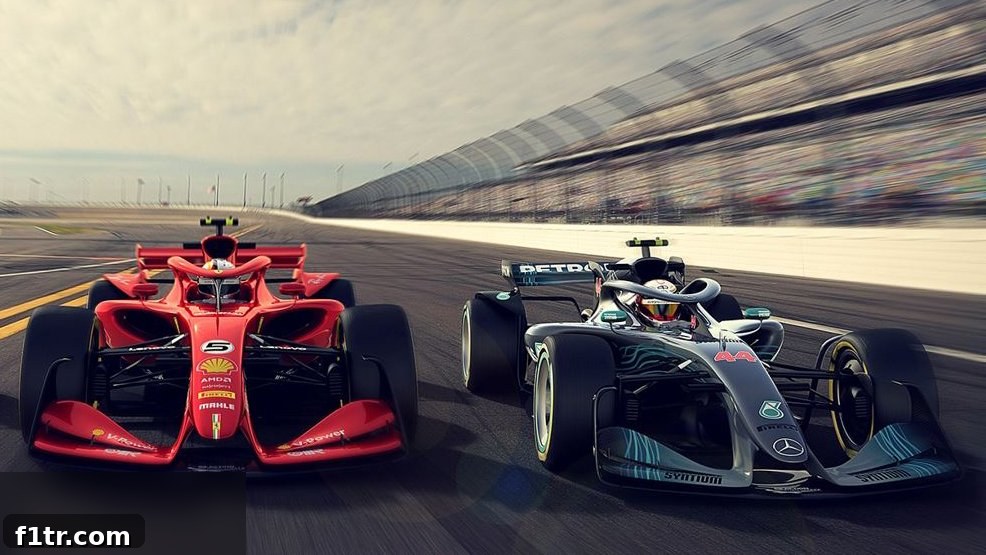
Haas team principal Guenther Steiner issued a pressing call for immediate clarity on Formula 1’s 2021 rules package, stressing the importance of a definitive framework to allow teams sufficient time to prepare for the anticipated sweeping changes. As the sport braced for one of its most significant overhauls in recent history, the clock was ticking for governing bodies to finalize the intricate details that would shape the future of F1.
The dawn of the 2021 season was poised to introduce a new era for Formula 1, with transformative proposals emanating from its owners, Liberty Media. These ambitious plans included radically redesigned cars aimed at promoting closer racing, the introduction of a long-debated budget cap to foster financial sustainability and competitive balance, and a revised prize money distribution system. Alongside these pillars, a multitude of other potential regulatory adjustments were on the table. Steiner acknowledged that discussions were “moving” but articulated a clear desire for tangible progress before the impending start of the new Formula 1 season.
Advert | Become a Supporter & go ad-free
The Impending Deadline: Steiner’s Urgent Call for 2021 F1 Rule Clarity
For any Formula 1 team, the lead time required for major regulatory shifts is extensive, spanning years rather than months. Steiner’s concern was rooted in this operational reality. “We need to know one way or another,” he stated emphatically. “We just cannot know nothing. That’s always bad if you know nothing in my opinion.” This sentiment underscores the immense logistical and technical challenges teams face when planning for a new generation of regulations.
The Haas team principal advocated for concrete information, whether it be final rules or at least firm deadlines for their release. “Even if [you] say ‘this is what it will be’, or at least solid dates, so you can plan for it and focus on it,” Steiner explained. Without such guidance, teams operate in a vacuum, unable to allocate resources, define research and development priorities, or initiate the complex design processes necessary for an entirely new car concept. The lack of clear direction meant that at the time, discussions remained largely theoretical. “At the moment it’s still a lot of talk but no real facts on the table,” he observed.
Steiner’s urgency was tied to a critical timeline: “In January we need to get something otherwise we cannot get there. For us ’21 starts [in 2019] it’s not starting, like in any other industry, the year before. You need to start [then] to look at what we need to do because it looks like the rules are changing dramatically and we need to get prepared for it.” This highlights the often-underestimated lead time in F1; a 2021 car design cycle effectively begins almost two years prior, involving thousands of hours of engineering, simulation, and manufacturing.
A Glimpse into the Future: Radical Changes Proposed for F1 in 2021
The anticipated changes for 2021 were not merely incremental tweaks; they represented a fundamental re-imagining of Formula 1. The proposed car designs, heavily focused on ground effect aerodynamics, aimed to reduce the turbulent air (“dirty air”) left behind a leading car, thereby allowing following cars to race more closely and facilitate overtaking. This technical revolution demanded significant investment in computational fluid dynamics (CFD), wind tunnel testing, and innovative mechanical design from every team on the grid.
The Budget Cap Dilemma: Financial Prudence and Staffing Concerns for F1 Teams
Perhaps one of the most contentious, yet crucial, elements of the 2021 package was the budget cap. Designed to curb escalating spending and level the playing field, its implementation carried profound implications for F1’s larger, traditionally big-spending teams. Steiner articulated a primary concern: the potential impact on personnel. “If the cost cap comes that means you need to plan beforehand so you don’t have to make decisions which are not good,” he explained. A budget cap could force teams to reduce staff numbers, a sensitive issue with widespread ramifications for hundreds of highly skilled engineers, mechanics, and support staff. Proactive planning would be essential to navigate such a transition responsibly, mitigating the need for abrupt and potentially detrimental staffing cuts.
Go ad-free for just £1 per month>> Find out more and sign up
Beyond the Track: Commercial Agreements and Liberty Media’s Vision for Formula 1
The end of 2020 marked a pivotal moment for Formula 1, as the existing commercial agreements between the teams and the sport’s commercial rights holder expired. This gave Liberty Media its first genuine opportunity to implement wholesale changes to the sport’s fundamental structure, including the highly sensitive issue of revenue distribution. Historically, prize money distribution has heavily favored the sport’s established giants, a system that smaller teams have long argued against. A new, more equitable system was promised, aimed at bolstering the financial viability of independent outfits and enhancing overall competition.
When questioned about F1’s evolution under Liberty Media’s stewardship, Steiner urged a degree of patience, acknowledging the complexity of managing a global sport with diverse stakeholders. “Some things are better,” he conceded. However, his core grievance remained: “Some things are not as I expected because I expected to have clear rules for ’21 and we haven’t got them.” This highlights the challenge for Liberty Media in balancing innovation with operational stability, particularly given the intricate web of technical, sporting, and commercial regulations.
Liberty Media’s Stewardship: A Mixed Report Card from Teams
Despite the lingering uncertainty regarding the 2021 regulations, Steiner did credit Liberty Media for some positive developments. “Other stuff I think they are doing a pretty good job. They announced that there is a new race coming in ’20 so I think they are doing good work on that one.” Expanding the F1 calendar and reaching new markets is a key strategic objective for Liberty, aimed at growing the sport’s global footprint and revenue streams. Such successes are vital for the long-term health of F1.
However, the financial aspect remained a point of contention. Teams, including Haas, had experienced reduced prize money distributions in the initial years of Liberty’s ownership. Steiner acknowledged this as an “investment” on Liberty’s part, expressing hope for future returns. “But if you explain that this is an investment we need to believe it because they run the business, not us,” he noted, highlighting the inherent trust required between the teams and the sport’s custodians. This dynamic often places teams in a reactive position, relying on Liberty’s strategic vision to ultimately benefit all stakeholders.
The Unavoidable Truth: Consensus is a Mirage in F1 Rule-Making
Crucially, Liberty Media, in conjunction with the FIA, possesses the authority to impose new rules for 2021 without the unanimous agreement of all participating teams. This constitutional power underscores the reality that, while team input is valued, the ultimate decision-making power rests with the sport’s governing bodies and commercial rights holder. Steiner pragmatically recognized this power dynamic and the inevitable dissent it would create. “There will never be 10 happy people,” he observed, referring to the number of teams on the grid. “If anybody thinks there will be 10 happy people, it’s just not realistic.” This acceptance of imperfection is a cornerstone of navigating the complex political landscape of Formula 1, where diverse interests and competitive ambitions are always at play.
The journey to 2021 was always going to be fraught with challenges, intense negotiations, and a degree of uncertainty. Guenther Steiner’s articulate demands for clarity served as a vital reminder that while visionary changes are necessary for F1’s future, the practicalities of implementation require timely and definitive guidance for the teams entrusted with bringing those visions to life on the racetrack. The successful execution of the 2021 regulations would ultimately depend on the precision and foresight applied in the preceding years of planning and preparation.
Advert | Become a RaceFans supporter andgo ad-free
2021 F1 Season Insights and Related Articles
- Masi ‘basically gifted the championship’ to Verstappen says 2021 FIA steward Sullivan
- Las Vegas race backers looking to extend F1 deal beyond 2025
- Why Mercedes put ‘a reminder of joy and pain’ on display in their factory lobby
- Verdict on error in GT race suggests Mercedes would have lost 2021 Abu Dhabi GP appeal
- Title ‘stolen’ from Mercedes made us ‘underdogs people cheer for’ – Wolff
Browse all 2021 F1 season articles