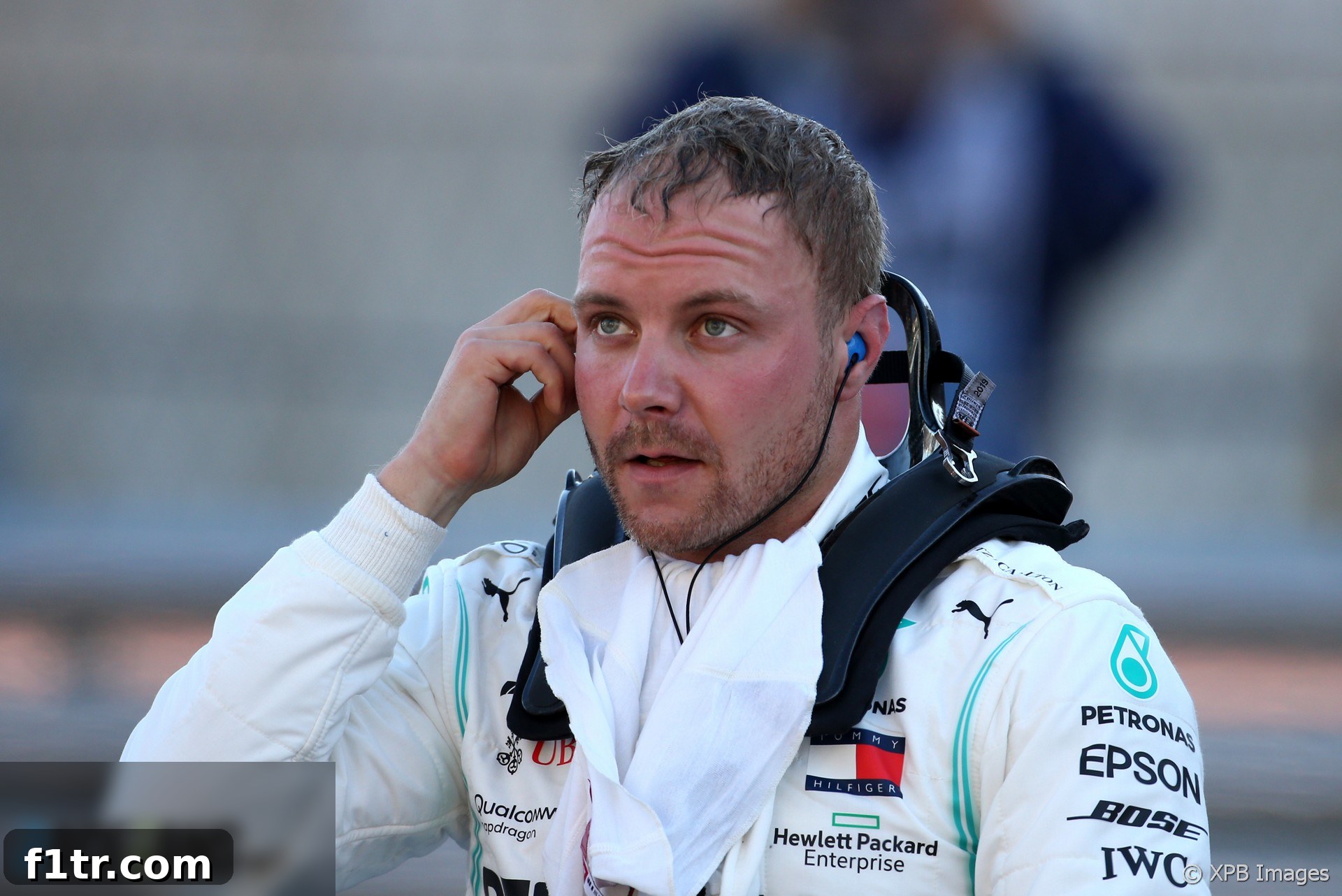
Valtteri Bottas Secures Pole at COTA: A Deep Dive into the US Grand Prix Qualifying and Championship Battle
The Circuit of the Americas (COTA) in Austin, Texas, is renowned for delivering gripping Formula 1 action, and the qualifying session for the United States Grand Prix proved no exception. Valtteri Bottas delivered a sensational performance, snatching pole position in a fiercely contested session. His achievement not only marks a significant personal victory but also serves as a crucial, albeit slender, lifeline for his fading championship hopes. As the paddock prepares for race day, all eyes are on the Finn’s attempt to convert pole into victory, while teammate Lewis Hamilton approaches a potentially historic moment – clinching his sixth world title.
Bottas’s Dominant Pole: A Glimmer of Hope Amidst Championship Realities
In a qualifying session that kept fans on the edge of their seats, Valtteri Bottas showcased exceptional skill and composure to claim pole position. The margins were razor-thin, with an astonishing 67 thousandths of a second separating the top three drivers. Bottas’s ability to extract maximum performance from his Mercedes on the challenging Circuit of the Americas track underscores his determination and raw pace. This pole position is more than just a starting advantage; it represents the best possible result he could have achieved to keep his championship aspirations mathematically breathing, even if the odds remain heavily stacked against him.
For Bottas, the task ahead on race day is monumental. To realistically prolong the title fight, he doesn’t just need to win the United States Grand Prix; he needs a significant stroke of misfortune to befall Lewis Hamilton. Such a scenario, largely beyond Bottas’s control, adds an almost poetic layer of drama to what will undoubtedly be a demanding 56-lap race. His immediate focus, however, must be on fending off the formidable challenge from Sebastian Vettel, who starts alongside him on the front row, and the ever-present threat of Max Verstappen from third.
Mercedes demonstrated promising race pace during Friday’s practice sessions. However, with the weather warming up considerably since then, their advantage might not be as pronounced as initially anticipated. Despite this, Bottas’s pole position places him in an excellent strategic position to claim what would be his fourth victory of the season, a crucial step in cementing his position as a front-running contender regardless of the championship outcome.
Lewis Hamilton’s Measured Pursuit of a Historic Sixth Title
While Bottas celebrates his pole, Lewis Hamilton finds himself in a familiar, yet historically significant, position. Despite being out-qualified by the Ferrari pair and Max Verstappen, starting fifth on the grid offers him ample opportunity to secure the points necessary for his sixth Formula 1 World Championship. His approach to this race will undoubtedly be a pragmatic one; with only an eighth-place finish required from the final three races to seal the title, prudence will likely override outright aggression.
Hamilton’s mindset reflects this calculated strategy. As he commented, “There’s still two more after this. Naturally, I’ll approach exactly the same. I’m not looking to pull out miracles tomorrow.” This indicates a clear intention to minimize risk and bring the car home safely, securing a championship that has largely been a foregone conclusion for several races. The allure of a race victory at a circuit where he has previously won six times is strong, but the historical weight of a sixth world title — a feat that would move him second only to Michael Schumacher in the all-time standings — demands a mature and controlled performance.
Despite the championship implications, Bottas expects no quarter from his teammate. He anticipates Hamilton will be a fierce competitor on track, regardless of his points advantage. “I don’t know what his mindset is right now but from what I know of him, he’s going to be there, fighting hard,” Bottas remarked. “For sure he also hates losing, he always wants to win like all of us. Obviously, he’s leading the championship with a big margin, he doesn’t need many points. I’m sure he would like to win the championship in a nice way eventually when and if it happens. But obviously, I will try to delay that, I try to focus on my own race, try to focus on winning the race rather than anyone else’s opinions or mindsets.” This competitive edge from both Mercedes drivers sets the stage for a compelling internal battle, adding another layer of intrigue to the race.
The Ferrari and Red Bull Challenge: Engine Power and Strategic Intrigue
The fight for victory extends well beyond the Mercedes garage. Sebastian Vettel’s second-place start alongside Bottas provides Ferrari with an excellent platform to launch an attack. Their car’s strengths, particularly on long straights, could prove decisive into COTA’s Turn 1 and on the back straight. However, a recent clarification of technical regulations by the FIA regarding engine performance may have blunted Ferrari’s superior straight-line speed, a factor that will be closely monitored during the race.
Adding to the pressure on Bottas is the formidable Max Verstappen, starting third in his Red Bull. Verstappen is consistently a threat on race day, known for his aggressive overtakes and relentless pursuit of victory. With Alexander Albon starting sixth, Red Bull has two cars within striking distance of the front, ensuring a strategic headache for Mercedes. Albon, though not quite challenging the Silver Arrows in qualifying, consistently improves during races and could play a crucial role in Red Bull’s strategy.
Ferrari’s strategic hand is further strengthened by their tyre allocation. Of the top five starters, who are all on medium compound tyres, only the Ferrari pair of Vettel and Charles Leclerc possess a fresh set of soft tyres. This tactical advantage opens up several possibilities, including the option to extend their initial stint on mediums and then switch to the faster softs for a decisive charge later in the race. However, this strategy carries inherent risks, as rivals could pit earlier on their medium tyres, attempting an undercut to gain track position. The delicate balance between tyre degradation, strategic timing, and track position will define the race for these top teams.
Race Day Strategy: Tyres, Track Characteristics, and the COTA Challenge
The strategic battle at COTA will be as intense as the on-track racing. The circuit, with its unique blend of fast esses, challenging elevation changes, and tight technical sections, demands precision from drivers and ingenuity from strategists. The warming weather conditions since Friday’s practice sessions will play a significant role, potentially influencing tyre degradation rates and challenging teams’ thermal management strategies. While Mercedes showed promising long-run pace earlier in the weekend, warmer temperatures could shift the advantage.
Tyre management will be paramount. The choice of the medium compound for the start by the top five suggests a leaning towards a one-stop strategy, aiming for a longer first stint. However, the availability of fresh soft tyres for Ferrari could lead to a strategic divergence. Should Ferrari opt for a medium-soft approach, they could unleash significant pace in the latter half of the race, but this would require impeccable tyre management during their initial stint and a perfectly timed pit stop to avoid being undercut by rivals on a more conventional medium-hard or medium-medium strategy. Overtaking opportunities exist at COTA, notably into Turn 1, Turn 11, and the long straight leading to Turn 12, emphasizing the importance of both tyre life and raw pace.
Qualifying Performance Breakdown: A Deeper Look at the Numbers
To fully appreciate the intensity of the qualifying session and glean insights into potential race performance, a detailed examination of the qualifying times, sector performance, and speed trap data is essential. These metrics offer a window into each team’s strengths and weaknesses across the demanding Circuit of the Americas.
Qualifying Times in Full
| Driver | Car | Q1 | Q2 (vs Q1) | Q3 (vs Q2) | |
| 1 | Valtteri Bottas | Mercedes | 1’33.750 | 1’33.160 (-0.590) | 1’32.029 (-1.131) |
| 2 | Sebastian Vettel | Ferrari | 1’33.766 | 1’32.782 (-0.984) | 1’32.041 (-0.741) |
| 3 | Max Verstappen | Red Bull | 1’33.549 | 1’33.120 (-0.429) | 1’32.096 (-1.024) |
| 4 | Charles Leclerc | Ferrari | 1’33.988 | 1’32.760 (-1.228) | 1’32.137 (-0.623) |
| 5 | Lewis Hamilton | Mercedes | 1’33.454 | 1’33.045 (-0.409) | 1’32.321 (-0.724) |
| 6 | Alexander Albon | Red Bull | 1’33.984 | 1’32.898 (-1.086) | 1’32.548 (-0.350) |
| 7 | Carlos Sainz Jnr | McLaren | 1’33.916 | 1’33.422 (-0.494) | 1’32.847 (-0.575) |
| 8 | Lando Norris | McLaren | 1’33.353 | 1’33.316 (-0.037) | 1’33.175 (-0.141) |
| 9 | Daniel Ricciardo | Renault | 1’33.835 | 1’33.608 (-0.227) | 1’33.488 (-0.120) |
| 10 | Pierre Gasly | Toro Rosso | 1’33.556 | 1’33.715 (+0.159) | 1’33.601 (-0.114) |
| 11 | Nico Hulkenberg | Renault | 1’34.092 | 1’33.815 (-0.277) | |
| 12 | Kevin Magnussen | Haas | 1’33.812 | 1’33.979 (+0.167) | |
| 13 | Daniil Kvyat | Toro Rosso | 1’34.138 | 1’33.785 (-0.353) | |
| 14 | Lance Stroll | Racing Point | 1’33.921 | 1’34.100 (+0.179) | |
| 15 | Romain Grosjean | Haas | 1’34.161 | 1’34.158 (-0.003) | |
| 16 | Antonio Giovinazzi | Alfa Romeo | 1’34.226 | ||
| 17 | Kimi Raikkonen | Alfa Romeo | 1’34.369 | ||
| 18 | George Russell | Williams | 1’35.372 | ||
| 19 | Robert Kubica | Williams | 1’35.889 | ||
| 20 | Sergio Perez | Racing Point | 1’35.808 |
Sector Times: Dissecting Performance Across COTA’s Unique Layout
Analyzing sector times provides a granular view of where each driver and car excelled or struggled. COTA’s three sectors demand different car characteristics: Sector 1 with its fast, flowing S-curves, Sector 2 with its long back straight and heavy braking zones, and Sector 3 featuring technical, low-speed corners. Understanding these nuances is key to appreciating each driver’s qualifying lap and anticipating race performance.
| Driver | Sector 1 | Sector 2 | Sector 3 |
|---|---|---|---|
| Valtteri Bottas | 24.719 (5) | 36.718 (1) | 30.553 (2) |
| Sebastian Vettel | 24.611 (2) | 36.765 (2) | 30.648 (5) |
| Max Verstappen | 24.646 (4) | 36.968 (5) | 30.422 (1) |
| Charles Leclerc | 24.518 (1) | 36.959 (4) | 30.574 (3) |
| Lewis Hamilton | 24.632 (3) | 36.866 (3) | 30.803 (7) |
| Alexander Albon | 24.758 (6) | 37.071 (6) | 30.609 (4) |
| Carlos Sainz Jnr | 24.974 (9) | 37.104 (7) | 30.745 (6) |
| Lando Norris | 24.945 (8) | 37.195 (8) | 30.868 (8) |
| Daniel Ricciardo | 25.111 (12) | 37.275 (9) | 30.965 (9) |
| Pierre Gasly | 25.031 (10) | 37.282 (10) | 31.074 (11) |
| Nico Hulkenberg | 25.380 (18) | 37.428 (14) | 31.007 (10) |
| Kevin Magnussen | 24.930 (7) | 37.392 (13) | 31.414 (15) |
| Daniil Kvyat | 25.155 (15) | 37.346 (12) | 31.265 (13) |
| Lance Stroll | 25.149 (14) | 37.457 (15) | 31.262 (12) |
| Romain Grosjean | 25.117 (13) | 37.622 (16) | 31.282 (14) |
| Antonio Giovinazzi | 25.264 (16) | 37.334 (11) | 31.628 (17) |
| Kimi Raikkonen | 25.103 (11) | 37.800 (17) | 31.466 (16) |
| George Russell | 25.359 (17) | 38.088 (19) | 31.811 (19) |
| Robert Kubica | 25.839 (20) | 38.299 (20) | 31.720 (18) |
| Sergio Perez | 25.659 (19) | 38.011 (18) | 32.138 (20) |
From the sector times, Charles Leclerc’s fastest Sector 1 time highlights Ferrari’s strong initial acceleration and handling through the fast esses. Valtteri Bottas dominated Sector 2, showcasing Mercedes’ strength in medium-speed corners and the crucial run up to the back straight. Max Verstappen was quickest in Sector 3, a clear indicator of Red Bull’s exceptional chassis and downforce in the technical, slower sections. Hamilton, while consistently strong, wasn’t fastest in any single sector, suggesting a balanced but not necessarily dominant car setup for qualifying.
Speed Trap Analysis: The Impact of Engine Power
The speed trap figures offer critical insights into engine power and aerodynamic efficiency, especially given the ongoing discussions around the FIA’s engine directives. Traditionally, Ferrari-powered cars have excelled here, but the data from COTA reveals an interesting shift. This metric can be particularly telling for anticipating overtakes and defensive strategies on race day.
| Pos | Driver | Car | Engine | Speed (kph/mph) | Gap |
|---|---|---|---|---|---|
| 1 | Pierre Gasly | Toro Rosso | Honda | 328.2 (203.9) | |
| 2 | Antonio Giovinazzi | Alfa Romeo | Ferrari | 328.1 (203.9) | -0.1 |
| 3 | Daniil Kvyat | Toro Rosso | Honda | 327.9 (203.7) | -0.3 |
| 4 | Carlos Sainz Jnr | McLaren | Renault | 327.5 (203.5) | -0.7 |
| 5 | Nico Hulkenberg | Renault | Renault | 327.2 (203.3) | -1.0 |
| 6 | Kevin Magnussen | Haas | Ferrari | 327.2 (203.3) | -1.0 |
| 7 | Lance Stroll | Racing Point | Mercedes | 327.1 (203.3) | -1.1 |
| 8 | Sebastian Vettel | Ferrari | Ferrari | 326.1 (202.6) | -2.1 |
| 9 | Charles Leclerc | Ferrari | Ferrari | 326.0 (202.6) | -2.2 |
| 10 | Alexander Albon | Red Bull | Honda | 325.8 (202.4) | -2.4 |
| 11 | Daniel Ricciardo | Renault | Renault | 325.7 (202.4) | -2.5 |
| 12 | Lando Norris | McLaren | Renault | 325.7 (202.4) | -2.5 |
| 13 | Max Verstappen | Red Bull | Honda | 324.9 (201.9) | -3.3 |
| 14 | Kimi Raikkonen | Alfa Romeo | Ferrari | 324.0 (201.3) | -4.2 |
| 15 | Valtteri Bottas | Mercedes | Mercedes | 323.0 (200.7) | -5.2 |
| 16 | George Russell | Williams | Mercedes | 322.6 (200.5) | -5.6 |
| 17 | Lewis Hamilton | Mercedes | Mercedes | 322.6 (200.5) | -5.6 |
| 18 | Sergio Perez | Racing Point | Mercedes | 322.3 (200.3) | -5.9 |
| 19 | Robert Kubica | Williams | Mercedes | 321.6 (199.8) | -6.6 |
| 20 | Romain Grosjean | Haas | Ferrari | 320.6 (199.2) | -7.6 |
Intriguingly, the Honda-powered Toro Rosso of Pierre Gasly registered the highest speed, closely followed by Antonio Giovinazzi in the Ferrari-powered Alfa Romeo. The works Ferrari cars of Vettel and Leclerc are present in the top ten, but not at the very top, which supports the notion that the FIA’s recent technical directive may indeed have impacted their ultimate straight-line performance. Mercedes, including Bottas and Hamilton, are noticeably lower down the speed trap rankings, suggesting their competitive edge at COTA comes more from exceptional aerodynamic efficiency and cornering prowess rather than raw engine power.
Tyre Strategy Deep Dive: A Look at Remaining Compounds
The allocation of remaining tyre sets is a critical factor in determining race strategy. The availability of fresh, softer compounds can offer a significant tactical advantage, particularly in reacting to changing race conditions or safety car periods. Analyzing this data provides invaluable insight into how teams might approach their pit stops and stint lengths.
| Driver | Team | Hard | Medium | Soft | |||
|---|---|---|---|---|---|---|---|
| New | Used | New | Used | New | Used | ||
| Lewis Hamilton | Mercedes | 1 | 0 | 1 | 1 | 0 | 3 |
| Valtteri Bottas | Mercedes | 1 | 0 | 1 | 1 | 0 | 3 |
| Sebastian Vettel | Ferrari | 1 | 0 | 0 | 2 | 1 | 2 |
| Charles Leclerc | Ferrari | 1 | 0 | 0 | 2 | 1 | 2 |
| Max Verstappen | Red Bull | 0 | 1 | 1 | 1 | 0 | 3 |
| Alexander Albon | Red Bull | 0 | 1 | 2 | 0 | 0 | 3 |
| Daniel Ricciardo | Renault | 1 | 0 | 1 | 0 | 0 | 4 |
| Nico Hulkenberg | Renault | 1 | 0 | 1 | 0 | 1 | 4 |
| Kevin Magnussen | Haas | 0 | 1 | 1 | 0 | 1 | 4 |
| Romain Grosjean | Haas | 0 | 1 | 1 | 0 | 1 | 4 |
| Carlos Sainz Jnr | McLaren | 1 | 0 | 1 | 0 | 0 | 4 |
| Lando Norris | McLaren | 1 | 0 | 1 | 0 | 0 | 4 |
| Sergio Perez | Racing Point | 1 | 0 | 1 | 0 | 3 | 2 |
| Lance Stroll | Racing Stroll | 1 | 0 | 1 | 0 | 1 | 4 |
| Kimi Raikkonen | Alfa Romeo | 1 | 0 | 1 | 0 | 3 | 2 |
| Antonio Giovinazzi | Alfa Romeo | 1 | 0 | 1 | 0 | 3 | 2 |
| Daniil Kvyat | Toro Rosso | 1 | 0 | 1 | 0 | 1 | 4 |
| Pierre Gasly | Toro Rosso | 1 | 0 | 1 | 0 | 0 | 4 |
| George Russell | Williams | 1 | 0 | 1 | 1 | 1 | 3 |
| Robert Kubica | Williams | 1 | 0 | 1 | 1 | 1 | 3 |
The tyre availability table highlights a key strategic disparity: while Mercedes, Red Bull (excluding Albon), and McLaren drivers in the top 10 have no new soft tyres remaining, Ferrari uniquely retain a fresh set for both Sebastian Vettel and Charles Leclerc. This could be a game-changer, allowing them flexibility for an aggressive second stint or a tactical response to a safety car. Teams like Racing Point and Alfa Romeo also hold multiple new soft sets, which could enable them to attempt bold strategies from further down the grid, potentially shaking up the established order.
The Race Ahead: Championship Drama and the Promise of a Closer Future
As the engines prepare to roar, the United States Grand Prix is poised to deliver a captivating blend of championship drama and fierce on-track competition. While Lewis Hamilton stands on the precipice of a sixth world title, a truly momentous achievement, the competitive qualifying session suggests this will be no mere procession. The incredibly tight margins that separated the top three teams hint at a multi-faceted battle for supremacy, ensuring that fans will witness a spectacle of high-speed chess on asphalt.
The confluence of Bottas’s pole-position drive, Hamilton’s calculated championship bid, Ferrari’s strategic gambles with tyre compounds, and Red Bull’s unwavering threat promises an unforgettable race. Beyond the immediate championship implications for 2019, the fierce competition demonstrated at the front of the field bodes well for the future. The intensity witnessed at COTA serves as an exciting preview, raising expectations that the 2020 F1 season could deliver an even closer and more thrilling fight for the ultimate prize in motorsport.
Over to you
Will Valtteri Bottas convert his pole position into a crucial victory at Austin? Can Lewis Hamilton navigate the challenges of the Circuit of the Americas to secure his sixth world championship? Or will Ferrari or Red Bull upset the Mercedes dominance?
Share your predictions and views on the United States Grand Prix in the comments below.
Quotes: Josh Holland
2019 United States Grand Prix Related Articles
- Gasly: Toro Rosso in the hunt for points every weekend
- Vettel praises “very good job” by Leclerc after losing qualifying battle
- Drivers’ salaries should be included in budget cap – Brown
- Grosjean: Hard to maintain motivation at end of tough year
- F1’s US audience continuing to grow in third year under Liberty
Browse all 2019 United States Grand Prix articles