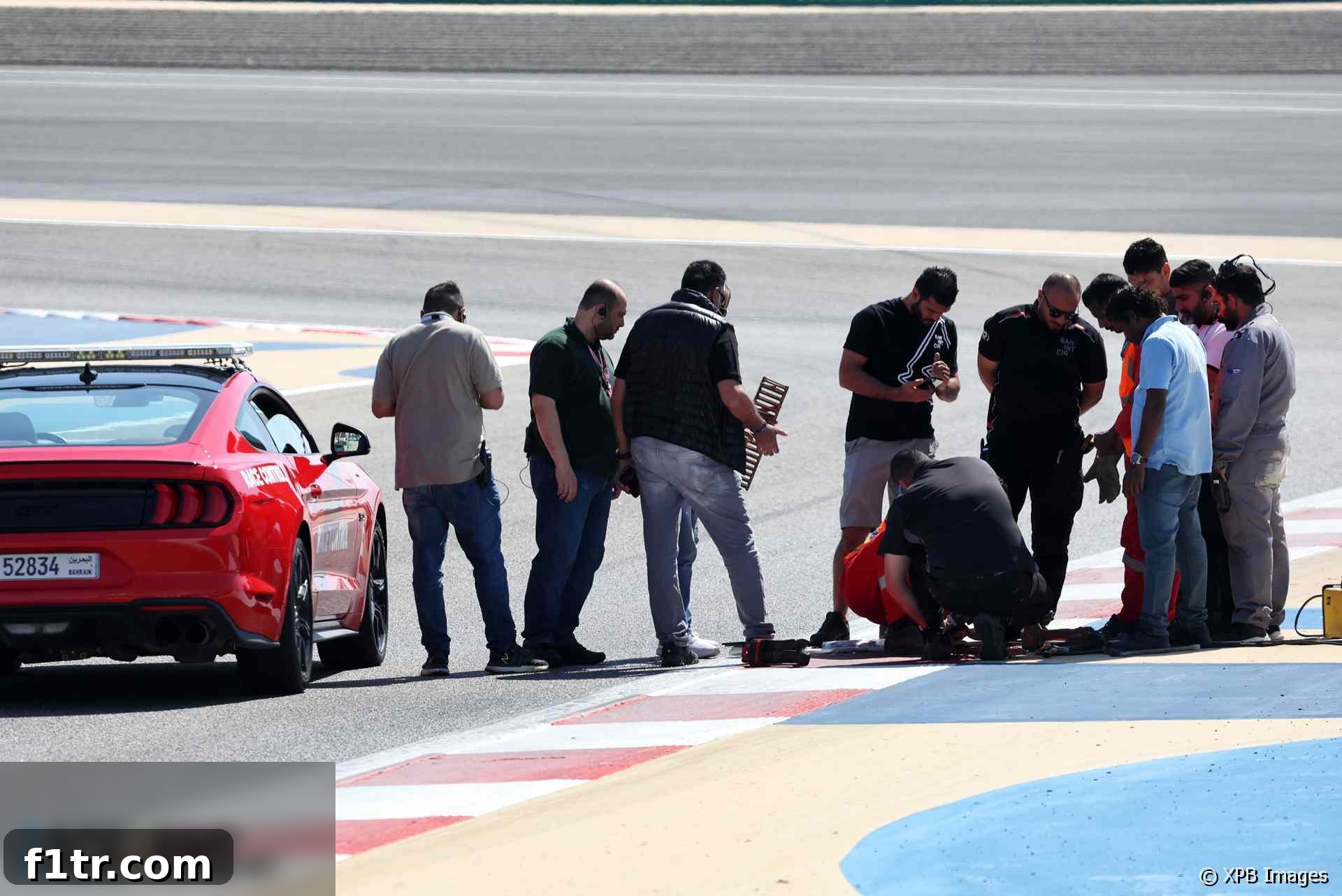
Formula 1, with its relentless pursuit of speed and technological advancement, is currently grappling with a fundamental safety concern: the recurring issue of loose drain covers on its global circuits. Recent incidents during pre-season testing at the Bahrain International Circuit, coupled with the costly and disruptive event at last year’s Las Vegas Grand Prix, have brought this critical problem into sharp focus. Top drivers, including reigning world champion Max Verstappen, Ferrari’s Charles Leclerc, and Mercedes ace Lewis Hamilton, have voiced their unified demand for urgent and comprehensive action. This isn’t merely an inconvenience; it represents a significant threat to driver safety, impacts team finances under the stringent budget cap, and undermines the integrity of the sport’s schedule, compelling the FIA and circuit operators to find immediate and lasting solutions.
The Alarming Incidents in Bahrain: A Wake-Up Call
The 2024 Formula 1 pre-season testing at the Bahrain International Circuit was disrupted by two distinct but equally concerning incidents involving dislodged track infrastructure. On Thursday, valuable track time was lost for over an hour when a drain cover in the approach to Turn 11 became loose. This particular cover was initially driven over by Lewis Hamilton’s Mercedes, before being struck with significant force by Charles Leclerc’s Ferrari. The immediate concern led to a red flag and extensive repair work by circuit staff throughout the night, highlighting the severity of the structural failure.
Despite these overnight efforts, the problem frustratingly recurred on Friday morning. Another drain cover, located in a different section of the circuit, became dislodged during running and was notably run over by Sergio Perez’s Red Bull. This second incident within 24 hours underscored the systemic nature of the problem, forcing yet another lengthy red flag period. These disruptions not only consumed precious testing hours – vital for teams to validate their new cars and prepare for the upcoming season – but also intensified the paddock’s anxieties regarding track integrity and the potential for far more serious consequences.
Echoes of Las Vegas: A Costly and Dangerous Precedent
The incidents in Bahrain inevitably brought back stark memories of the 2023 Las Vegas Grand Prix weekend, where a loose track covering caused an even more severe outcome. During the inaugural practice session of what was meant to be a showpiece event, a dislodged drain cover inflicted catastrophic damage on Carlos Sainz Jnr’s Ferrari. The impact was so violent that it destroyed the car’s chassis, engine, and battery, leading to the session’s immediate cancellation and presenting his team with an enormous, unexpected repair bill.
The incident in Las Vegas was more than just a public relations nightmare for the sport’s much-hyped return to the Strip; it served as a brutal demonstration of the destructive potential of these seemingly innocuous track elements. Under Formula 1’s strict budget cap regulations, such extensive damage carries significant financial penalties for teams. The cost of replacing a chassis, engine, and critical hybrid components can run into millions, a sum that directly impacts a team’s ability to allocate resources for performance development throughout the season. This makes the prevention of such failures not only a matter of driver safety but also a critical economic imperative, as teams cannot afford to see their limited budgets consumed by preventable infrastructure mishaps.
Drivers Speak Out: A Unified Call for Action
The consensus among Formula 1 drivers is clear and resolute: more robust measures are needed to prevent future incidents involving loose drain covers. Their concerns stem from both personal experience and a deep understanding of the risks involved at speeds exceeding 300 km/h.
Max Verstappen’s Perspective: The Ground Effect Theory
Reigning three-time world champion Max Verstappen offered a plausible explanation for the recent increase in drain cover failures, linking it to the aerodynamic characteristics of the current generation of Formula 1 cars. “With the ground effect cars, probably it’s a little bit worse,” he suggested, referring to the immense downforce generated by these vehicles which effectively sucks them to the track surface. This powerful aerodynamic suction, combined with the extreme vibrations and forces exerted by cars, could be contributing to the dislodgement of covers that were previously secure.
Verstappen also highlighted changes in racing lines, noting, “it seems like we’re driving in places that not a lot of other cars are going, in terms of opening up corners.” Modern F1 cars, with their exceptional grip, often utilize wider sections of the track, potentially stressing areas of infrastructure that might not have been designed for such loads. He strongly advocated for a proactive approach to circuit safety: “Maybe these kind of things can be checked a bit more. We know that this is a potential problem with these cars and when you go to certain tracks, you know where the drain covers are. So I guess before you start driving in the weekend [you need] to double-check that everything is solid.” Verstappen’s comments underscore the urgency and financial implications, stating, “I think it’s a must for the upcoming tracks that we don’t have another situation where cars get destroyed. Especially with the budget cap in place as well, it’s not nice when these things happen.”
Charles Leclerc’s Plea for Prevention
Charles Leclerc, who personally experienced the impact of a loose drain cover in Bahrain, firmly echoed Verstappen’s concerns, emphasizing the severe potential consequences. “It’s a serious issue, because it can have big consequences,” Leclerc warned, reflecting on the near-miss his team mate Carlos Sainz faced in Las Vegas. He recognized the element of luck involved in the Bahrain incidents: “Yesterday we were quite lucky that it didn’t happen, in a place and in a situation similar to Vegas, but in Vegas, it was quite serious for Carlos.”
Leclerc’s statement highlights the razor-thin margin between a minor incident and a catastrophic one. His immediate concern for future safety protocols is palpable, as he called for a definitive resolution: “We have to look into it for the future, for it to not happen again.” While expressing confidence that “everybody’s on it and working on finding the best solution for that,” his words serve as a strong reminder that the responsibility lies with the sport’s governing bodies and circuit operators to deliver tangible improvements.
Lewis Hamilton’s Practical Solution: Weld Them Down
Seven-time world champion Lewis Hamilton, whose car also encountered the dislodged cover on Thursday in Bahrain, called for a more definitive and preventative engineering solution. Moving beyond mere inspection, Hamilton suggested a permanent fix for known problematic areas. “It’s obviously a concern and I think, hopefully, the FIA on top of it,” he began, before proposing, “We probably need to be welding these things down in advance before us getting there.”
Hamilton’s suggestion reflects a desire for proactive, rather than reactive, measures. Welding drain covers securely into place would significantly reduce the risk of them coming loose under the immense forces generated by F1 cars. He acknowledged the relative fortune of the Bahrain incidents compared to the damage sustained by Sainz in Vegas, but reiterated the critical need for vigilance: “Fortunately it wasn’t like the one that Carlos hit, but we’ve definitely got to be on top of it.” His pragmatic approach emphasizes the importance of engineering reliability into track infrastructure, ensuring safety before the cars even hit the circuit.
The Broader Implications: Safety, Schedule, and Economics
The issue of loose drain covers extends far beyond mere inconvenience, touching upon several critical aspects of Formula 1.
Uncompromising Driver Safety
At the pinnacle of motorsport, driver safety must always be the paramount concern. While debris from a drain cover can severely damage a sophisticated F1 car, the much greater and truly terrifying prospect is a driver being struck by a flying piece of metal at high speed, or losing control unexpectedly due to an immediate track obstruction. Given the extraordinary velocities reached by Formula 1 cars, any failure in track infrastructure carries potentially lethal consequences. This fundamental risk underscores the absolute necessity for impeccable circuit design, construction, and maintenance.
Significant Economic Burden and Budget Cap Challenges
Beyond the direct repair costs, which can be substantial, the financial implications are particularly acute for teams operating under Formula 1’s stringent budget cap. Unexpected damage from track infrastructure failures directly depletes a team’s allocated budget for performance development, potentially hindering their ability to introduce upgrades, conduct vital research and development, or even pay staff. The cost of a new chassis, engine, and associated hybrid components, as witnessed with Sainz’s Ferrari, can easily amount to several million euros – a sum that can severely strain a team’s financial strategy for an entire season and potentially put them at a competitive disadvantage.
Impact on Sporting Integrity and Fan Experience
Frequent red flags and cancelled sessions, as seen in Bahrain testing and the Las Vegas Grand Prix, significantly detract from the fan experience. Spectators, both trackside and watching globally, tune in for uninterrupted racing action, not extended delays or truncated sessions. For teams, the loss of valuable practice and testing time directly impacts their ability to optimize car setups, fine-tune strategies, and provide crucial data for development. This not only affects the competitive balance but also causes frustration and disillusionment among the dedicated global fanbase.
Circuit Responsibility and FIA Oversight
The ultimate responsibility for track safety and integrity lies with the circuit owners and operators, alongside the FIA, which grants circuit homologation for Formula 1 events. These recurring incidents inevitably raise critical questions about the adequacy of current inspection protocols, construction standards, and ongoing maintenance regimes. There is an undeniable need for a comprehensive review of how drain covers are designed, installed, secured, and regularly checked, especially in light of the evolving demands and aerodynamic forces generated by modern F1 machinery. The FIA’s role in enforcing rigorous safety standards during the homologation process, and throughout the season, is crucial.
Moving Forward: Towards Sustainable and Proactive Solutions
To decisively mitigate these risks, Formula 1, the FIA, and all circuit operators worldwide must engage in a collaborative and multi-pronged strategy. This includes immediate enhancements to pre-event checks, potentially utilizing advanced scanning technologies or stress-testing methods to detect even minute vulnerabilities in drain cover fixings. A shift towards more frequent and thorough inspections, particularly in areas identified as high-risk by the drivers, is paramount.
For long-term sustainability, more fundamental engineering solutions are required. This could involve redesigning drain covers themselves to be more robust and resilient against aerodynamic forces and vibrations. Implementing stronger, more permanent fixing mechanisms, such as welding, in critical areas – as suggested by Lewis Hamilton – should be seriously considered. Exploring alternative track drainage systems that minimize the need for exposed covers in high-speed zones, or developing innovative materials and installation techniques, could also offer lasting improvements. Furthermore, ongoing reassessment of track infrastructure, factoring in the specific characteristics and demands of current and future F1 cars, will be crucial. The overarching goal must be to transition from reactive repairs to proactive, engineering-led solutions that guarantee the highest level of safety and reliability for all participants, allowing the sport to focus on its exhilarating competition.
Become a RaceFans Supporter
RaceFans is run thanks in part to the generous support of its readers. By contributing £1 per month or £12 per year (or the same in whichever currency you use) you can help cover the costs of creating, hosting and developing RaceFans today and in the future.
Become a RaceFans Supporter today and browse the site ad-free. Sign up or find out more via the links below:
- Become a RaceFans Supporter
- RaceFans Supporter FAQ
Conclusion: Prioritizing Safety for F1’s Future
The persistent issue of loose drain covers presents a significant and, crucially, preventable threat to Formula 1. The unified and vocal concerns from respected figures like Max Verstappen, Charles Leclerc, and Lewis Hamilton underscore the critical urgency of the situation, demanding immediate and decisive action from all stakeholders. From safeguarding the lives of the sport’s elite drivers to protecting the multi-million-dollar assets of teams operating under the challenging budget cap, and ensuring uninterrupted, thrilling spectacles for its global fanbase, the stakes are undeniably high.
It is imperative that the FIA, in close collaboration with circuit operators worldwide, implements robust, preventative measures. These efforts must transcend mere temporary fixes, focusing instead on comprehensive engineering solutions and enhanced safety protocols. Only by ensuring that such fundamental infrastructure failures become a relic of the past can Formula 1 truly uphold its commitment to safety and allow the focus to remain where it belongs: on the unparalleled skill, drama, and innovation that define the pinnacle of motorsport.
Formula 1
- Controversies, Norris, Newey and more: Five new motorsport books reviewed
- One of F1’s greatest races happened 15 years ago today. Or did it?
- “Overtaking is overtaking”: Domenicali denies F1’s yo-yo racing is “artificial”
- The crashes F1 is trying to prevent may be rare – but the danger is obvious
- F1 returning to India soon after 2027 sounds like wishful thinking
Browse all Formula 1 articles