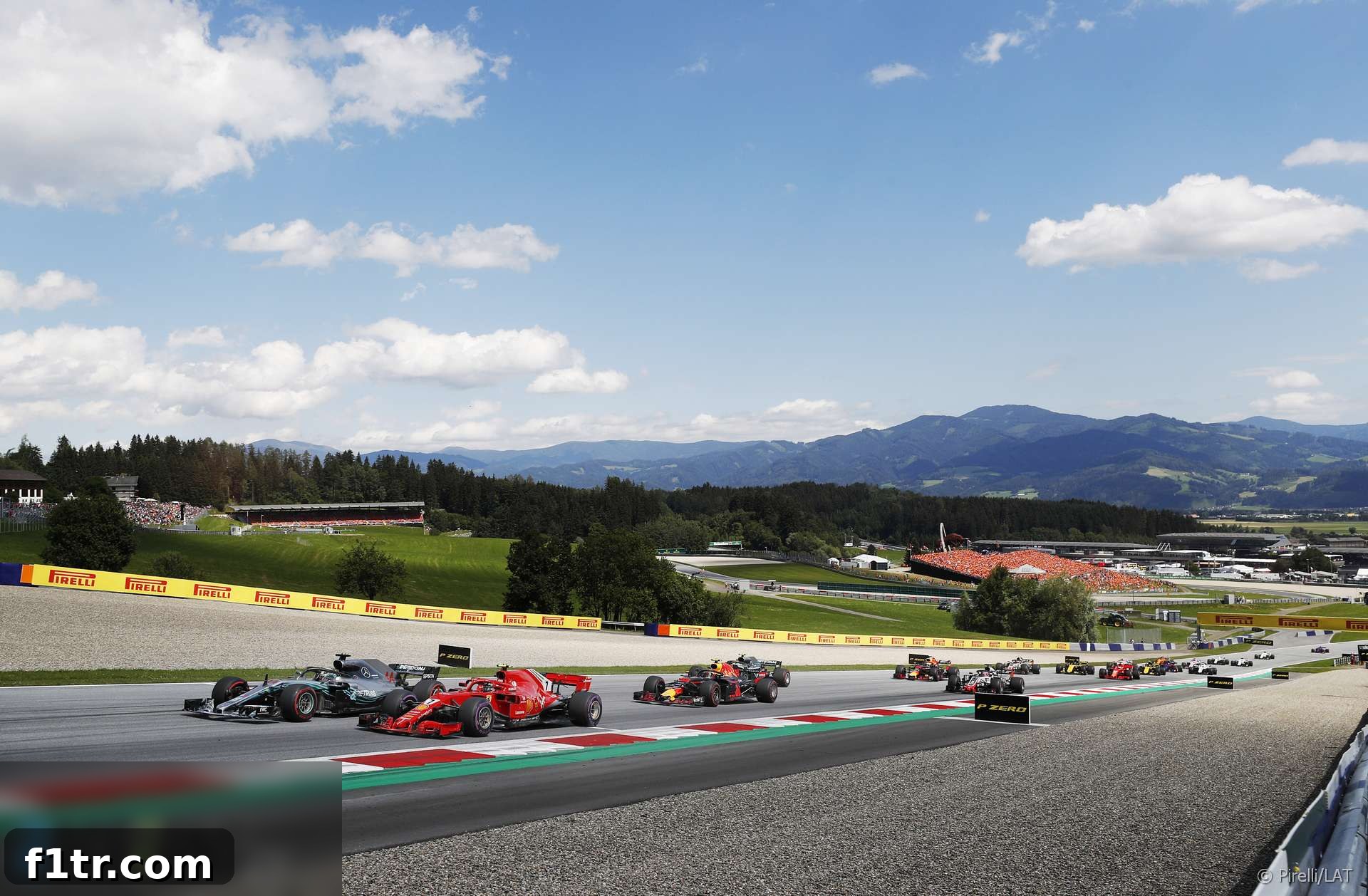
Anticipation is building for what promises to be an exceptionally challenging Formula 1 weekend at the Austrian Grand Prix. Nestled in the picturesque Styrian hills, the Red Bull Ring is set to host a scorching battle, with a relentless heatwave gripping much of Europe and extending its fiery embrace to the heart of Austria. While thunderstorms are on the horizon, they are not expected to offer any reprieve until well after the chequered flag falls on Sunday, ensuring that the entire race weekend will be a test of endurance and strategic prowess under an intense sun.
The Red Bull Ring Braces for a Scorching Challenge
The 2019 Austrian Grand Prix is shaping up to be one of the hottest editions in recent memory. A widespread heatwave has settled over Europe, bringing with it record-breaking temperatures that will undoubtedly leave their mark on the motorsport spectacle in Spielberg. While the beautiful Styrian hills surrounding the Red Bull Ring might offer a psychological break from the relentless sun, the track itself will be anything but cool. Teams, drivers, and engineers are meticulously preparing for conditions that will push both man and machine to their absolute limits.
Temperatures Soaring: A Detailed Forecast for the Weekend
Drivers can expect a significant increase in temperatures compared to previous years. Last year’s race day saw ambient temperatures peak at a manageable 24 degrees Celsius. However, forecasts for this weekend predict a dramatic increase, with Sunday’s ambient temperatures potentially soaring as much as 10 degrees higher. Today, the day before track action commences, temperatures are already anticipated to hit a sweltering 34 degrees Celsius, providing a clear indication of the conditions to come, even though they are expected to dip slightly before race day itself.
The forecast paints a picture of three days of unbroken sunshine, beginning on Friday. A moderate breeze is the only factor preventing ambient temperatures from consistently breaching the 30-degree mark throughout practice and qualifying. More critically, track temperatures are projected to climb significantly, likely exceeding 50 degrees Celsius – a figure reminiscent of the extreme heat experienced at Paul Ricard just last weekend. Similar conditions are expected to persist through Saturday’s qualifying sessions, setting the stage for an even hotter Sunday. Last year’s peak track temperature of 49 degrees Celsius is almost guaranteed to be surpassed with ease, potentially climbing well into the mid-50s.
Impact on Formula 1 Machines: Pushing Limits in the Heat
Extreme temperatures pose a myriad of challenges for modern Formula 1 cars. The intricate engineering and finely-tuned components are designed for optimal performance within specific temperature windows. When ambient and track temperatures skyrocket, every aspect of the car’s operation is stressed. Engine cooling becomes a paramount concern, as teams must ensure that power units can maintain optimal operating temperatures without suffering performance degradation or, worse, critical failures due to overheating. Radiator sizes and cooling ducts are often adjusted to maximize airflow, but this can come at the cost of aerodynamic efficiency, requiring a delicate balance.
Brake temperatures are another critical area. While F1 brakes are designed to operate at incredibly high temperatures, sustained extreme heat can lead to increased wear, reduced stopping power, and a higher risk of component failure. Teams will be closely monitoring brake temperatures, potentially adjusting cooling inlets and managing brake usage during the race to prevent issues. Furthermore, the overall reliability of electronic systems, hydraulics, and other vital components can be compromised under intense thermal stress. Every team will have revised their cooling packages and strategies, aiming to find the sweet spot between outright speed and robust reliability in the face of the heat.
The Driver’s Gauntlet: Physical Demands and Mental Fortitude
For the Formula 1 drivers, the Austrian Grand Prix weekend will be an immense physical and mental test. Cockpit temperatures, already high in normal conditions, can reach stifling levels in a heatwave, often exceeding 50-60 degrees Celsius. Drivers will battle dehydration, fatigue, and intense discomfort throughout each session. Maintaining focus and concentration for extended periods under such duress is incredibly challenging, increasing the risk of errors. Hydration strategies will be meticulously planned, with drivers consuming significant amounts of fluids before, during, and after each session. Specialized cooling vests and drinks systems within the cockpit provide some relief, but ultimately, driver fitness and endurance will be crucial determinants of performance. The Red Bull Ring’s undulating layout, with its short straights and challenging corners, already demands high physical exertion, and the added heat will only amplify this.
Tyre Management: The Defining Battleground
Perhaps the most significant strategic variable affected by the anticipated heat at the Red Bull Ring will be tyre management. The scorching track temperatures will place immense stress on Pirelli’s rubber, making tyre degradation a critical factor. The chosen compounds for this weekend – the C2 (hard), C3 (medium), and C4 (soft) – are the same selection used at Paul Ricard, where Mercedes unusually encountered blistering issues on their tyres during the race. This precedent raises significant concerns for all teams in Austria.
Pirelli’s C2, C3, and C4 Compounds Under Pressure
High track temperatures accelerate thermal degradation, causing the tyres to lose performance rapidly. Blistering, where pieces of rubber detach from the tyre surface due to overheating, and graining, where small chunks of rubber peel off the tread, are common manifestations of extreme heat stress. The softer C4 compound, designed for maximum grip, will be particularly vulnerable to overheating and rapid degradation. The C3 will offer a more balanced compromise, while the harder C2 will be the most resilient but provide less outright pace. Teams will need to understand the nuances of each compound’s behavior under this specific heat, balancing outright lap time with the need to make the tyres last for crucial race stints.
Strategic Implications: Pit Stops and Race Pace
The severity of tyre degradation will directly influence race strategy. A single pit stop might prove challenging if tyres cannot withstand the heat for sufficient durations, potentially forcing teams into two-stop strategies. This adds complexity, as extra pit stops can cost valuable track position. Engineers will be poring over telemetry from Friday and Saturday practice sessions to understand how the tyres are performing, extrapolating degradation rates to formulate the optimal race strategy. Managing the pace, ensuring drivers don’t push too hard early in a stint, and optimizing pit stop windows will be paramount. Teams with a historically better understanding of tyre management, or those whose car design is inherently kinder to the tyres, might gain a crucial advantage.
The Red Bull Ring’s Unique Demands on Tyres
The Red Bull Ring layout presents specific challenges that exacerbate tyre wear, particularly on the rear axle. The circuit features several hard acceleration zones, most notably out of Turn 1 (Castrol Edge) and Turn 3 (Remus), where drivers apply maximum throttle out of relatively slow corners. This violent acceleration places immense stress on the rear tyres, generating significant heat and contributing to degradation and blistering. Traction will be at a premium, and teams will need to find the right balance in their car setup to minimize rear tyre slip without compromising overall grip. Furthermore, the circuit’s undulating nature, with its changes in elevation, adds another layer of dynamic load on the tyres, further complicating tyre preservation efforts.
Race Dynamics and Potential Scenarios
The intense heat will undoubtedly shape the race dynamics. While outright qualifying pace might be determined by a single hot lap, race pace will hinge on a car’s ability to consistently manage its tyres over longer stints. This could lead to fascinating strategic variations, with some teams opting for an aggressive initial stint on softer tyres, hoping to build a gap, while others might favour a more conservative approach on harder compounds. Overtaking opportunities could also be influenced; while a struggling car on worn tyres might be an easier target, the overall lack of grip in hot conditions might make close-quarters racing more challenging.
Team Strategies and Car Setups for Extreme Heat
Teams will have spent countless hours in simulations, preparing for these exact conditions. Car setups will be tailored to mitigate the effects of the heat. This includes adjusting wing levels to balance aerodynamic efficiency with cooling requirements, modifying brake duct sizes, and fine-tuning suspension settings to optimize tyre contact patch and minimize thermal build-up. The data gathered during Friday’s practice sessions will be invaluable, allowing teams to make informed decisions about their car’s cooling configuration and overall setup for qualifying and the race. Any compromises made to cope with the heat could have ripple effects on performance, making these setup decisions critical.
Beyond the Heat: A Glimmer of Hope (or Warning)
While the entire race weekend is projected to be a furnace, the forecast does indicate a shift in weather patterns. Thunderstorms are expected to roll into the region, but crucially, these are not anticipated until after the conclusion of the Grand Prix on Sunday. This means that while teams won’t have to contend with the unpredictable challenge of a wet race, the changing atmospheric conditions do highlight the dynamic nature of the weather in the Styrian Alps. For the race itself, however, the focus remains squarely on managing the relentless heat.
The 2019 Austrian Grand Prix: A Spectacle of Endurance and Strategy
In conclusion, the 2019 Austrian Grand Prix is set to be a true test of endurance, strategy, and engineering ingenuity. The European heatwave will transform the Red Bull Ring into a crucible, where drivers battle dehydration and fatigue, and cars struggle with engine cooling, brake management, and, most critically, tyre degradation. The similarities to Paul Ricard’s blistering issues, coupled with the Red Bull Ring’s unique demands on rear tyres, will make tyre management the defining factor of the weekend. Fans can anticipate a thrilling race where strategic decisions, driver skill in preserving their tyres, and the sheer robustness of the F1 machines under extreme pressure will ultimately decide who stands atop the podium.
Further Reading: The 2019 Austrian Grand Prix Unpacked
- 2019 Austrian Grand Prix Star Performers
- Top ten pictures from the 2019 Austrian Grand Prix
- Leclerc denied again as Verstappen’s hard racing gives Red Bull home win
- Six wins and no pole for Verstappen, two poles and no win for Leclerc
- Paddock Diary: Austrian Grand Prix day four
Browse all 2019 Austrian Grand Prix articles