Romain Grosjean’s Challenging 2019 Formula 1 Season: A Deep Dive into Haas’s Struggles
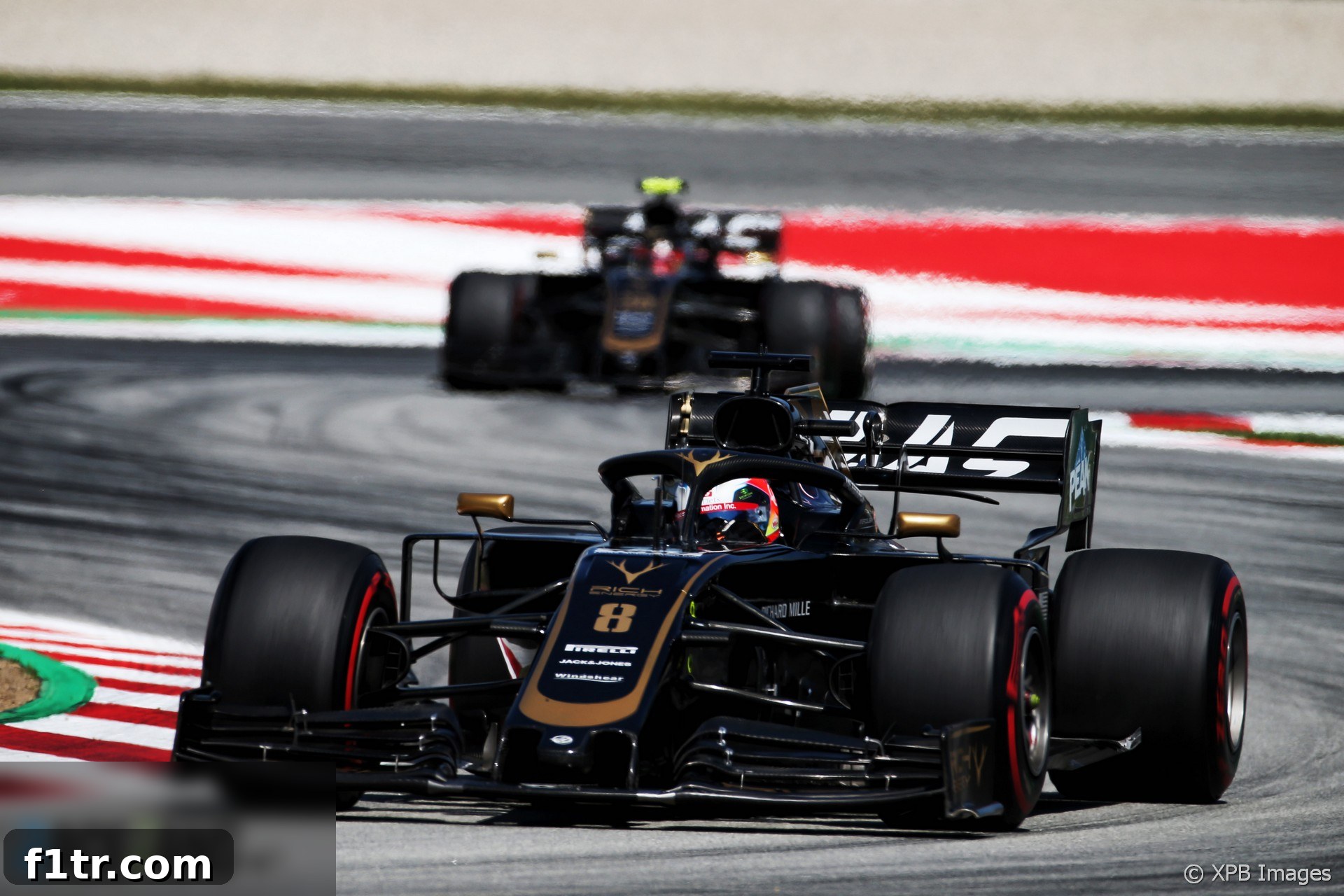
The 2019 Formula 1 season proved to be a profoundly challenging campaign for Romain Grosjean, characterized by a distinct lack of standout performances and a pervasive sense of frustration. While the French driver certainly faced his share of misfortune due to car issues, there were also moments where, despite opportunities arising, he struggled to seize the initiative and deliver the pivotal results that could have turned his season around. This narrative of unfulfilled potential wasn’t solely Grosjean’s burden; it was deeply intertwined with the persistent technical complexities plaguing the Haas F1 Team’s VF-19 challenger throughout the year, making it exceptionally difficult for either driver to consistently extract performance.
A Season Marred by Mechanical Gremlins and Strategic Missteps
From the outset, reliability proved to be a significant hurdle for Grosjean, as his car suffered mechanical failures on four separate occasions – a tally higher than any other driver on the grid. The season opener in Melbourne perfectly encapsulated this early misfortune. While his teammate, Kevin Magnussen, impressively secured a ‘best of the rest’ finish by crossing the line in sixth, Grosjean’s own promising points bid evaporated due to a wheel issue after his pit stop, forcing an early retirement. This was a bitter déjà vu for Grosjean, as a strikingly similar problem had also curtailed his race at the same venue in 2018.
Grosjean’s elusive first points finish of the season didn’t materialise until the Spanish Grand Prix. Yet, even this modest achievement was overshadowed by further team dynamics and a critical turning point in the team’s development path. Once again, Magnussen asserted his dominance by securing ‘best of the rest’, demonstrating a robust overtaking manoeuvre on Grosjean during a race restart. However, the true significance of that Barcelona weekend lay in the introduction of a major aerodynamic upgrade package. Intended to propel Haas further up the midfield, this upgrade instead sent the team into a profound development cul-de-sac, fundamentally compromising their competitive edge for the remainder of the season.
Despite the team’s unwavering commitment to persevering with this new package, Grosjean voiced consistent dissatisfaction with the car’s handling characteristics. His renowned one-lap pace, typically a formidable strength, noticeably failed to materialise with the updated VF-19. This struggle continued until the team eventually acquiesced to his insistent appeals, allowing him to revert to the older, Melbourne-specification aerodynamic package. By this critical juncture, Grosjean found himself trailing Magnussen significantly, with a 7-2 deficit in their Saturday qualifying head-to-head battles, highlighting the extent of his struggles with the new components.
Returning to Basics: Glimmers of Hope with the Melbourne Specification
A tangible improvement in Grosjean’s morale and performance was evident once the Haas team opted to revert to the Melbourne-specification aerodynamics. This strategic decision provided him with a car he felt far more comfortable and confident pushing to its limits. This renewed synergy between driver and machine culminated in his most impressive result of the season at the German Grand Prix. In a chaotic and unpredictable wet-dry race at Hockenheim, Grosjean skilfully navigated the challenging conditions to secure a valuable seventh place finish. This strong performance was undoubtedly aided by penalties incurred by the Alfa Romeo drivers, but it also came despite yet another on-track clash with Magnussen – their third of the season, following an incident at Silverstone that resulted in both cars retiring.
Regrettably, that commendable seventh-place finish at Hockenheim proved to be Grosjean’s final top-10 result of the entire season. The mid-season peak was fleeting, and the underlying issues of the VF-19 continued to plague the team. By the time Formula 1 returned from its summer break, it had become glaringly apparent that Haas would not be able to resolve their deep-seated technical problems before the conclusion of the 2019 campaign, let alone make significant strides forward. Gradually, the team came around to Grosjean’s earlier, persistent insistence that the Spanish Grand Prix upgrade package had simply not delivered on its promise. Acknowledging this fundamental flaw, they made the pragmatic decision to stick with the more reliable and predictable Melbourne-specification VF-19 for the remainder of the year.
The Rollercoaster of Performance: Unpredictability and Tyre Challenges
Romain Grosjean |
|
|---|---|
| Beat team mate in qualifying | 7/20 |
| Beat team mate in race | 8/13 |
| Races finished | 13/21 |
| Laps spent ahead of team mate | 576/1025 |
| Qualifying margin | +0.08s |
| Points | 8 |
Romain Grosjean’s individual performance through the 2019 season became inextricably linked to the unpredictable nature of the VF-19. His form fluctuated wildly, mirroring the car’s own erratic behaviour. When the car managed to hit a rare sweet spot, Grosjean often found himself capable of advancing into the crucial Q3 segment of qualifying, showcasing flashes of his undeniable raw speed. However, these brief moments of Saturday glory were frequently a precursor to race-day disappointment. The VF-19 notoriously struggled to maintain its tyres within the correct operating temperature window during longer stints, leading to a dramatic drop-off in performance. This tyre degradation was often accompanied by Grosjean’s characteristic radio calls, declaring the car “undriveable,” inevitably leading to a swift descent out of contention for points.
When the VF-19 was at its worst, it seemed to amplify Grosjean’s struggles disproportionately. The Italian Grand Prix at Monza, a circuit demanding low-downforce efficiency, proved to be an unmitigated disaster for him. Singapore presented its own set of challenges, starting poorly before a tangle with George Russell further compounded his woes. In Mexico, a circuit at high altitude, Grosjean found himself inexplicably struggling even to outpace his Williams rival, a stark indicator of the car’s profound limitations and his inability to extract any meaningful pace from it. The United States Grand Prix in Austin offered a brief glimmer of hope when he expressed satisfaction with the car’s feel in the first practice session. However, this promising start was brutally cut short by a crash in the second session, from which he never truly recovered his rhythm or confidence with the car for the remainder of the weekend.
The season’s final race at Yas Marina circuit in Abu Dhabi provided a fittingly frustrating conclusion to Grosjean’s year. The team, still desperately seeking solutions, experimented with yet another floor change and a different car setup during Friday practice, which Grosjean immediately praised. Yet, in a cruel twist of fate, Valtteri Bottas collided with him, irrevocably damaging the only example of the new floor the team possessed. This unfortunate incident effectively scuppered any chance of evaluating the upgrade and left Grosjean to round off a truly forgettable season with a lowly 15th-place finish, far from the points and further cementing the narrative of a year defined by external factors and missed opportunities.
Teammate Dynamics: Grosjean vs. Magnussen in 2019
Analyzing Romain Grosjean’s 2019 season necessitates a closer look at his performance relative to his teammate, Kevin Magnussen. While the Haas VF-19 was an inconsistent machine, the head-to-head statistics reveal a complex picture. Grosjean managed to beat Magnussen in qualifying on 7 out of 20 occasions, translating to roughly 35% of the time. His average qualifying margin was a tight +0.08 seconds, indicating that on sheer one-lap pace, the gap between the two was minimal, often coming down to minute details or car setup preferences. However, Magnussen generally seemed to adapt better to the car’s quirks or perhaps had a driving style that more readily compensated for its deficiencies, particularly with the problematic Spanish upgrade.
In terms of race performance, Grosjean finished ahead of his teammate in 8 out of 13 races where both drivers saw the checkered flag. This suggests that when he could manage the car and tyres, his race craft was often strong. The statistic of “Laps spent ahead of team mate” (576/1025) provides further insight. While he was ahead for a significant portion, it also highlights periods where Magnussen was able to maintain an advantage. Ultimately, Grosjean amassed a mere 8 points compared to Magnussen’s 20, a disparity that underscores the difficulty Grosjean had in converting promising positions or strong qualifying efforts into tangible championship points. This could be attributed to the critical tyre temperature issues, race incidents, or simply the car’s inability to hold position against faster rivals over a full race distance.
Assessing Grosjean’s Contribution Amidst Team Turmoil
The myriad of problems faced by the Haas F1 Team throughout 2019 made it exceptionally challenging to accurately assess Romain Grosjean’s individual performance. The VF-19’s fundamental flaws, particularly its erratic aerodynamic behaviour and chronic inability to manage tyre temperatures, often left both drivers battling an uncooperative machine rather than their competitors. Given these profound technical limitations, it’s incredibly difficult to ascertain precisely how much better Grosjean should have performed.
Even accounting for the car’s inherent deficiencies, it remains difficult to reconcile that a driver of Grosjean’s experience and proven speed could only manage a paltry three points finishes throughout an entire season, two of which were for the very lowest points-scoring position of tenth place. This suggests that while the car was undeniably poor, there were likely missed opportunities or an inability to consistently extract the maximum from a difficult package, even when others around him, including his teammate, occasionally found ways to score. His season was a complex blend of genuine misfortune, coupled with moments where he couldn’t quite elevate the car beyond its limitations, leading to a year of unfulfilled potential for both driver and team.
The Road Ahead for Romain Grosjean
The 2019 season undoubtedly placed immense pressure on Romain Grosjean. While Haas ultimately opted to retain him for the 2020 season, the lack of consistent results and the perception of underperformance, even when mitigated by car issues, created a narrative of a driver fighting for his future in Formula 1. The challenges of 2019 highlighted his resilience but also exposed areas where, perhaps, he could not overcome the technical deficiencies of his machinery as effectively as needed. His future in the sport beyond this difficult year remained a topic of intense speculation, a direct consequence of a season that yielded so little to celebrate.
Your Verdict on Romain Grosjean’s 2019 Season
Having delved into the intricacies of Romain Grosjean’s 2019 Formula 1 season, we invite you to share your perspective. What is your overall verdict on his performance during this challenging year? Do you believe the car’s limitations were the predominant factor, or could Grosjean have extracted more? Which drivers, in your opinion, did he perform better or worse than throughout the 2019 campaign? We encourage you to share your thoughts and opinions in the comments section below.
Participate: Vote for Your 2019 F1 Driver of the Year
As we reflect on the 2019 Formula 1 season, your voice matters. Join our exclusive poll and cast your vote for the driver you believe stood out the most. Have your say and contribute to the ultimate decision:
- Vote for your 2019 F1 Driver of the Year
Explore More: 2019 F1 Season Review Articles
- ‘I should have done a better job. There’s things that I know I can do better’
- ‘I am definitely not a rookie anymore – but I’m still getting better’
- ‘I didn’t believe in myself much. But after Australia and Bahrain and I gained a lot of confidence’
- ‘It was my best season for sure so far in terms of pure results and speed’
- ‘There’s been plenty of good performances – but there’s also other years I’ve performed at my best’
Browse all 2019 F1 season review articles