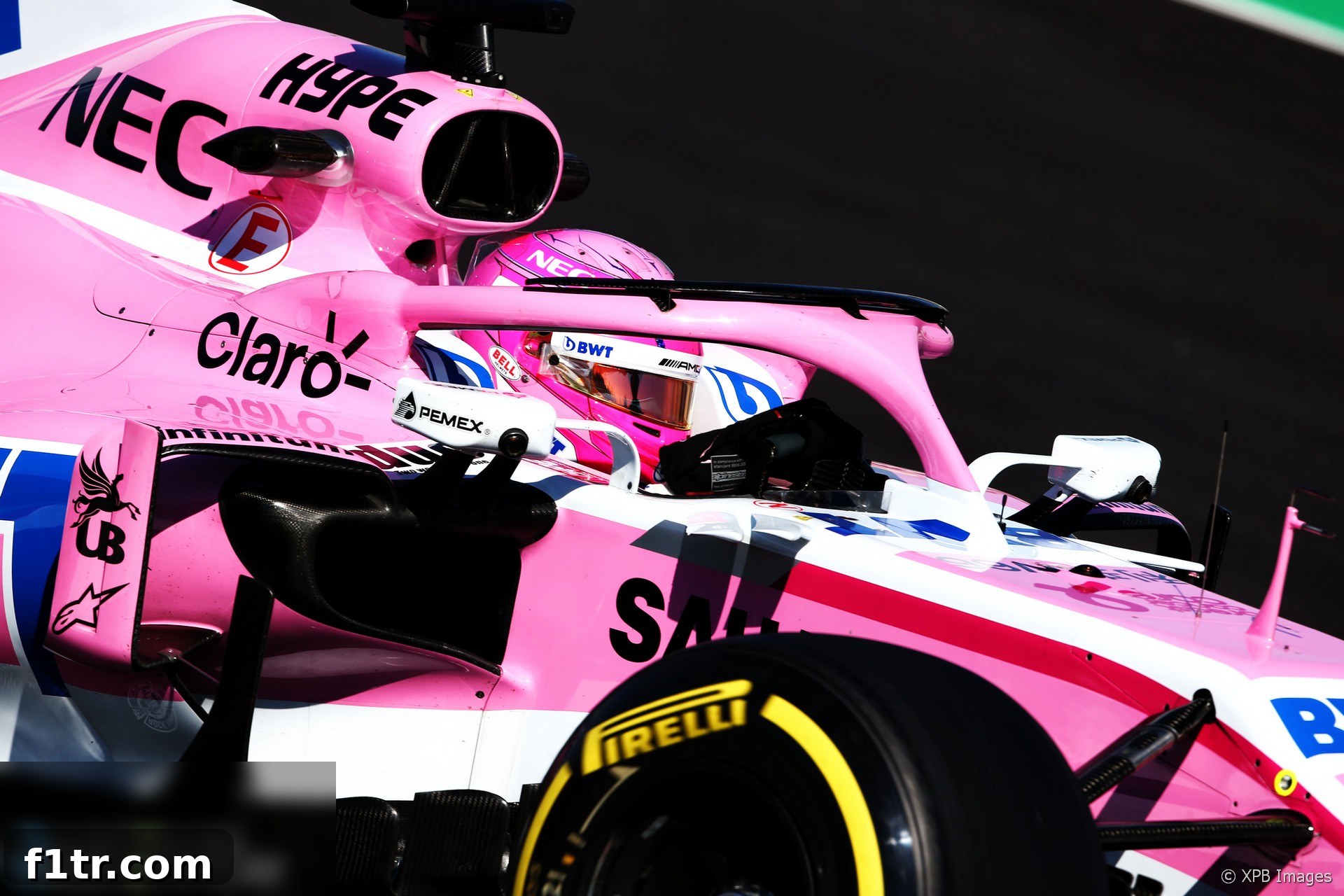
FIA President Jean Todt Fiercely Defends Halo: An Uncompromising Stance on Formula 1 Driver Safety
In a candid media briefing, Jean Todt, the then-president of the Fédération Internationale de l’Automobile (FIA), vehemently defended the controversial introduction of the Halo cockpit protection device in Formula 1, dismissing criticisms as “childish” and “inappropriate.” Todt underscored his belief that the Halo is a potentially life-saving innovation, a crucial step forward in driver safety, and an indispensable addition to the sport’s evolving safety standards.
The Halo, a three-pronged titanium structure designed to protect drivers’ heads from flying debris and collisions, had been met with a mixed reception since its mandatory implementation for the 2018 Formula 1 season. While some lauded it as a necessary safety advancement, a vocal contingent, including prominent figures within the sport, expressed strong aesthetic objections. Mercedes executive director Toto Wolff famously remarked that he would “like to remove it with a chainsaw,” while Red Bull driver Max Verstappen described the new structure as “ugly.” These public outcries, Todt asserted, were deeply misplaced and counterproductive to the sport’s core values.
The Nature of Criticism: Constructive vs. Detrimental
“I will not react to whatever has been said, it’s simply a childish game,” Todt declared, making his stance unequivocally clear. He elaborated on his disapproval of public denouncements, drawing a sharp distinction between beneficial constructive criticism and unhelpful, public negativity. “For me, I love Formula One, I think we all should love Formula One if we are in this business, all motor racing. I think it’s very inappropriate, whoever you are, to publicly deny something which is introduced.”
Todt emphasized that while healthy debate and critical analysis are essential for progress, public disparagement of a safety measure serves no positive purpose. “For me constructive criticism is always good because it makes you move forwards. But public criticism which is not good for the sport, I don’t see the value.” His words underlined the FIA’s commitment to prioritizing driver welfare above aesthetic preferences or superficial objections, framing the widespread negative commentary as a distraction from the fundamental importance of safety innovation.
Echoes of the Past: A History of Reluctance and Acceptance in F1 Safety
To contextualize the resistance to the Halo, Todt drew powerful parallels with previous safety innovations in motorsport that initially faced skepticism and outright rejection before becoming universally accepted and indispensable. He cited the evolution of safety measures, reminding his audience that reluctance to change is a deeply ingrained human trait, especially when it involves altering established norms or appearances.
“The Halo for me is kind of like the safety belt,” he stated, referring to a device now considered so fundamental that its absence is unimaginable. He pointed out archival photographs of legendary drivers competing without seatbelts, a testament to how far safety standards have advanced and how initial resistance often gives way to undeniable necessity. The journey from optional to mandatory, and then to universally accepted, often characterizes truly impactful safety features.
A more recent and particularly relevant comparison Todt made was to the Head and Neck Support (HANS) device. “More recently it was the HANS. Max [Mosley, former FIA president] imposed HANS, nobody wanted it. Now if you ask somebody to go in the car without the HANS device they will not go in the car.” The HANS device, introduced in the early 2000s, was initially met with significant driver discomfort and aesthetic concerns, similar to the Halo. However, after proving its effectiveness in countless incidents, reducing the risk of basilar skull fractures and other severe neck injuries, it became an accepted and revered part of a driver’s safety equipment.
This pattern, Todt argued, highlights a predictable cycle: “It’s a human attitude to be reluctant on a change. But once we know that the change, after a lot of experiences, a lot of testing, is good, we should implement.” He challenged critics to consider the profound moral implications of neglecting a proven safety measure. “Can you imagine how we will all feel if something would happen if [we didn’t] have Halo and we knew if it was there it wouldn’t have happened?” While acknowledging that “motor racing will never be bulletproof,” he firmly believes that continuous improvement in safety is a non-negotiable imperative. The Halo, through rigorous testing and development, had demonstrated its potential to mitigate severe head injuries, making its introduction a logical and ethical decision.
Advert | Become a RaceFans supporter andgo ad-free
The Drivers’ Paradox: From Plea for Protection to Public Disapproval
Perhaps the most poignant aspect of Todt’s defense was his revelation of the drivers’ own role in demanding enhanced head protection, which subsequently led to the development and implementation of devices like the Halo. He expressed particular dismay at the criticism emanating from the very individuals who had previously urged the FIA to prioritize their safety.
“On 16th December 2015 I got a letter which was signed by [GPDA representatives] Jenson Button, Sebastian Vettel, Alex Wurz urging us to decide for head protection for the drivers,” Todt revealed, pinpointing the precise moment the FIA received an urgent appeal from the Grand Prix Drivers’ Association (GPDA). This letter served as a direct and formal request from the drivers themselves to address the critical issue of head safety, which had been tragically highlighted by incidents in other motorsport categories.
He recounted the FIA’s immediate and earnest response: “And I said, ‘We are there. We will listen.’ So immediately we asked the technical people as a priority to see what they could come up with.” The FIA took the drivers’ concerns seriously, commissioning extensive research and development into various head protection concepts, including the Halo.
Todt further disclosed a subsequent plea from the drivers on July 27th, 2016, as a crucial meeting on head protection approached. “On July 27th 2016 they [the drivers] knew a meeting was going to happen and they said: ‘Don’t be weak. Please respect what we have asked you on safety’. So we committed to take into consideration their request. I feel it is a fair request.” This second appeal underscored the drivers’ profound concern and their desire for the FIA to remain resolute in its pursuit of enhanced safety.
Given this history, Todt’s surprise and disappointment at the subsequent backlash were palpable. “And here came the Halo. So I must say I am so surprised.” He expressed a deep frustration with what he perceived as a lack of consistency and loyalty. “You know I love Formula One but I hate this part of Formula One. Because you have people, they don’t [keep their] word. For me we are talking about the biggest asset in life: it is loyalty and [keeping their] word and having respect of what you have been undertaking. So we did respect that. And some have forgotten that.” His words highlighted a betrayal of trust, emphasizing the FIA’s diligent response to a collective plea that seemingly evaporated once the solution was presented.
Go ad-free for just £1 per month>> Find out more and sign up
An Unwavering Commitment to Life Preservation
Jean Todt concluded his impassioned defense by reiterating the FIA’s unwavering commitment to driver safety, regardless of popular opinion or aesthetic preferences. For him, the Halo was not merely an option but a moral imperative, a necessary step in the continuous journey of making motorsport as safe as possible.
“For me the Halo is no problem. I hope that we will have also more support from everybody – the fans, the media – for something which is for safety.” He appealed for a broader understanding and acceptance from all stakeholders, emphasizing that supporting safety initiatives is a collective responsibility that transcends individual tastes.
He expressed astonishment at the fatalistic viewpoint that motorsport must inherently remain perilous, challenging the notion that danger is an inextricable and acceptable component of racing. “I’m amazed to hear some people [saying] ‘OK, motor racing has to be dangerous, if it happens it happens’. I mean if we can avoid it why should we not protect the life of whoever?” This rhetorical question encapsulated the FIA’s fundamental philosophy: if a measure can save a life or prevent a severe injury, it must be implemented, irrespective of superficial objections. The ultimate goal is to push the boundaries of safety without compromising the thrill and integrity of the sport.
The introduction of the Halo, though controversial, represented a landmark moment in Formula 1’s ongoing commitment to driver welfare. Todt’s strong stance served as a powerful reminder of the FIA’s role as a guardian of safety, drawing upon historical precedents and moral obligations to justify a decision that, despite initial resistance, was engineered to protect the most valuable asset in motorsport: its competitors.
2018 F1 season
- F1 feared “death knell” for Drive to Survive after Ferrari and Mercedes snub
- McLaren staff told us we were “totally crazy” to take Honda engines in 2018 – Tost
- ‘It doesn’t matter if we start last’: How Red Bull’s junior team aided Honda’s leap forward
- Honda’s jet division helped F1 engineers solve power unit problem
- McLaren Racing losses rise after Honda split
Browse all 2018 F1 season articles