Formula 1’s Sprint Race Conundrum: A Unified Call for Stability and Fan Consultation
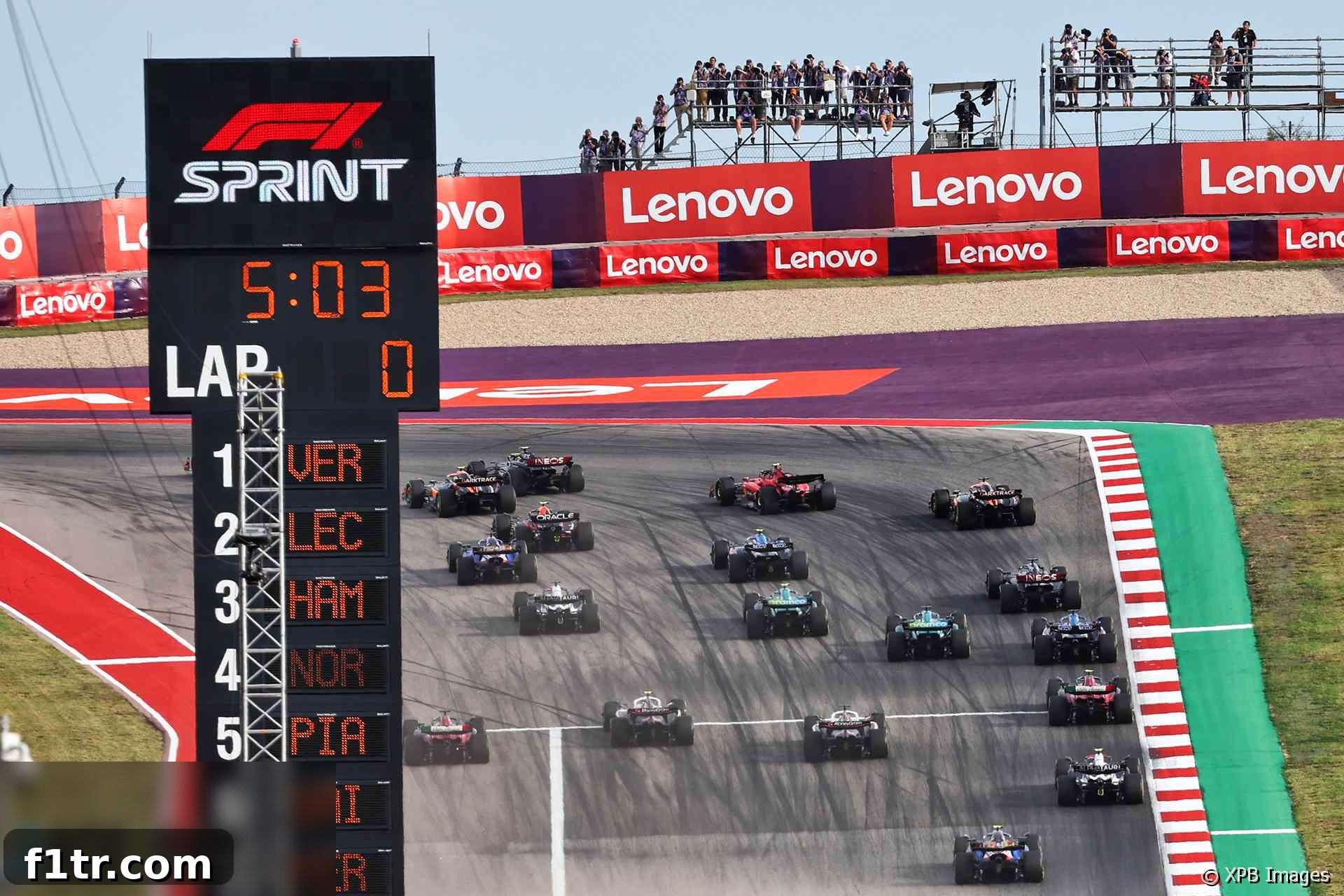
The divisive nature of Formula 1’s sprint race format has reached a critical juncture, with leading teams urging the sport’s governing bodies to cease the annual tinkering with its rules and, more importantly, engage deeply with fans before dictating its future. Since its controversial introduction in 2021, the sprint race format has undergone yearly alterations, leading to growing frustration among stakeholders who crave consistency and a clear vision for this supplementary racing event.
The Evolving Saga of F1 Sprint Races: A History of Constant Change
The journey of the Formula 1 sprint race began in 2021 with an initial ambition to set the starting grid for the Sunday Grand Prix. This original concept, however, quickly proved unpopular among both traditionalists and a significant portion of the fanbase who felt it devalued the main event. Feedback indicated a strong preference for the Grand Prix grid to be determined solely by a dedicated qualifying session, preserving the sanctity and importance of Saturday’s single-lap battle.
Responding to these sentiments, the format underwent its first major overhaul. By the end of 2021, the decision was made to decouple the sprint race from the Grand Prix grid. From 2022 onwards, sprint races were given their own qualifying sessions, making them standalone events with their own points structure, aiming to add extra competitive action to the race weekend without directly impacting the main event.
Alongside these structural changes, the points awarded for sprint races have also been continuously revised. Initially, only the top three finishers were rewarded for their efforts in the short dash. This limited distribution was soon deemed insufficient to incentivize vigorous competition and reward more drivers for their performance. Consequently, in a move to broaden the competitive scope, the points system was expanded last year to cover the top eight finishers, hoping to inject more intensity into the races and encourage drivers to push harder for valuable championship points.
Despite these iterative changes, dissatisfaction persists within the paddock. The F1 Commission recently indicated that further modifications are on the horizon for the 2024 F1 season, signaling yet another shift in a format that has known little stability. This continuous evolution has highlighted fundamental issues that remain unaddressed, pushing teams to demand a definitive, long-term solution.
Deep-Seated Concerns: Why Teams Are Unhappy with the Current Sprint Format
Beyond the inherent volatility of annually changing rules, teams harbor several significant concerns regarding the operational aspects and overall impact of the current sprint format. One of the most frequently cited issues revolves around the restrictive *parc ferme* regulations. Under these rules, teams are locked into their car setups after just a single, one-hour practice session on Friday. This limitation severely curtails their ability to experiment, optimize settings for varying track conditions, or respond to unexpected performance issues, often forcing them into compromise setups for the entire weekend, including the crucial Grand Prix. This rigidity can stifle engineering creativity and hinder a team’s potential to extract maximum performance.
Furthermore, many observers and teams contend that the sprint races themselves have not consistently delivered the promised spectacle or notably more on-track action compared to Grands Prix. While intended to provide explosive, short-form racing, they often unfold with less drama and overtakes than anticipated, failing to justify their inclusion as a truly exciting additional event. The limited tire usage and strategic options due to the shorter distance often lead to processions, particularly when compared to the strategic depth and sustained battles seen in a full Grand Prix.
Perhaps the most profound concern is the potential for sprint races to undermine the main Grand Prix event. By essentially running a mini-race on Saturday, teams’ performance levels and potential strategies are often revealed too early. This pre-exposure can diminish the element of surprise and anticipation for Sunday’s feature race, potentially revealing too much about the competitive order and strategic possibilities. The fear is that the sprint effectively spoils the plot for the main event, lessening the overall excitement and perceived value of the Grand Prix weekend as a whole.
Team Principals Speak Out: The Imperative for Fan-Centric Decisions
The discontent has prompted prominent figures within Formula 1 to voice their opinions, united in their call for stability and a fan-first approach to the sprint format’s future.
Christian Horner: Prioritizing Fan Feedback for a Lasting Solution
Red Bull team principal Christian Horner has been particularly vocal, emphasizing the critical need for comprehensive fan consultation before any further decisions are made regarding the sprint race format for the 2024 F1 season and beyond. Horner insists that the next iteration of the sprint concept must be one that is “fixed for a long period of time,” bringing an end to the cycle of continuous adjustments.
He acknowledges the polarized views on sprints, recognizing that “in some areas it’s very popular and with some traditionalists, it’s very unpopular.” This division underscores the necessity of thorough research into fan sentiment. Horner articulated key questions that F1 must address: “What is it actually that the audience want? Do they actually enjoy the sprint format as it is? Or do they actually want to see a bit more racing if we’re going to do a sprint race?” His line of questioning extends to the practicalities, asking, “If so, if we’re going to do that, then how do we award the points? How do we incentivise drivers and teams? So there are many topics attached to it. But the most important, fundamental thing is, what do the fans want?” This holistic approach highlights the complexity of the issue and the vital role of the fanbase in shaping the sport’s evolution.
Mike Krack: Measured Changes and Long-Term Vision
Aston Martin team principal Mike Krack echoed Horner’s sentiments, expressing his “full agreement” that Formula 1 must resist the temptation to “shoot too quickly after a couple of races” to make “small changes or small adjustments, step by step.” Krack, too, champions the pursuit of a long-term solution, advocating for a more considered approach to rule modifications.
Krack highlighted the ongoing implications of even minor adjustments, noting that “the sequence of sessions is already a change that we have to see how it pans out. It will have also other consequences or other implications.” He strongly reiterated the importance of fan preferences, stating, “the most important, and that is a point that Christian made, which I think is very, very important is what do the fans want? Because we do it for them. This has to be taken carefully into consideration. But also, when doing changes, think about the implications and not trying to fix something again two races later.” His comments underline a desire for strategic foresight rather than reactive tinkering.
Andrea Stella: Incremental Evolution Over Drastic Overhauls
McLaren’s Andrea Stella offers a slightly nuanced perspective, believing that drastic changes to the format are neither necessary nor desirable at this stage. Instead, Stella advocates for incremental improvements and a period of stability to allow all stakeholders to adapt. “We need to make sure that we don’t change too often, too rapidly, because then we wouldn’t have this time to adapt, absorb to a certain way in which we intend a Formula 1 race weekend,” he explained.
Stella’s view emphasizes the need for a measured approach. While acknowledging that “improvements have to be made,” he stresses that “they should be relatively incremental, have a few more sprint races, and then we can have better data, better information to see in which direction the business of Formula 1 should go.” He firmly states, “We don’t think that there should be some dramatic changes in the execution of the sprint race,” suggesting that the current format, with minor refinements, could still find its footing if given sufficient time to mature without constant upheaval.
Past Fan Surveys: A Mixed Verdict and Lessons Learned
The calls for fan consultation are not without precedent, and past attempts at gauging public opinion offer valuable insights. When the new format was first introduced in 2021, Formula 1 conducted a fan poll. The results revealed only a small majority of respondents agreed that “the introduction of sprint race has improved the show.” This limited endorsement stood in stark contrast to the significantly higher support for other potential changes, such as allowing multiple tyre suppliers, which garnered much stronger positive feedback.
Furthermore, another survey conducted earlier, exploring more radical alterations to the format like introducing reverse grid races, found very little support among the fanbase. These historical data points serve as a crucial reminder: while innovation is often welcomed, it must align with what the audience truly desires and values in the sport. The mixed reception and outright rejection of certain concepts from previous surveys underscore the importance of listening attentively to fans rather than imposing changes from above. The sport’s commercial success and long-term appeal are inextricably linked to its ability to resonate with its passionate global following.
Charting a Course for the Future: Stability and Purpose
The collective message from team principals is clear: the era of annual, reactive adjustments to the F1 sprint format must end. Instead, Formula 1 needs to embark on a more strategic, fan-centric process to define the sprint’s purpose and structure for the long term. This requires more than just superficial tweaks; it demands a fundamental re-evaluation of what the sprint race is intended to achieve within the broader Grand Prix weekend.
Is the sprint primarily a standalone entertainment event, a points-scoring opportunity, or a feeder for the main race? Clarifying this core purpose is essential for designing a format that truly adds value without detracting from the Grand Prix’s prestige. The challenge lies in striking a delicate balance between respecting the sport’s rich traditions and embracing innovation to attract new audiences. The future success of Formula 1’s sprint races hinges on this commitment to stability, clarity, and, above all, a genuine understanding of what the fans truly want to see.
Conclusion: A Unified Call for Strategic Foresight in Formula 1
In summary, the Formula 1 paddock stands united in its plea for a halt to the perpetual modifications of the sprint race format. Key figures like Christian Horner, Mike Krack, and Andrea Stella, while offering slightly varied approaches, converge on the vital importance of stability, measured changes, and comprehensive fan consultation. The history of the sprint race, marked by annual revisions and mixed fan reception, underscores the urgency of this call. Moving forward, the success of the sprint format will depend not on quick fixes, but on a strategic, long-term vision rooted in genuine fan feedback and a clear definition of its role within the exhilarating world of Formula 1 racing.
More Formula 1 Insights
- F1 returning to India soon after 2027 sounds like wishful thinking
- Verstappen loathes F1’s new generation of cars – but what do his rivals reckon?
- The ‘throwback weekend’ is back in fashion. But it’s a flawed concept – especially for F1
- Is Formula 1’s double race cancellation a blessing in disguise?
- Todt admits Schumacher crashed on purpose – but did it really cost him two titles?
Browse all Formula 1 articles