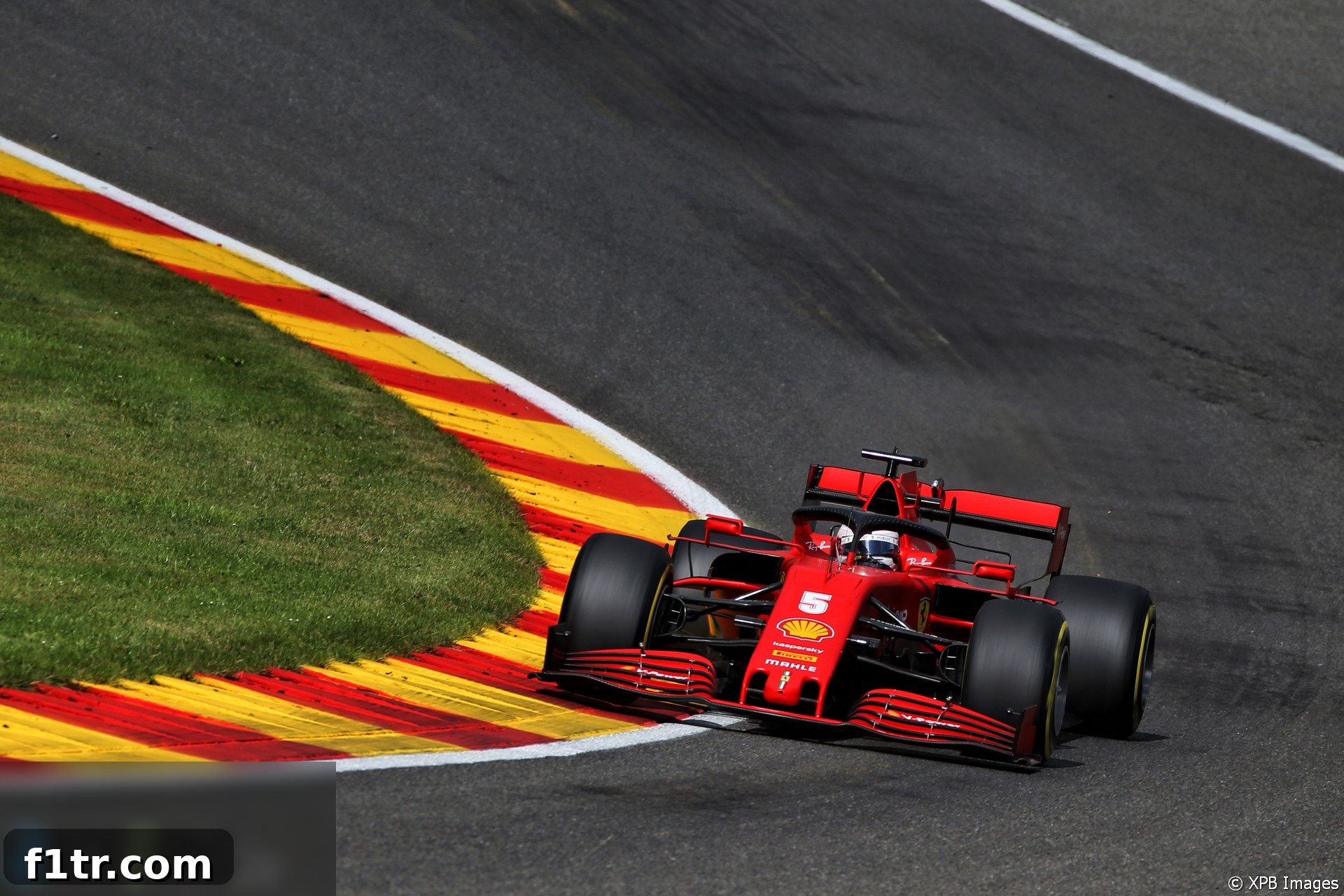
The legendary Spa-Francorchamps circuit, a hallowed ground for motorsport, typically stages thrilling battles at the pinnacle of Formula 1. However, the 2020 Belgian Grand Prix weekend painted a starkly different, and deeply concerning, picture for one of the sport’s most iconic teams: Scuderia Ferrari. The team’s inability to progress beyond Q2 in qualifying, a result that saw both Sebastian Vettel and Charles Leclerc relegated to the mid-grid, was described by Vettel as the “true picture” of their performance, a brutally honest assessment that resonated with the team’s struggles throughout the season.
Advert | Become a Supporter & go ad-free
Ferrari’s Unsettling Reality at Spa: A Deep Dive into the Q2 Elimination
The Spa-Francorchamps circuit, with its demanding layout featuring long straights like Kemmel and high-speed corners such as Eau Rouge and Blanchimont, serves as a litmus test for a car’s overall performance – particularly its engine power and aerodynamic efficiency. For Ferrari, the results were devastatingly clear. After languishing at the bottom of the timesheets during Saturday’s third practice session, both Charles Leclerc and Sebastian Vettel found themselves eliminated in Q2 during the crucial qualifying session. This disappointing outcome meant the formidable red cars would start Sunday’s Belgian Grand Prix from an unfamiliar 13th and 14th grid position, respectively. Such a result for a team steeped in racing history, a team that traditionally challenges for pole positions and race wins, sent shockwaves through the paddock and amongst its global fanbase.
Sebastian Vettel’s Candid Assessment: “The True Picture” of SF-1000’s Pace
For Sebastian Vettel, a four-time world champion and a driver known for his frankness, there was no sugar-coating the situation. He openly admitted that a seventh-row start was a fair and accurate reflection of the SF-1000’s true performance at Spa. “Well, it is the true picture,” Vettel stated, his words carrying the weight of a season-long battle against an underperforming machine. “It’s what the car can do around here today.”
Vettel’s comments underscored the fundamental limitations of the 2020 Ferrari challenger. Despite the team’s relentless efforts to extract more pace, particularly with significant adjustments made overnight between Friday and Saturday, the gains were marginal at best. “Obviously, we tried everything we can and a lot of effort went in from last night to today, trying to make things better,” he explained. “I think we did a little bit. But obviously, we’re not where we want to be, but that’s not the first race and the first qualifying where that’s the case.” This recurring theme of struggle has become a painful reality for Ferrari throughout the 2020 season, a stark contrast to their competitive form in previous years.
The German driver also indicated that the lack of pace, while disheartening, was not entirely unexpected. Despite Ferrari being unable to match their qualifying times from 2019 at the same Belgian circuit – a track where Leclerc had claimed a memorable pole and victory just twelve months prior – Vettel remained stoic. “We tried to do our best,” Vettel reiterated. “I think it’s obviously the car that we have and the car that we know now for the whole season so far. So it’s not a surprise today.” His pragmatism highlighted the deep-seated issues that had plagued the SF-1000 from the very first race. While a P13 finish is far from exhilarating for a driver accustomed to fighting at the front, Vettel acknowledged the small victory of getting both cars into Q2, a feat that had seemed questionable after a difficult practice session. “Obviously a P13 is not as exciting as P1, but I think we still tried to put everything together and this morning we looked like we wouldn’t make it to Q2 and we did with both cars. So, obviously, that’s not a success, but it’s everything that we could do today and it’s where we stand. So we’ll see what happens.”
Charles Leclerc’s Despair: A “Big Step Back” and Fan Disappointment
Sebastian Vettel’s Ferrari teammate, Charles Leclerc, echoed similar sentiments of profound disappointment, but with an added layer of perplexity. The young Monegasque driver, who delivered Ferrari’s most recent F1 victory at Spa in 2019, found himself struggling to comprehend the dramatic decline in performance. “To be honest, it’s very difficult to find an explanation,” a visibly frustrated Leclerc confessed.
Leclerc’s assessment highlighted an alarming regression: “Yeah, it’s a big step back.” This wasn’t just about being off the pace; it was about falling further behind, even compared to their already compromised start to the season. The difficulty in pinpointing the exact cause of this slump only added to the team’s woes. “We need to try and find the main issue to try and address it,” he urged, emphasizing the critical need for a solution. The emotional toll of such consistent underperformance was also evident in his call for resilience within the team. “I think everyone in the team needs to keep their heads up, even though it’s very difficult in tough times like this.”
Crucially, Leclerc also addressed the palpable disappointment radiating from the Scuderia’s loyal fanbase. “I can also understand the fans at home that are very disappointed. It’s understandable.” This empathy for the Tifosi, who have endured a challenging few seasons, underscored the magnitude of the team’s current crisis. While promising to deliver their best in the race, Leclerc realistically tempered expectations, acknowledging that a miraculous turnaround was highly improbable. “But yet, us drivers all try to make the best race possible tomorrow, even though we can’t expect any miracles.”
The SF-1000’s Chronic Woes: Why Ferrari Lags Behind
The fundamental issues plaguing the SF-1000 have been a persistent narrative throughout the 2020 Formula 1 season. The car suffers from a significant deficit in engine power, a consequence widely believed to stem from regulatory clarifications issued by the FIA at the end of 2019 regarding power unit legality. This clarification effectively reined in some of Ferrari’s engine advantages from the previous season, leaving them struggling to compete with rivals like Mercedes and even Renault and Racing Point in terms of straight-line speed.
Beyond the power unit, the SF-1000 has also demonstrated clear aerodynamic inefficiencies. High-speed tracks like Spa expose these weaknesses brutally. The car struggles to generate sufficient downforce without incurring excessive drag, leading to a delicate balancing act that often compromises either cornering grip or straight-line speed. This becomes particularly problematic at a circuit with iconic high-speed sections where confidence and outright grip are paramount. Drivers are forced to wrestle with an unstable rear end and a general lack of confidence, which is reflected in their lap times.
Moreover, these inherent design flaws often complicate tire management and setup optimization. A car that is fundamentally slow and aerodynamically unstable places immense strain on its tires, making it harder to find the optimal operating window and extract maximum performance over a qualifying lap or a race stint. This cascading effect of engineering compromises has left Ferrari in an unenviable position, battling not only formidable competitors but also the very limitations of their own machinery.
Advert | Become a RaceFans supporter andgo ad-free
Looking Ahead: Ferrari’s Path Through Crisis
The struggles at Spa-Francorchamps represented more than just a bad weekend; they symbolized a deeper crisis for Scuderia Ferrari, a team synonymous with Formula 1 success and passionate rivalry. For a constructor with 16 Constructors’ Championships and 15 Drivers’ Championships, its current predicament is almost unthinkable. The pressure on Team Principal Mattia Binotto and the entire Maranello outfit intensified with each disappointing result, demanding urgent and effective solutions.
The immediate future for Ferrari in the remainder of the 2020 season, particularly with power-sensitive tracks like Monza (their home race) on the horizon, appears bleak. Hopes for significant improvements are tempered by the realities of development limitations under the current regulations and budget constraints. The long-term implications are even more critical. With largely stable regulations for 2021 before a major overhaul in 2022, Ferrari faces the daunting task of rectifying fundamental design flaws while simultaneously planning for a radically different future.
The impact on driver morale, particularly for Sebastian Vettel in his final season with the team, cannot be overstated. While Charles Leclerc remains committed for the long haul, the consistent struggle challenges the resilience of both drivers and the entire racing team. The 2020 Belgian Grand Prix qualifying was a painful “true picture” for Ferrari, but it also served as a stark reminder of the monumental effort required to claw their way back to the front of Formula 1.
2020 Belgian Grand Prix Articles
- 2020 Belgian Grand Prix Star Performers
- Ricciardo believes Renault’s Spa set-up breakthrough will work on other tracks
- ‘He should have let me pass’: How Raikkonen saw Giovinazzi’s crash
- Sub-54 second laps will produce a “big mess” in qualifying on Bahrain Outer circuit
- McLaren expect Ferrari will “strike back” after Monza
Browse all 2020 Belgian Grand Prix articles