Carlos Sainz Jnr Calls for Major F1 Rule Change to Curb Qualifying Disruptions
Carlos Sainz Jnr, the acclaimed Ferrari driver, has openly expressed his conviction that Formula 1 regulations must evolve to prevent drivers from strategically benefiting from crashes during critical qualifying sessions. His proposal targets a crucial loophole that, he believes, undermines the fairness and integrity of the sport’s high-stakes grid-setting process.
Sainz is a strong proponent for F1 adopting a new regulation that would impose penalties on drivers who trigger a yellow or red flag during qualifying, irrespective of whether the incident was intentional or accidental. This concept is not new to top-tier motorsport; similar stringent rules are already effectively implemented in other competitive series, such as IndyCar, where driver accountability for on-track incidents is paramount.
The core philosophy behind Sainz’s advocacy is to eliminate any incentive for drivers to crash deliberately or take excessive, calculated risks purely to obstruct their rivals. Such tactics, if left unchecked, could allow a driver to secure a better grid position by preventing competitors from completing their flying laps, thereby distorting the true competitive order based on merit and pace.
The Monaco GP Incident: A Catalyst for Change
The renewed debate surrounding this critical rule change gained significant traction following highly publicized events at this year’s Monaco Grand Prix qualifying session. Speculation mounted after Max Verstappen reportedly raised strong objections within the Red Bull Racing team concerning the driving conduct of his teammate, Sergio Perez.
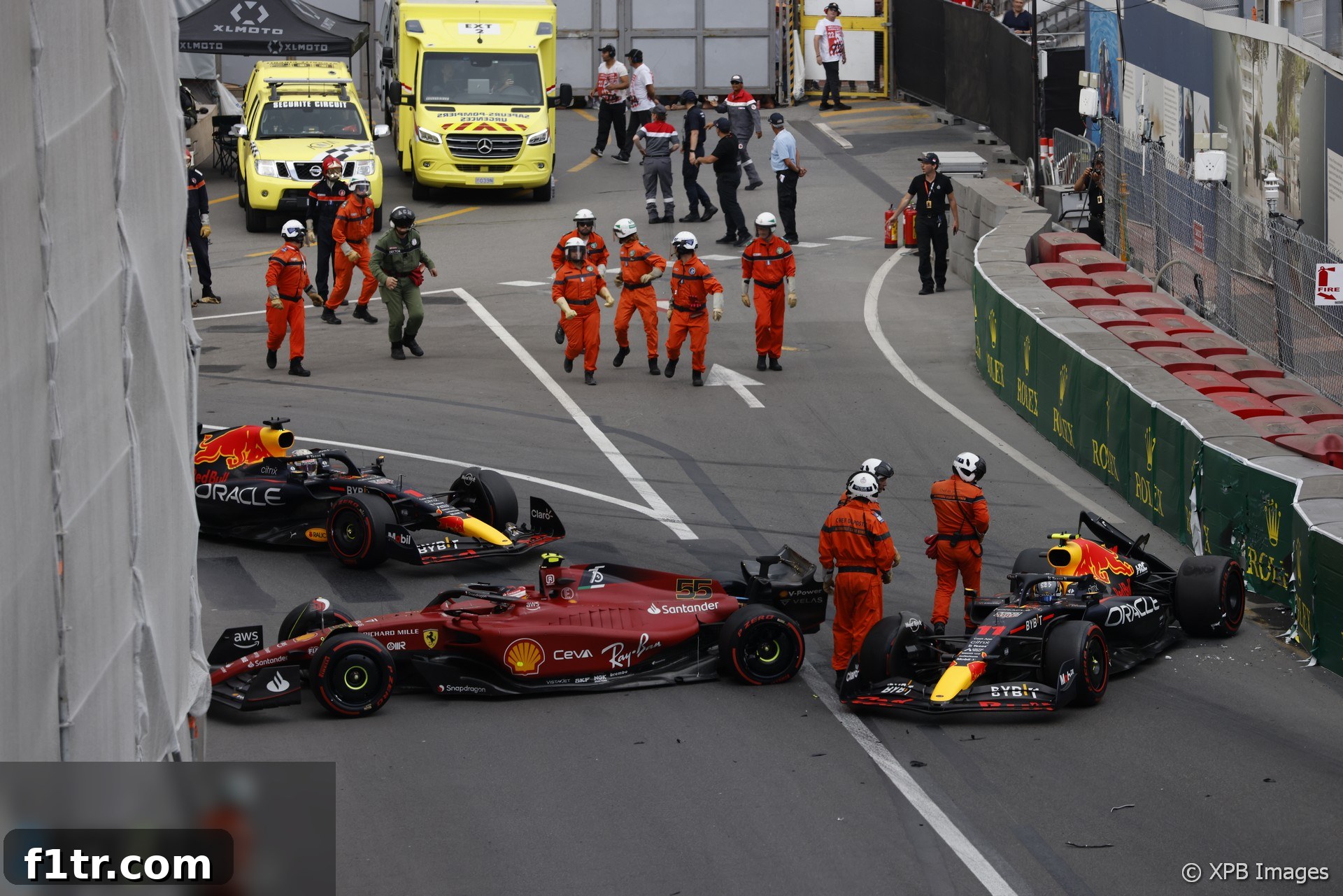
During the final, nail-biting moments of Q3, Perez crashed his car, a significant incident that immediately brought out a red flag. This sudden halt to the session had profound implications, critically preventing several drivers, including Verstappen himself, from completing their final attempts to improve their lap times. The timing of such an incident in a high-stakes session naturally fueled discussion about its potential tactical implications.
Sainz, who was directly involved in the incident as he subsequently crashed into Perez’s stranded car, has deliberately refrained from publicly stating whether he believes Perez’s crash was deliberate. However, his strong stance on the need for new rules makes his position clear: he wants Formula 1 to introduce robust regulations that definitively stamp out any and all deliberate tactics designed to manipulate qualifying outcomes.
Sainz’s Stance: “We All Want Some Kind of a Rule”
“Without commenting if it was on purpose or not, I think it’s for real now that all drivers, we want some kind of a rule that if you generate a red flag or a yellow flag, even if it’s intentional or not, there should be something done to that driver,” Sainz articulated. His statement underscores a shared sentiment among the F1 paddock that the current rules are insufficient to address this specific grey area of competitive behavior.
He further elaborated on the collective impact of such incidents: “Because you have compromised the other nine – on purpose, or maybe not – but you should get a penalty for it. If not, we’re all going to start playing with it. And I’ve seen over the last few years a lot more play around with it than what you might even have picked out in the media.” This candid observation from a driver inside the cockpit suggests that the issue of tactical disruptions is more prevalent and nuanced than it appears to external observers.
The Driver’s Intuition: Recognizing Intent
Sainz emphasized that Formula 1 drivers, given their unique perspective and intimate understanding of racing dynamics, are exceptionally well-positioned to discern when a crash in qualifying might have been deliberate. “I think all 20 drivers in ourselves, when we analyze these kind of incidents, we know immediately [if] the driver has done it on purpose or not because we’re not stupid,” he asserted with conviction.
While still sidestepping direct commentary on the specific Monaco incident – referring to it as “an incident of the past” – Sainz highlighted the preventative power of a new rule. “I’m just going to say that if there would be a rule, it wouldn’t even go through your head,” he stated, indicating that the mere existence of a penalty would serve as a powerful deterrent, removing the temptation for such actions altogether.
Heightened Stakes: The Impact on Q3 Strategy
The introduction of penalties for disrupting sessions, Sainz believes, would dramatically heighten the tension and commitment required in crucial qualifying sessions, particularly in Q3 where pole position is decided. “Because it means that in Q3 there’s a lot to win, but also something to lose,” he explained. This added layer of risk would compel drivers to perform with impeccable precision.
“So you need to put a really good lap together with no mistakes if you want to take pole position,” Sainz concluded. This shift would prioritize clean driving and absolute accuracy, ensuring that the fastest driver truly earns their pole position without the shadow of tactical interference.
Past Discussions and Future Implementation
The idea of penalizing drivers for causing qualifying disruptions is not a new concept within Formula 1 circles. It has been a topic of discussion on several past occasions, notably last year when Sainz’s Ferrari teammate, Charles Leclerc, also crashed during Q3 at the Monaco Grand Prix. This recurring nature of such incidents, especially at a circuit like Monaco where small mistakes can have huge consequences, reinforces the urgency of the issue.
“I think we’ve raised a few times, but it’s never been concluded into something,” Sainz noted, expressing a clear desire for concrete action. “But I think for next year it should be done.” This suggests a growing consensus and a push from within the driver community for the FIA and Formula 1 management to address this regulatory gap decisively.
The Frequency of “Not Regular” Incidents
While Sainz acknowledges that deliberate crashes are “not regular,” he stressed that they have occurred “enough times already that there should be kind of a rule for it.” This indicates that even infrequent occurrences are sufficient to warrant a rule change, given the significant impact they have on the fairness of competition and the championship battle.
He offered clear examples of how such a rule could be applied and its immediate effects: “I think in Monaco it would have been very easy to judge the situation. I think either laps canceled or three or five places penalty if you [cause] a yellow flag or a red flag in quali, [would] means the incentive of doing that goes away immediately.”
The proposed penalties are straightforward and impactful. A cancelled lap would deny the driver their best effort, while a grid penalty of three or five places would have a tangible effect on their starting position in the race. Such deterrents, Sainz believes, would instantaneously remove any tactical advantage associated with causing a disruption.
“It also forces us drivers to behave and to be committed to the lap but also with a level of need maybe leaving half a percent on the table,” he added. This nuanced point suggests that while drivers are always pushing to the absolute limit, the new rule might encourage a minuscule degree of self-preservation, ensuring that the pursuit of pole position doesn’t cross into unsportsmanlike conduct.
Ensuring Sporting Integrity: A Call for Fair Play
Carlos Sainz Jnr’s proposal is fundamentally about safeguarding the sporting integrity of Formula 1 qualifying. By implementing clear, decisive penalties for causing yellow or red flag incidents, F1 can ensure that grid positions are earned through pure speed, skill, and clean driving, rather than through controversial tactical maneuvers. This would not only enhance the fairness of competition but also bolster public confidence in the sport’s commitment to fair play at the highest level.
The ongoing discussions among drivers and the clear calls for action signal a significant moment for Formula 1 to review and potentially revise its rulebook to align with the evolving nature of competitive racing and the constant quest for strategic advantage.
2022 Abu Dhabi Grand Prix Insights
- Norris dissatisfied with solitary podium finish: “One isn’t enough”
- Verstappen achieves most dominant title win since Vettel in 2013
- Magnussen’s experience makes him ‘positive’ ousted Schumacher can return to F1
- Overtaking still difficult at Yas Marina despite 2021 track changes, say drivers
- Depressing to consider points lost says Gasly after AlphaTauri slump to ninth
Browse all 2022 Abu Dhabi Grand Prix articles