The prospect of a new team joining the prestigious Formula 1 grid is always met with a mix of excitement and scrutiny, and the recent revelation of Michael Andretti’s ambition to enter F1 is no exception. Formula 1 team principals have made it clear that while the illustrious Andretti name holds significant weight in motorsport, any new entrant, including Andretti Global, must unequivocally demonstrate its capability to add substantial value to the championship before being granted a coveted spot.
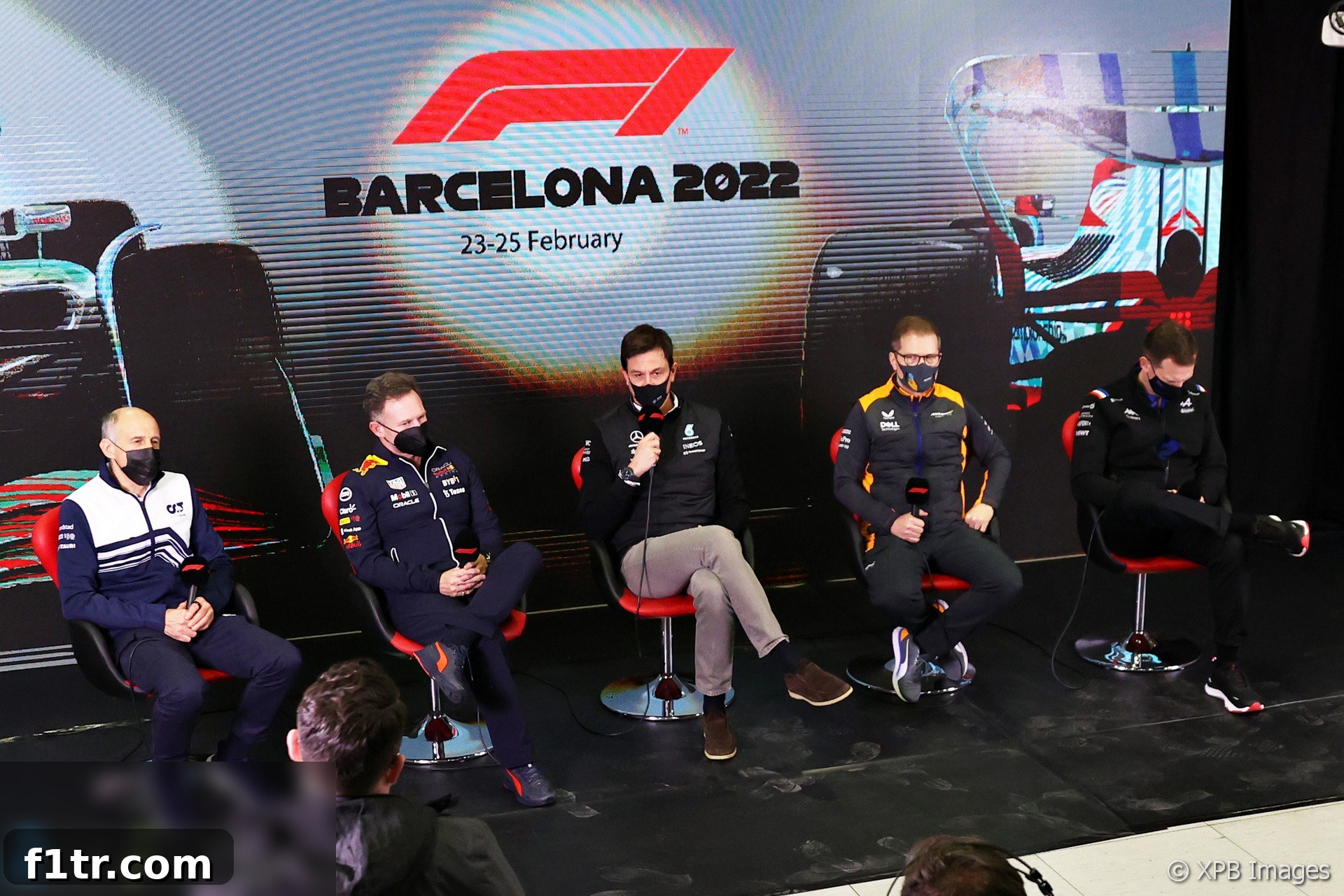
Last week, motorsport legend and 1978 world champion Mario Andretti, proudly unveiled that his son, Michael, a former F1 and IndyCar driver, had formally initiated discussions with the FIA regarding the entry of an 11th team for the 2024 Formula 1 season. This announcement immediately sparked widespread debate and garnered cautious, yet intriguing, responses from various team bosses during an FIA press conference held at the Circuit de Catalunya during recent testing sessions.
The commercial framework governing Formula 1, known as the Concorde Agreement, stipulates a significant hurdle for any aspiring new team: a $200 million anti-dilution fee. This fee is designed to compensate the existing ten teams for the potential reduction in prize money and other benefits that a new competitor might bring. However, Mercedes team principal Toto Wolff articulated a sentiment shared by many of his counterparts: mere financial capability to pay the fee is insufficient. Andretti Global, or any other prospective team, must prove it can offer much more.
“Andretti is a name that for sure in the American market is important,” Wolff acknowledged, recognizing the heritage and brand power. “But every team that is joining needs to be accretive, that means needs to add value. It’s not only by paying a 200 million dollar entry fee, it needs to demonstrate, in my opinion, what it can do for the other teams, for Formula 1 and the FIA. Only then the sport will grow.” Wolff’s statement underscores the prevailing belief among current stakeholders that F1 is not merely a sport, but a premium global entertainment product where new additions must enhance, not just participate.
Wolff further emphasized the elite status of the championship, stating, “F1 is the absolute pinnacle of motorsport. This is the Champions League or the NFL. And redistributing franchises on the go, that’s not how it should be, and it’s not the intention of Formula 1 and the FIA either.” He highlighted the need for substantial, long-term commitment and investment beyond the entry fee. “But if there is a real brand coming in with good people, necessary funding, not only the 200 million, but probably you need more of a billion if you want to play in this club straight from the get go. And then why not?” This “billion-dollar” figure, while perhaps an exaggeration for a startup budget, highlights the immense financial muscle required to compete effectively and sustainably in modern F1.
Michael Andretti’s extensive motorsport empire, which includes successful teams in IndyCar, Formula E, Extreme E, and various other racing series, provides a credible foundation for his Formula 1 aspirations. This strong pedigree, however, does not exempt him from the rigorous scrutiny of the current F1 establishment. Red Bull team principal Christian Horner echoed the cautious optimism, stating, “I think it’s great that there’s the interest, for people wanting to enter Formula 1 and the Andretti name is certainly a powerful name in motorsport. And of course, they’re not the only ones that are making noises about coming on, but there is a clear criteria, through the Concorde Agreement, that has to be met and approved.” Horner stressed that the application process would necessitate meticulous evaluation, adding, “I’m sure they’re engaged in that process. And of course, that agreement is there to protect the ten incumbents and not to dilute that. So obviously, that would need to be carefully looked at.” The Concorde Agreement is a complex document, periodically renewed, that governs the commercial rights and responsibilities of all parties involved in F1 – the FIA, FOM (Formula One Management), and the competing teams. Its primary purpose is to ensure stability, fairness, and the financial viability of the sport for all participants.
Adding another layer to the approval process, AlphaTauri team principal Franz Tost indicated that the existing teams would ultimately need to give their assent to an Andretti entry. “We have 10 teams and I think 10 really good teams. And at the end, this is a decision from the FIA and from FOM. And you know, if Michael wants to come with a new team and if all the ingredients are coming together and if all the teams also accept it, then yes, otherwise, no.” This collective approval mechanism underscores the political landscape of Formula 1, where existing teams act as significant stakeholders with vested interests in the championship’s structure and profitability.
However, not all team principals shared the same level of caution. McLaren team principal Andreas Seidl offered a notably more welcoming perspective, expressing enthusiasm for the potential inclusion of Andretti Global. “The Andretti name, a US team which will help to grow the sport further in the US, I think would also open up simply more possibilities again to get young drivers in, the more teams we have. And in the end, the earlier we get to 12 teams, which is the maximum we can have, I think it would just help to drive the franchise value even higher of us teams.” Seidl’s viewpoint highlights several potential benefits: tapping into the lucrative American market, which F1 has prioritized for growth in recent years, creating more opportunities for emerging talent, and ultimately bolstering the overall value and prestige of the Formula 1 brand for all involved. He concluded, “So absolutely open for it, and I’d love to compete with them.”
The discussion surrounding Andretti’s potential F1 entry encapsulates the complex dynamics of modern Formula 1. On one hand, there’s a desire for expansion and growth, particularly into key markets like the United States, where Andretti’s legacy resonates deeply. A successful American team could significantly boost F1’s popularity and commercial appeal in the region. On the other hand, the existing teams are understandably protective of their investments, their share of the prize money, and the stability of the championship. The $200 million anti-dilution fee, while substantial, is seen by some as a mere entry ticket, with the real cost of competing at the highest level demanding far greater financial commitment and a demonstrated ability to contribute meaningfully to the sport’s ecosystem, both technologically and commercially.
The path for Andretti Global to join the Formula 1 grid is fraught with challenges, requiring not only significant financial backing and a robust technical plan but also navigating the intricate political landscape and securing the tacit approval of the established competitors. The FIA and Formula One Management will ultimately weigh these factors, balancing the potential benefits of an iconic new entrant against the legitimate concerns of the current teams. The saga of a potential 11th team, particularly one carrying the celebrated Andretti name, promises to be a defining narrative in the coming months, shaping the future competitive and commercial landscape of Formula 1.
Related F1 News & Analysis
- Mercedes told me “you’re wrong” about 2022 car’s problems – Hamilton
- FIA confirms all 10 F1 teams complied with 2022 cost cap
- Steiner “not ashamed” of panning “slow” Schumacher in Drive to Survive
- Albon believes year out of F1 improved him as a driver
- Hamilton sees diversity gains in F1 years on from his ‘traumatising’ experience of racism
Browse all 2022 F1 season articles