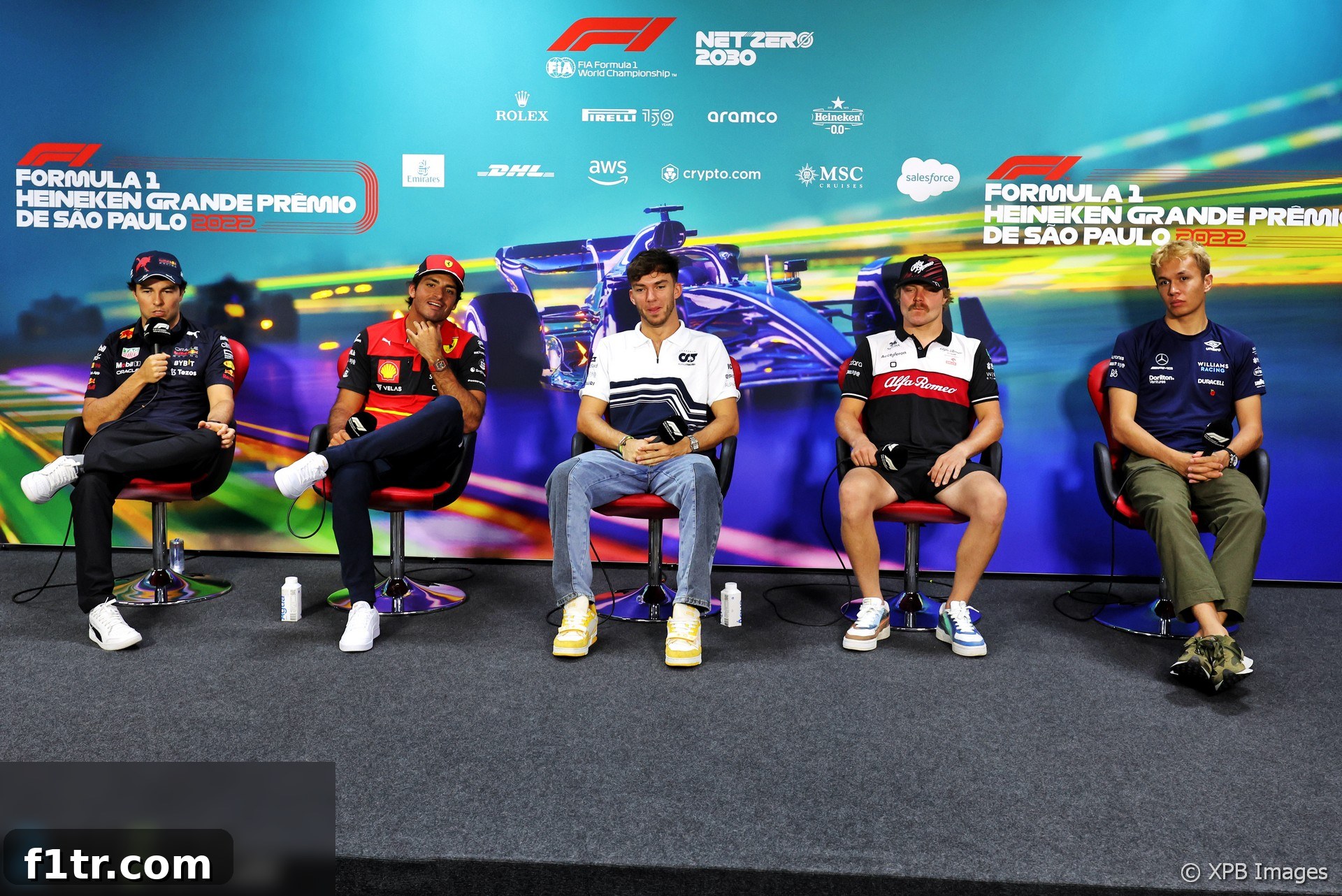
The Formula 1 paddock is abuzz with calls for a significant overhaul of its long-standing penalty points system, as key drivers, led by AlphaTauri’s Pierre Gasly, find themselves on the brink of an automatic race ban. This critical juncture has ignited a broad discussion among competitors and officials alike, spotlighting concerns over the system’s fairness, its application to various infringements, and its potential impact on sporting integrity. The consensus emerging from the driver briefing rooms is that a rethink is not just necessary but imminent, aiming to differentiate between genuinely dangerous driving and minor procedural errors that currently carry the same punitive weight.
Advert | Become a Supporter & go ad-free
At the heart of this growing controversy is Pierre Gasly, who accrued a concerning total of 10 penalty points following incidents at the Mexican Grand Prix. With the threshold for an automatic one-race ban set at 12 points, Gasly is now just two points away from missing a future Grand Prix. What exacerbates his predicament is the protracted nature of the penalty system: points are not deducted from a driver’s super licence until a full 12 months after their imposition. This means Gasly faces the daunting prospect of competing in the next nine races under immense pressure, knowing any minor misstep could lead to a ban, a scenario that none of his Formula 1 peers believe he deserves given the nature of his infringements.
F1 Penalty Points System Under Scrutiny: Drivers Demand Immediate Reforms
While no Formula 1 driver has ever triggered the 12-point threshold and been forced to miss a race, the junior category, Formula 2, offers a stark warning. The F2 championship has seen four drivers banned as a result of accumulating too many penalty points, with an alarming three of these incidents occurring since June alone. This trend in F2 has prompted its CEO, Bruno Michel, to openly question the current system, particularly its application for non-dangerous infractions such as exceeding track limits. Michel has previously stated that the practice of awarding penalty points for such minor rule breaches should be reconsidered, echoing sentiments now resonating across the Formula 1 grid.
The Precarious Position of Pierre Gasly and the Call for a Fairer System
The spotlight on Pierre Gasly’s situation has become a catalyst for this broader discussion within Formula 1. Many of his rivals believe his predicament vividly illustrates the flaws in the existing system and are confident that changes are on the horizon. “I think there’s been already good discussions, and I think it’s better to keep it internal, but from my understanding there will be some changes made for the future,” commented Valtteri Bottas, the experienced Alfa Romeo driver. His statement underscores a collective expectation among drivers that the FIA will address their concerns proactively and implement necessary revisions to the penalty points framework.
Valtteri Bottas Advocates for Differentiating Dangerous from Minor Infringements
Valtteri Bottas articulated a clear philosophical stance on how penalty points should be administered. He firmly believes that the current system lacks the necessary distinction between truly dangerous driving and infringements that pose no threat to safety. “The points should be only given when it’s really dangerous and can be harm[ful] to yourself or somebody else on-track,” Bottas argued. His position highlights a fundamental question: Should a driver exceeding track limits, even repeatedly, be penalized with points that contribute to a race ban in the same manner as a driver involved in a reckless collision? Bottas expressed optimism for future adjustments, adding, “So I think we will see progress being made. I don’t think Pierre deserves to be in that kind of situation, on the edge. But that’s the rule now. The main thing is how we act with that in the future.” This reflects a widespread sentiment that while rules must be enforced, the punishment must fit the crime, especially when it comes to jeopardizing a driver’s ability to compete.
Advert | Become a RaceFans supporter andgo ad-free
Sergio Perez Echoes Concerns: The Unfairness of Non-Driving Related Penalties
Sergio Perez, the Red Bull Racing driver, strongly supported his fellow competitors’ views, emphasizing the need to distinguish between genuine driving errors and other types of infringements. “When it’s not related to bad driving or mistakes there shouldn’t be a penalty,” Perez stated, advocating for a more nuanced approach to the rules. He also voiced his concern for Gasly’s situation: “and it would be really bad if if he ends up losing a race for that.” Perez’s comments highlight the perceived injustice of a system where a driver’s racing career could be interrupted due to incidents that don’t involve a clear lapse in driving standards or pose a direct safety risk to other participants. The sentiment within the paddock is that the current framework potentially punishes drivers disproportionately for minor infractions, thereby undermining the spirit of fair competition.
Alexander Albon: A Personal Account of Undeserved Penalty Points
Alexander Albon, who returned to Formula 1 in 2022 after a year’s absence, also found himself accumulating penalty points rapidly, reaching half the threshold for a ban during the first half of the season. His experience provides a compelling personal anecdote to the debate. “I’m quite high up there as well and I completely agree with Pierre,” Albon shared, illustrating that Gasly’s case is far from isolated. Albon detailed specific instances he felt were unjust: “Just to give some context to it, I think I have three points on my licence [that are] down to track limits, which is something which is not dangerous at all. I’m not harming any other driver or myself in that situation.” His frustration is palpable, as he points out how track limits violations, while infringements, do not inherently pose a danger that warrants a penalty point accumulation towards a race ban.
Albon further elaborated on another incident: “I’ve got another two points for a collision with Stroll in Jeddah, which I think at the end of the race, we as drivers deemed wasn’t my fault. So there are a lot of points on my licence which I don’t think are deserved.” This particular example underscores the challenge of subjective race incidents and how stewards’ decisions, even if later questioned by drivers, lead to irreversible penalty points. Such cases fuel the argument that the system needs more flexibility and discretion, or at least a clearer categorization of offenses.
The Broader Impact: Racing Dynamics and Strategic Implications
The current penalty points system not only impacts individual drivers like Gasly and Albon but also introduces significant strategic implications for teams. A driver constantly on the verge of a ban might be forced to adopt a more conservative driving style, potentially impacting their performance and the team’s overall competitiveness. This subtle pressure can detract from the thrilling, aggressive racing that Formula 1 is known for. Moreover, the long validity period of the points means drivers carry this burden for an entire year, creating prolonged periods of anxiety and potential restraint. This can inadvertently penalize competitive driving and risk-taking, which are often essential for exciting wheel-to-wheel action.
Anticipated Changes and the Path Forward for F1 Penalty Regulations
Albon, like Bottas, is optimistic about impending changes to the system. He highlighted ongoing discussions and raised an important question about the retroactivity of any new rules: “[But] if we’ve already got the points on licence what happens then? Because even if we do make steps forward into next year do the points that we just got from previous years or previous races, stay on or whatever?” This query touches upon a crucial aspect of any reform: how to address existing penalty points if the criteria for their issuance change. It suggests that a complete overhaul might necessitate a review or amnesty for previously awarded points deemed inconsistent with new guidelines.
“I think we do need to do something about it. I don’t think any of us are dangerous drivers. I do understand, of course, you should punish drivers if they do dangerous things. But I think a lot of the points that everyone has right now aren’t because of dangerous things,” Albon concluded. His statement encapsulates the core of the drivers’ argument: a clear distinction must be made between actions that genuinely compromise safety and those that are minor sporting infractions. The goal is not to eliminate penalties entirely but to refine the system to ensure it serves its intended purpose: promoting safe, fair, and exciting competition, without disproportionately penalizing drivers for non-hazardous errors.
Advert | Become a RaceFans supporter andgo ad-free
Conclusion: A New Era for Fairer Penalty Enforcement in Formula 1
The intensifying debate over the Formula 1 penalty points system, ignited by Pierre Gasly’s proximity to a race ban and strongly supported by drivers like Valtteri Bottas, Sergio Perez, and Alexander Albon, signals a critical moment for the sport. The universal demand from the grid for a more equitable and logical system, one that clearly distinguishes between genuinely dangerous driving and minor procedural infractions, underscores a significant need for reform. While the intention behind the penalty points system is commendable – to ensure driver safety and fair play – its current application is widely perceived as flawed, leading to situations where drivers face severe consequences for non-hazardous errors. The comparisons with Formula 2, where bans are more frequent, further highlight the urgency of addressing these concerns before a similar situation arises in the pinnacle of motorsport. The ongoing internal discussions and the expressed expectations for change suggest that Formula 1 is poised to enter a new era of penalty enforcement, one that is hopefully more nuanced, fair, and conducive to the unbridled spirit of competition, ultimately ensuring that the focus remains on the thrilling racing action rather than an overly stringent rulebook. The coming months will be crucial in determining the exact nature of these reforms and their potential impact on the careers of Formula 1’s most talented individuals.
2022 Brazilian Grand Prix
- Ferrari’s season of missed chances led to “difficult” criticism for Binotto
- How many victory chances did Hamilton have in his first winless F1 season?
- Red Bull “never envisaged” Brazil team orders situation – Horner
- Red Bull “accept Max’s reasoning” over radio row and condemn online abuse
- Russell’s first grand prix victory means F1 has a dozen winners – for one race only
Browse all 2022 Brazilian Grand Prix articles