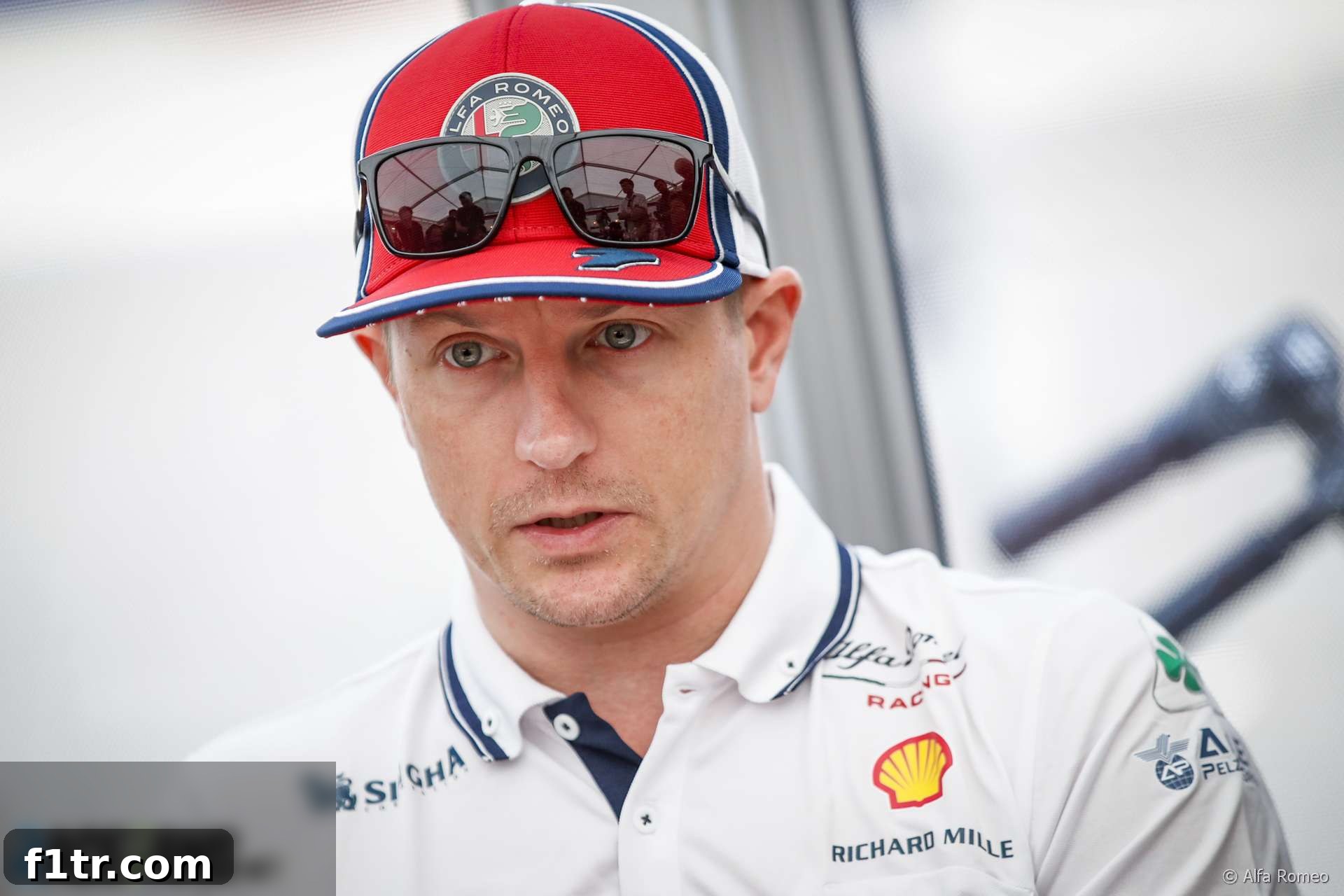
In a candid assessment of modern Formula 1, veteran driver Kimi Raikkonen has voiced a strong opinion: the sport was significantly better equipped to handle profoundly wet conditions nearly two decades ago than it is today. The former world champion, often dubbed “The Iceman,” suggests that the evolution of F1 tyres has, paradoxically, rendered contemporary cars less capable of performing when tracks are inundated with heavy rain.
Advert | Become a Supporter & go ad-free
Raikkonen’s remarks came amidst concerns surrounding the 2019 Japanese Grand Prix, which was threatened by the impending Super Typhoon Hagibis. The typhoon, expected to bring torrential rain throughout Saturday, cast a significant shadow over the Suzuka race weekend. “If it looks bad they might cancel straight away and not even come,” Raikkonen commented, highlighting the severity of potential weather disruptions.
The Aquaplaning Predicament: A Modern F1 Challenge
At the heart of Raikkonen’s criticism lies the issue of aquaplaning, a phenomenon where a layer of water separates a vehicle’s tyres from the road surface, leading to a complete loss of grip and control. According to the Alfa Romeo driver, this has become an all too common and dangerous occurrence in modern F1 when track conditions deteriorate beyond a certain point. “Obviously we know how limited we are with the tyres, unfortunately. It doesn’t need much rain then we have aquaplaning, that’s the issue, then obviously you have zero control,” he explained.
The Finn, known for his straightforward and often blunt observations, drew a stark contrast between his early years in Formula 1 and the current era. He recollected a time when racing in heavy rain was a more manageable affair, suggesting that the tyres of yesteryear were simply more robust in such extreme conditions. “[In] the early days when I started it could rain really heavy and we never had an issue,” Raikkonen stated. This historical perspective from a driver with over 300 Grand Prix starts carries significant weight, offering a unique insight into the sport’s technical evolution.
Tyre Evolution and Supplier Dynamics: A Look Back
Raikkonen’s career spans a period of significant change in Formula 1 tyre technology and supply. When he debuted in F1 with Sauber in 2001, the sport was in the midst of a competitive “tyre war” between multiple manufacturers. Raikkonen initially raced on Bridgestone tyres before switching to Michelin when he moved to McLaren the following year. This era of intense competition among tyre suppliers often spurred rapid innovation and performance enhancements, as manufacturers vied to provide teams with the best possible grip and durability across all conditions, including extreme wet weather.
The landscape shifted dramatically in 2007 when Bridgestone became the sole tyre supplier for the entire F1 grid, marking the end of the competitive tyre wars. In 2011, Pirelli took over this exclusive role, a position they have held ever since. A further significant change occurred in 2017, just two years prior to Raikkonen’s comments, with the introduction of new, wider tyres designed to increase mechanical grip and make cars faster. While these wider tyres certainly delivered on pace in dry conditions, their performance in very wet weather has frequently been a point of contention among drivers.
The Pirelli Paradox: Performance vs. Safety in the Wet
Pirelli, as the sport’s sole tyre supplier, faces the immense challenge of developing tyres that not only perform across a vast range of track and weather conditions but also meet specific performance and degradation targets set by the FIA and F1 management. This often involves a delicate balancing act, as optimizing for one characteristic (e.g., dry grip, tyre degradation) can sometimes compromise another (e.g., extreme wet weather performance).
Indeed, Raikkonen is not alone in his critiques. Several Formula 1 drivers have openly expressed their dissatisfaction with the performance of Pirelli’s full wet weather tyres in recent seasons. Raikkonen himself has been one of the most vocal and consistent critics during rain-affected race weekends. Notable instances include the notoriously wet 2016 Brazilian Grand Prix at Interlagos, where he was highly critical of the tyres’ ability to cope with standing water, and the 2017 Italian Grand Prix at Monza, where tyre performance was blamed for significant qualifying delays due to heavy rain.
“When there’s a river you lose absolutely control of the cars,” Raikkonen reiterated, underscoring the severity of the problem. This loss of control is not merely a matter of lap time; it’s a profound safety concern. At speeds exceeding 300 km/h, even a momentary loss of control can lead to catastrophic accidents, jeopardizing driver safety and potentially involving trackside marshals and spectators. The FIA’s stringent safety protocols mean that if conditions are deemed too dangerous, races or sessions are either delayed or, in extreme cases, cancelled entirely.
“We’ll see, if it rains like it’s supposed to rain I think it’s a very clear no-go. We’ll see what we can,” Raikkonen concluded, emphasizing the stark reality faced by drivers and race officials when confronting severe weather events like Typhoon Hagibis. The decision to race or not in such conditions is a complex one, weighing the desire for competition and spectacle against the paramount need for safety.
The challenges presented by extreme wet weather are a recurring theme in Formula 1. While the cars themselves are technological marvels, capable of incredible feats in dry conditions, their interaction with the chosen tyre compound in the face of significant standing water remains a critical and often controversial aspect of the sport. Raikkonen’s perspective, rooted in decades of top-tier racing experience, serves as a poignant reminder of how certain aspects of F1’s capability to handle natural elements may have shifted over time, prompting ongoing debates about the optimal balance between performance, entertainment, and safety.
Advert | Become a RaceFans supporter andgo ad-free
2019 F1 Season: Further Insights
- Crying in the Melbourne car park at 2019 grand prix was my career low – Ocon
- McLaren Racing reports reduced £71 million loss in 2019
- Kvyat: Hockenheim podium last year was “my biggest achievement” so far
- How the FIA’s new encrypted fuel flow meter targets Ferrari’s suspected ‘aliasing’ trick
- “He smashed my office door”: 23 must-see moments from ‘Drive to Survive’ season two
Browse all 2019 F1 season articles