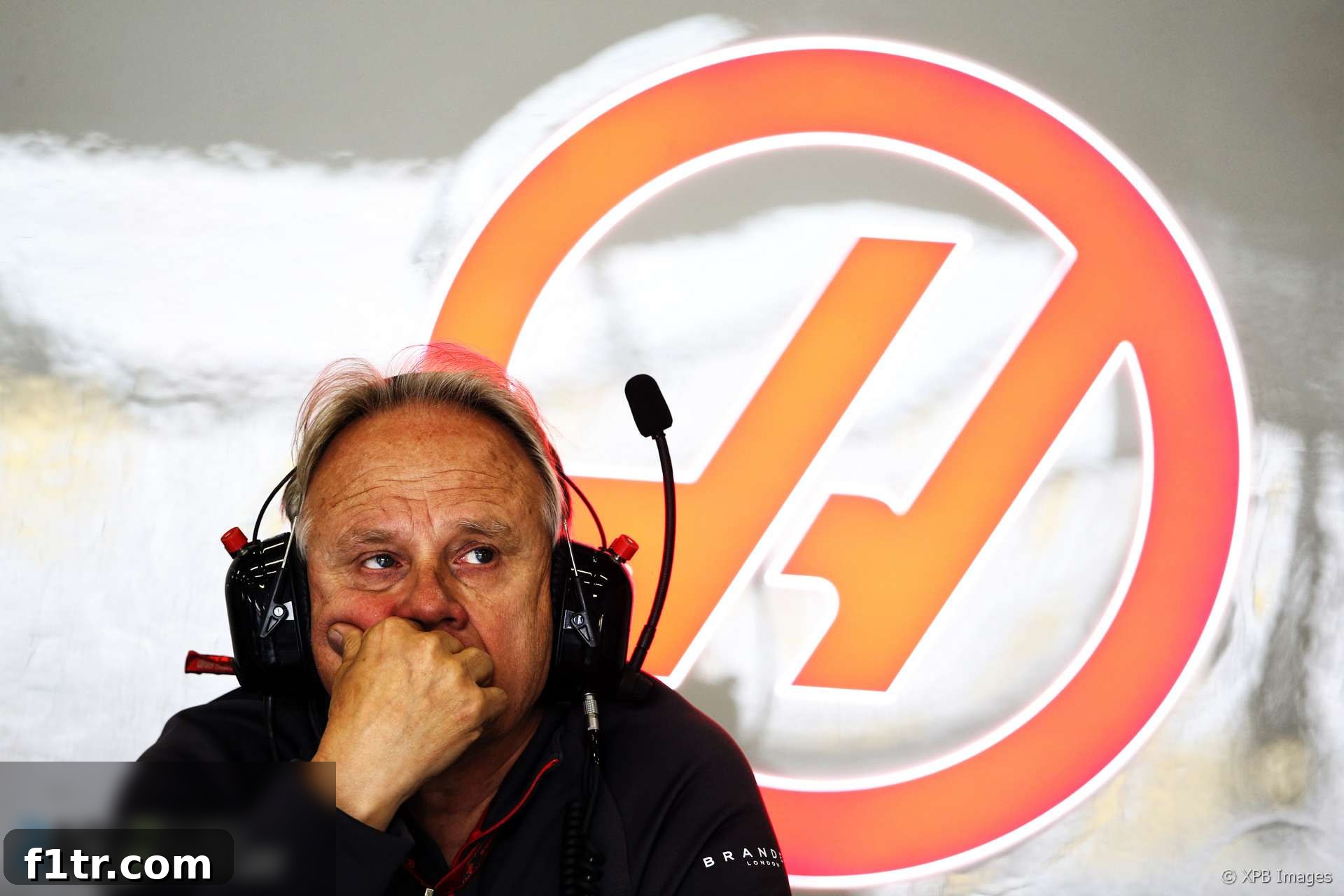
The intricate world of Formula 1, often celebrated for its speed and innovation, harbors a deeply fragmented and opaque governance structure. This underlying complexity was starkly exposed by a pivotal incident in 2018: the protest filed by Haas against Force India during the Abu Dhabi Grand Prix. More than just a sporting dispute, this event peeled back the layers of F1’s internal workings, revealing a system riddled with inconsistencies, overlapping agreements, and a profound lack of cohesive oversight. It underscored how critical commercial interests could clash with sporting integrity, all within a regulatory framework that seemed designed for confusion rather than clarity.
The protest, lodged late on Thursday, just hours before scrutineering for the season’s final round, carried significant weight. A crucial aspect was the involvement of Abu Dhabi steward Garry Connelly, who had also officiated in Belgium where Racing Point Force India was controversially declared a “new team” operating under a new entrant license. This continuity meant there was no legitimate reason to delay proceedings. Consequently, the hearing and its much-anticipated outcome – that the Force India cars were deemed legal – were delivered ahead of FP3 on Saturday. While seemingly a victory for Force India, this ruling, as many analysts immediately noted, was a pyrrhic one, representing a deeper defeat for the sport’s structural integrity.
The Pyrrhic Victory and F1’s Deeper Malaise
Force India’s legal win against Haas merely confirmed the legality of their cars on technical grounds for that specific race. However, it did little to address the fundamental issues that had plunged the team into administration in July 2018, triggered by unpaid 2017 driver wages. This saga, meticulously documented across various F1 publications, was a symptom of a much larger, systemic problem within the sport’s governance. Haas’s protest, in essence, was a commercially driven challenge, leveraging sporting regulations to dispute Force India’s eligibility. At its core, the American team questioned whether Force India, after its administration and subsequent asset sale, still held “exclusive rights” to its technology – a clause crucial for its commercial standing within F1.
The bizarre aspect of this dispute was that Haas invoked a clause from the Sporting Regulations (Appendix Six) to challenge a commercial breach. The “exclusive right” clause, while mentioned in sporting rules, is primarily detailed within bilateral agreements between individual teams and Formula One Management (FOM), the commercial rights holder owned by Liberty Media. The very nature of these “bilateral” agreements, rather than a single, multi-lateral accord encompassing all teams, hinted at the inherent fragmentation. Each team negotiates its own deal, leading to a patchwork of differing terms and conditions, often shrouded in secrecy due to non-disclosure clauses. This meant that the FIA-appointed stewards, independent yet tasked with interpreting such complex inter-commercial agreements, were forced to make far-reaching judgments on commercial matters, despite the FIA itself being explicitly excluded from such involvement by a European Union decree. The fact that they managed to do so within a demanding 48-hour timeframe, while operating in a foreign land, is a testament to their judicial skills, but also a stark illustration of F1’s deeply convoluted, some might say dysfunctional, governance processes.
Without significant rectification before 2021, when many of these bilateral agreements are set to expire, Formula 1 faces the substantial risk of repeating such costly and reputation-damaging incidents. The very foundation of the sport is built upon a bewildering array of contracts, covenants, agreements, amendments, regulations, codes, and appendices. Astonishingly, no single entity – not the FIA, not FOM, and not even the teams collectively – is a signatory to all of these documents. This creates a scenario where one arm of F1 simply doesn’t know what the other is doing, a stark deterioration from the days when Bernie Ecclestone’s singular authority, however controversial, at least provided a clear chain of command.
A Labyrinth of Legal Documents: The Current Framework
The complexity of Formula 1’s current administrative and legal structures is best understood by examining the key documents that ostensibly govern the sport:
- 100-Year Agreement: This controversial agreement, originally for a mere 10 years, was extended by the Mosley-era FIA to 100 years (expiring 2110) during a three-year dispute with the EU Commission. Its purpose was to grant FOM exclusive F1 rights, effectively circumventing EU requirements that would have greatly empowered the FIA. This extension, made to address immediate challenges, paradoxically created a long-term framework that now limits the FIA’s influence.
- Concorde Implementation Agreement (CIA): Signed between the FIA and FOM in July 2013, the CIA outlines the rights and obligations of the governing body and F1’s governance processes for the period of January 1, 2013, to December 31, 2020. Importantly, no teams are party to this document, further segmenting the overall governance.
- Bilateral Agreements: These are individual contracts between FOM and each team, also running from January 1, 2013, to December 31, 2020. These agreements are protected by non-disclosure clauses and are far from uniform. For instance, Ferrari, Red Bull, and McLaren’s agreements granted them powers within the Strategy Group, with Ferrari uniquely benefiting from long-standing heritage bonuses. Other teams received varying constructor championship bonuses. Mercedes’s deal was retrospectively aligned with Red Bull’s, while Williams secured a modest heritage bonus. Newer entrants like Haas held shorter, more basic contracts, while Force India’s was specifically amended to address the contentious “Column One” prize money. Only Toro Rosso and Sauber possessed truly identical bilateral contracts, highlighting the vastly uneven commercial playing field.
- Technical Regulations: These comprehensive documents, spanning over 100 pages, are compiled and annually updated by the FIA. While teams contribute via the non-executive Technical Working Group, and Liberty Media provides input through its recently established technical department, neither teams nor Liberty are direct parties to the final regulations.
- Sporting Regulations: Similarly extensive at 70 pages, these regulations are annually compiled, updated, and administered by the FIA. Like their technical counterparts, they allow for team input through the Sporting Working Group and Liberty’s sporting department, but neither has direct signatory power over the final text.
- FIA International Sporting Code (ISC): Consisting of 80 pages plus 12 appendices for circuit events, the ISC is the overarching ethical and procedural framework. It generally takes precedence over other regulations unless specifically overridden, as is often the case with existing bilateral agreements.
The Missing “Constitution”: The Demise of the Concorde Agreement
Given this complex array, it’s hardly surprising that many within the paddock, from team personnel to journalists, struggle to differentiate between sporting codes and technical regulations, or between various agreements and their numerous appendices. This confusion is compounded by a host of secondary agreements, such as those governing the Engine Working Group or the “Budapest Agreement” related to Force India’s sale.
The Budapest Agreement, for example, was an accord reached by six teams in July 2018 to ensure Force India would receive its prize money should the team be sold as a “going concern” – meaning its company registration and entrant license would continue. McLaren, Renault, and Williams dissented, while Haas explicitly tied its approval to a “going concern sale.” When legal issues forced the transaction to shift to an “asset sale” – resulting in a new company and a new entrant license – Haas withdrew its approval. Yet, FOM, bewilderingly, initially viewed the new entity as a going concern, allocating it $60 million in historic revenues. This decision, allegedly based on a flawed interpretation of unanimity from diverse documents and signatures, further exposed the arbitrary nature of F1’s decision-making processes.
Astute observers will note a significant omission from the list of governing documents: the Concorde Agreement. This term, frequently invoked by those who should know better – team bosses, executives, and F1 personnel – no longer refers to an active, overarching covenant. The Concorde Agreement, essentially F1’s constitution, meticulously defined the obligations of the governing body (FIA), the commercial rights holder (FOM), and the teams, both individually and collectively, across sporting, technical, commercial, and governance domains. It unified the sport’s disparate elements. However, in its rush to divest F1 and capitalize on its immensely profitable investment, CVC Capital Partners (the previous owners of FOM) allowed the Concorde Agreement to expire at the end of 2012, replacing it with the fragmented series of bilateral agreements and the Concorde Implementation Agreement. The abolition of Concorde ripped out F1’s guiding principles, leaving a legislative void that the current patchwork system has failed to fill adequately.
Consequences of Fragmentation: From Sporting Protests to Unclear Guidelines
The direct consequence of this fragmentation is profound: teams now weaponize sporting protests to pursue commercial interests, as seen with Haas and Force India. There are no clear, universally accepted guidelines defining a “constructor” or regulating new team entries and their eligibility for prize money. Commercial agreements state that new teams need to finish in the top ten for two out of three years – yet with only ten teams currently entered, the designation of a “new” team can become arbitrarily “old” overnight, demonstrating the elastic and vaguely written rules that characterize F1’s regulatory landscape.
For a decade, CVC’s ownership prioritized investor returns above the sport’s long-term health, implementing expedient agreements that served short-term financial goals but crippled F1’s foundational structure. Liberty Media, as the current owner, inherited this complex legacy. However, with its NASDAQ listing, the tension between appeasing investors during “investor days” and prioritizing fundamental reforms for the “track days” remains a significant challenge.
A recent example illustrates this dysfunction: the decision to award a tyre tender for 18-inch rubber from 2021, despite no such technical regulation change being formally approved by the Strategy Group or Formula 1 Commission. The justification offered was that the current approval process (Strategy Group to F1 Commission to World Motor Sport Council) expires with the bilateral agreements at the end of 2020, meaning the International Sporting Code would then become the guiding authority for post-2020 regulations, potentially bypassing team input altogether. This haphazard approach risks further instability. Any future governance changes could easily overrule these incoming regulations, especially if teams demand a say, leading to potential re-tenders and further chaos. The existing tender was already flawed, expiring in 2019 rather than the more logical 2020 cut-off, underscoring the lack of foresight and strategic planning.
Charting a Path Forward: Towards a Coherent Constitution
What Formula 1 desperately needs is a long-term, comprehensive constitution that encompasses every single aspect of the sport. This document should be overseen by an independent individual or body with extensive experience across all relevant domains – sporting, technical, and commercial. This figure, perhaps serving as the chairman of an advisory board, would evaluate the ramifications of all proposed changes, ensuring that modifications to Sporting Rule X do not inadvertently undermine Technical Rule Y or Commercial Clause Z. Such a structure would mirror the oversight committees common in corporations, where proposals are rigorously vetted before board approval. The original Concorde Agreement had similar provisions, with executive Working Groups submitting proposals that eventually reached the World Motor Sport Council for ratification. However, even this system was flawed, lacking independent oversight and excluding crucial stakeholders like broadcasters – arguably the sport’s largest “customer” block.
The ideal solution might involve appointing a retired team boss, free from current loyalties, empowered to co-opt specialists. This individual would first revise and simplify the labyrinthine rulebooks and then “police” the governance process moving forward. As the Haas versus Force India dispute unequivocally demonstrated, F1’s processes are riddled with ever-widening cracks. Instead of merely patching over these issues, as has been the sport’s unfortunate habit for too long, Liberty Media must fundamentally underpin the foundations and strengthen the structural integrity of the valuable entity they acquired from CVC. This essential “renovation” must also involve the FIA, as the ultimate regulatory authority, akin to a landlord in a lease agreement.
Liberty has a narrow window of two years to effect these crucial renovations before the current agreements expire. Given the modest overall impact Liberty has had on F1’s governance in its initial years, this is a monumental task. Chase Carey, then CEO of Formula 1, acknowledged these challenges in a recent investor call: “We’re focused on a larger list of sporting regulation changes to further improve the sport for our drivers and fans. I am often asked about the so-called Concorde Agreement [note], we’re making progress regarding the broader set of changes to cost structures, revenue distribution regulations and governance. [We’ve had] constant constructive discussions with the teams, and at the end of the day, our interests are aligned.”
For the future health and credibility of Formula 1, one can only hope that Carey’s optimistic assessment truly reflects the reality and urgency of the situation. The sport’s survival as a fair, transparent, and globally respected competition hinges on resolving its deep-seated governance issues.
The Force India-Haas Dispute: Key Moments
- Stroll deal to bring Force India out of administration
- Haas has not agreed for Force India to receive prize money
- Why Force India’s rescue deal could still unravel
- Haas lodge protest against Force India
- Steiner says Haas is seeking “equal treatment” with its Force India protest
- Stewards dismiss Haas’s protest against Force India
- Why Haas’s ‘defeat’ in Force India protest was really a win
Follow Dieter on Twitter: @RacingLines
RacingLines
- The year of sprints, ‘the show’ – and rising stock: A political review of the 2021 F1 season
- The problems of perception the FIA must address after the Abu Dhabi row
- Why the budget cap could be F1’s next battleground between Mercedes and Red Bull
- Todt defied expectations as president – now he plans to “disappear” from FIA
- Sir Frank Williams: A personal appreciation of a true racer
Browse all RacingLines columns