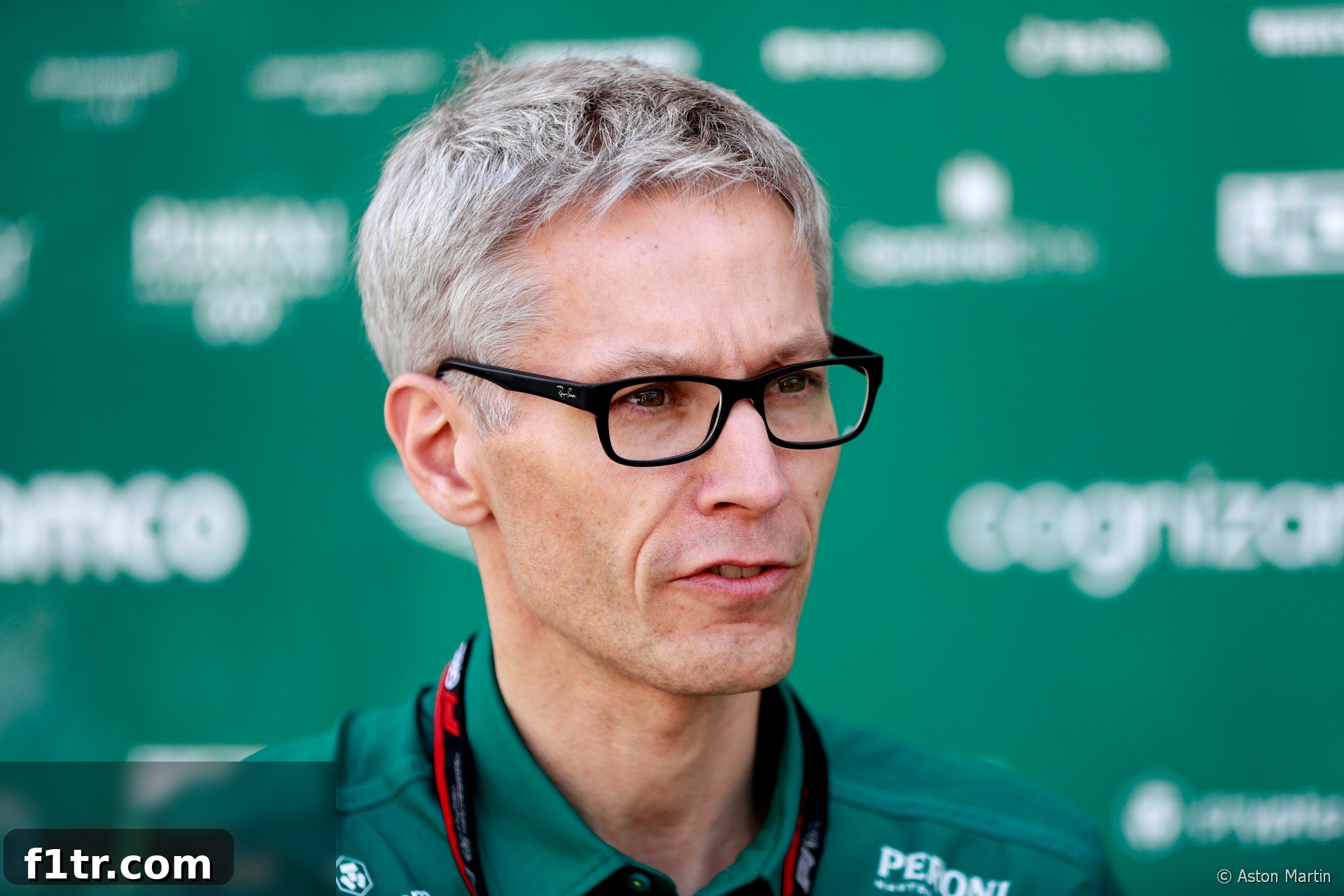
Aston Martin’s Formula 1 team, under the strategic guidance of Team Principal Mike Krack, is poised for a significant performance resurgence. Krack has indicated that a series of crucial upgrades are in the pipeline, expected to transform the team’s fortunes within “a couple of races.” This announcement comes as a beacon of hope for fans and stakeholders after a challenging start to the 2022 Formula 1 season, where the team grappled with the intricacies of the new technical regulations.
The 2022 season marked a pivotal moment for Formula 1, introducing a radical overhaul of technical rules designed to promote closer racing. While many teams struggled to adapt, Aston Martin found themselves particularly challenged, scoring their inaugural points of the year only in the fourth race at Imola. This period of learning and adaptation has been intense, with engineers and drivers working tirelessly to unlock the potential of the AMR22 chassis.
Strategic Upgrades: The Path to Enhanced F1 Performance
Mika Krack’s cautious optimism is rooted in the team’s meticulous development pipeline. He firmly believes that once the planned upgrades are integrated and fully understood, the AMR22 will demonstrate a marked improvement in its competitive edge. This iterative process of introducing new components, testing them, and then fine-tuning their interaction with the existing car setup is fundamental to success in Formula 1.
“I think in a couple of races we will be in better shape,” Krack affirmed, acknowledging the inherent unpredictability of F1 development. He wisely refrained from pinpointing a specific Grand Prix for the team’s turnaround, understanding the potential pitfalls of setting rigid expectations. The complexities of motorsport mean that even with substantial upgrades, the journey from design to track domination is fraught with variables.
Krack elaborated on the rationale behind this cautious approach, highlighting scenarios where external factors could overshadow the introduction of new parts. “It would be foolish to say in ‘race X’ or ‘race Y’, because even if you bring new parts on, you always need to understand them and you need to understand what job you have done,” he explained. He cited a hypothetical situation, such as bringing a major upgrade package to a high-profile event like the Miami Grand Prix, only for adverse weather conditions to prevent proper evaluation. Such an outcome could inadvertently create a perception of failure, despite the underlying progress.
The compressed schedule of sprint race weekends further complicates the testing and validation process for new components. “Take the sprint [in Imola] – we have only one session on Friday, you bring a big update and you have no chance at all to test it or to consolidate if it works or not,” Krack pointed out. This limited track time underscores the importance of not overpromising to the public, while maintaining rigorous internal development timelines. Aston Martin’s internal plans, while confidential, are clearly geared towards systematic improvement, ensuring that each upgrade contributes meaningfully to the AMR22’s performance capabilities.
Three Critical Areas of AMR22 Development
The Aston Martin engineering team is channeling its efforts into three core areas to enhance the AMR22, each vital for extracting maximum performance under the new regulations. Krack detailed these strategic priorities, emphasizing their interconnectedness in the pursuit of a faster, more controllable race car.
1. Aerodynamics: The Foundation of Ground Effect Performance
At the apex of Aston Martin’s development agenda is aerodynamics. In the era of ground effect cars, the efficient management of airflow is paramount, influencing everything from downforce generation to drag reduction and tire degradation. “One is aero, the most important one,” Krack stressed. The 2022 regulations brought back ground effect, meaning the underfloor design and Venturi tunnels are crucial for generating downforce. This shift requires a deep understanding of complex airflows, sophisticated computational fluid dynamics (CFD) simulations, and extensive wind tunnel testing. Optimizing the car’s interaction with the air allows for higher cornering speeds and greater stability, directly translating into lap time gains. Aston Martin’s focus here indicates a commitment to fundamentally improving how the AMR22 interacts with the track, a critical step for unlocking its full potential and climbing up the F1 grid.
2. Car Weight: A Constant Battle for Milliseconds
The second key area of development revolves around car weight. In Formula 1, every gram counts, and a lighter car offers a multitude of performance advantages. “Second one is car weight, very important as well,” Krack noted. Reducing the overall weight of the AMR22 allows for better weight distribution, which in turn enhances the car’s balance and responsiveness. A lighter chassis can also be crucial for optimizing tire wear and managing fuel consumption over a race distance. Teams continuously strive to shed excess weight through innovative materials and design efficiencies, often battling against minimum weight regulations. Achieving the minimum weight target, or even dipping below it to add ballast strategically, provides engineers with more flexibility in setting up the car for different tracks and conditions, ultimately giving drivers a more agile and competitive machine.
3. Driver Feedback: Building Confidence Through Connection
The third crucial aspect of Aston Martin’s development strategy is improving driver feedback. This area is intensely focused on the subjective feel and responsiveness drivers experience from the car, which directly impacts their confidence and ability to push limits. “The third one is how can we provide better feedback to our driver,” Krack explained. This involves intricate adjustments to various car components, including suspension settings, steering response, and the overall vertical compliance of the chassis. The goal is to give drivers like Sebastian Vettel and Lance Stroll a clearer understanding of the car’s behavior at the limit, allowing them to extract maximum performance without fear of unpredictable reactions. Better feedback translates to more precise inputs, improved tire management, and ultimately, faster, more consistent lap times.
Understanding Driver Challenges and Incident Rates
The unique characteristics of the 2022 ground effect cars, particularly their limited mechanical feedback, have presented a significant challenge for drivers across the grid, and Aston Martin’s lineup, including four-time world champion Sebastian Vettel and experienced competitor Lance Stroll, was no exception. Krack acknowledged that the inherent difficulty drivers faced in truly getting to grips with the handling of these new machines was a direct consequence of this reduced sensory input from the chassis. The traditional cues and feel that drivers rely on to understand grip levels and car balance were simply not as pronounced, leading to a narrower operating window and less forgiveness at the limit.
This lack of clear feedback manifested in a higher incidence of driver errors and off-track excursions, particularly during the early stages of the season. “This is also why I think we had so many incidents at various tracks like, for example, in Melbourne, when our drivers went off quite a lot,” Krack clarified. He underscored that such incidents were uncharacteristic for drivers of Vettel’s and Stroll’s caliber, suggesting a systemic issue with the car’s communication rather than individual driving errors. High-quality drivers are adept at feeling the car’s limits, but when those limits are vague or abrupt, even the best can be caught out. Aston Martin has been proactive in addressing this, with Krack confirming, “This is not normal – drivers of this quality don’t go off all the time. So I think we made a small step here already by some small updates, and we’re looking forward to doing more.” These initial “small steps” are crucial for building driver confidence, allowing them to push harder and more consistently throughout a race weekend.
Looking Ahead: Aston Martin’s Long-Term Vision and Ambition
Aston Martin’s commitment to Formula 1 transcends short-term results; it is a long-term project aimed at establishing the team as a front-runner. The challenges faced in the early part of the 2022 season, while significant, are viewed as part of a larger learning curve necessary for building a championship-contending team. The ongoing investment in state-of-the-art facilities, including a new factory and wind tunnel, coupled with the recruitment of top engineering talent, underscores the ambitious vision of Lawrence Stroll and the entire Aston Martin Lagonda Group.
Mika Krack’s leadership is pivotal in navigating this complex journey. His measured approach, combining cautious optimism with transparent communication about the development process, instills confidence in the team’s ability to overcome hurdles. The focus on fundamental improvements in aerodynamics, weight management, and driver feedback demonstrates a comprehensive strategy to address the AMR22’s inherent weaknesses and transform it into a competitive force. As the team introduces more sophisticated upgrades and continues to gain a deeper understanding of the new technical regulations, the expectation is for a steady upward trajectory in performance. The journey to the top of Formula 1 is arduous, demanding patience, resilience, and relentless innovation, qualities that Aston Martin is determined to embody as they chase their ultimate goals.
Further Reading & Related Content
- Understanding F1’s 2022 Technical Regulations: The Ground Effect Era
- The Impact of Aerodynamic Development on Modern Formula 1 Cars
- Driver Adaptation and the Evolving Role of Feedback in High-Performance Motorsport
- Team Principal Strategies: Navigating F1 Development Cycles and Budget Caps
- Sebastian Vettel and Lance Stroll: Analyzing Driver Performance in the New F1 Era