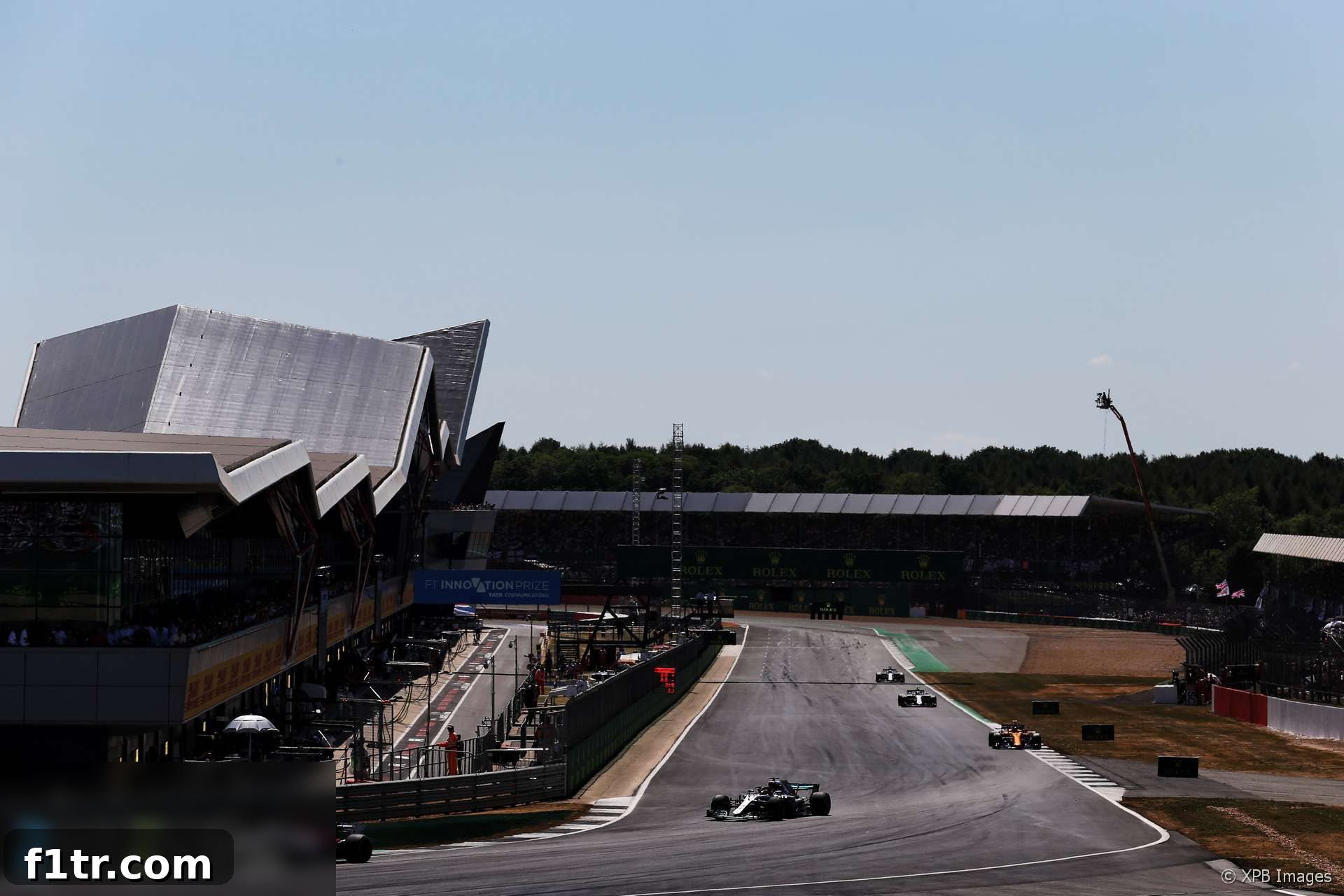
Marcus Ericsson’s Abbey Crash: A Catalyst for F1 DRS Safety Discussions
In the high-octane world of Formula 1, where milliseconds define victory and defeat, even the slightest miscalculation or technical glitch can lead to dramatic consequences. Such was the case during the 2018 British Grand Prix when Sauber driver Marcus Ericsson experienced a harrowing high-speed crash at the iconic Abbey corner. The incident, which saw Ericsson’s car careen violently into the barriers, not only highlighted the inherent dangers of the sport but also ignited crucial discussions around the operation and safety protocols of the Drag Reduction System (DRS).
The Terrifying Incident at Abbey Corner
The British Grand Prix at Silverstone is renowned for its blisteringly fast corners, and Abbey is no exception. As Marcus Ericsson navigated this demanding section of the circuit, attempting to overtake Sergio Perez, his Sauber C37 suddenly lost control. The car speared off track with alarming speed, a stark reminder of the immense forces at play in Formula 1. Post-incident analysis revealed that the primary cause of the crash was Ericsson failing to close his car’s rear wing (DRS) early enough as he turned into the corner. While thankfully Ericsson emerged largely unscathed, the severity of the impact underscored the critical need for absolute precision and reliable system operation in a sport where margins are razor-thin.
Understanding the Drag Reduction System (DRS)
The Drag Reduction System, commonly known as DRS, was introduced in Formula 1 in 2011 with the primary aim of enhancing overtaking opportunities and improving the spectacle of racing. This innovative aerodynamic aid allows drivers, under specific conditions, to flatten a section of their rear wing, significantly reducing aerodynamic drag and increasing top speed. The rules governing its use are strict: a driver can only activate DRS in designated “DRS zones” on a circuit and only if they are within one second of the car ahead at a predetermined detection point. When activated, the rear wing opens, and when deactivated, it returns to its normal high-downforce position. Deactivation typically occurs either by the driver manually pressing a button or automatically when they apply the brakes. The system has undoubtedly added an exciting strategic element to racing, enabling more wheel-to-wheel action, but it also introduces an additional layer of complexity for drivers.
The Driver’s Perspective: Ergonomics, Precision, and Human Error
Ericsson’s account of the incident provided invaluable insight into the challenges faced by F1 drivers. He initially questioned whether it was a system failure, but data analysis pointed to driver input. “When you’re racing and you have this DRS zone you want to try and be as late as possible to switch it off, and switch it [back] on as early as possible to try and stay as close as possible,” Ericsson explained. His investigation revealed that while traversing the bumpy entry to Abbey corner, which involves riding the kerb, he believes his finger slipped, preventing him from properly pressing the DRS deactivation button behind his steering wheel. He vehemently denied attempting to take the corner with DRS open, stating, “We thought it was not possible and obviously now I tried, it didn’t work out so good.”
This incident vividly illustrates the intense demands placed on Formula 1 drivers, who must manage a myriad of controls on their steering wheels while operating at the very limit of adhesion. Modern F1 steering wheels are sophisticated pieces of technology, resembling a complex game controller with dozens of buttons, toggles, and rotary switches. These controls manage everything from engine modes, brake bias, differential settings, and, crucially, DRS activation and deactivation. Performing these actions at speeds exceeding 300 km/h, enduring extreme G-forces, and navigating bumps and kerbs requires an extraordinary level of precision and concentration. A button that feels perfectly fine in the garage can become a significant ergonomic challenge when a driver’s hand is jolted by track imperfections or fatigue sets in.
Ericsson’s situation underscores the critical role of cockpit ergonomics. The placement, size, and tactile feedback of controls are paramount. A button that is too small, too smooth, or awkwardly positioned could lead to missed inputs, especially under race conditions where every fraction of a second counts and the physical environment inside the cockpit is anything but stable. This incident served as a potent reminder that even the most advanced racing machines are still fundamentally operated by humans, and human factors must be meticulously considered in their design.
Proposed Solutions: Enhancing Safety and Control
Following his dramatic crash, Marcus Ericsson was quick to suggest practical solutions aimed at preventing a recurrence, both from a driver-centric and system-automation perspective.
Driver-Centric Adjustments
Ericsson’s immediate thought was a modification to the steering wheel itself. “Maybe we need to look at, on tracks like this, making sure we have a bit bigger button or something like that or see what we can do so it doesn’t happen again,” he mused. This proposal highlights the importance of tailoring equipment to the specific demands of racing and the individual driver. A slightly larger, more prominent, or repositioned DRS button could provide better tactile feedback and reduce the chance of a “slip” under extreme conditions. Teams continuously refine steering wheel layouts, often incorporating driver feedback to optimize accessibility and reduce the cognitive load associated with managing multiple functions simultaneously. Such seemingly minor ergonomic adjustments can have a profound impact on safety and driver confidence.
Automated System Thresholds
Beyond physical button modifications, Ericsson also put forward a more significant systemic change: the introduction of automatic DRS closure. He noted that even when he lifted off the throttle, the DRS remained open, exacerbating the loss of control. “Maybe there you need to set some thresholds or something that when you lift off the DRS closes automatically, because then maybe the accident would have not happened,” he suggested. This concept proposes a failsafe mechanism, where the DRS would automatically deactivate if certain parameters are met, such as a significant lift from the throttle pedal, or perhaps even a certain steering angle combined with high speed.
The implementation of such automated thresholds would offer several benefits. Firstly, it would significantly enhance safety by removing a layer of manual input required at a critical moment, reducing the potential for human error. Secondly, it could streamline the driver’s task load, allowing them to focus more on braking points and corner entry. However, there are also considerations. Any automation must be finely tuned to avoid unintended consequences, such as premature DRS closure impacting overtaking attempts. The complexity of setting these thresholds—how much lift, what steering angle, at what speed—would require extensive testing and agreement among teams and the FIA to ensure fairness and maintain the spirit of racing.
Formula 1 already employs various automated systems, such as the pit lane speed limiter, which automatically caps a car’s speed when entering the pit lane. Extending this philosophy to DRS operation, particularly for safety-critical deactivation, represents a logical evolution in the ongoing pursuit of a safer sport.
The Broader Impact on F1 Safety
Ericsson’s crash at Abbey served as a stark reminder that despite decades of relentless safety improvements, Formula 1 remains an inherently dangerous sport operating at the bleeding edge of technology and human capability. High-speed incidents, even those without serious injury, trigger immediate re-evaluations across the paddock. The FIA (Fédération Internationale de l’Automobile), as the governing body, is constantly working with teams to analyze accidents, identify root causes, and implement new safety standards. This incident likely contributed to internal discussions within Sauber and potentially across other teams regarding their DRS systems, driver training, and steering wheel ergonomics.
The balance between enhancing the spectacle of racing and ensuring driver safety is a constant tightrope walk for Formula 1. DRS was introduced to make racing more exciting, but incidents like Ericsson’s underscore that any performance-enhancing tool must be impeccably safe and intuitive to operate. The data collected from such crashes is invaluable, allowing engineers and safety experts to refine car designs, improve control systems, and even influence track modifications to mitigate risks.
FIA and Team Collaboration: A Continuous Pursuit of Safety
The Formula 1 paddock thrives on innovation, and safety is an area where collaboration often overrides competition. Following a significant incident, teams share data (within certain competitive limits) with the FIA, allowing for a comprehensive understanding of what transpired. This collaborative approach means that lessons learned from one team’s incident can benefit the entire grid. Driver feedback, such as Ericsson’s suggestions for a bigger button or automatic thresholds, is critical to this process. Drivers are the ultimate interface with these complex machines, experiencing their nuances and limitations firsthand under immense pressure.
The iterative process of F1 development ensures that every challenge, every incident, becomes an opportunity for improvement. From the introduction of mandatory head and neck support (HANS) devices to stronger chassis designs and the pioneering halo cockpit protection system, F1 has continually pushed the boundaries of safety. Discussions around DRS operation are another chapter in this ongoing narrative, illustrating the sport’s unwavering commitment to protecting its competitors while delivering exhilarating racing.
Balancing Spectacle and Safety in Formula 1
Ultimately, Marcus Ericsson’s high-speed crash at the 2018 British Grand Prix was more than just another racing incident; it was a potent catalyst for re-examining how a performance-enhancing system like DRS integrates with driver control and overall safety. It highlighted the intricate balance between human input and automated systems, and the relentless pursuit of perfection required in F1. The insights gained from Ericsson’s experience – from the nuances of steering wheel ergonomics to the potential for smart, automatic system thresholds – are invaluable. As Formula 1 continues to evolve, these lessons will undoubtedly shape future car designs and safety protocols, ensuring that the thrill of racing remains paramount, but never at the expense of driver well-being. The conversation sparked by Ericsson’s crash serves as a testament to F1’s ongoing commitment to pushing technological boundaries while prioritizing the safety of its heroes behind the wheel.