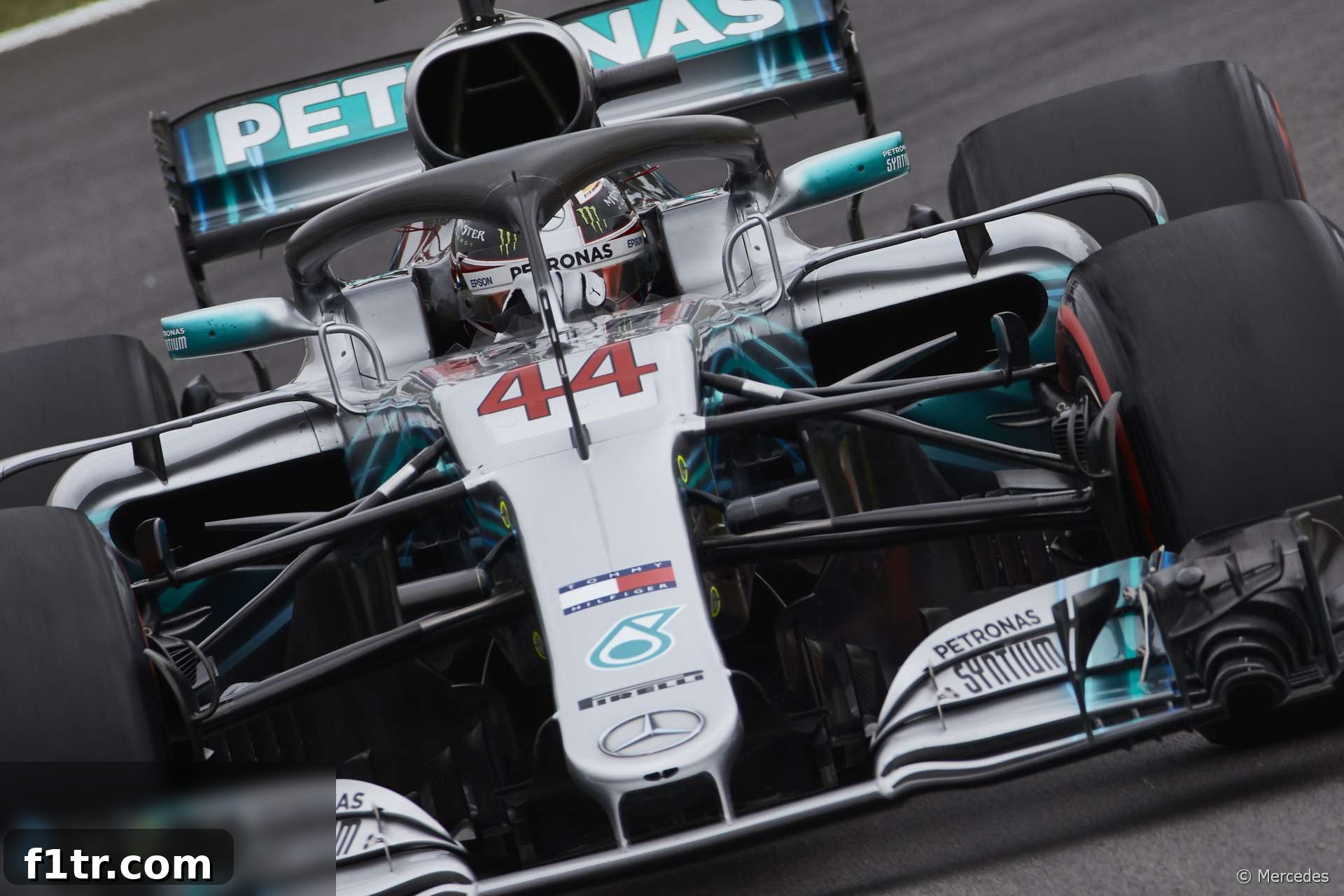
Lewis Hamilton Faces Uphill Battle as Mercedes Engine Upgrade Delayed Amidst Critical Race Weekend
Formula 1, a sport synonymous with cutting-edge technology and relentless pursuit of performance, often presents its participants with unforeseen challenges. For Lewis Hamilton and the Mercedes-AMG Petronas F1 Team, the seventh race of the season brings with it an unexpected hurdle: a crucial engine upgrade, meticulously planned for this very weekend, has been delayed. This setback has left the reigning world champion expressing significant concern over a potential loss of performance, casting a shadow over Mercedes’ prospects at a “power circuit” where engine output is paramount. The meticulous strategic planning that defines top-tier F1 teams has been tested by an unavoidable decision, forcing Hamilton and his team to adapt their approach in a fiercely competitive environment.
The Critical Engine Upgrade: A Strategic Setback for Mercedes’ 2018 Campaign
Mercedes’ engineers and strategists had meticulously charted a course for the 2018 Formula 1 season, carefully allocating engine components to maximize performance while adhering to the stringent regulations that limit power unit usage. Part of this strategy involved introducing a brand-new engine specification for this weekend’s race. This upgrade was not merely incremental; it promised to deliver a vital boost in horsepower and efficiency, a crucial advantage given the demands of the circuit, which places a significant emphasis on outright straight-line speed. The existing power units, having already completed six demanding races, were then intended for re-deployment at less power-sensitive tracks later in the calendar, such as the twisty Hungaroring, where aerodynamic grip and driver finesse often take precedence over raw engine power.
Advert | Become a Supporter & go ad-free
However, these well-laid plans were disrupted by an unforeseen development. Mercedes made the difficult but necessary decision not to introduce the upgraded units after discovering a “quality issue” during their final pre-race checks. In the high-stakes world of Formula 1, where engines operate at the absolute limit of their design, a quality concern is taken with the utmost gravity. Such an issue could manifest as compromised reliability, inconsistent performance, or, in the worst-case scenario, catastrophic engine failure. Opting for caution over potential risk, the team chose to defer the introduction of the new specification. This decision has immediate and far-reaching implications, as it means all six Mercedes-powered drivers across the grid – encompassing the factory Mercedes-AMG team as well as customer outfits Force India and Williams – will be forced to compete with their original, higher-mileage power units for this critical seventh race of the season. The collective nature of this setback underscores the intricate challenges inherent in modern F1 engine development, where even the most advanced engineering can encounter unexpected hurdles, forcing difficult strategic compromises.
Lewis Hamilton’s Concerns: Navigating Performance Degradation and Reliability Risks
Expressing his candid thoughts on the matter, Lewis Hamilton did not shy away from articulating his apprehension regarding the impact of the delayed upgrade. “This is a power circuit so it definitely was our target [to have the new engines],” Hamilton stated, emphasizing the circuit’s characteristics and the strategic importance of the planned boost. While acknowledging the immense efforts of the engineering teams, he conceded that the decision to hold back the upgrade, though “sensible,” was “definitely unfortunate.” The core of his concern lies in the inevitable reality of engine degradation. “But it will mean our performance is not probably the greatest. It will be the seventh race on the engine. The goal is to make the engines stay the same the whole way through [its life] but naturally [if] it’s degraded you lose horsepower over races.”
Modern Formula 1 power units are engineering marvels, designed to withstand incredible stresses and perform at peak efficiency under extreme conditions. However, even these sophisticated machines are subject to the laws of physics. Over thousands of kilometers of high-intensity racing, components within the internal combustion engine, turbocharger, and energy recovery systems experience minute wear and tear. This accumulation of “seven or eight thousand kilometres,” as Hamilton noted, invariably leads to a gradual, almost imperceptible loss of original horsepower and efficiency. On circuits where maximum throttle application is frequent and sustained, this degradation becomes significantly more pronounced. Hamilton accurately pointed out that “At a power circuit it will probably be multiplied,” meaning the performance deficit would be amplified where raw engine grunt directly translates to lap time. This not only puts Mercedes at a disadvantage but also raises the specter of reliability concerns for units that are being pushed beyond their initially planned operational window.
The Delicate Balance: Chasing Points Amidst Adversity and Rivalry
For a driver of Lewis Hamilton’s caliber, the objective is always victory. However, the unexpected engine situation necessitates a recalibration of immediate priorities. While still aiming for the top step of the podium, a more fundamental concern has emerged. “This is a power circuit, there is power loss. All I’m hoping for is reliability. I’m on the seventh race, difficult circuit on the engine, I just want to see it through,” he conveyed, articulating a clear shift in focus towards ensuring the engine simply finishes the race without incident. The immense pressure exerted on engine components during an F1 Grand Prix means that an older, more fatigued unit is inherently at a higher risk of mechanical failure. For Mercedes, maximizing championship points is paramount, and a DNF (Did Not Finish) due due to an engine issue would be a far more detrimental outcome than a slight dip in performance over the weekend.
Despite this inherent disadvantage, Hamilton’s formidable competitive spirit remains undimmed. “Naturally I’m still here to win,” he affirmed, embodying the champion’s relentless drive. Yet, he remains a pragmatist, acutely aware of the competitive landscape, particularly the formidable challenge posed by rivals such as Ferrari during the 2018 season. Ferrari had consistently demonstrated exceptional straight-line speed throughout the year, a characteristic that would be particularly advantageous at a power-sensitive circuit. Hamilton acknowledged this threat directly: “But if [our rivals] have got upgrades in their engines which can be a tenth to two-tenths, Ferrari are particularly very strong on the straights… it’ll be interesting to see whether we’re able to match them.” A performance gap of even one or two-tenths of a second per lap, especially if concentrated on the long straights, can be incredibly challenging to bridge, even with superior chassis dynamics or unparalleled driver skill.
Advert | Become a RaceFans supporter andgo ad-free
Strategic Implications and the Broader Championship Battle
The delay of Mercedes’ planned engine upgrade extends its ramifications far beyond the immediate race weekend. Firstly, it significantly disrupts the team’s meticulously planned engine rotation strategy for the entire season. Forcing these older power units to run an additional race, especially a demanding one, means they accumulate even more mileage and stress before they can potentially be retired or repurposed for less critical roles. This could create a cascading effect, impacting the availability and optimal performance of future engine components and adding pressure to the development and deployment cycles later in the championship. Secondly, in the context of the intense 2018 championship battle, every race offers a crucial opportunity to gain a competitive edge. Even a minor performance disadvantage can shift momentum, allowing rival teams to erode Mercedes’ lead or establish their own.
For Mercedes, this unexpected challenge demands a multi-faceted and resilient response. The engineering team will be working tirelessly to extract every possible ounce of performance from the older power units while simultaneously ensuring their reliability. This involves meticulous data analysis, fine-tuning engine mapping, and optimizing every variable to mitigate the inherent degradation. On the strategic front, the team will need to remain highly adaptable, potentially adjusting their race plans to compensate for any straight-line speed deficit. This could involve focusing on aggressive tire management strategies, executing precise undercut or overcut maneuvers during pit stops, or relying on the car’s overall aerodynamic efficiency in the corners. Ultimately, a significant portion of the burden will fall upon the shoulders of Lewis Hamilton and his teammate Valtteri Bottas, who will need to draw upon their immense talent, experience, and the car’s overall package to make up for any power shortfall. Hamilton’s defiant pledge – “We’re going to give it everything we’ve got” – encapsulates the fighting spirit that will be essential for the team to navigate this unexpected adversity and continue their championship charge.
Looking Ahead: The Unpredictable Nature of Formula 1 Continues
The saga surrounding Mercedes’ delayed engine upgrade serves as a powerful testament to the complex and often unpredictable nature of Formula 1. Success in this elite sport is not simply about possessing the fastest car; it hinges on a delicate balance of meticulous planning, flawless execution, and an unwavering ability to adapt to unforeseen circumstances. While the immediate outlook for Lewis Hamilton and the Mercedes team might appear challenging, their illustrious history is replete with examples of overcoming significant obstacles through sheer determination, engineering prowess, and exceptional teamwork.
This weekend promises to be a true test of character and capability for the Silver Arrows. Can Mercedes effectively mitigate the performance loss and maintain their championship momentum? Will Lewis Hamilton’s extraordinary driving talent be enough to counter the potential power deficit against a strong and eager Ferrari challenge? The answers will unfold on the track, where every corner, every straight, and every strategic decision will be under intense scrutiny. This unexpected turn of events only reinforces why Formula 1 continues to captivate audiences worldwide, delivering a compelling blend of high-speed drama, technological innovation, and human endeavor.
2018 F1 season
- F1 feared “death knell” for Drive to Survive after Ferrari and Mercedes snub
- McLaren staff told us we were “totally crazy” to take Honda engines in 2018 – Tost
- ‘It doesn’t matter if we start last’: How Red Bull’s junior team aided Honda’s leap forward
- Honda’s jet division helped F1 engineers solve power unit problem
- McLaren Racing losses rise after Honda split
Browse all 2018 F1 season articles