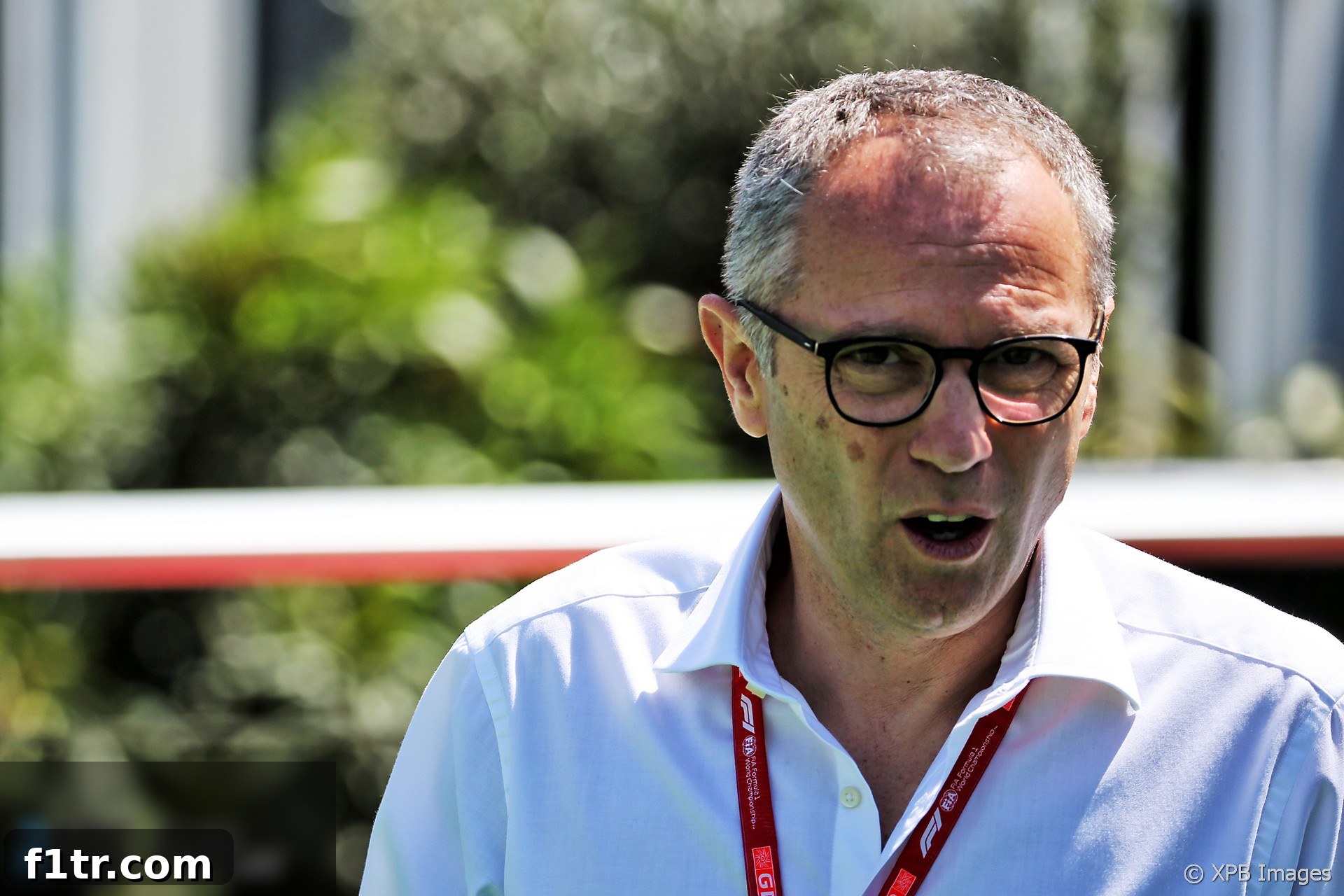
Stefano Domenicali Named Formula 1 CEO: A New Chapter for the Pinnacle of Motorsport
Formula 1, the world’s premier motorsport championship, is set to embark on a new era of leadership as Stefano Domenicali has been officially confirmed as the sport’s new Chief Executive Officer. The former Ferrari team principal will take the helm in January, succeeding Chase Carey, who has steered F1 through a transformative period since Liberty Media’s acquisition in 2017. Carey will transition to a new, vital role as non-executive chairman, ensuring a smooth leadership handover and continued strategic guidance for the sport.
Stefano Domenicali: A Return to His Roots as F1’s New Leader
The announcement marks a significant return to the top echelons of Formula 1 for Stefano Domenicali, a figure deeply rooted in the sport’s history and future. Domenicali’s extensive experience within various facets of motorsport and the automotive industry positions him uniquely for this challenging role. Speaking on his appointment, the 55-year-old expressed profound enthusiasm, stating that Formula 1 “has always been part of my life” and that he is “thrilled” to embrace this new responsibility.
Advert | Become a Supporter & go ad-free
From Ferrari to Lamborghini: Domenicali’s Distinguished Career Path
Stefano Domenicali’s professional journey is a testament to his leadership capabilities and deep understanding of high-performance environments. He famously served as the team principal for Scuderia Ferrari from 2008 to 2014, leading the iconic Italian outfit in the fiercely competitive world of Formula 1. During his tenure, he navigated the complexities of managing one of motorsport’s most prestigious teams, working with legendary figures and world-class drivers. Following his departure from Ferrari, Domenicali remained connected to motorsport by becoming a member of the FIA’s single-seater commission in 2014, contributing to the regulatory and strategic development of various racing categories.
His career then took a strategic turn into the broader automotive sector. In 2016, he was appointed CEO of Lamborghini, the renowned Italian luxury sports car manufacturer. Under his leadership, Lamborghini experienced significant growth and diversification, including the successful launch of its Urus SUV model, which dramatically expanded the brand’s market reach and profitability. This period at Lamborghini, preceded by his work at Audi (Lamborghini’s parent company), provided Domenicali with invaluable broader perspective and corporate experience in brand management, product development, and global business strategy. He articulated this sentiment, remarking, “The past six years at Audi and then leading Lamborghini have given me broader perspective and experience that I will bring to Formula 1.” His diverse background, blending motorsport intensity with corporate executive acumen, makes him an ideal candidate to lead Formula 1 into its next phase of global expansion and innovation.
Chase Carey’s Transformative Tenure: Building a Stronger Foundation for F1
Stefano Domenicali steps into the role following a pivotal period under the leadership of Chase Carey. Appointed CEO in 2017 after Liberty Media’s monumental takeover of Formula 1, Carey was tasked with modernizing and expanding the sport’s global appeal. His tenure has been characterized by significant achievements that have laid a robust foundation for future growth and stability.
Liberty Media’s president and CEO, Greg Maffei, lauded Carey’s performance, stating he had done a “phenomenal job leading F1” for the past four years. Maffei highlighted a long list of accomplishments during Carey’s stewardship: “He assembled a first-class commercial and sporting organisation that has a long list of achievements, including broadening the appeal of the sport, growing its digital presence, establishing new technical regulations, securing a cost cap for the first time and reaching a new more equitable Concorde Agreement with the teams.” These strategic initiatives have profoundly reshaped Formula 1. The focus on digital platforms, including the launch of F1 TV and increased engagement on social media, has significantly expanded the sport’s fanbase, particularly among younger demographics. Furthermore, the introduction of groundbreaking new technical regulations designed to promote closer racing, coupled with the historic implementation of a cost cap, aims to create a more level playing field and foster greater competitive balance across the grid. The new Concorde Agreement, ratified with all ten teams, also ensures financial sustainability and a fairer distribution of revenues, safeguarding the sport’s long-term health.
Carey, reflecting on his time, described the opportunity to run Formula 1 as an “honour.” He expressed immense pride in the team’s ability to navigate the immensely challenging 2020 season amid the global pandemic, returning “with added purpose and determination in the areas of sustainability, diversity and inclusion.” These areas represent critical pillars for F1’s future, as the sport commits to reducing its environmental impact and fostering a more inclusive environment for participants and fans alike. “I’m confident that we’ve built the strong foundation for the business to grow over the long term. It’s been an adventure and I’ve enjoyed working with the teams, the FIA and all of our partners. I look forward to staying involved and supporting Stefano as he takes the wheel,” Carey concluded, signaling a collaborative transition and his ongoing commitment in his new non-executive chairman role.
Industry Endorsement and the “Ferrari Triumvirate” Discussion
The news of Domenicali’s appointment, first revealed by RaceFans, was met with broad approval from within the Formula 1 paddock. Red Bull team principal Christian Horner was among those who welcomed the decision, describing Domenicali as “one of the good guys” and praising his character and professional attributes. “Having competed against him when he was the team principal of Ferrari, he had a lot of integrity, he was a racer, a competitor. He understands the business,” Horner stated. “He’s done a great job at Lamborghini and I think he will be a real asset to Formula 1.” This sentiment underscores the respect Domenicali commands and the confidence that his deep-seated knowledge of racing will serve the sport well.
Navigating Perceptions: Impartiality Amidst Ferrari Connections
Domenicali’s appointment does, however, bring to the fore an interesting dynamic concerning the sport’s top leadership. He joins two other prominent figures with strong ties to Ferrari’s past in key positions: Ross Brawn, F1 Managing Director of Motor Sports, and Jean Todt, the current FIA President. Brawn, who Domenicali will work alongside, was a crucial architect of Ferrari’s dominant era, as was Todt, Domenicali’s predecessor as Ferrari team principal, who became FIA president in 2010. This collection of former Ferrari senior staff has led some to playfully refer to the leadership as a “mid-1990s or early-2000 Formula 1 set-up,” as noted by Christian Horner.
Despite these historical associations, Horner quickly dismissed any concerns regarding potential bias towards the Maranello-based team. He confidently asserted, “But I don’t think that there will be any particular bias or love towards Ferrari from any of those individuals. So I’m sure Stefano will be, if he takes the role, [scrupulous] in his impartiality.” This reassurance highlights the understanding within the sport that individuals in such high-ranking, global roles are expected to prioritize the collective good of Formula 1 over any past allegiances. Impartiality is paramount for the credibility and fairness of the championship, and Domenicali’s reputation for integrity is expected to ensure this standard is upheld.
Advert | Become a RaceFans supporter andgo ad-free
The Road Ahead: Building on Success and Embracing Innovation
With Stefano Domenicali at the helm, Formula 1 is poised to continue its trajectory of growth and evolution. He inherits a sport that has successfully navigated significant challenges, particularly the unprecedented disruption of the 2020 season, demonstrating resilience and adaptability. His extensive experience across diverse aspects of motorsport and high-performance automotive business will be invaluable in guiding F1 through its next phase.
The foundation laid by Chase Carey, focusing on increased fan engagement, digital innovation, financial stability, and a commitment to critical societal values like sustainability, diversity, and inclusion, provides a strong platform. Domenicali’s challenge and opportunity will be to build upon these achievements, further cementing Formula 1’s status as a global sporting spectacle and a leader in technology and innovation. His passion for racing, combined with a proven track record in strategic leadership, promises an exciting future for the sport, its teams, partners, and millions of fans worldwide.
Related F1 News & Insights
- Despite F1 drivers’ concerns, stewards don’t give penalty points for “minor infringements”
- 2020 Russian Grand Prix Star Performers
- “Slower” Ferrari only beat us because of Q3 tyre rule – Tost
- “I may not always get it right” says Hamilton after penalty criticism
- Why did the stewards make their second U-turn this year on a Hamilton penalty call?
Browse all 2020 Russian Grand Prix articles