Williams’ Resurgence: Jost Capito on Dorilton’s Vision, Driver Market, and F1 Future
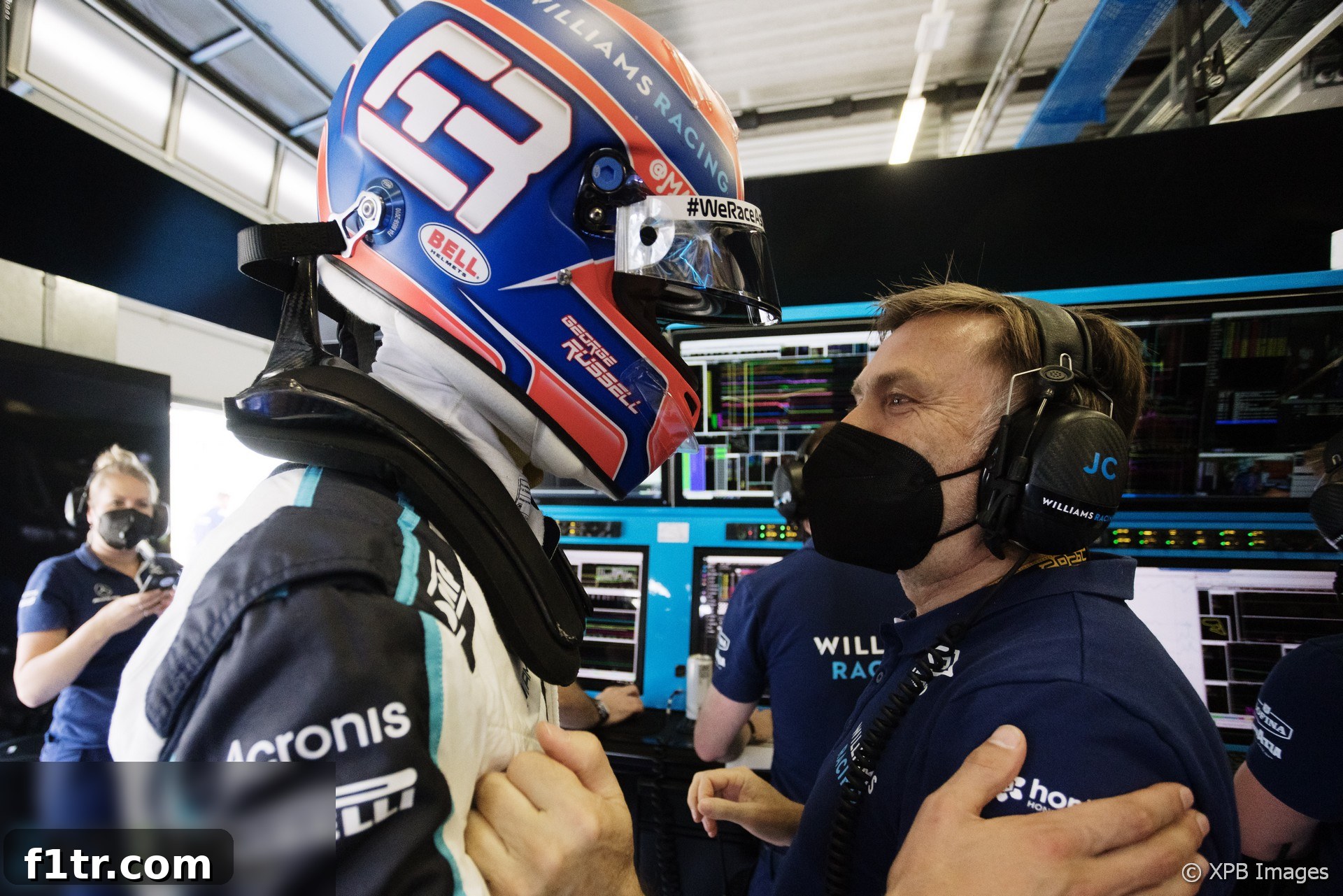
Following a truly spectacular qualifying performance at the Belgian Grand Prix, which saw George Russell secure a stunning front-row start for the Williams Racing team, CEO and Team Principal Jost Capito offered unique insights into the squad’s journey. In an exclusive interview, Capito delved into the transformative impact of Dorilton Capital’s ownership, the team’s long-term strategic investments, and the highly anticipated decisions surrounding its driver line-up amid persistent rumors linking Russell with a potential move to Mercedes.
The interview provided a pivotal moment to reflect on Williams’ remarkable turnaround since its acquisition by Dorilton Capital. Capito articulated a clear vision for the team, emphasizing not just financial stability but a cultural renaissance aimed at reclaiming its storied position in Formula 1. This discussion also touched upon the intricacies of navigating the driver market, particularly with a talent like Russell at the forefront, and the strategic outlook for Williams in an evolving championship landscape.
A Year of Transformation: Dorilton Capital’s Impact on Williams
Reflecting on Dorilton’s First Year: A Foundation for Future Success
Exactly one year ago, the iconic Williams team embarked on a new chapter under the ownership of Dorilton Capital. When questioned about the significant developments witnessed over this period, Jost Capito painted a vivid picture of a team re-energized and re-focused.
“What I immediately discovered was a truly dedicated and highly motivated team,” Capito explained. “In the preceding years, the challenges were predominantly financial, which unfortunately hindered the necessary investments that other top teams were making. This naturally put Williams at a significant disadvantage, impacting our performance on track and leading to a dip in results.”
However, the change in ownership heralded a new dawn. “With Dorilton Capital’s arrival, those critical investments have now been realized. But it’s crucial to understand that money alone doesn’t guarantee victory. History is replete with examples of companies attempting to buy success in Formula 1, only to fall short. The real work lies in effectively activating these investments, ensuring they translate into tangible improvements.”
Capito stressed the importance of a fundamental shift in mindset within the team. “We needed to transition from a mentality of ‘we are tenth, we have zero points, and that’s just our reality’ to ‘no, we aspire to return to the top.’ Convincing every single member of the team that this goal is achievable has been paramount. It’s about instilling belief and reigniting the fighting spirit that once defined Williams.”
The early results of this cultural shift have been profoundly encouraging. “I’ve been genuinely surprised by the extent of what we can achieve without implementing dramatic or major overhauls to the car itself,” Capito continued. “The power of activating the team, fostering a motivated environment, and rekindling the desire to be truly competitive again has already yielded impressive dividends.” This focus on human capital and operational efficiency, alongside financial backing, underscores Dorilton’s holistic approach to rebuilding Williams.
Strategic Investments: Building for the Next Decade
Prioritizing Long-Term Growth: Car Development vs. Infrastructure
In the highly competitive world of Formula 1, strategic allocation of resources is critical. When asked about how Williams prioritizes investments between immediate car development and long-term infrastructure, Capito revealed a forward-thinking philosophy that extends far beyond the upcoming season.
“Our approach involves a comprehensive look at what Formula 1 is poised to become in the future,” Capito elaborated. “We meticulously prioritize our investments based on what we believe the team will require to thrive in the years to come. This isn’t just about playing catch-up to where other teams currently stand; it’s about looking beyond the immediate horizon, perhaps even ten years down the line, and proactively working towards those future needs.”
This long-term vision serves as a powerful motivator for the entire organization. “It’s highly motivating for the team members themselves to know that we are thinking beyond just what we can achieve next year,” Capito added. “We’re asking fundamental questions: ‘Where is Formula 1 heading?’ and ‘What critical steps do we need to take now to ensure we remain competitive throughout the next decade?’ This strategic foresight allows us to make investments that build a sustainable, competitive future for Williams, rather than simply chasing fleeting gains.” This focus on foundational strength ensures that Williams is not just preparing for the next race, but for the next era of Formula 1.
The Budget Cap: A Level Playing Field for All
The introduction of the budget cap has been a significant regulatory change in Formula 1, aimed at promoting greater financial sustainability and a more equitable competitive landscape. Capito confirmed that reaching this budget cap is a core objective for Williams.
“Achieving the budget cap is absolutely our goal,” Capito stated unequivocally. “I believe it’s also a fundamental objective for both the FIA and FOM to ensure that every team has the capability to operate at the budget cap limit. If the ultimate aim is to cultivate a truly balanced battlefield, then it stands to reason that all teams should have access to comparable resources.”
He further elaborated on the long-term implications of this financial ceiling. “With the budget cap progressively decreasing, it creates an environment where the majority of teams will realistically be able to operate at that spending threshold in the future. This provides a crucial opportunity for teams like Williams to compete on a more level financial footing, allowing our engineering prowess and operational efficiency to shine through, rather than being overshadowed by vastly superior spending power.” The budget cap is thus seen as a vital tool for Williams’ sustained competitiveness.
Williams’ Unique Position and the Future of F1
The Strength of Independence in Formula 1
In an era where many Formula 1 teams operate with strong affiliations to larger manufacturers or as ‘B-teams,’ Williams proudly stands as a truly independent entity. Capito highlighted this unique status as a significant competitive advantage and a strength for potential partners.
“I firmly believe that Williams is currently the only genuinely independent team on the grid,” Capito asserted. “This independence is a profound strength and truly unique within the current Formula 1 landscape. It offers a distinct advantage when it comes to forming partnerships.”
He elaborated on the benefits of this autonomy. “We are not constrained by external corporate agendas or the need to align with broader automotive group strategies. Our focus is purely and singularly on the Williams brand, our performance, and our legacy. This dedicated focus means we can be agile, make decisions swiftly, and fully commit to the interests of our team and our partners.”
This unencumbered status makes Williams an attractive proposition for external entities. “I see this as a considerable advantage for any major company or brand looking to enter the sport,” Capito concluded. “They would be partnering with a team that offers a clean slate, a rich history, and a commitment solely to its own success, without the complexities of navigating multi-faceted corporate interests.” This independence is key to Williams forging its own path.
The Optimal Grid Size: 10 Teams, 20 Cars
The discussion occasionally surfaces regarding whether Formula 1 should expand its grid beyond the current ten teams. Capito expressed a clear preference for the existing structure, believing it offers the ideal balance for the sport.
“I think ten teams is perfectly fine for Formula 1,” Capito stated simply. “With twenty cars on the grid, we consistently deliver a spectacular show for the fans. This number feels like the right balance for the sport.”
He also pointed to the practical considerations that support this view. “The current arrangement ensures we have adequate space within the paddock at all circuits, which is an important operational factor. Furthermore, this team count aligns well with the format and structure of modern F1 races. From my perspective, it’s a perfect setup that maximizes both competitive integrity and logistical feasibility.” Capito believes that maintaining the current grid size allows for intense competition without diluting the quality or manageability of the championship.
Navigating the Driver Market: George Russell’s Future and Beyond
The Inevitable Departure of George Russell: A Proud Moment for Williams
The motorsport world was abuzz with speculation regarding George Russell’s imminent move to Mercedes, a prospect that seemed all but certain following Toto Wolff’s comments. When confronted with the near-certainty of losing such a prodigious talent, Capito approached the topic with pragmatism and a clear sense of pride.
“Firstly, it’s important to clarify that if such a move were to happen, it has not yet been officially confirmed. I have not received any formal confirmation regarding George’s decision,” Capito stated, maintaining a composed stance. “While Toto has indicated he’s made a decision, the specifics remain unknown to me. Our relationship is a good one, so whatever he decides, I accept it. I have also made my own decisions concerning our future driver lineup.”
Capito expressed his sincere hope that Russell would indeed secure the Mercedes seat, viewing it as a deserved progression for his career. “In this particular situation, we are naturally dependent on Toto’s decision. My genuine hope is that he chooses George because, at this stage of his career, George absolutely deserves the opportunity to drive a championship-winning car. Regrettably, Williams is not yet in a position to offer him that.”
In a touching nod to Williams’ ambition and heritage, Capito also voiced a heartfelt wish for the future. “I truly hope that in a few years’ time, George might consider returning to us, perhaps because he’s looking to clinch another world championship, and by then, we will be able to provide him with that winning machine! You can never say never in Formula 1.” This perspective highlights Williams’ ambition not just to develop talent, but to eventually attract top-tier drivers back to their fold for championship contention.
Considering New Talent: Nyck de Vries and Beyond
With George Russell’s potential departure, the focus naturally shifts to potential replacements. When asked specifically about Nyck de Vries, the reigning Formula E champion, and whether Toto Wolff had discussed him, Capito was resolute about Williams’ independence in driver selection.
“I deliberately don’t engage in driver discussions with Toto, and I believe he understands this perfectly well,” Capito asserted. “It’s paramount that Williams retains complete autonomy over our driver decisions. We will select the drivers who are best suited for our team and our objectives.”
Regarding specific candidates, Capito acknowledged De Vries’s undeniable credentials. “Of course, I meticulously assess various drivers who could potentially join us, and Nyck de Vries, as a Formula E world champion, is undoubtedly on that list. It would be foolish not to consider a driver of his caliber for our potential line-up.” However, he quickly tempered expectations, adding, “But he is certainly not the only candidate we are evaluating at this stage. Our search is comprehensive.” This underscores Williams’ commitment to a thorough and independent driver selection process, looking for the best fit for their evolving team.
Casting a Wide Net: Exploring Options Beyond the F1 Paddock
The possibility of seeking a driver from outside the established Formula 1 paddock is always a topic of intrigue. Capito confirmed that Williams is keeping an open mind regarding all potential candidates.
“At this juncture, I wouldn’t exclude any option or indeed anybody from our considerations,” Capito stated, indicating a broad and flexible approach to driver selection. This suggests that Williams is prepared to look across various motorsport disciplines, from feeder series to other international championships, to find the right talent that aligns with their future vision and team culture. This open-minded strategy ensures they do not miss out on any exceptional talent, regardless of their current racing environment.
The Prospect of a Valtteri Bottas Return
Another name frequently linked with a potential Williams seat, given his history with the team, is Valtteri Bottas. Capito acknowledged the logic of such a move but reiterated his policy of not entering detailed discussions prematurely.
“Taking Valtteri back into the team would certainly not be a foolish decision, just as considering other experienced drivers wouldn’t be,” Capito admitted. “He has a proven track record and a deep understanding of Formula 1. However, at this precise moment, until George’s departure is formally decided and announced, I am not in a position, nor do I wish, to engage in detailed conversations with any potential candidate.” This prudent approach allows Williams to focus on the immediate situation while maintaining strategic options for the future.
Nicholas Latifi’s Strong Performance and Future
Amidst the speculation surrounding George Russell’s future, the position of Nicholas Latifi, the other current Williams driver, was also a point of discussion. Capito offered a strong endorsement of Latifi’s contributions and potential to remain with the team.
“Nicholas is undeniably doing a tremendous job for us,” Capito affirmed. “While discussions about future contracts are naturally ongoing, he has genuinely impressed everyone within the team this year. We’ve witnessed a consistent improvement in his performance, and he is getting better and better with each race weekend.”
Crucially, Capito highlighted Latifi’s integration and positive impact within the team dynamic. “The team genuinely values Nicholas; he works exceptionally well with everyone and contributes positively to our environment. Given his progress and team fit, I believe he has a very good chance of retaining his seat for the upcoming season.” This suggests that Latifi’s dedication and development are highly appreciated by Williams, positioning him as a strong candidate for continuity.
Beyond “Pay Drivers”: Prioritizing Talent Over Budget
In the past, Williams, like many smaller teams, was known to rely on drivers who brought substantial sponsorship. However, Capito clarified the team’s current philosophy, emphasizing that talent and suitability now outweigh financial contributions.
“Let me be very clear: we do not need ‘pay drivers’ anymore,” Capito stated emphatically. “We are no longer in a position where we require drivers to financially contribute for the privilege of driving for Williams. That era is firmly behind us.”
He acknowledged the nuances of sponsorship in modern F1. “Of course, there are various drivers who come with established sponsorships or associations with significant partners. While such contributions are certainly welcome and do not hurt our financial position, they are absolutely not the primary factor in our decision-making process for driver selection.”
Capito concluded by underscoring the team’s fundamental priority. “Our absolute priority is to secure the right driver – the individual with the talent, experience, and commitment to genuinely push the team forward and contribute to our ongoing progress. Performance and team fit now stand at the forefront of our considerations.” This commitment to merit-based selection marks a significant shift in Williams’ recruitment strategy under Dorilton Capital.
The Road Ahead: Williams’ Return to the Midfield and Beyond
Targeting Consistent Points and Podiums: The 2022 Opportunity
George Russell’s P2 at the curtailed Belgian Grand Prix, though achieved under unusual circumstances, sparked hope about Williams’ potential. The inevitable question arises: when will Williams be able to genuinely contend for points and podiums consistently, without relying on such extraordinary conditions?
“That is undeniably a difficult question to answer with absolute certainty,” Capito admitted, reflecting on the competitive nature of Formula 1. “However, next year, with the introduction of the completely new car under the revised regulations, it’s an exciting unknown. Nobody truly knows what the competitive order will look like with these radically different cars. Our hope is that we can deliver a positive surprise during the initial testing phase and carry that momentum into the season.”
Capito also acknowledged the inherent challenges for a team that has been at the back of the grid. “It’s often the case that teams with a really strong car in the current year might be in a somewhat better position to adapt and produce another excellent car under new regulations, compared to a team that has been struggling with one of the slowest cars. They often have more resources freed up to focus on the next generation.”
Nevertheless, he exuded confidence in Williams’ internal efforts. “Despite this, we are working incredibly hard. We’ve implemented numerous significant changes, especially with our technical leadership coming in and providing strong support and direction. I believe we possess a truly talented group of engineers, and I am confident that we can produce a car that, even if it isn’t immediately in the midfield at the very start of the season, can certainly be developed during the year to consistently compete in that crucial midfield battle. From there, it’s about taking continuous, determined step-by-step progress towards our ultimate goals.” This long-term, iterative approach underlines Williams’ realistic yet ambitious plan for climbing the F1 ladder.
Related F1 Articles
- Spa spectators who saw no racing offered prize draw for 2022 tickets
- ‘Wrong to award points for a couple of laps behind the Safety Car’ – Horner
- Hamilton offers “exclusive gift” to fans who attended Belgian GP wash-out
- Change rules to give points for qualifying if race can’t happen – Seidl
- “I apologised to the entire team for my mistake” – Perez
Browse all 2021 Belgian Grand Prix articles