The intricate world of Formula 1, renowned for its relentless pace, precision engineering, and global reach, has found itself navigating unprecedented challenges posed by the United Kingdom’s departure from the European Union, commonly known as Brexit. With the vast majority of F1 teams headquartered or significantly operating within the UK, the ongoing uncertainty surrounding Brexit has introduced a complex web of logistical, operational, and personnel-related concerns that could profoundly impact the sport.
Originally slated for March 31st, the UK’s departure date from the EU has seen multiple postponements, reflecting the profound political and economic complexities involved. The initial deadline was extended, and subsequently, a further extension was agreed upon, potentially pushing the exit date into the following year. This prolonged period of ambiguity has compelled Formula 1 teams, like countless other businesses with substantial UK operations, to meticulously plan for a spectrum of outcomes, from a comprehensive deal to a disruptive ‘no-deal’ scenario.
Formula 1’s British Heartland: A Unique Vulnerability to Brexit
Formula 1 is a truly international sport, yet its operational heart largely beats in the United Kingdom. Out of the ten teams currently competing, all but two – the iconic Ferrari from Italy and Alfa Romeo (Sauber) from Switzerland, though even Alfa Romeo Racing operates parts of its engine development in the UK – have at least a significant portion, if not their entire F1 base, located within the UK. This concentration, often referred to as the “Motorsport Valley” in England, brings together a unique ecosystem of engineering talent, advanced manufacturing, and unparalleled expertise. However, it also renders the sport particularly susceptible to changes in trade, customs, and immigration policies stemming from Brexit.
The “Just-In-Time” Conundrum: A Logistical Tightrope
One of the most critical operational pillars of modern Formula 1 is the “just-in-time” supply chain. This highly efficient system ensures that parts, components, and even raw materials arrive at the factory precisely when needed for manufacturing, and similarly, crucial upgrades and spare parts are dispatched from the factory to race tracks around the world, often arriving just hours before they are required for practice, qualifying, or even the race itself. This methodology minimizes warehousing costs, reduces waste, and allows for rapid development cycles, which are vital in a sport where incremental improvements can mean the difference between victory and defeat.
A departure from the European Union, particularly without a comprehensive trade deal that maintains frictionless borders, threatens to throw a wrench into this finely tuned machine. Leaving the customs union with Europe would inevitably introduce new customs checks, paperwork, and potentially tariffs on goods moving between the UK and EU member states. For F1 teams, whose freight travels extensively across European borders for pre-season testing, numerous European Grand Prix events on the F1 calendar, and logistical movements of personnel and equipment, these new barriers could lead to significant delays. Even minor holdups could have catastrophic implications, potentially causing teams to miss crucial practice sessions, or worse, races, due to the late arrival of essential parts.
Supply Chain Resilience and Increased Costs
Beyond the immediate transport of race-specific freight, the broader supply chain for Formula 1 teams is also at risk. Modern F1 cars are mosaics of components sourced from a global network of suppliers, many of whom are based within the EU. Everything from composite materials to advanced electronic sensors and specialized tools could face new import/export regulations, increased bureaucracy, and additional costs. Teams might be forced to consider stockpiling parts, which goes against the efficiency of the “just-in-time” model and ties up valuable capital. Furthermore, the administrative burden of managing new customs declarations, complying with varying regulations, and potentially navigating different VAT regimes would add a layer of complexity and cost to already tightly budgeted operations.
Leading Voices on the Impact of Brexit on F1 Teams
Team principals and CEOs across the paddock have openly expressed their concerns and outlined the extensive preparations undertaken to mitigate potential disruptions.
Mercedes-AMG Petronas F1 Team: Preparing for the Unknown
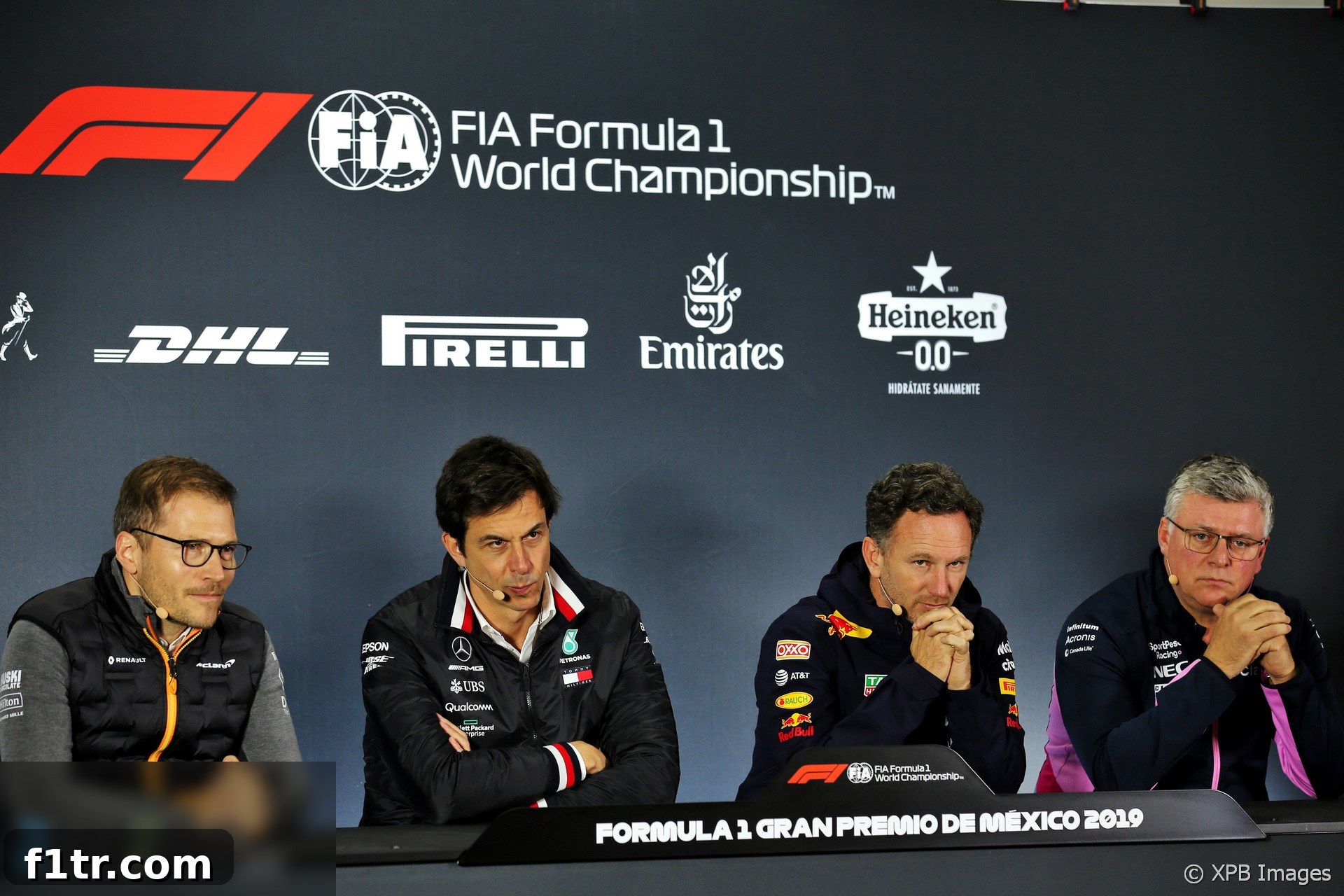
Toto Wolff, Team Principal and CEO of the dominant Mercedes-AMG Petronas F1 Team, whose entire Formula 1 operation is proudly based in Brackley, UK, has been a vocal proponent of preparedness. Wolff emphasized that teams “need to prepare, as any other company out there, for potential impact” if Britain’s departure proceeds. He candidly admitted, “It’s clear that it will harm us in a way because our businesses live with the ‘just in time’ concept of product supplies.” Despite the challenges, Wolff highlighted the team’s proactive approach: “But we are going to get our head around it. As a team, we put a lot of effort into understanding what the potential impact could be and we are ready for whatsoever outcome.” This sentiment underscores the significant investment in resources and planning that even a well-resourced team like Mercedes has had to commit to Brexit preparations.
Racing Point F1 Team (now Aston Martin F1 Team): Planning for a ‘No-Deal’ Scenario
Another entirely UK-based outfit, Racing Point (now known as Aston Martin F1 Team), adopted a similarly pragmatic stance. Otmar Szafnauer, then CEO and Team Principal, stated that the team was “planning for the worst case, the worst case being a no-deal Brexit.” A ‘no-deal’ scenario, where the UK leaves the EU without any formal agreement on future trade and regulatory cooperation, is widely anticipated to cause the most significant economic disruption. Government documents leaked previously indicated that such a scenario could lead to queues lasting two-and-a-half days at British ports, a nightmare for F1 logistics. Szafnauer expressed confidence in their preparations: “I think we’ve put some plans in place to cope with that and we’re hoping for the best case. Only time will tell. But I think we’re well prepared to keep going if Brexit does happen sooner rather than later and there is no deal.”
McLaren F1 Team: Assuring Staff and Adapting Operations
Woking-based McLaren, another pillar of British motorsport excellence, has also been meticulously planning for various Brexit outcomes. Andreas Seidl, the German Team Principal of McLaren, highlighted the human element of the challenge, addressing concerns among the team’s European staff based in the UK. Seidl reassured his staff, stating he’d “got the guarantee that I can stay at least, whatever happens,” suggesting measures are in place to secure the status of crucial personnel. He reiterated McLaren’s comprehensive approach: “As a team we simply did our homework and prepared for every possible scenario which is on the horizon. I’m sure whatever happens in the next weeks and months there will be solutions in place and we will keep going racing.” This focus on both logistical and personnel planning demonstrates the multi-faceted nature of Brexit’s impact.
Beyond Logistics: Personnel, Talent, and the Future of Motorsport Valley
While the immediate concerns often revolve around freight and supply chains, Brexit’s implications extend to the highly skilled, international workforce that powers Formula 1. F1 teams employ a diverse pool of talent from across Europe and the globe, encompassing engineers, aerodynamicists, strategists, mechanics, and administrative staff. The freedom of movement for EU citizens has historically facilitated the rapid acquisition and retention of this world-class talent within the UK-based teams.
Challenges to Workforce Mobility and Talent Acquisition
Post-Brexit immigration policies could introduce significant hurdles for EU citizens seeking to work in the UK, potentially requiring visas and navigating complex application processes. This could not only impact existing European staff, whose right to live and work in the UK might be subject to new rules, but also make it more challenging for UK-based teams to attract the brightest new talent from across Europe. In a highly competitive global sport, any friction in talent acquisition could gradually diminish the UK’s long-standing advantage as a hub for motorsport innovation and excellence. Teams might need to invest more in legal and HR resources to manage these new requirements, adding further operational costs.
The Broader Economic Landscape and Investment
Brexit also carries broader economic implications. Increased costs due to tariffs, administrative burdens, and potential supply chain disruptions could impact team budgets, potentially reducing funds available for research and development – the lifeblood of Formula 1. Furthermore, the overall economic climate and investment attractiveness of the UK post-Brexit could influence sponsors and external investors, potentially affecting the financial health of teams. While the sport is driven by passion and innovation, its commercial viability is paramount, and any factors that increase operational costs or reduce revenue streams will inevitably be scrutinized.
Navigating Uncertainty: The Resilience of Formula 1
Despite the formidable challenges, the Formula 1 community is known for its incredible adaptability and problem-solving capabilities. The very nature of the sport demands constant innovation and the ability to react swiftly to changing circumstances, whether technical regulations, adverse weather conditions, or complex logistical puzzles.
As the UK continues to navigate its new relationship with the European Union, F1 teams will undoubtedly continue to leverage their engineering ingenuity and strategic foresight to adapt. This might involve re-evaluating sourcing strategies, establishing dual logistical hubs, investing in enhanced customs compliance infrastructure, or even exploring longer-term structural adjustments to their operations. The ultimate goal remains clear: to ensure the seamless continuation of racing at the highest level, regardless of the political backdrop.
The Brexit saga serves as a stark reminder of how deeply interwoven modern global sports are with broader geopolitical and economic shifts. For Formula 1, the impact of Britain’s exit from the EU is not merely an abstract political event but a tangible operational challenge that requires meticulous planning and robust contingency measures. The coming months and years will reveal the full extent of these changes and showcase the sport’s enduring ability to innovate and overcome adversity.
2019 F1 Season Insights
- Crying in the Melbourne car park at 2019 grand prix was my career low – Ocon
- McLaren Racing reports reduced £71 million loss in 2019
- Kvyat: Hockenheim podium last year was “my biggest achievement” so far
- How the FIA’s new encrypted fuel flow meter targets Ferrari’s suspected ‘aliasing’ trick
- “He smashed my office door”: 23 must-see moments from ‘Drive to Survive’ season two
Browse all 2019 F1 season articles