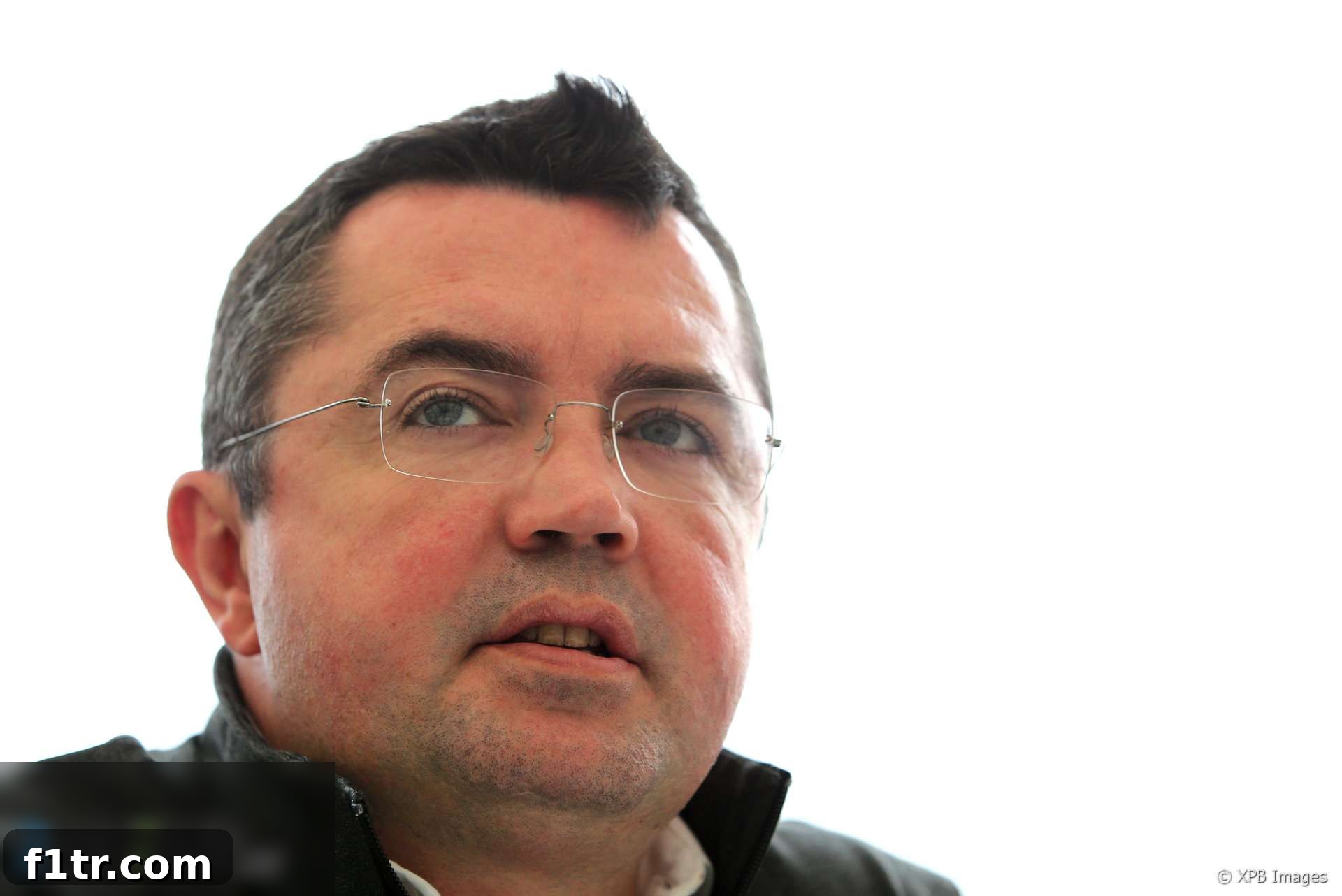
Eric Boullier Takes On Key Strategic Role at French Grand Prix Organisation
In a significant development for French motorsport, Eric Boullier, a highly respected figure with extensive experience as the former McLaren sporting director and Renault/Lotus team principal, has embarked on a new chapter. Boullier has officially joined the French Grand Prix Organisation, taking on a dual role that promises to leverage his deep understanding of Formula 1 and event management. This appointment marks his return to a prominent position within the sport, albeit from a different vantage point, reinforcing the event’s commitment to excellence and strategic growth.
A New Horizon: Boullier’s Influence at Circuit Paul Ricard
Boullier’s new responsibilities with the French Grand Prix Organisation are multifaceted and strategically vital. He will serve as an ambassador for the prestigious race, working to enhance its global profile and strengthen its connections within the motorsport community. Beyond his ambassadorial duties, he will also act as a sport and operational strategic advisor, a role perfectly suited to his decades of experience at the highest echelons of professional racing. This advisory capacity will see him contribute to the planning, execution, and long-term vision of the French Grand Prix, ensuring its continued success at the historic Circuit Paul Ricard.
Expressing his enthusiasm for this new challenge, Boullier stated, “I attach particular importance to the French Grand Prix and I look forward to contributing to the success of this major motor sport event.” His words underscore a genuine commitment to the event and a recognition of its importance on the global Formula 1 calendar. His involvement is expected to bring a fresh perspective and invaluable operational insight, crucial for an event that consistently aims to deliver an unparalleled experience for teams, drivers, and fans alike.
A Distinguished Career in Formula 1 Leadership
Eric Boullier’s journey through the ranks of Formula 1 has been marked by significant leadership positions and challenging environments. His career trajectory provides a comprehensive background that makes him uniquely qualified for his new strategic advisory role. His experience spans various facets of team management, from engineering to full team principal responsibilities, giving him a holistic understanding of the demands and intricacies of top-tier motorsport.
The Renault and Lotus Era: Building Competitive Teams
Boullier first made his grand entrance into the world of Formula 1 with the Renault F1 team in 2010. He quickly ascended to the role of team principal, overseeing the team’s transition and evolution. Under his stewardship, Renault, which later rebranded as Lotus F1 Team, experienced periods of considerable success. During this time, he was instrumental in guiding the team through significant technical and financial challenges, maintaining a competitive edge against formidable rivals.
A highlight of his tenure at Lotus was the successful return of world champion Kimi Raikkonen to Formula 1. Under Boullier’s leadership, Raikkonen secured two memorable Grand Prix victories, revitalizing the team’s fortunes and proving its capability to compete at the front of the grid. These victories were a testament to Boullier’s ability to foster a winning environment and extract maximum performance from both personnel and machinery, even with limited resources compared to some of the sport’s giants. His strategic acumen was evident in how he managed team dynamics and navigated the complex political landscape of Formula 1.
The McLaren Challenge: Navigating a Period of Transition
In 2014, Boullier moved to McLaren, one of Formula 1’s most iconic and historically successful teams, taking on the role of racing director. His arrival coincided with a pivotal period for McLaren as they prepared for a significant engine supplier change, moving from Mercedes-Benz to Honda in 2015. This era proved to be particularly challenging, marked by significant performance struggles and reliability issues stemming primarily from the new power unit partnership.
Despite the immense pressure and scrutiny, Boullier worked tirelessly to steer the team through these turbulent waters, implementing organizational changes and striving to improve efficiency and development processes. However, after an unsuccessful start to the 2018 season and ongoing struggles, McLaren initiated a comprehensive management shake-up. Boullier departed from his role as McLaren racing director in July 2018. Following his exit, it was understood that he was subject to standard gardening leave clauses and employment restrictions. Typically, such clauses limit employment options to non-F1 team and non-FIA or -FOM roles for a period, often six months, with a longer restriction (e.g., 12 months) for direct rival F1 roles. These provisions are common in top-tier motorsport to protect intellectual property and competitive advantage, ensuring a smooth transition without immediate transfer of sensitive information.
Beyond Formula 1: Boullier’s Motorsport Foundations
Eric Boullier’s profound understanding of motorsport extends far beyond his Formula 1 leadership roles. His career began in engineering, providing him with a fundamental appreciation for the technical intricacies of racing. He gained valuable experience in these foundational roles with esteemed organizations like DAMS and, subsequently, Racing Engineering. This hands-on engineering background equipped him with a crucial technical grounding that would later inform his strategic and managerial decisions.
His return to DAMS in a management capacity in 2003 marked a pivotal shift towards leadership. There, he successfully managed their highly competitive GP2 and GP2 Asia squads, nurturing future Formula 1 talents and consistently achieving strong results in these vital feeder series. Furthermore, he spearheaded the French A1 Grand Prix team, contributing to national motorsport pride and demonstrating his capability in managing large-scale international racing operations. This diverse background, encompassing both the technical and managerial aspects of various racing categories, built a robust foundation for his eventual rise to prominence in Formula 1.
The French Grand Prix: A Revival and Future Aspirations
The French Grand Prix holds a significant place in the history of Formula 1, having been a staple of the calendar for many decades across various circuits. After a decade-long absence, the race made a triumphant return to the calendar in 2018 at the iconic Circuit Paul Ricard, marking a new era for motorsport in France. The revival of this event was met with widespread enthusiasm, bringing top-tier racing back to a nation with a rich heritage in Formula 1, boasting legendary drivers and constructors.
Hosting a modern Formula 1 Grand Prix is an immense undertaking, requiring meticulous planning, significant logistical coordination, and a steadfast commitment to innovation and fan engagement. Events like the French Grand Prix face continuous challenges in areas such as spectator experience, infrastructure development, environmental sustainability, and commercial viability. Eric Boullier’s appointment as a strategic advisor is particularly timely, as his extensive experience in managing large-scale operations and navigating the complex demands of Formula 1 will be invaluable. He can help shape the future direction of the event, ensuring it remains a premier fixture on the global motorsport stage, attracting both domestic and international visitors to the beautiful region of Provence.
The Value of Seasoned Leadership in Motorsport Events
The decision to bring a figure of Eric Boullier’s caliber into the French Grand Prix Organisation reflects a growing trend in motorsport events: the recognition of the indispensable value that seasoned industry leaders bring to event management. These individuals possess not only an intimate knowledge of the sport’s mechanics and politics but also a deep understanding of what makes a Grand Prix successful from every perspective – for the teams, for the media, for the sponsors, and crucially, for the fans.
Boullier’s background provides him with a unique insight into the operational nuances of a Formula 1 weekend, from paddock logistics to circuit safety, from stakeholder relations to fan accessibility. His experience in leading F1 teams means he understands the pressures and expectations of the participants, allowing for better collaboration and a more streamlined event. Moreover, his ambassadorial role will be instrumental in fostering relationships and promoting the French Grand Prix on an international scale, leveraging his extensive network built over years in the sport. This strategic move by the French Grand Prix Organisation is a clear signal of their ambition to elevate the event to new heights and cement its position as a highlight of the Formula 1 season.
Connecting with the World of Formula 1
Stay informed about the latest developments from the world of Formula 1 and the French Grand Prix. Follow us on social media and subscribe to our updates to ensure you don’t miss any breaking news or exclusive insights.
- Join us on Facebook for F1 discussions and updates
- Follow us on Twitter for real-time news and analysis
- Get daily email updates directly to your inbox
For more content related to the exciting world of Formula 1, including historical context and future predictions, explore our extensive archives.
Browse all Formula 1 articles