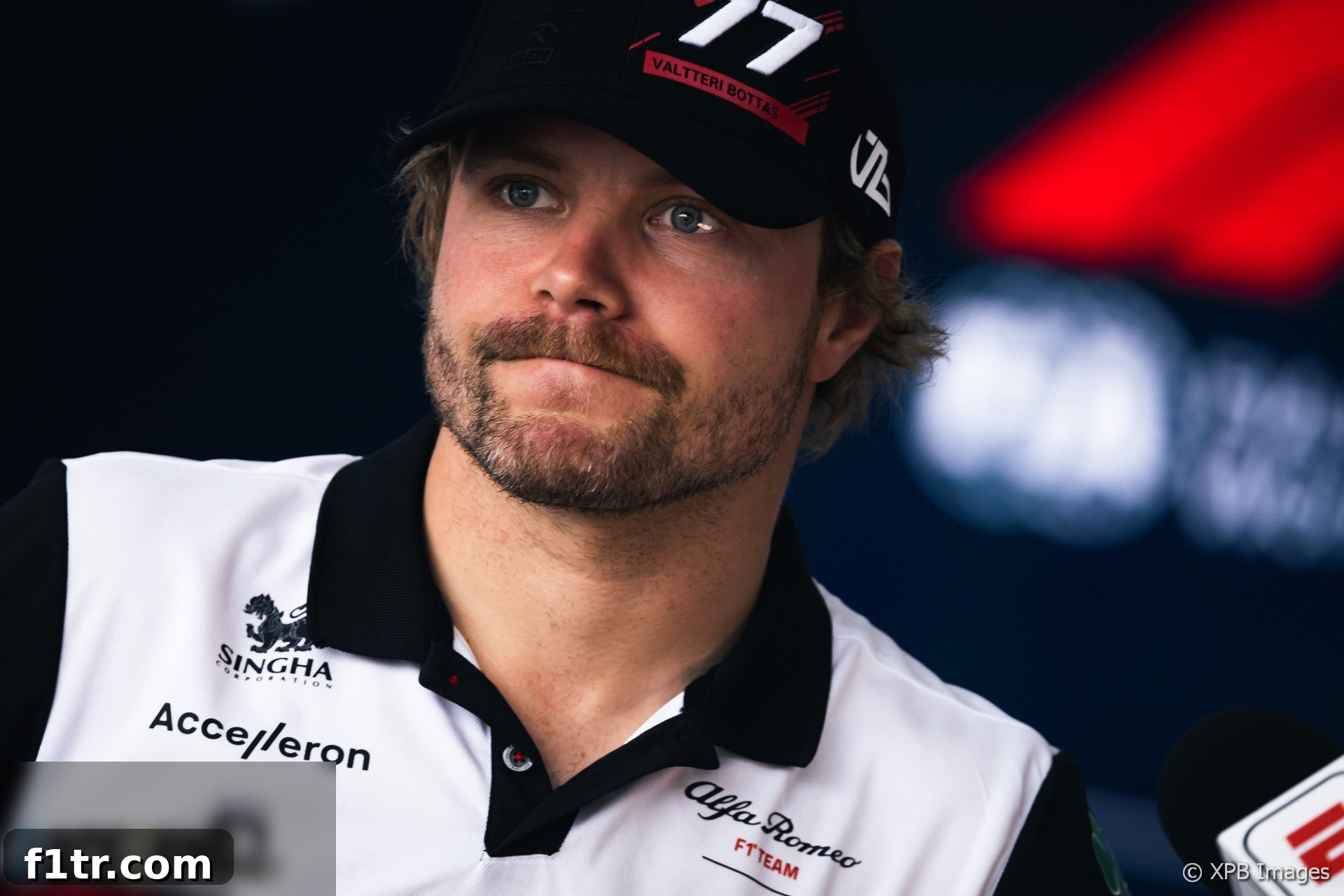
Valtteri Bottas Outlines Key to Audi-Sauber F1 Success in 2026
Valtteri Bottas, the seasoned Finnish Formula 1 driver currently competing with Alfa Romeo, has offered his expert perspective on the critical factors that will determine Audi’s success upon their highly anticipated entry into the sport in 2026. Bottas firmly believes that the true measure of their triumph will hinge on the depth and timing of support Audi extends to its chassis partner, Sauber, in the crucial years leading up to their official debut as an engine manufacturer.
Advert | Become a Supporter & go ad-free
Audi’s Ambitious F1 Entry: A New Partnership Unveiled
The motorsport world recently buzzed with excitement following Audi’s definitive confirmation that it will join forces with Sauber, the team presently branded as Alfa Romeo, to enter Formula 1 as an engine supplier for the 2026 season. This landmark announcement signifies a pivotal moment for both Audi, a global automotive powerhouse renowned for its engineering excellence, and Sauber, a long-established and highly respected contender in the fiercely competitive world of Formula 1.
For Valtteri Bottas, whose career includes a successful stint with multiple championship-winning team Mercedes, the prospect for Sauber under Audi’s stewardship is nothing short of immense. He perceives this strategic partnership as a transformative opportunity for the Hinwil-based squad and openly expresses his keen interest in being an integral part of this ambitious, long-term project.
“For this team, in the end, if you look at the big picture, I think it’s huge,” Bottas conveyed to the media, including RaceFans, yesterday. His words resonate with a deep understanding of the profound impact a factory partnership can have on a privateer outfit. “There’s big potential for Sauber with Audi. No doubt they want to succeed in the future. They want to do well, they’re serious. So I think for any driver on the grid and especially for me now being already part of Sauber it would be very interesting to be part of that project.” This sentiment underscores not just personal ambition, but a genuine belief in the vision unfolding.
The Indispensable Role of Pre-Entry Support: 2024-2026
The current title sponsorship agreement with Alfa Romeo is slated to conclude at the end of the 2023 F1 season. Bottas emphatically highlights the period from 2024 onwards as the most critical for Audi to lay a robust foundation for a successful and competitive entry. His extensive experience at the pinnacle of motorsport dictates that early and substantial investment will be directly correlated with their ultimate performance when the new regulations take effect in 2026.
“It depends how much Audi is going to support this team before they officially become the manufacturer,” Bottas elaborated, emphasizing the transitional phase. “Obviously nothing changes next year; we are still with Alfa Romeo, and of course we hope that we can have a better car than this year.” This realistic assessment underlines the gradual nature of such a significant transition within Formula 1.
The pivotal moment, according to Bottas, will arrive after the 2023 season concludes. “But then I think it depends on the support from 2024 onwards, how much they’re willing to support. If they’re really helping a lot and supporting and if the power unit is good in ’26, which is impossible to predict at the moment, then why not?” This statement perfectly encapsulates the blend of ambitious hope and pragmatic caution that is inherent in every Formula 1 endeavor.
Strategic Investments for a Competitive Edge
For Audi to maximize its probability of success and ensure a strong start, substantial investment and close collaboration will be paramount across several key operational areas, well before the 2026 regulatory overhaul fully takes hold. These critical areas include:
- Advanced Infrastructure Development: This entails significantly upgrading and expanding Sauber’s state-of-the-art facilities located in Hinwil, Switzerland. The goal is to meet and exceed the demanding requirements of a modern, top-tier factory team, potentially involving cutting-edge simulation tools, advanced wind tunnel capabilities, and bespoke manufacturing technologies.
- Strategic Personnel Expansion and Recruitment: A significant increase in the team’s human capital is essential. Bottas specifically noted the current team size being comparatively smaller than what he witnessed during his tenure at Mercedes. Attracting and integrating top-tier engineering talent, aerodynamic specialists, and experienced operational staff will be crucial.
- Integrated Research & Development: Early and deep collaboration on technical projects, particularly concerning aerodynamic efficiency and optimal chassis integration with the new power unit, will ensure that the Audi power unit and Sauber chassis form a perfectly harmonized package from day one of the new regulations.
- Harmonious Cultural Integration: Fostering a cohesive and unified working environment between the established Sauber team members and the incoming Audi personnel is vital. This ensures a shared vision, streamlined processes, and a synergistic approach to problem-solving and innovation.
The impending 2026 regulations, which introduce a new generation of power units with a significantly increased electrical component and a commitment to 100% sustainable fuels, represent a unique and timely opportunity for new manufacturers like Audi. These regulatory shifts are designed to create a more level playing field, potentially diminishing the ingrained advantages held by long-standing engine suppliers and fostering a more open and competitive landscape.
Sauber’s Foundation: A Platform for Future Glory
Sauber is currently enjoying one of its most competitive seasons in the last decade, impressively holding sixth position in the Constructors’ Championship with just three races remaining. This commendable performance provides a robust and promising foundation upon which the future partnership with Audi can build. Bottas, leveraging his invaluable experience from driving for a multiple championship-winning constructor, expresses confidence that Sauber can realistically contend with the best teams in Formula 1, provided they receive the necessary backing from Audi.
“There’s still work to do, no doubt, that’s a fact. But it’s not like that far,” Bottas affirmed, articulating his belief in the inherent potential within the existing team structure. “All the facilities are there. Yes, still some facilities, some machinery, can be better compared to a championship-winning team. But it’s all feasible, it’s all possible.” His pragmatic outlook suggests that the challenges, while real, are surmountable with dedicated effort and resources.
He further elaborated on the crucial aspect of human resources: “Still the amount of people in the team is still a bit less than what I saw last year. So there’s still a bit of work to do. But I think with the support of a manufacturer like Audi I see no reason why it wouldn’t be possible.” This statement speaks volumes about the ambition and inherent drive within the Sauber team, which is now poised for exponential growth and development under Audi’s strategic leadership.
Transforming from Privateer to Factory Powerhouse
Sauber boasts a rich and storied history in Formula 1, consistently lauded for its operational efficiency and remarkable ability to overperform as a privateer team against much larger, factory-backed rivals. Its facilities in Hinwil are undoubtedly world-class, but as Bottas shrewdly observes, there is always scope for enhancement when benchmarked against the titans of the sport, such as Mercedes or Red Bull, who operate with considerably larger budgets and expansive workforces. Audi’s arrival is expected to comprehensively address this gap, initiating a transformation that will elevate Sauber into a fully-fledged factory team, endowed with resources commensurate with Formula 1’s leading contenders.
This anticipated transformation transcends mere financial injection; it encompasses a holistic integration of technological transfer, shared engineering expertise, and a unified, long-term strategic vision. Audi brings to the table not only substantial financial backing but also profound automotive engineering prowess, particularly in areas of hybridization and advanced electric powertrains. These capabilities align perfectly with the innovative direction of Formula 1’s future technical regulations, offering a significant competitive advantage.
Navigating the Path: Challenges and Opportunities to 2026
While the Audi-Sauber partnership holds immense promise, the journey towards becoming a consistent championship contender will inevitably be fraught with challenges. Successfully integrating two distinct corporate cultures, developing a brand-new, cutting-edge power unit from scratch, and attracting and retaining top-tier talent in an incredibly competitive global market represent significant undertakings that demand meticulous planning and execution.
However, the opportunities that lie ahead significantly outweigh these potential obstacles. For Audi, Formula 1 offers an unparalleled global platform for enhancing brand visibility, accelerating technological development, and attracting premier engineering talent. For Sauber, it presents a golden opportunity to reclaim its place among the sport’s elite, actively competing for race victories and championships under the prestigious banner of a leading automotive manufacturer. And for Valtteri Bottas, it could very well represent the pinnacle of his illustrious career ambitions – leading a factory team to sustained glory in the world’s most demanding motorsport.
Advert | Become a RaceFans supporter andgo ad-free
The Road Ahead: Forging a Winning Formula
The palpable excitement surrounding Audi’s entry into Formula 1 and its strategic partnership with Sauber is undeniable. Valtteri Bottas’s perspective, deeply rooted in years of high-level motorsport experience, offers a realistic yet profoundly optimistic outlook. The central message from Bottas is crystal clear: the enduring success of the Audi-Sauber collaboration will not solely be contingent on the technical brilliance of the 2026 power unit or chassis. More crucially, it will depend on the strategic, financial, and collaborative commitment Audi demonstrates in the foundational years preceding its full entry. By proactively nurturing, empowering, and investing in Sauber from 2024 onwards, Audi can significantly enhance its chances of making an immediate impact and firmly establishing itself as a formidable and championship-contending force in the exciting new era of Formula 1.
This journey promises to be one of the most fascinating narratives in modern Formula 1, as a new challenger prepares to disrupt the established order, with a seasoned and ambitious driver like Bottas eager to play a pivotal role in its ascent to the top.
Related Articles: 2022 Mexican Grand Prix
- How many victory chances did Hamilton have in his first winless F1 season?
- Delay in producing new parts held up Alfa Romeo upgrade
- Doohan’s practice run earns praise, but Alpine undecided over reserve role
- ‘I was in the fight which hasn’t been often this year’: Ricciardo’s Mexican GP transcript
- Verstappen “will continue to break records for the rest of his career” – rivals
Browse all 2022 Mexican Grand Prix articles