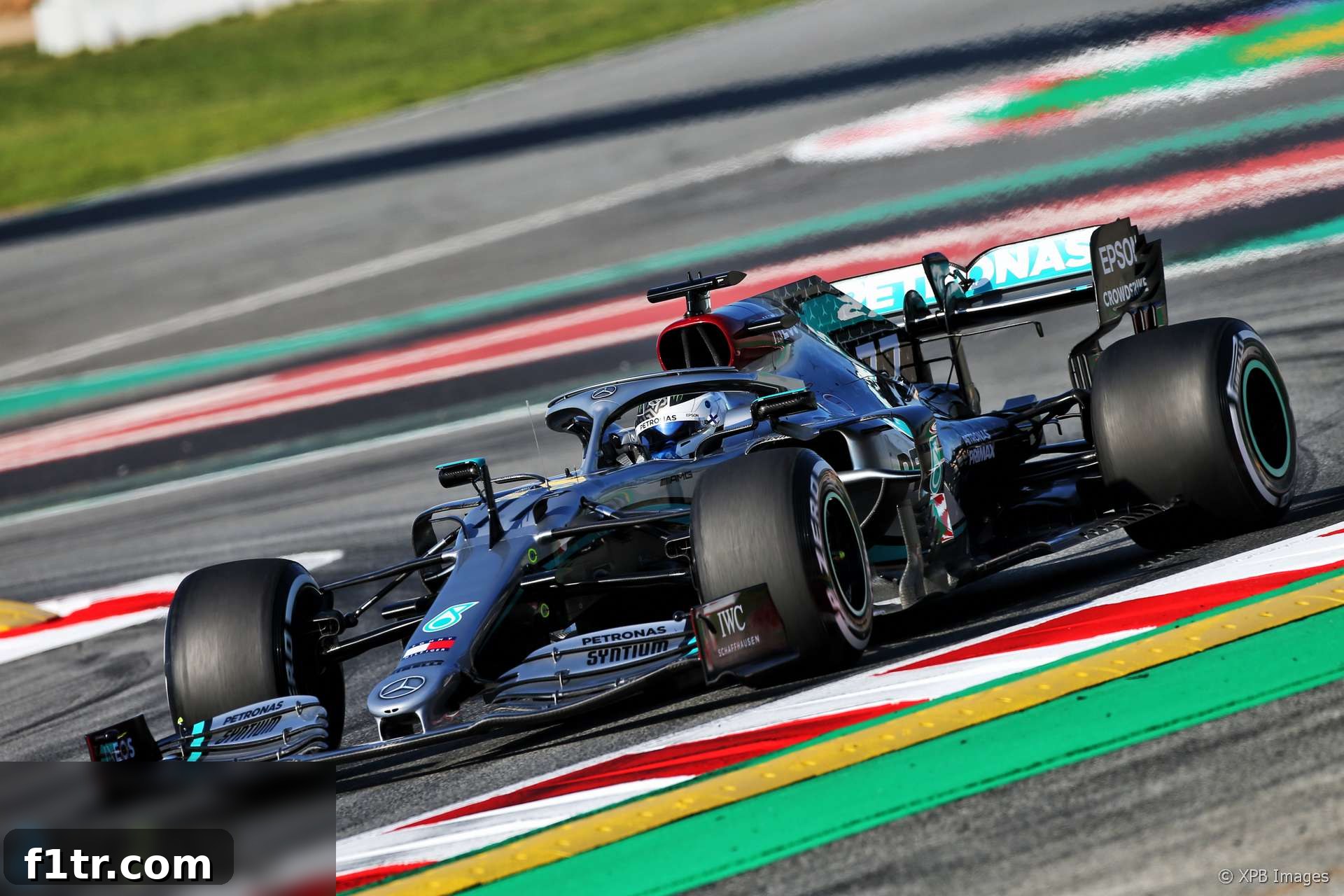
The dawn of a new Formula 1 season always brings with it a surge of anticipation, and the initial four hours of pre-season testing at the iconic Circuit de Catalunya in Barcelona provided a thrilling glimpse into what might unfold. As the morning session concluded, the stopwatch revealed an incredibly tight battle at the top, with Valtteri Bottas and Sergio Perez separated by a mere six hundredths of a second. This incredibly narrow margin set the tone for what promises to be a fiercely competitive 2020 F1 season, showcasing the meticulous engineering and driver prowess already at play.
The first day of official pre-season testing serves as a crucial benchmark for all teams, offering the initial opportunity to assess their new challengers on track. For fans and analysts alike, it’s a moment of both excitement and guarded optimism, as lap times and lap counts provide the first tangible data points after months of development. While outright pace is rarely the primary objective in these early stages, the consistency and initial performance of the cars offer valuable insights into their potential and the efficacy of their design philosophies.
Among the standout performers of the morning was Sergio Perez, who made an encouraging start for Racing Point. The team unveiled their striking new RP20 challenger for the first time as the test commenced, alongside Renault who also presented their RS20. Racing Point’s early pace, particularly in the hands of Perez, hinted at a significant step forward for the Silverstone-based squad. Their strong showing right out of the gate suggests a car that is not only reliable but also possesses inherent speed, a critical combination for success in the intensely competitive midfield. Both teams, like many others, are aiming to consolidate their positions and challenge higher up the grid, making the early performance metrics from testing particularly scrutinized.
While outright speed grabbed headlines, sheer mileage was equally, if not more, important for teams collecting crucial data. Red Bull’s Max Verstappen emerged as the busiest driver of the morning, logging an impressive 91 laps in his new, Honda-powered RB16. This high lap count underscores Red Bull’s clear focus on reliability and understanding the nuanced characteristics of their latest machinery. The partnership with Honda has been steadily gaining momentum, and a trouble-free run like Verstappen’s demonstrates the growing strength and dependability of their power unit and chassis integration. For a team with championship aspirations, maximizing track time is paramount to fine-tuning the car and exploring its limits before the season officially begins.
A remarkable aspect of the morning’s running was the impressive reliability demonstrated by all ten teams. Every driver completed at least 50 laps at the home of the Spanish Grand Prix, a testament to the robust engineering and meticulous preparation undertaken during the winter break. The session was largely devoid of significant stoppages, allowing teams to progress through their initial test programmes without major interruptions. This smooth start is a welcome sight for the sport, indicating a high level of technical readiness across the grid. The only minor hiccup observed was Daniil Kvyat’s AlphaTauri, which briefly required a push back to the garage after a stuttering getaway from his pit box. Despite ending the morning session at the bottom of the timesheets, his gap to Bottas’s best time was a mere 1.1 seconds. This marginal difference, particularly in early testing where teams are not exploring the absolute limits of their cars, highlights the competitive nature of the field and the latent potential in even the slowest cars at this stage.
Mercedes, ever the meticulous operators, stuck to their customary testing schedule. After setting the benchmark pace, Valtteri Bottas, who had already completed more than a 66-lap race distance in his potent W11, gracefully handed over the driving duties to his illustrious teammate, Lewis Hamilton, for the afternoon session. This strategic division of labour allows both drivers to gain valuable feedback on the new car, ensuring a comprehensive understanding of its behaviour across different conditions and setup configurations. Mercedes’ seamless transition and immediate front-running pace signaled their strong intent for the season, leaving no doubt about their continued dominance.
Meanwhile, Ferrari experienced a somewhat more challenging morning. Charles Leclerc, stepping in for his unwell teammate, Sebastian Vettel, fell slightly short of the leading benchmark, as the Scuderia appeared to suffer a delay in their programmed running at one stage. Adding to the intrigue, Ferrari also deployed several mechanics to block the view into their garage at a certain point. This action, a consequence of the new regulations banning the use of screens to hide their cars, underscores the intense secrecy surrounding development and the ongoing competitive espionage in Formula 1. Teams are constantly striving to gain an edge, and even a brief glimpse into a rival’s garage can yield invaluable information, making these protective measures a common sight during testing.
Perhaps one of the most significant and heartening stories of the morning came from Williams. The British outfit was the first team to hit the track when the test began, making a clear and resounding statement about their readiness for the new season. This was a stark contrast to their challenging 2019 campaign, where they famously failed to have their car ready for the start of testing, putting them on the back foot from the outset. The sight of the FW43 rolling out promptly was a powerful symbol of their renewed determination and improved operational efficiency. Deputy team principal Claire Williams articulated the immense effort involved, stating, “The entire team at Grove have worked tirelessly over the winter to get the FW43 ready for when the lights went green in Barcelona today.”
The dedication of the Williams team bore fruit in tangible ways on track. Only Bottas and Verstappen completed more laps than George Russell managed in the FW43 during the morning session. This high mileage for Russell not only speaks volumes about the car’s newfound reliability but also about the team’s commitment to gathering data and making progress. Claire Williams further emphasized this strategic shift: “We have spent a significant amount of time and resource analysing our weaknesses over the past 12 months so that we can make progress in 2020 and beyond and I know everyone in the team will have been delighted to see their car out on track today.” This renewed focus and visible improvement instill a sense of optimism for Williams as they aim to climb back up the grid after a period of struggle, proving that perseverance can indeed lead to positive change.
2020 Pre-Season Test Day One Morning Lap Times
| Pos. | Car number | Driver | Team | Model | Best time | Gap | Laps | Tyres |
|---|---|---|---|---|---|---|---|---|
| 1 | 77 | Valtteri Bottas | Mercedes | W11 | 1’17.313 | 78 | C3 | |
| 2 | 11 | Sergio Perez | Racing Point | RP20 | 1’17.375 | 0.062 | 58 | C3 |
| 3 | 33 | Max Verstappen | Red Bull | RB16 | 1’17.787 | 0.474 | 91 | C2 |
| 4 | 55 | Carlos Sainz Jnr | McLaren | MCL35 | 1’18.001 | 0.688 | 64 | C2 |
| 5 | 31 | Esteban Ocon | Renault | RS20 | 1’18.004 | 0.691 | 59 | C3 |
| 6 | 63 | George Russell | Williams | FW43 | 1’18.168 | 0.855 | 73 | C3 |
| 7 | 16 | Charles Leclerc | Ferrari | SF1000 | 1’18.289 | 0.976 | 64 | C3 |
| 8 | 88 | Robert Kubica | Alfa Romeo | C39 | 1’18.386 | 1.073 | 57 | C3 |
| 9 | 20 | Kevin Magnussen | Haas | VF-20 | 1’18.466 | 1.153 | 52 | C3 |
| 10 | 26 | Daniil Kvyat | AlphaTauri | AT01 | 1’18.484 | 1.171 | 53 | C3 |
Analyzing the lap times from the morning session provides a fascinating, albeit early, snapshot of the pecking order. Valtteri Bottas’s leading time of 1’17.313 on C3 tires showcased the raw speed of the Mercedes W11. Hot on his heels, Sergio Perez’s 1’17.375 also on C3 tires, underscored Racing Point’s unexpected early form. Max Verstappen, despite using the harder C2 compound, secured third with a 1’17.787, indicating strong underlying pace for the Red Bull. The C2 and C3 tire compounds represent medium and soft options respectively, with C3 being theoretically faster, making Bottas and Perez’s times particularly noteworthy. Carlos Sainz Jnr for McLaren also showed promising pace, further solidifying the highly competitive nature of the midfield battle.
The first morning of the 2020 F1 pre-season testing at Circuit de Catalunya delivered a captivating blend of speed, reliability, and intrigue. While it is always cautioned that testing results are not fully indicative of race-day performance, the seamless operations, high lap counts, and incredibly close timings at the top have set a high bar for the season ahead. Teams will continue to fine-tune their machines and push the boundaries throughout the remaining test days, as they prepare for what promises to be an enthralling championship battle.
2020 F1 season
- Grosjean to make F1 test return tomorrow for first time since Bahrain horror crash
- Pictures: Wrecked chassis from Grosjean’s Bahrain fireball crash to go on display
- Bottas vs Rosberg: Hamilton’s Mercedes team mates compared after 78 races each
- F1 revenues fell by $877 million in Covid-struck 2020 season
- Hamilton and Mercedes finally announce new deal for 2021 season
Browse all 2020 F1 season articles