Aston Martin F1: A Season of Unprecedented Growth and Strategic Realism
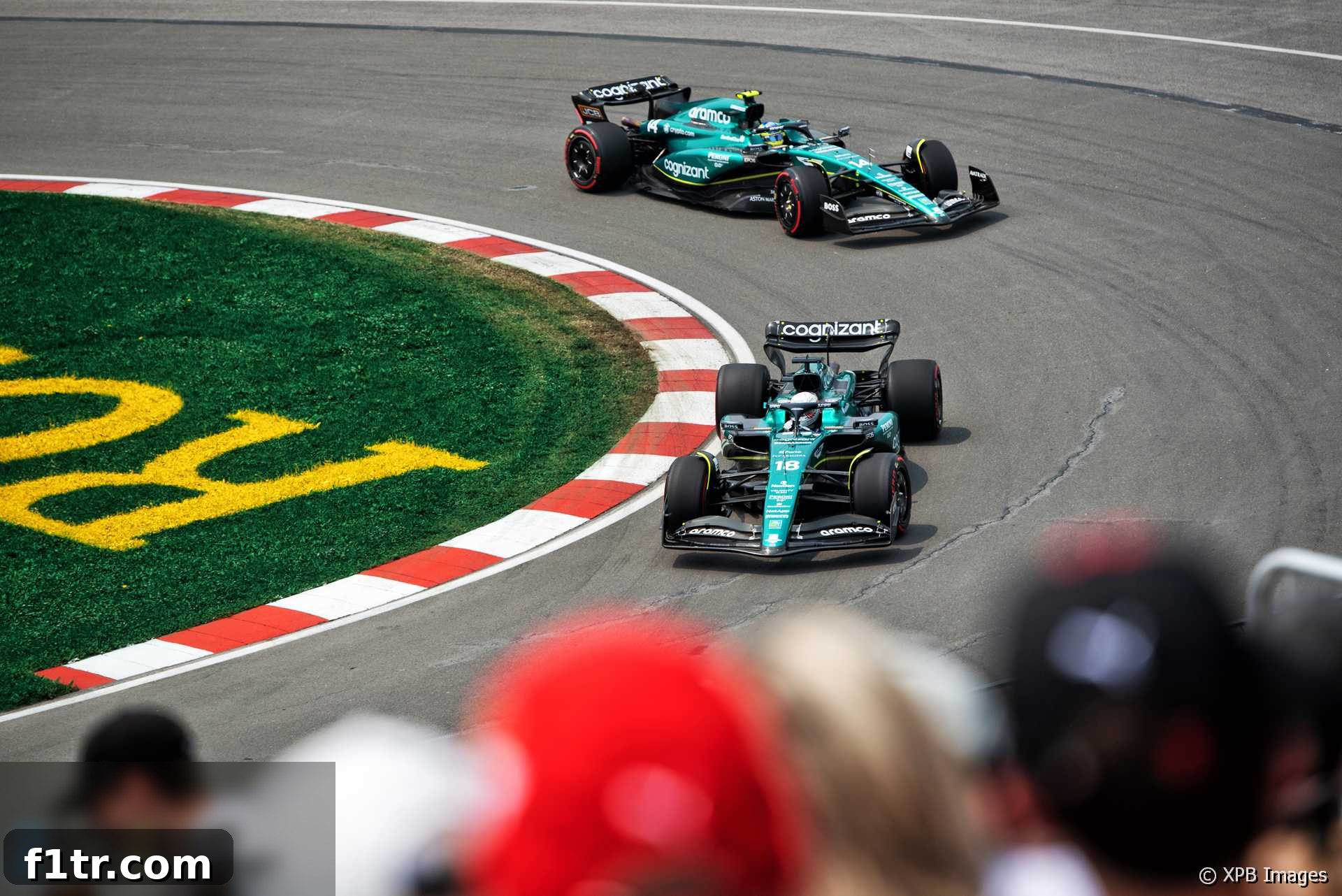
The 2023 Formula 1 season saw Aston Martin rise as one of the sport’s most compelling narratives. From a modest seventh-place finish in the 2022 constructors’ championship, the Silverstone-based team achieved an astonishing surge, consistently challenging at the front and securing multiple podium finishes in the early rounds. This remarkable transformation ignited hopes of a sustained challenge at the pinnacle of motorsport. However, as the season progressed, the intense developmental race saw the team eventually settle into a respectable fifth position by the year’s end. Despite this shift from early-season glory, Aston Martin’s leadership firmly asserts that the final standing is not a source of disappointment but rather a testament to a season of profound learning and strategic advancement.
The Meteoric Ascent: Early Season Dominance
The dawn of the 2023 campaign presented an Aston Martin team rejuvenated and ready to challenge the established order. With the seasoned prowess of two-time world champion Fernando Alonso joining their ranks, coupled with the determined efforts of Lance Stroll, the team’s AMR23 challenger proved to be an instant sensation. From the opening race in Bahrain, Aston Martin consistently defied expectations, showcasing impressive pace and strategic acumen. Their performance was a revelation, leading them to hold a commanding second place in the constructors’ championship for an extended period, a feat that captured the imagination of fans and pundits alike.
The initial phase of the season was marked by a string of spectacular performances, particularly from Alonso, who secured six podiums in the first eight races. This early success was not merely a stroke of luck but a result of significant investment in infrastructure, talent, and a meticulously crafted car design that maximized the new aerodynamic regulations. The team’s immediate competitiveness underscored their ambition to transition from a midfield contender to a championship challenger, setting an exhilarating tone for what promised to be a truly historic season.
Navigating the Competitive F1 Landscape: The Mid-Season Shift
While the early season showcased Aston Martin’s formidable capabilities, Formula 1’s relentless developmental arms race quickly began to alter the landscape. As rival teams, notably Mercedes, Ferrari, and McLaren, poured resources into their own car development throughout the season, they began to close the gap and eventually surpass Aston Martin. The intense pressure to continuously innovate and upgrade components became a defining factor, testing the limits of every team’s engineering prowess and financial might.
Aston Martin maintained their second-place standing in the constructors’ championship until the Spanish Grand Prix, a pivotal moment where Mercedes overtook them. Subsequently, Ferrari and then McLaren, particularly in the later rounds, also demonstrated superior development trajectories, pushing Aston Martin down the order. By the chequered flag of the final race, the team found themselves in fifth position. This mid-season recalibration served as a stark reminder of the ever-evolving nature of Formula 1, where sustained success demands not only initial brilliance but also the capacity for continuous, aggressive development against formidable competitors.
Mike Krack’s Pragmatic Perspective: Beyond the Numbers
When questioned about whether the fifth-place finish represented a disappointment given their sensational start, Team Principal Mike Krack offered a response rooted in pragmatism and long-term vision. He articulated a perspective that prioritizes realistic self-assessment over transient results. “It’s not a disappointment, because you need to be realistic about where you are,” Krack stated, emphasizing the importance of understanding the underlying factors behind their performance fluctuations.
Krack further explained that the team had always maintained a clear understanding of its position within the competitive hierarchy. He candidly admitted to being “surprised – and I think everybody was surprised – that some teams were not coming out of the starting blocks as we have expected.” This acknowledgment highlights the context of their early success, suggesting that it was partly aided by the initial struggles of some larger, more established teams. As these rivals inevitably found their stride through targeted development, Krack noted, they returned to their “more natural position.” For Aston Martin, this understanding is crucial. It underscores that while their early performance was exceptional, their long-term trajectory must account for the formidable resources and capabilities of their competitors. The season, in Krack’s view, revealed areas for improvement for the future, but it was far from a setback or a reason for despondency.
Tom McCullough’s Data-Driven Philosophy: Understanding Over Results
Echoing Krack’s sentiment, Performance Director Tom McCullough further elaborated on Aston Martin’s internal philosophy, which he describes as “brutal with ourselves.” McCullough emphasized that the team operates with an “understanding-led” approach rather than being “results-led.” This distinction is fundamental to their developmental strategy, asserting that an over-reliance on race results can obscure the deeper insights required for genuine progress in the complex world of Formula 1.
Being “understanding-led” means meticulously dissecting every aspect of performance, regardless of the outcome. McCullough provided the Australian Grand Prix as a prime example. Despite Fernando Alonso and Lance Stroll finishing an impressive third and fourth, securing the team’s biggest points haul of the season, McCullough pointed out, “we were clearly the fourth-fastest team at that circuit with those characteristics.” This frank assessment demonstrates their commitment to objective self-evaluation. For Aston Martin, a high finishing position that doesn’t reflect true car performance is merely a temporary gain; the real value lies in understanding *why* that result occurred and identifying where the car truly stands against its rivals. This rigorous, post-race analysis forms the bedrock of their continuous development cycle.
The Relentless Pursuit of Excellence: Continuous Development in F1
The “understanding-led” mantra extends to every facet of Aston Martin’s operations, particularly in the relentless pursuit of car development. In Formula 1, stagnation is not an option; every race weekend is a critical data-gathering exercise. As McCullough articulated, “It doesn’t matter what result we’ve got, it’s ‘where were we good? Where were we bad? What do we need to work around?’.” This philosophy drives a culture of continuous improvement, where every data point, every lap time, and every driver feedback loop is meticulously analyzed to inform future design and engineering decisions.
The team’s focus on granular detail and a willingness to confront difficult truths about their performance underscores a mature approach to F1 competition. Rather than celebrating fleeting successes, Aston Martin prioritizes a deep dive into car characteristics, tire degradation, aerodynamic efficiency, and strategic execution. This ongoing analytical process is essential for identifying weaknesses, optimizing strengths, and ensuring that future updates genuinely enhance the car’s overall package. It’s a marathon, not a sprint, and every post-race debrief is a step towards building a truly championship-contending machine.
Building for the Future: Aston Martin’s Long-Term Vision
Aston Martin’s philosophical stance on their 2023 season is entirely consistent with their ambitious long-term vision for Formula 1. Under the leadership of Executive Chairman Lawrence Stroll, the team has invested massively in state-of-the-art facilities, including a new factory and wind tunnel in Silverstone, alongside a significant recruitment drive for top engineering talent. This commitment signifies a dedication to becoming a front-running team, not just for a single season, but for years to come.
The lessons learned from the 2023 season, particularly the challenges faced in maintaining a development pace against larger manufacturers, are invaluable. They provide concrete data and insights that will shape the design of future cars and the strategic allocation of resources. The “no disappointment” stance reflects a profound belief in their ongoing process and their trajectory. It suggests that every season is a foundational block in a much grander structure, and setbacks, or rather, realignments, are simply part of the journey towards ultimate success. For Aston Martin, 2023 was a pivotal year of growth, demonstrating their potential and refining their approach to becoming a consistent force at the sharp end of the grid.
Conclusion: A Stepping Stone to Greater Heights
In summation, Aston Martin’s 2023 Formula 1 season, despite concluding in fifth place after an electrifying start, is viewed internally as a significant triumph rather than a disappointment. The team’s journey from midfield obscurity to podium regular, even if not sustained throughout the entire year, showcased immense progress and capability. Under the pragmatic leadership of Mike Krack and the data-driven precision of Tom McCullough, Aston Martin has demonstrated a clear understanding of the demanding F1 environment. Their commitment to an “understanding-led” philosophy, prioritizing deep analysis and continuous improvement over mere results, positions them strongly for future challenges. The 2023 season serves not as an endpoint, but as a crucial stepping stone, providing invaluable insights and solidifying Aston Martin’s strategic path towards achieving their ultimate ambition of becoming Formula 1 world champions.
Formula 1
- One of F1’s greatest races ever happened 15 years ago today. Or did it?
- “Overtaking is overtaking”: Domenicali denies F1’s yo-yo racing is “artificial”
- The crashes F1 is trying to prevent may be rare – but the danger is obvious
- F1 returning to India soon after 2027 sounds like wishful thinking
- Verstappen loathes F1’s new generation of cars – but what do his rivals reckon?
Browse all Formula 1 articles