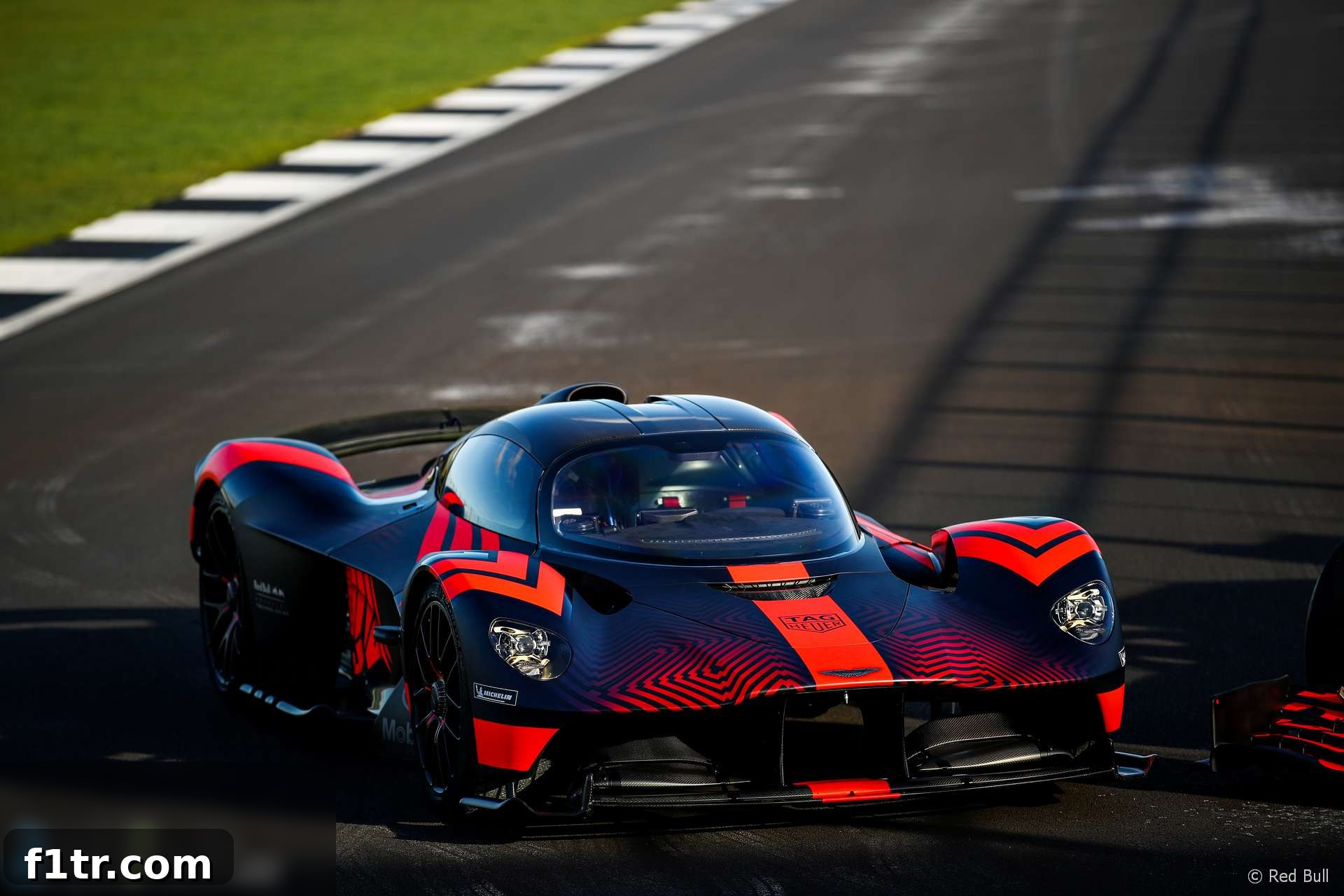
Aston Martin Puts Valkyrie WEC Program on Hold Amidst Motorsport Reshuffle
Aston Martin has officially announced the postponement of its highly anticipated program to campaign the Valkyrie hypercar in the World Endurance Championship (WEC). This strategic pivot marks a significant development for both the luxury automotive manufacturer and the pinnacle of global endurance racing, coming at a crucial juncture for both entities.
In a detailed statement released on Wednesday, Aston Martin cited the recent decision by motorsport’s governing bodies, the Automobile Club de l’Ouest (ACO) and the International Motor Sport Association (IMSA), as the primary catalyst for their revised plans. The move by the ACO and IMSA to harmonize the top-tier Hypercar class with the newly introduced LMDh (Le Mans Daytona h) prototype category has reshaped the landscape of elite sportscar racing. This regulatory alignment is set to take effect in the WEC from 2021 and extend to the US-based WeatherTech Sportscar Championship from 2022, creating a unified global platform for manufacturers. However, for Aston Martin, this harmonization presented unforeseen challenges to the Valkyrie’s designed path.
The Valkyrie project represented an audacious commitment from Aston Martin to return to the highest echelons of endurance racing, a discipline where the brand holds a storied history. The program had meticulously laid out plans for the 2020-21 WEC season, with two Valkyrie hypercars slated to enter the championship. Key partners in this ambitious endeavor included Multimatic, a renowned name in automotive engineering responsible for producing the Valkyrie’s advanced chassis, and R-Motorsport, a team with prior experience managing Aston Martin’s DTM campaign. Their combined expertise was poised to launch Aston Martin into direct competition at tracks like Silverstone, where the season was originally scheduled to commence in August.
David King, President of Aston Martin Racing, articulated the strategic rationale behind the postponement. “With such momentous change taking place in sportscar racing, the decision to pause our entry into the WEC Hypercar class gives us the time and breathing space to calmly assess the status of the top level of the sport, and our place within it,” King stated. This reflection underscores the profound impact of the regulatory shift, which fundamentally altered the technical and competitive parameters under which the Valkyrie was initially conceived to race. The harmonisation effectively introduced a new paradigm, necessitating a complete re-evaluation of Aston Martin’s competitive strategy and investment in the WEC program.
A Strategic Shift: The Lawrence Stroll Factor
This announcement is inextricably linked to a pivotal corporate development for Aston Martin. Last month, Lawrence Stroll, the Canadian billionaire and owner of the Racing Point Formula 1 team, acquired a significant 20% equity stake in the luxury car manufacturer. This substantial investment heralds a new era for Aston Martin, with a clear and ambitious direction for its motorsport endeavors. Commencing next year, Racing Point is set to transform into a full factory-backed Aston Martin F1 project, marking a triumphant return for the brand to the pinnacle of single-seater racing. This reorientation of motorsport priorities, with a heavy emphasis on Formula 1, inevitably prompted a re-assessment of other high-profile racing commitments, including the costly and technically demanding WEC Hypercar program.
The synergy between Formula 1 and endurance racing, while present, often demands distinct technical approaches and resource allocation. With the company’s focus now firmly set on establishing a competitive presence in F1, the resources, both financial and engineering, previously earmarked for the WEC Valkyrie effort are likely being redirected. Stroll’s vision for Aston Martin’s motorsport future appears to be centrally focused on leveraging the global platform of Formula 1 to enhance brand prestige and technological development, a strategy that arguably offers a more direct and potent return on investment for a luxury automotive brand than a standalone WEC program under newly evolving regulations.
The Valkyrie’s Pedigree and Lost Potential
The Valkyrie hypercar itself is a testament to extraordinary automotive engineering, a collaborative masterpiece born from Aston Martin’s vision and the unparalleled aerodynamic expertise of Red Bull Advanced Technologies. Red Bull, a key partner in the Valkyrie’s development, recently showcased the car’s raw performance for the first time in a thrilling demonstration at Silverstone. With two of Formula 1’s brightest stars, Max Verstappen and Alexander Albon, at the wheel, the Valkyrie demonstrated its incredible capabilities, underscoring the immense potential that would have been unleashed on the WEC grid. This high-speed display followed earlier, lower-speed demonstration runs, including a memorable appearance at last year’s British Grand Prix, which had only intensified anticipation for its WEC debut.
The Valkyrie was designed as a true hypercar, pushing the boundaries of road-legal performance with technology derived directly from Formula 1. Its advanced hybrid powertrain and revolutionary aerodynamics made it a formidable contender under the original Hypercar regulations. However, the introduction of the LMDh platform, which is based on existing LMP2 chassis and features spec hybrid systems, offers a more cost-effective entry point for manufacturers. While this move aims to attract a broader array of marques to the top class of endurance racing, it also fundamentally changes the performance envelope and competitive philosophy. For a bespoke, ultra-high-performance machine like the Valkyrie, designed without compromise, adapting to or competing effectively against the LMDh cars under a Balance of Performance (BoP) system presented a new and perhaps unpalatable challenge for Aston Martin.
WEC’s Ongoing Challenges and the Future Landscape
Aston Martin’s decision comes as a significant blow to the World Endurance Championship, which has been grappling with a period of transition and uncertainty regarding its premier category. The championship had pinned considerable hopes on its new technical regulations, specifically the Hypercar class, to attract a fresh wave of manufacturer interest and revitalize the competition at the top. The goal was to create a diverse grid featuring both bespoke hypercars and the new LMDh prototypes, fostering a vibrant era of innovation and fierce competition, particularly at iconic events like the Le Mans 24 Hours.
The withdrawal of Aston Martin follows closely on the heels of another concerning development for the WEC. Just last week, Rebellion Racing, a stalwart of the LMP1 privateer ranks and a team that had announced a future cooperation with Peugeot for their return to the championship in 2022, declared its complete withdrawal from motorsport after this year’s Le Mans 24 Hours. The cumulative effect of these announcements places the WEC in a precarious position, intensifying the pressure on the ACO and IMSA to deliver on their promise of a robust and appealing unified top class. While the LMDh platform has garnered commitments from other major manufacturers, the loss of a revered marque like Aston Martin, with a project as exciting as the Valkyrie, leaves a void that the championship will undoubtedly strive to fill.
The WEC’s journey to define its future top class has been fraught with challenges, from the high costs associated with LMP1 prototypes to the subsequent efforts to create a more sustainable and attractive environment for manufacturers. The harmonisation with LMDh is seen as a crucial step towards this goal, aiming to reduce development costs and increase competitive parity. However, it also means that projects like the Aston Martin Valkyrie, which represented the pinnacle of pure hypercar engineering, might find it challenging to integrate seamlessly or justify the investment within the new regulatory framework. The endurance racing world now watches intently to see how the WEC navigates these waters, and which manufacturers will step forward to shape the next chapter of this iconic sport.
For Aston Martin, the focus shifts. While the Valkyrie’s WEC dreams are on hold, its technological prowess and engineering excellence will undoubtedly find other avenues for expression, potentially in bespoke track-only variants or as a halo car for the brand’s renewed Formula 1 assault. The luxury marque is embarking on a bold new chapter, prioritising its F1 commitment and recalibrating its motorsport strategy to align with its broader corporate ambitions under Lawrence Stroll’s leadership. The endurance racing community, meanwhile, will continue to adapt to a rapidly changing landscape, hoping that the unified rules ultimately usher in an era of sustained manufacturer interest and exhilarating competition.
World Endurance Championship
- WEC cancels its Qatar season-opener due to US-Iran war
- Porsche to end WEC Hypercar programme after just three seasons
- Mercedes won’t return to Le Mans because “we don’t like Balance of Performance” – Wolff
- “Luck” needed to win Le Mans because of Balance of Performance – Verstappen
- McLaren finally confirms it will enter the World Endurance Championship in 2027
Browse all World Endurance Championship articles