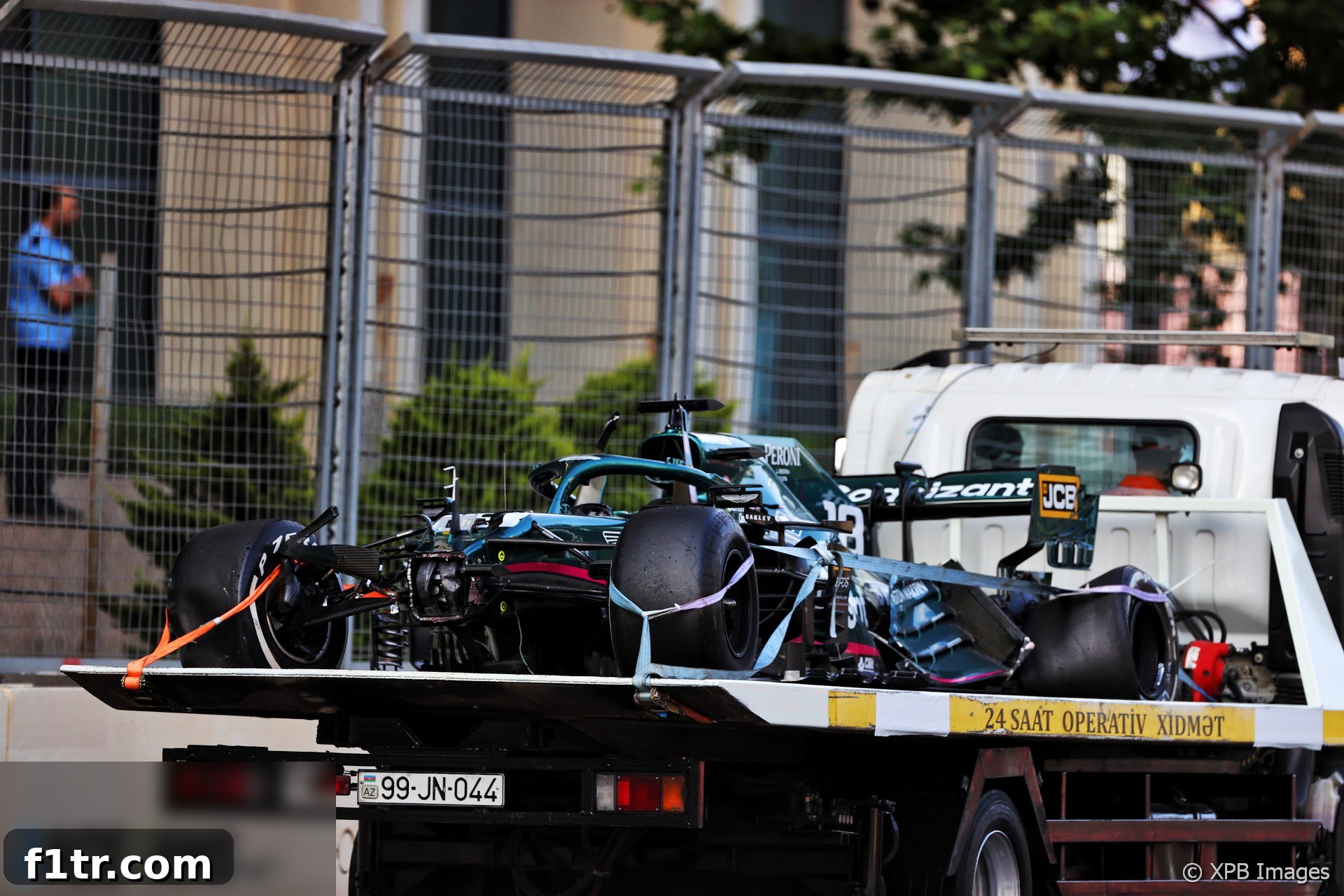
The exhilarating world of Formula 1, renowned for its cutting-edge technology and relentless pursuit of speed, faced a moment of profound concern during the Azerbaijan Grand Prix. The Baku City Circuit, known for its high-speed straights and challenging corners, became the scene of two dramatic tyre failures that sent shockwaves through the paddock. Aston Martin and Red Bull, two prominent teams, found themselves at the centre of an intense investigation by Pirelli, the sport’s sole tyre supplier, and the FIA.
The incidents, which led to the retirement of both Lance Stroll’s Aston Martin and Max Verstappen’s Red Bull, ignited a crucial discussion about tyre integrity, safety protocols, and the interpretation of technical regulations. As the dust settled and the investigations commenced, both teams swiftly affirmed their adherence to Pirelli’s stringent operating parameters, setting the stage for a detailed examination of what truly transpired on the high-stakes streets of Baku.
Dramatic Tyre Failures Rock the Azerbaijan Grand Prix
Advert | Become a Supporter & go ad-free
The Azerbaijan Grand Prix was poised for an exciting conclusion when, on lap 29, Lance Stroll’s Aston Martin suffered a catastrophic left-rear tyre failure while traveling at immense speed down the main straight. The sudden delamination pitched his car violently into the wall, thankfully without serious injury to the driver, but ending his race immediately. The incident was alarming, yet few could have predicted that a similar fate awaited another front-running contender just laps later.
Sixteen laps after Stroll’s dramatic exit, Max Verstappen, who was comfortably leading the race, experienced an almost identical left-rear tyre failure. His Red Bull RB16B, too, slammed into the barrier on the very same main straight, forcing his retirement from a seemingly certain victory. The consecutive incidents involving two different teams, both suffering from the same type of tyre failure in remarkably similar circumstances, raised immediate and serious questions. Was it a manufacturing defect? Was it debris on the track? Or was there a more complex underlying issue related to how the tyres were being operated?
The safety implications were paramount. High-speed tyre failures are among the most dangerous occurrences in motorsport, and the F1 community held its breath, awaiting a thorough and transparent investigation by Pirelli and the FIA.
Pirelli’s Investigation Unveils Critical Findings
Following the alarming events in Baku, Pirelli, as the exclusive tyre supplier to Formula 1, launched an immediate and comprehensive investigation. Their remit was clear: to ascertain the precise causes of the catastrophic tyre failures that impacted both the Aston Martin and Red Bull cars. This investigation involved a meticulous examination of the failed tyres, along with numerous other samples collected throughout the race weekend, and a detailed analysis of the operational data provided by the teams and the FIA.
After a thorough review, Pirelli issued a definitive statement that shed significant light on the incidents. The company unequivocally declared that the tyre failures were not attributable to production defects or material fatigue. This was a crucial finding, as it ruled out widespread manufacturing issues that could potentially compromise the safety of all teams. Instead, Pirelli concluded that the failures were a consequence of the tyres being operated outside the prescribed parameters.
Crucially, Pirelli stated that both teams had followed the “prescribed starting parameters” for minimum tyre pressure and blanket temperatures. This nuance was vital. While teams adhered to the *starting* parameters, the dynamics of a race, combined with specific operational strategies, could lead to tyre pressures deviating during running. This suggested a complex interplay between initial setup, on-track performance, and the inherent characteristics of the tyres.
The findings, while exonerating Pirelli from manufacturing fault, immediately shifted the focus towards how teams manage their tyres throughout a race, particularly concerning pressure management under various load and temperature conditions. This clarification from Pirelli laid the groundwork for further regulatory action and emphasized the constant challenge of balancing performance optimization with stringent safety requirements in Formula 1.
Teams Maintain Stance: Full Compliance Assured
In the immediate aftermath of Pirelli’s findings, both Red Bull Racing and Aston Martin issued strong statements reaffirming their unwavering commitment to all regulatory guidelines. Red Bull, whose championship leader Max Verstappen lost a potential victory due to the failure, was quick to assert that they had “adhered to Pirelli’s tyre parameters at all times.” This public declaration underscored the team’s confidence in its operational procedures and its insistence on operating within the boundaries set by the tyre supplier.
Aston Martin followed suit with a similar statement, further emphasizing their stringent adherence to safety and compliance. “Following the tyre issue on Lance Stroll’s car on lap 29 of the Azerbaijan Grand Prix, we have worked with the FIA and Pirelli during their investigation,” the team stated. “We can confirm there was no car fault that caused the tyre to fail. The team has always operated its tyres within the Pirelli prescribed parameters and will continue to do so.”
These parallel declarations from both teams highlighted a critical juncture in the ongoing dialogue surrounding tyre safety and technical regulations in Formula 1. While Pirelli identified that the failures stemmed from operational parameters, the teams maintained they were operating within the established rules. This apparent disconnect hinted at a deeper issue related to the enforcement, monitoring, and perhaps the interpretation of the existing tyre guidelines.
The teams’ steadfast insistence on compliance, even as Pirelli pointed to operational factors, underscored the necessity for clearer, more robust, and more enforceable guidelines to prevent a recurrence of such dangerous incidents. It set the stage for the introduction of a revised technical directive, aiming to close any potential loopholes and ensure absolute safety across the grid.
Advert | Become a RaceFans supporter andgo ad-free
The New Technical Directive: Stricter Tyre Management Protocols
The events of Baku, coupled with the differing perspectives from Pirelli and the teams, swiftly prompted the FIA to implement a revised technical directive (TD). This new directive, which came into force ahead of the subsequent French Grand Prix, was designed to introduce significantly stricter parameters for tyre usage and monitoring, ensuring that the tyre failures seen in Azerbaijan would not be repeated. A technical directive in Formula 1 serves to clarify existing rules or introduce new interpretations to address specific issues, and this one was particularly comprehensive.
Enhanced Monitoring of Tyre Pressures and Temperatures
The core of the new TD focused on enhancing the monitoring and enforcement of minimum tyre pressures and blanket temperatures. While teams previously adhered to specified starting parameters, the new directive introduced extensive new rules, including crucial cold pressure checks of the tyres. This was a significant shift, as it aimed to curb any practices where teams might seek to run pressures below the specified minimums once the tyres were on track and heated up.
One of the key concerns addressed by the TD was the suspected practice of “tyre running” or “bleeding.” This involves teams starting with pressures slightly higher than desired, then using various methods (some perhaps exploiting loopholes in temperature measurement or air pressure bleeding mechanisms) to achieve lower, performance-enhancing pressures during a race. Lower tyre pressures can increase the contact patch of the tyre with the track, offering more grip and potentially greater performance, but at the cost of increased stress on the tyre structure and significantly elevated safety risks, especially at high speeds.
Closing Loopholes for On-Track Performance Gain
The new technical directive effectively aimed to close these loopholes. It specified precisely how tyre pressures and blanket temperatures would be checked during all sessions, from practice to qualifying and the race itself. The introduction of cold pressure checks meant that teams could no longer rely on pressures dropping significantly during a run without being detected. This provided a more robust and continuous verification process, ensuring that tyres remained within Pirelli’s safe operating window throughout their usage.
Furthermore, the directive also implicitly addressed specific tactics, such as those reportedly spotted by Lewis Hamilton in Spain, regarding how teams might have been manipulating tyre parameters. By tightening the regulations around measurement and enforcement, the FIA and Pirelli sought to create a level playing field while primarily safeguarding driver safety. The new protocols represented a clear escalation in the oversight of tyre usage, reflecting the seriousness of the Baku incidents and the collective commitment to preventing future recurrences.
Implications for F1 Safety, Performance, and Competition
The events of the Azerbaijan Grand Prix and the subsequent introduction of the new technical directive have far-reaching implications across several critical areas of Formula 1: driver safety, team performance, and the competitive landscape of the championship.
Prioritizing Driver Safety
At the forefront of all discussions is driver safety. The high-speed failures in Baku served as a stark reminder of the inherent dangers in motorsport and the critical role tyres play in maintaining control and integrity. Modern F1 cars generate immense downforce and speeds, placing extraordinary loads on the tyres. Any compromise in tyre integrity at 300+ km/h can have catastrophic consequences. The FIA’s swift action through the new TD underscores an unwavering commitment to minimizing such risks, reinforcing the principle that safety must never be sacrificed for performance.
Impact on Team Performance and Strategy
From a performance perspective, the stricter tyre regulations present a new challenge for all teams. Finding the optimal balance between maximum grip and maintaining tyre integrity within the prescribed parameters is a constant engineering battle. Teams invest heavily in understanding tyre behaviour, thermal management, and pressure dynamics. The new cold pressure checks and increased monitoring mean that teams can no longer push the boundaries as aggressively with tyre pressures. This could lead to a slight reduction in absolute performance for some cars that previously benefited from running lower pressures. It will also require a re-evaluation of setup strategies and potentially a more conservative approach to tyre management throughout a race weekend.
Shifting Competitive Dynamics
The competitive implications are also significant. If certain teams were gaining a performance advantage through clever interpretations or manipulations of tyre pressure rules, the new directive aims to level the playing field. This could potentially alter the competitive order, albeit subtly, as teams adapt to the more stringent compliance requirements. It ensures that all teams are operating under the same, clearly defined conditions, fostering a fairer competition where genuine engineering and driving talent are the primary differentiators, rather than exploiting grey areas in the regulations.
Ultimately, the Baku tyre failures and the subsequent regulatory response highlight the delicate equilibrium that Formula 1 constantly seeks to maintain between pushing technological boundaries and ensuring the safety and fairness of the sport. It’s a testament to the sport’s proactive approach to learning from incidents and continuously evolving its safety standards.
Looking Ahead: Adapting to the New Era of Tyre Management
The introduction of the new technical directive marks a pivotal moment in Formula 1’s ongoing journey to ensure driver safety while maintaining the pinnacle of motorsport competition. As the grid moved from the dramatic streets of Baku to the more conventional circuits, teams faced the immediate challenge of adapting to the revised tyre management protocols.
For Pirelli, the enhanced monitoring allows them to ensure their tyres are operated as designed, reducing the risk of failures caused by external factors beyond their control. This also reinforces their data collection efforts, enabling them to design even more robust and predictable tyres for future seasons, balancing performance characteristics with maximum safety margins.
For the teams, the new era demands increased vigilance and precision in their tyre strategy. Engineers must now work within even narrower operational windows, ensuring that pressures and temperatures remain compliant from the moment the tyres are fitted to the car until the chequered flag. This might involve adjustments to car setups, brake cooling strategies, and pit stop procedures to maintain the tyres in their optimal and safest operating range. The emphasis shifts from potentially exploiting ambiguities to absolute adherence and meticulous control.
The incidents in Azerbaijan served as a stark reminder that even with the most advanced technology, fundamental safety aspects like tyre integrity can never be taken for granted. The collective response from the FIA, Pirelli, and the teams demonstrates Formula 1’s commitment to continuous improvement, ensuring that the spectacle of racing is always underpinned by the highest standards of driver welfare and technical compliance. As the 2021 season progressed and beyond, the lessons learned from Baku have undoubtedly shaped how tyres are managed, monitored, and understood throughout the entire Formula 1 paddock.
2021 F1 season
- Masi ‘basically gifted the championship’ to Verstappen says 2021 FIA steward Sullivan
- Las Vegas race backers looking to extend F1 deal beyond 2025
- Why Mercedes put ‘a reminder of joy and pain’ on display in their factory lobby
- Verdict on error in GT race suggests Mercedes would have lost 2021 Abu Dhabi GP appeal
- Title ‘stolen’ from Mercedes made us ‘underdogs people cheer for’ – Wolff
Browse all 2021 F1 season articles