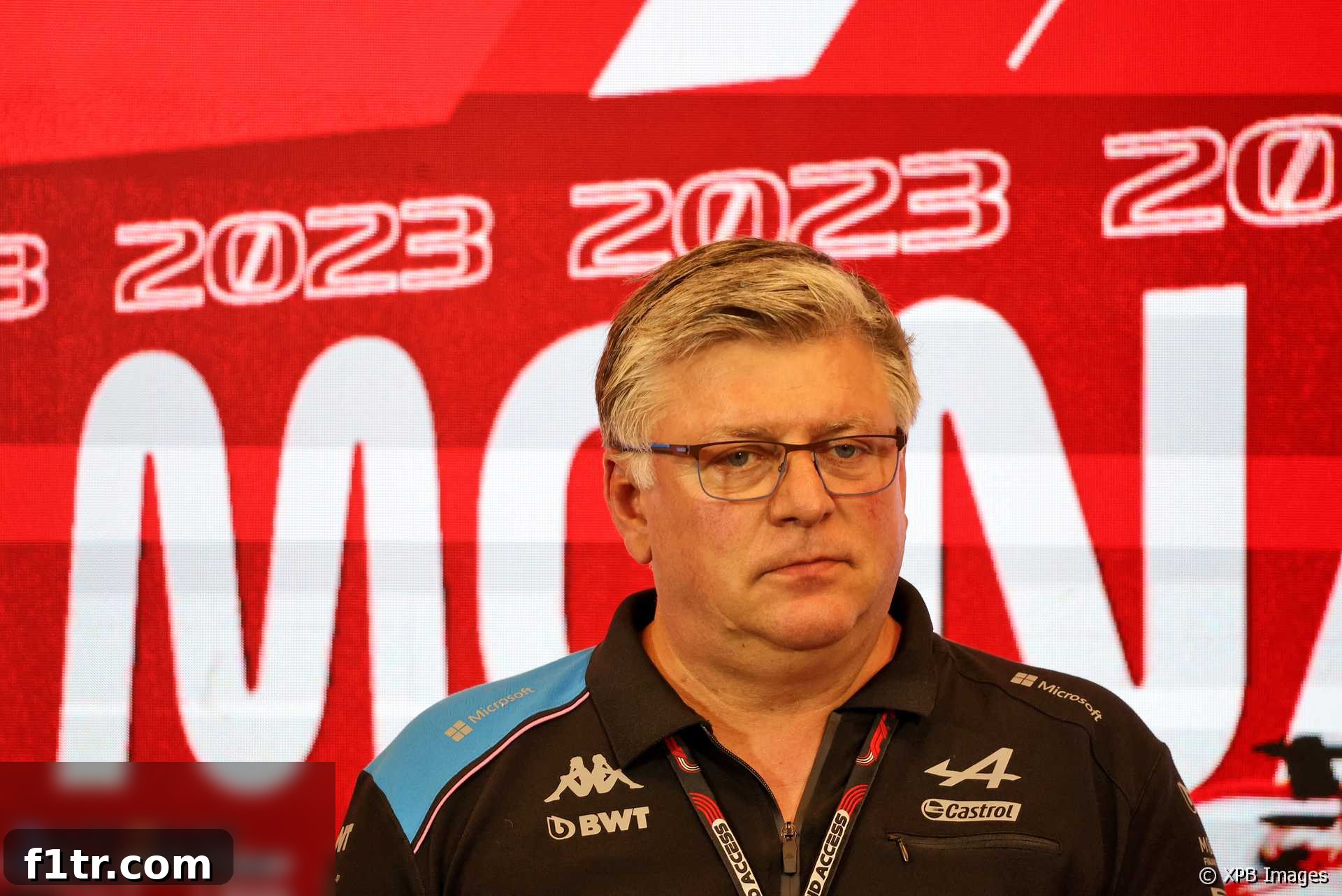
In the high-stakes world of Formula 1, transparency and accountability are paramount. Recently, the Alpine F1 team found itself under intense scrutiny following a series of disappointing performances, culminating in stark public criticism from its own CEO, Laurent Rossi. Team principal Otmar Szafnauer, a veteran of top-tier motorsport, confirmed he learned of Rossi’s scathing remarks – which branded the team’s outings in Bahrain and Azerbaijan as ‘unacceptable’ and ‘amateurish’ – through the media, highlighting a surprising communication dynamic within the French outfit. This unexpected public rebuke has cast a significant spotlight on Alpine’s strategic direction and operational efficiency as they navigate the fiercely competitive landscape of modern Formula 1.
Advert | Become a Supporter & go ad-free
Rossi’s strong words, delivered with a rare degree of candor for a CEO, underscore the immense pressure on Alpine to deliver results. The performances in question were indeed a cause for concern. The season opener in Bahrain proved particularly challenging, marred by a combination of procedural lapses and driver errors that saw Esteban Ocon, despite qualifying ninth, incur a string of penalties. These included an incorrect starting position, a penalty for working on the car during a penalty stop, and exceeding the pit lane speed limit – a trifecta of mistakes that effectively ruined his race and left the team’s aspirations for a strong start in tatters. This operational disarray set an ominous tone for the subsequent races.
The Azerbaijan Grand Prix further exacerbated Alpine’s woes, transforming into what Szafnauer candidly described as a ‘nightmare weekend.’ This event, held on the challenging Baku City Circuit, exposed critical vulnerabilities within the team. Both drivers, Ocon and Pierre Gasly, faced issues ranging from reliability concerns to costly incidents on track. Crashes, mechanical failures, and a general lack of pace plagued their efforts, preventing them from capitalizing on potential points-scoring opportunities. Such a weekend not only harms a team’s championship standing but also severely impacts morale and public perception. The cumulative effect of these poor showings prompted Rossi’s very public condemnation, signaling an urgent need for improvement and a zero-tolerance approach to underperformance.
Addressing the criticism, Szafnauer acknowledged the team’s shortcomings but emphasized that proactive measures were already in motion to rectify the identified issues well before Rossi’s public comments. “In the first races we had a couple of good ones, up and down, and a couple of them that should have gone better,” Szafnauer stated. His management philosophy centers on a rigorous process of self-assessment: “When we make mistakes, or when team members make mistakes, we have to make sure we understand the root cause of those mistakes, and then put countermeasures in place so that we never do them again.” This systematic approach is critical in Formula 1, where marginal gains and error reduction are key to competitive advantage. Identifying the ‘root cause’ involves deep dives into engineering processes, operational protocols, communication channels, and even human factors, requiring a comprehensive organizational review.
Szafnauer also revealed that while Alpine “hit most of our targets – not all of them – over the winter,” achieving all objectives necessitates internal organizational adjustments. These ‘changes are coming,’ he affirmed, hinting at structural or personnel modifications aimed at bolstering the team’s performance. In Formula 1, winter targets typically encompass various aspects, including car performance metrics (aerodynamic efficiency, mechanical grip), reliability benchmarks, and operational readiness. Missing even a few of these crucial targets can have a ripple effect throughout the season, necessitating strategic shifts and resource reallocations to get back on track. The challenge for Alpine now is to implement these changes effectively and swiftly, transforming aspirations into tangible on-track results.
Advert | Become a RaceFans supporter andgo ad-free
However, the modern Formula 1 landscape presents unique challenges for rapid transformation, particularly due to stringent financial and technical regulations. Szafnauer highlighted how the sport’s current framework, including the budget cap and Aerodynamic Testing Restrictions (ATR), limits a team’s ability to implement wholesale changes as quickly as in previous eras. “Changes were in progress already. It just takes time. We all know it’s a huge team effort and we have very, very talented engineers that work really hard within the regulations,” he explained. The budget cap, introduced to level the playing field and ensure financial sustainability, restricts overall spending, meaning teams cannot simply outspend rivals to buy their way to success or pour unlimited resources into R&D when issues arise. This forces a more strategic and efficient allocation of funds.
Furthermore, Aerodynamic Testing Restrictions (ATR) impose strict limits on wind tunnel usage and Computational Fluid Dynamics (CFD) hours. This means teams cannot endlessly experiment with new designs or work longer hours to find solutions. “We’re capped on ATR, we’re capped on how much time we can spend in the tunnel or in CFD. So, it’s not a matter of working harder or working more, like it was in the past,” Szafnauer elaborated. He reminisced about his time at Brawn GP (formerly Honda), where teams could operate multiple wind tunnels simultaneously. “I remember the days of Brawn when I was there, we were running three [wind] tunnels. You can’t run three tunnels anymore.” This shift fundamentally alters development methodology, emphasizing precision, quality, and the strategic deployment of limited resources over sheer volume of effort. Success now hinges on the efficacy of each design iteration and the astute use of restricted testing time.
In this constrained environment, the focus irrevocably shifts from quantity to quality. “So it’s not a matter of quantity. It’s a matter of quality, and getting the right quality takes time, and that’s people,” Szafnauer stressed. This implies that organizational improvements often boil down to refining processes, enhancing skill sets, and, crucially, securing the right talent. Attracting top-tier engineers, strategists, and operational staff and integrating them effectively into an existing structure is a complex, time-consuming endeavor. High-performing individuals are in demand, and bringing them on board, alongside the necessary cultural and procedural adjustments, is a long-term investment. Szafnauer affirmed, “So we’ve got the plans in place, we’re talking to the right people. It just takes time.” This underlines the strategic, patient approach required to elevate a Formula 1 team in the current regulatory climate.
Szafnauer himself joined Alpine as team principal in February of last year, stepping into a role that has seen frequent turnover within the team’s various guises over the past 15 years, a rate of leadership change that surpasses many of its rivals, even Ferrari. Given this history, one might assume Rossi’s strong words would add significant personal pressure. However, Szafnauer, with his extensive experience, appeared unfazed. “Added pressure? Look, it’s Formula 1. We put pressure on ourselves if we’re not winning, we all do,” he asserted. His perspective highlights the inherent, self-imposed pressure that defines motorsport at its pinnacle. Every individual, from the engineers to the drivers and the team principal, is driven by an relentless desire to compete and win. This internal motivation often eclipses any external criticism, serving as the primary impetus for continuous improvement.
Drawing on his quarter-century of experience at a senior level within Formula 1, Szafnauer confidently stated his understanding of the journey ahead for Alpine. “I’ve been there just over a year now and I spent the first six, seven, eight months assessing deeply as to the team, the structure, how it operates, how it functions, the good, the bad, the indifferent, and I have a good understanding,” he explained. His tenure has been dedicated to a thorough appraisal, laying the groundwork for strategic interventions. “I’ve been doing this for 25 years at a very senior level and I know what it takes to move a team from, say, last to fourth or mid-grid to second. So I have an understanding and the plans are in place.” This long-term vision and deep understanding of team development processes are crucial for navigating Alpine through its current challenges and steering it towards its ambitious goals of consistently competing at the front of the grid.
The broader context of Formula 1 further illustrates this pervasive pressure. As Szafnauer succinctly put it, “I think everybody in this room – we don’t have Red Bull here, Red Bull are happy and the rest of us are working hard to catch up.” This statement perfectly encapsulates the current competitive hierarchy: one dominant team enjoying success, while the rest are intensely focused on bridging the performance gap. For Alpine, this means not only addressing internal issues but also accelerating their development curve to challenge established front-runners like Mercedes, Ferrari, and Aston Martin, let alone the formidable Red Bull. The journey to the top in Formula 1 is a marathon, not a sprint, demanding sustained effort, strategic acumen, and an unwavering commitment to excellence.
Ultimately, Alpine’s path forward involves a multifaceted approach, blending meticulous root cause analysis with strategic organizational changes. The limitations of the budget cap and ATR mean that these changes must be highly effective and precisely targeted. It’s a game of quality over quantity, where the right talent and streamlined processes are more valuable than brute force expenditure. While public criticism from the CEO adds a layer of external pressure, Szafnauer’s seasoned perspective reminds us that the intrinsic pressure of Formula 1 itself is the most powerful motivator. The plans are in place, the conversations are happening, but as Szafnauer rightly notes, transforming a Formula 1 team and achieving consistent top-tier performance in this demanding era will inevitably “take time.” The racing world will be watching to see if Alpine can translate these acknowledged plans into tangible progress on track, living up to the high expectations set by its leadership and its passionate fanbase.
Become a RaceFans Supporter
RaceFans is run thanks in part to the generous support of its readers. By contributing £1 per month or £12 per year (or the same in whichever currency you use) you can help cover the costs of creating, hosting and developing RaceFans today and in the future.
Become a RaceFans Supporter today and browse the site ad-free. Sign up or find out more via the links below:
- Become a RaceFans Supporter
- RaceFans Supporter FAQ
Advert | Become a RaceFans supporter andgo ad-free
2023 Monaco Grand Prix
- Mercedes ready to “grind” their way to competitiveness after major W14 update
- Verstappen surpasses Vettel as winner of most races for Red Bull
- How the first team to fit intermediate tyres in Monaco got the call right
- Verstappen’s Monaco pole run was the completion of his 2021 Jeddah lap – Horner
- Haas thrilled as upgrade performance exceeds wind tunnel predictions
Browse all 2023 Monaco Grand Prix articles