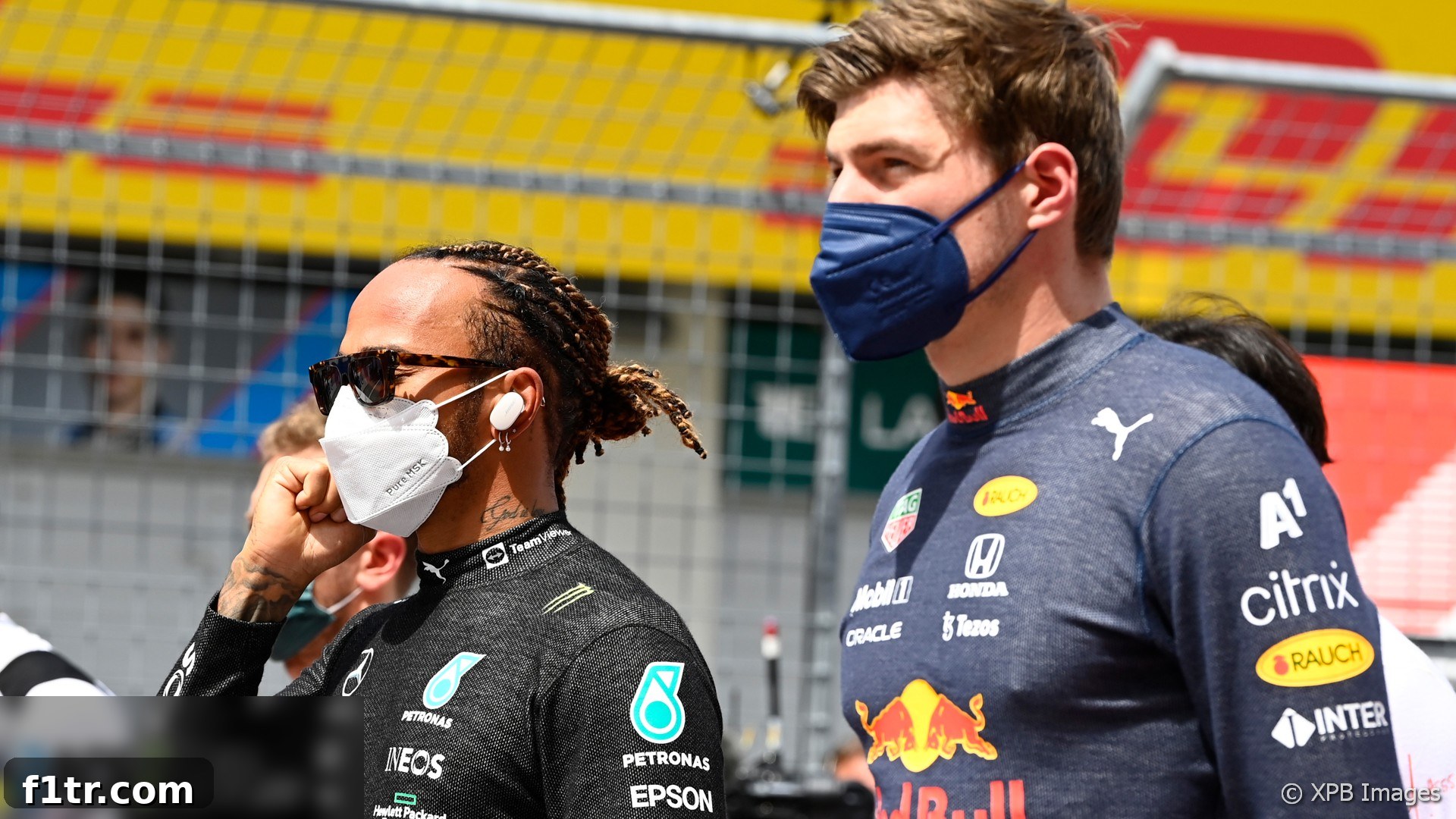
In the high-octane world of Formula 1, championship battles are often defined by intense rivalries, psychological warfare, and on-track drama. The 2021 season epitomizes this perfectly, with the captivating duel between seven-time world champion Lewis Hamilton and Red Bull’s young sensation, Max Verstappen, gripping fans worldwide. Amidst this escalating tension, a seasoned voice from the paddock, two-time world champion Fernando Alonso, has offered a unique perspective, expressing profound empathy for the challenges Verstappen faces as he goes head-to-head with a legend.
Alonso’s insights come at a crucial juncture, particularly in the wake of the highly contentious collision between Hamilton and Verstappen at the British Grand Prix. The aftermath of that incident continued to reverberate through the F1 community, with a visibly frustrated Verstappen reacting angrily during a press conference when repeatedly questioned about the Silverstone crash by the moderator. This incident underscored the immense pressure and scrutiny under which the young Dutch driver operates, a scenario Alonso knows all too well from his own illustrious career.
Advertisement | Become a Supporter & go ad-free
Sponsored Content
Alonso’s Unique Perspective: Understanding Verstappen’s Challenge
Fernando Alonso, a champion who himself succeeded the iconic Michael Schumacher in the mid-noughties and engaged in a fierce intra-team rivalry with Lewis Hamilton during their McLaren days in 2007, possesses an unparalleled understanding of the psychological and competitive pressures inherent in a championship fight. His observations on Verstappen’s current predicament are therefore particularly poignant and insightful.
“I feel probably what the other [is] experiencing now,” Alonso remarked, referring to Verstappen. “Especially Max, because he’s the younger guy fighting with a legend, with a champion. He’s not British so it will be always more difficult for him.” This statement encapsulates several critical aspects of Verstappen’s challenge. Firstly, the dynamic of a younger challenger taking on an established titan of the sport—a narrative that resonates with many classic F1 rivalries. Verstappen is not merely fighting a competitor; he is attempting to dethrone a driver widely considered one of the greatest of all time.
The “not British” comment, while perhaps controversial to some, highlights a subtle yet significant factor in the cutthroat world of F1: perceived national bias and media narrative. While F1 prides itself on its global appeal, the influence of national media and home support can be substantial. In a championship battle involving a British driver like Hamilton, there is often an undeniable swell of local support and, at times, a narrative shaped by British media outlets. Alonso, having competed against Hamilton on British soil and understood the complexities of diverse media landscapes, suggests that this dynamic adds an extra layer of difficulty for Verstappen, potentially impacting public perception and even the scrutiny faced from regulatory bodies.
Lingering Tensions and Hungarian Grand Prix Anticipation
The British Grand Prix collision, which saw Verstappen’s Red Bull crash out of the race while Hamilton went on to win, inflicted a significant blow to Verstappen’s championship lead and ignited a firestorm of debate. The incident not only had immediate consequences for the championship standings but also left a palpable sense of animosity and unresolved tension between the two title protagonists. This simmering rivalry promised to boil over at the next opportunity, making the upcoming Hungarian Grand Prix a focal point of intense anticipation.
Alonso, always one to read the unfolding drama on the track, expressed his intention to exercise caution during the start of the Hungarian Grand Prix. He anticipates further fireworks involving the championship contenders, a prediction rooted in the events of Silverstone and the strategic setup for the Hungaroring race. With Verstappen set to start behind Hamilton but on softer, potentially faster-starting tyres, Alonso suspects a repeat of on-track clashes could very well be on the cards.
Alonso’s Race Strategy: Navigating the Chaos
Lining up ninth on the grid, just one place behind his Alpine team mate Esteban Ocon, Alonso realistically assessed his own prospects for the race. He predicted that “it’s going to be hotter in front of us” at the start, indicating his expectation of aggressive manoeuvres and potential incidents involving the front-runners. Despite the anticipated chaos, Alonso remained optimistic about his team’s ability to gain positions.
“We will try to recover places,” said Alonso. “I think we can.” His confidence was partly based on his starting position on the clean side of the grid, a significant advantage at circuits like the Hungaroring where track conditions can dramatically affect initial acceleration and grip. “It’s one of the circuits that it’s more noticeable starting on the clean side so for sure my wish is to finish a little bit higher in the first lap.”
However, Alonso tempered his optimism with a healthy dose of realism and caution. He stressed the importance of strategic foresight, especially given the various tyre compounds and driver temperaments at play. “But I think we need to be careful because in front of us I think something could happen tomorrow again because we have Max starting on the red [soft] tyre, Lewis on the yellow [medium].” This tyre differential is a classic strategic element in F1, with soft tyres offering superior grip off the line but potentially degrading faster, while medium tyres provide a more balanced approach for longer stints.
The grid composition immediately behind the leading duo further amplified Alonso’s concerns about a dramatic opening lap. “We have Checo [Perez], Gasly also behind them. Norris and Leclerc, which are one of the best starters.” The presence of highly competitive and aggressive drivers like Sergio Perez, Pierre Gasly, Lando Norris, and Charles Leclerc—all known for their strong starts and daring overtakes—creates a perfect storm for potential first-corner incidents. These drivers, hungry for points and podiums, will be looking to capitalize on any opportunity, especially if the Hamilton-Verstappen dynamic leads to early skirmishes.
“So the first corner is going to be a little bit of action and we need to be clever to stay out of any trouble and benefit from whatever happens in front of us. So we want a clean first lap because maybe there are some positions that come for free.” Alonso’s seasoned approach emphasizes a pragmatic outlook: prioritize survival in the initial chaos and capitalize on the inevitable fallout. This strategy, often employed by experienced drivers, highlights the fine line between aggressive driving and calculated risk in the early stages of a race.
The Broader Championship Implications
The 2021 F1 season had already delivered an unprecedented level of excitement, and Alonso’s predictions for the Hungarian Grand Prix only added to the anticipation. The rivalry between Hamilton and Verstappen transcended mere racing; it became a clash of generations, philosophies, and driving styles. Hamilton, meticulous and strategic, pitted against Verstappen, aggressive and relentless. This dynamic, intensified by the British Grand Prix incident, set the stage for one of the most memorable championship fights in recent F1 history.
Alonso’s comments provided not just a driver’s perspective but also a historical context. His own battles with Schumacher and Hamilton offered a mirror to Verstappen’s situation, underscoring the mental fortitude required to sustain a championship challenge against an established icon. The psychological aspect of F1, particularly in a two-horse race, often proves as decisive as raw pace. Managing media scrutiny, team expectations, and personal frustrations becomes paramount.
The Hungarian Grand Prix was seen as more than just another race; it was a crucial chapter in this unfolding saga. The outcome, especially the initial laps, had the potential to define the trajectory of the championship. Whether Hamilton would consolidate his lead or Verstappen would stage a comeback, the race was guaranteed to deliver drama. Alonso’s caution, therefore, served as a poignant reminder of the inherent risks and rewards associated with competing at the pinnacle of motorsport.
Advertisement | Become a RaceFans supporter andgo ad-free
Premium Sponsorship Space
Conclusion: A Championship Battle for the Ages
Fernando Alonso’s profound empathy for Max Verstappen’s struggle against Lewis Hamilton provides a compelling lens through which to view the ongoing F1 championship battle. His experience, having navigated similar high-pressure scenarios, gives his insights particular weight. The lingering fallout from the British Grand Prix collision, coupled with the strategic nuances of the Hungarian Grand Prix, set the stage for an explosive and potentially pivotal race.
As the drivers prepared to unleash their machines on the Hungaroring, all eyes were on the front of the grid, anticipating further confrontations between the two title contenders. Alonso’s advice to be “clever to stay out of any trouble” resonated not just for his own race but for any driver caught in the vortex of this championship defining rivalry. The 2021 season was destined to be remembered not just for the speed and skill of its competitors, but for the raw human drama that unfolded with every turn of the wheel.
Related Articles: 2021 Hungarian Grand Prix
- Ocon Congratulated by Past French F1 Aces After Breakthrough Win
- Alpine Doubt First Win Signals a Performance Breakthrough
- Vettel Disqualification Hearing to Take Place on Monday
- Why No One Received a Grosjean-Style Race Ban for the Hungarian GP Pile-Up
- Ocon’s “Beautiful” Late-Stint Pace Was Other Key to Alpine’s Breakthrough Win
Browse all 2021 Hungarian Grand Prix articles