Fernando Alonso Reveals MCL33 Upgrade Delay: A Game-Changer for McLaren’s 2018 F1 Season?
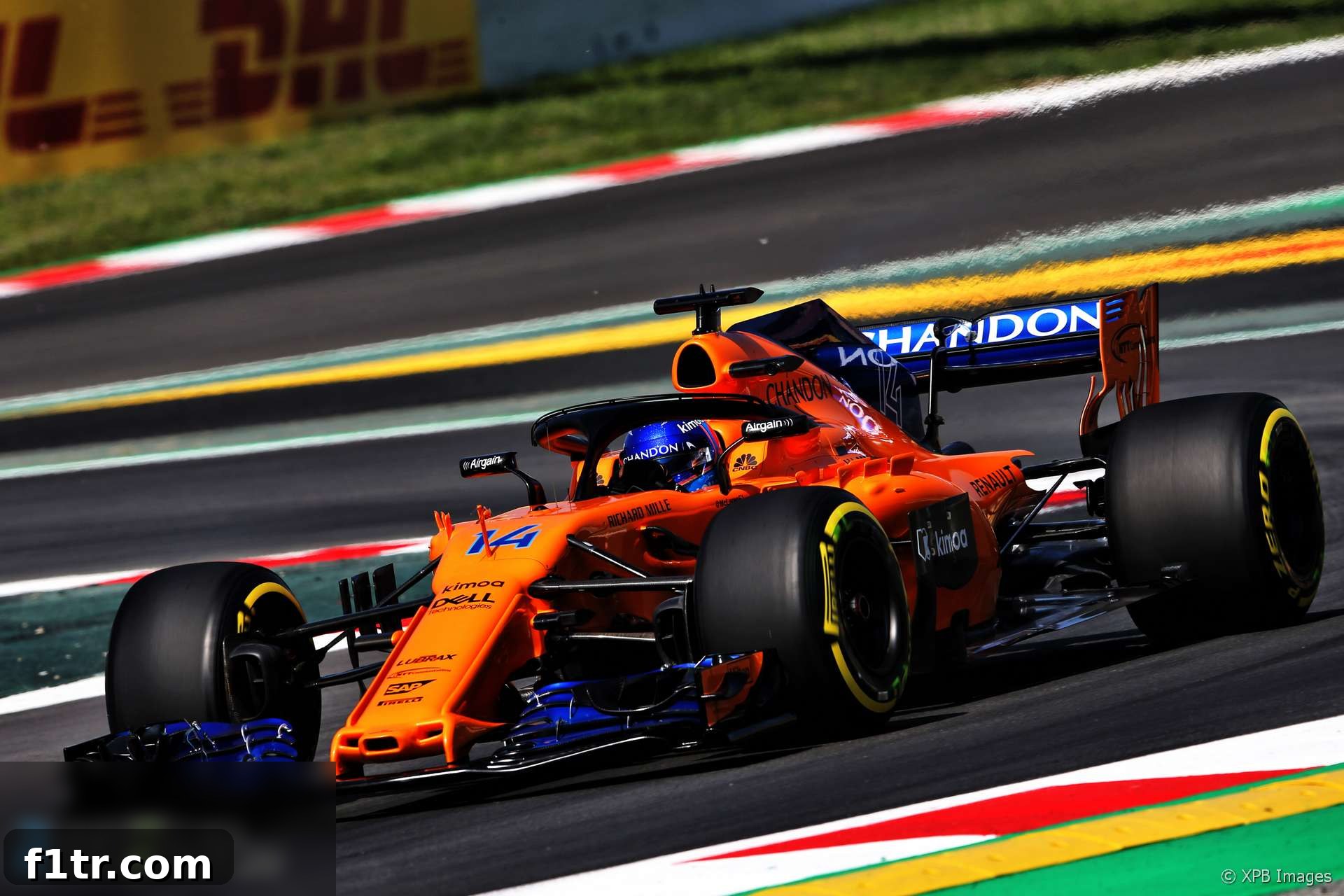
McLaren’s highly anticipated and dramatic upgrade package for its MCL33 challenger, featuring a notably radical new nose design, should have been unleashed at the very beginning of the 2018 Formula 1 season, according to star driver Fernando Alonso. His candid remarks shed light on the team’s development timeline and the crucial impact of these enhancements.
Speaking about the comprehensive new package, which indeed includes a significantly revised front-end, Alonso stated unequivocally that it has made the car “much better.” However, he also revealed a degree of frustration regarding its delayed introduction. The team had initially intended to roll out these vital improvements long before the fifth race of the year. “This should be the car of Australia,” Alonso remarked, referencing the season-opening Grand Prix. “So, yeah, it was a delay.” This statement underlines the significant setback McLaren faced, running their early races with a package they knew was sub-optimal compared to their intended design.
The Impact of Delayed Development: Running Behind Schedule
The two-time world champion elaborated on the team’s ongoing development efforts, acknowledging the challenges. “We’re running a little bit behind schedule on the updates,” he explained, painting a clear picture of the hurdles McLaren was navigating. Despite this acknowledgment of past delays, Alonso expressed a potent sense of optimism for the future. He emphasized the crucial importance of continuous progress: “The important thing is that the new parts are coming every race from now on to put some performance on the car.” This commitment to consistent upgrades signals McLaren’s determination to claw back performance throughout the demanding 2018 championship.
While the eye-catching, radical new nose cone has undoubtedly garnered the lion’s share of attention from media and fans alike, it represents just one component of a far more extensive overhaul. McLaren engineers have meticulously revised several other critical parts of the car, aiming for holistic performance gains. Alonso confirmed the breadth of these modifications, indicating a strategic approach to unlocking the MCL33’s full potential.
Unpacking the Upgrade: More Than Just a Nose
Pinpointing the exact source of performance improvements in a complex F1 car is always challenging, even for the drivers themselves. Alonso articulated this complexity: “It’s difficult to separate one part from the whole package.” He readily admitted that the visual impact of the new nose makes it the most talked-about element. “The front nose is the most spectacular thing but there are aero devices all around the car so it’s difficult to separate which one is delivering more.” This insight underscores the intricate interplay of aerodynamics in modern Formula 1, where every surface, winglet, and contour contributes to the overall downforce and efficiency. Despite the difficulty in singling out individual components, the collective benefit was undeniable for Alonso. “But I think the whole package is better, the new McLaren is definitely faster so we’re happy with that.” This endorsement from a driver of Alonso’s caliber speaks volumes about the perceived improvements.
Even with the tangible progress, the team faced critical decisions regarding the optimal configuration for the upcoming race. There was “still some debate on some of the parts if they are quicker or not,” Alonso added, highlighting the meticulous fine-tuning required to extract maximum performance. He confirmed the rigorous decision-making process: “But tonight we will make all the decisions and tomorrow put the best car on the track.” This nightly assessment is standard practice in Formula 1, where data analysis from practice sessions informs the final setup choices for qualifying and the race.
The Quest for Q3: A New Horizon for McLaren
Heading into this crucial race weekend, McLaren had yet to secure a coveted spot in the top 10 in qualifying for any of the races held so far in the 2018 season. This statistic weighed heavily on the team, particularly given their aspirations following the highly publicized switch to Renault power units. However, the arrival of this significant upgrade package injected a fresh wave of optimism. Fernando Alonso firmly believed that with these enhancements, McLaren finally had their best chance yet to break into Q3, a significant benchmark for competitiveness.
His confidence was palpable as he assessed their prospects: “Overall I think we are a little bit more competitive than any other Friday so hopefully Q3 tomorrow for the first time is a real possibility.” Achieving a Q3 appearance would not only boost team morale but also validate the extensive efforts poured into developing and bringing forward these crucial updates. For McLaren, a team with a storied history of success, consistently competing at the sharp end of the grid remained their ultimate objective, and this upgrade was a pivotal step in that direction.
McLaren’s 2018 Journey: From Honda Hopes to Renault Realities
The 2018 Formula 1 season marked a significant turning point for McLaren. After three challenging and often frustrating years with Honda power, the team had switched to Renault engines, a move widely hailed as the key to unlocking their potential and returning to competitiveness. The early races, however, had proven to be a stark reminder of the monumental task ahead. While reliability had improved, raw pace was still lacking, preventing them from consistently challenging the established front-runners.
The delay in introducing this major aerodynamic package likely contributed to their early season struggles. Starting the season with a car that was already a step behind their intended development timeline meant playing catch-up from the outset. Alonso’s comment about the package “should be the car of Australia” highlights this lost opportunity. Had these upgrades been available from day one, McLaren’s performance trajectory in the initial Grands Prix might have been significantly different, potentially allowing them to score more points and build momentum.
Continuous Evolution: The F1 Development Race
Formula 1 is a relentless development race, and Alonso’s insistence on “new parts coming every race” underscores this reality. Teams cannot afford to rest on their laurels; continuous innovation and iterative improvements are paramount to staying competitive. The MCL33 upgrade, while significant, was never intended to be the final word. It served as a foundation, a critical step upon which further enhancements would be built. This iterative process of designing, testing, analyzing, and manufacturing new components is the lifeblood of an F1 team, constantly pushing the boundaries of engineering and performance.
The intricate details of the “radical new nose design” and other “aero devices all around the car” speak to the cutting-edge nature of F1 aerodynamics. These designs are born from countless hours in computational fluid dynamics (CFD) simulations and wind tunnel testing, meticulously crafted to manage airflow, generate downforce, and reduce drag. The goal is always to maximize the car’s grip and efficiency, allowing drivers like Fernando Alonso to extract every ounce of performance on track.
Looking Ahead: The Promise of Future Performance
As McLaren looked beyond this immediate race, the implications of this upgrade extended far into the remainder of the 2018 season. A successful integration of the new package, coupled with consistent further updates, promised a more competitive future. For fans and the team alike, the prospect of seeing Fernando Alonso battling for higher positions, consistently making Q3, and perhaps even challenging for podiums, was a powerful motivator. The MCL33’s journey through the 2018 season was set to be a testament to McLaren’s resilience and their unwavering commitment to returning to the pinnacle of Formula 1 racing, starting with this pivotal upgrade.
2018 F1 Season Insights and Related Articles
- F1 feared “death knell” for Drive to Survive after Ferrari and Mercedes snub
- McLaren staff told us we were “totally crazy” to take Honda engines in 2018 – Tost
- ‘It doesn’t matter if we start last’: How Red Bull’s junior team aided Honda’s leap forward
- Honda’s jet division helped F1 engineers solve power unit problem
- McLaren Racing losses rise after Honda split
Browse all 2018 F1 season articles