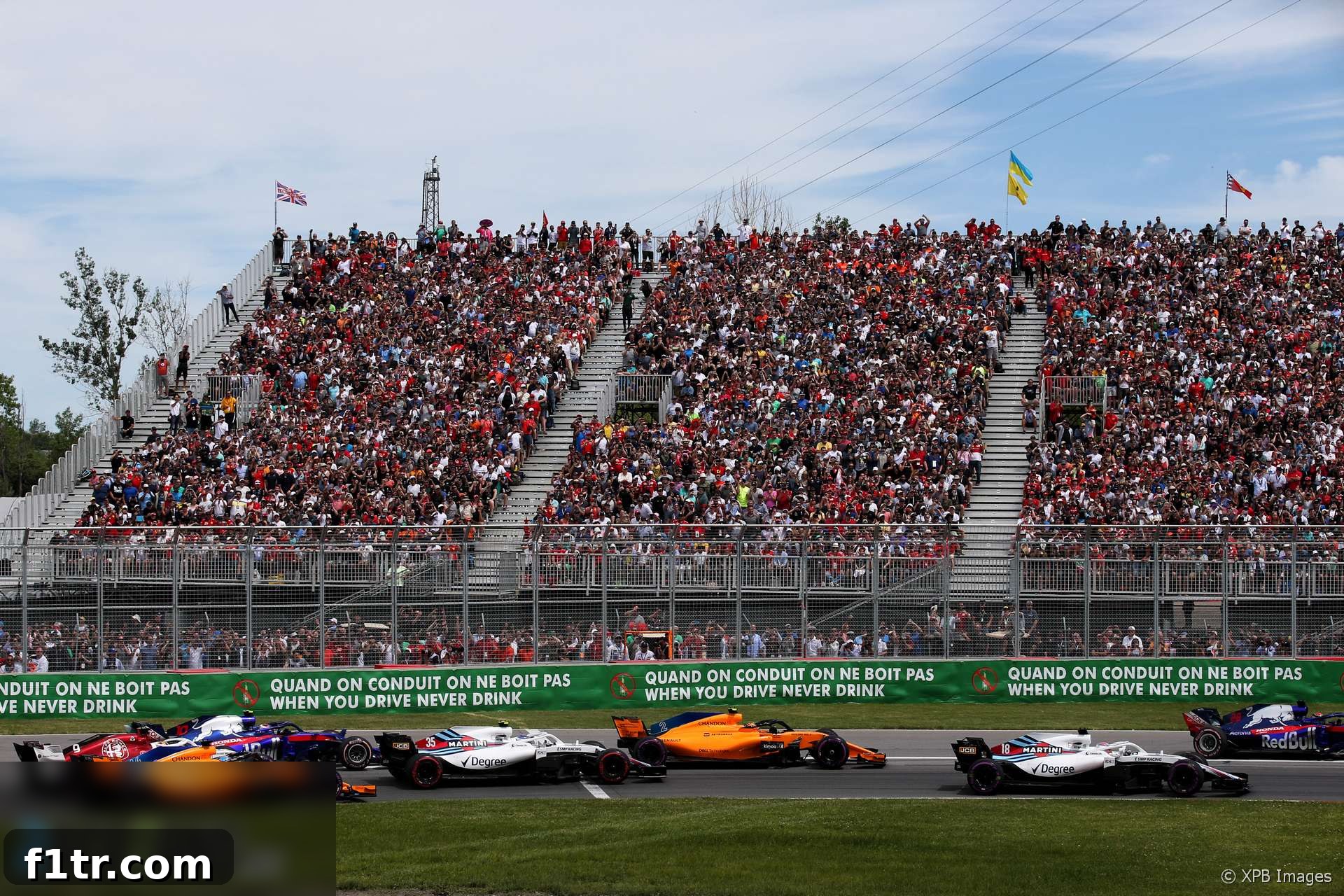
The 2018 Formula 1 season brought a mix of anticipation and trepidation for McLaren fans and particularly for their seasoned driver, Fernando Alonso. Arriving at the iconic Circuit Gilles Villeneuve for the Canadian Grand Prix, the weekend held special significance as it marked Alonso’s remarkable 300th appearance in a Formula 1 event. A two-time world champion with an illustrious career, Alonso’s presence alone commanded respect, yet his 2018 campaign with McLaren was proving to be a challenging one. Despite glimpses of competitive pace, the team often found themselves battling reliability issues and a midfield struggle. The Canadian Grand Prix, known for its high-speed layout and propensity for drama, promised an exciting spectacle, and true to form, it delivered on that promise from the very first moments, albeit not in the way Alonso or his team would have hoped for a milestone race.
Advert | Become a Supporter & go ad-free
A Chaotic Start: Alonso’s Perspective on Aggression and Avoidance
The opening lap of any Formula 1 race is inherently tense, a high-stakes ballet of precision and aggression as twenty cars jostle for position. At the 2018 Canadian Grand Prix, this tension manifested into what Fernando Alonso vividly described as an “way too aggressive” start. Speaking after the race, the Spanish veteran recounted the intense skirmishes he found himself embroiled in during the initial corners. “I had contact with Leclerc at the beginning and then with Sirotkin in the Williams,” Alonso explained, highlighting the immediate challenges faced by drivers in the tightly packed field. These early contacts, while seemingly detrimental as he lost a couple of places, might have inadvertently been his saving grace.
In a twist of fate often seen in the unpredictable world of motorsport, Alonso speculated that these minor incidents, by dropping him back slightly, shielded him from a more catastrophic event unfolding just ahead. “So I lost a couple of places. And then maybe thanks to those places I was not involved in the crash in front of me,” he reflected. The crash he referred to was the significant incident involving Brendon Hartley of Toro Rosso and Lance Stroll of Williams, a collision that dramatically altered the course of their respective races and triggered an early safety car period. Alonso’s comments underscored a common sentiment among drivers about the fine line between assertive racing and excessive aggression, particularly at the congested start of a Grand Prix. The tight chicanes and close proximity of cars at Circuit Gilles Villeneuve amplify the risks, making calculated aggression a necessity, but also increasing the chances of unwanted contact. “I think there was too much contact in the first couple of corners. But this is Canada, this is part of the magic as well and we need to take care,” Alonso concluded, acknowledging the unique nature of the Montreal circuit.
The Specter of Collision: Hartley and Stroll’s Race-Ending Contact
The specific incident Alonso referenced was a dramatic collision between Brendon Hartley in the Toro Rosso and Lance Stroll in the Williams. As the pack surged through Turn 5, Stroll lost control of his car, spinning across the track and making heavy contact with Hartley, who had no place to go. Both cars suffered significant damage, forcing an immediate retirement for both drivers and bringing out the Safety Car. This incident served as a stark reminder of the dangers inherent in the opening laps and the chain reaction effects that even minor contacts can trigger. For Alonso, having navigated his own brushes with other cars, the sight of the wreckage ahead undoubtedly reinforced his feeling about the overall level of aggression on display and the fortunate circumstances that had seen him avoid being part of it.
A Glimmer of Hope: Alonso’s Post-Safety Car Charge
When the Safety Car eventually peeled into the pits, signaling the restart of the race, Fernando Alonso demonstrated precisely why he remains one of the sport’s most revered competitors. Despite the initial setbacks and the chaos of the first lap, his fighting spirit was undimmed. “It was fun at the beginning after the restart, we overtook three cars in two corners,” Alonso enthusiastically recalled. This immediate charge through the field showcased his exceptional race craft and ability to capitalize on opportunities. One notable moment involved a close encounter with Sergio Perez.
Alonso described the challenging maneuver: “Sergio [Perez] was on the grass sideways and coming back to the track so it was difficult to anticipate what line he [would take].” Such situations demand split-second decision-making and pinpoint accuracy, skills Alonso possesses in abundance. His rapid ascent up the order post-restart was a testament to his enduring talent and determination to extract every ounce of performance from his McLaren, even if the car itself wasn’t consistently at the front of the grid. For a brief period, it seemed as though the two-time champion might salvage a respectable result from his milestone weekend, climbing several positions and showcasing the aggressive yet controlled driving that has defined his career.
Cruel Fate: Exhaust Problem Forces Retirement on Milestone Weekend
However, the Canadian Grand Prix, much like the 2018 season for McLaren, ultimately delivered a dose of bitter disappointment for Fernando Alonso. Just as he had begun to climb the competitive ladder, his race was prematurely curtailed by a technical issue. “At the end a retirement, an exhaust problem I think the team found out,” he stated with a tone of clear frustration. This marked his second retirement in as many races, a particularly painful blow given the significance of the weekend. To retire from his 300th Formula 1 event, especially after showcasing such tenacity in the early stages, was a cruel twist of fate that encapsulated the ongoing challenges McLaren faced.
The immediate consequence of this mechanical failure was the loss of valuable championship points. Alonso highlighted this keenly, noting, “We retired the car seventh in Monaco, 10th today. So that’s some points we lost in the last two races so we need to come back to the reliability we had at the beginning of the championship.” The reference to Monaco, where he also retired from a promising position, painted a clear picture of a concerning trend. For a team striving to regain its competitive edge and a driver known for his relentless pursuit of performance, these lost points were more than just numbers; they represented missed opportunities to build momentum and demonstrate progress. The recurring reliability issues were a major impediment to McLaren’s aspirations and a source of considerable frustration for Alonso, who was desperate to convert strong qualifying performances and aggressive race starts into tangible results. Each retirement chipped away at the team’s morale and hindered their ability to challenge for higher positions in the Constructors’ Championship, making the struggle for consistency a defining narrative of their season.
McLaren’s 2018 Struggle: A Season of Unfulfilled Promise
The 2018 season was meant to be a turning point for McLaren. After three challenging years with Honda power units, the Woking-based team had switched to Renault engines, hoping to unlock the chassis potential they believed was always present. Early in the season, there were indeed flashes of promise, with both Alonso and Stoffel Vandoorne scoring points. However, as the season progressed, the inherent difficulties of integrating a new power unit and the overall performance deficit of the package became increasingly apparent. Reliability became a significant concern, often derailing promising runs, as evidenced by Alonso’s retirements in Monaco and Canada.
The team was locked in a fierce midfield battle, and every point lost due to mechanical failure was a setback in their quest to climb the Constructors’ Championship standings. For a driver of Alonso’s caliber, accustomed to challenging for wins and championships, these consistent frustrations undoubtedly weighed heavily, fueling his eventual decision to step away from Formula 1 at the end of the year to pursue other motorsport challenges like the World Endurance Championship and the Indianapolis 500. The Canadian Grand Prix, therefore, served as a stark reminder of the gap between McLaren’s storied past and its challenging present, a struggle that would ultimately lead to significant changes within the team and a temporary hiatus for its star driver.
Reflecting on a Milestone Weekend: Resilience Amidst Adversity
Fernando Alonso’s 300th Formula 1 weekend at the Canadian Grand Prix ultimately became a microcosm of his challenging 2018 season. It began with the characteristic intensity of a veteran racer navigating an “way too aggressive” start, a testament to his uncanny ability to survive chaos. His subsequent charge through the field after the safety car period once again highlighted his peerless racecraft and unwavering determination. Yet, the celebratory milestone was overshadowed by the familiar sting of an exhaust problem, leading to an untimely retirement and the loss of crucial points.
It was a stark reminder of the fine margins in Formula 1 – where skill, experience, and sheer will can be undone by mechanical fragility, leaving a taste of what might have been. Despite the disappointing outcome, Alonso’s performance, particularly in the early stages, underscored his enduring talent and commitment, even in the face of adversity. The Canadian Grand Prix would go down as another chapter in a season that tested the patience and resolve of one of Formula 1’s greatest drivers, making the pursuit of reliability as critical as the pursuit of pace for McLaren.
Advert | Become a RaceFans supporter andgo ad-free
2018 F1 season
- F1 feared “death knell” for Drive to Survive after Ferrari and Mercedes snub
- McLaren staff told us we were “totally crazy” to take Honda engines in 2018 – Tost
- ‘It doesn’t matter if we start last’: How Red Bull’s junior team aided Honda’s leap forward
- Honda’s jet division helped F1 engineers solve power unit problem
- McLaren Racing losses rise after Honda split
Browse all 2018 F1 season articles