F1 Drivers Brace for Slippery Istanbul Park: A Portimao Repeat?
Formula 1 makes its highly anticipated return to Istanbul Park, Turkey, this weekend for the first time since 2011. However, the excitement of revisiting a beloved circuit is tempered by a familiar concern for the drivers: a freshly laid, potentially ultra-slippery track surface. This scenario echoes the challenges faced just three weeks prior at the Autódromo Internacional do Algarve in Portimão, Portugal, where a new layer of asphalt presented a significant hurdle for grip levels, transforming the race into a demanding test of skill and car control.
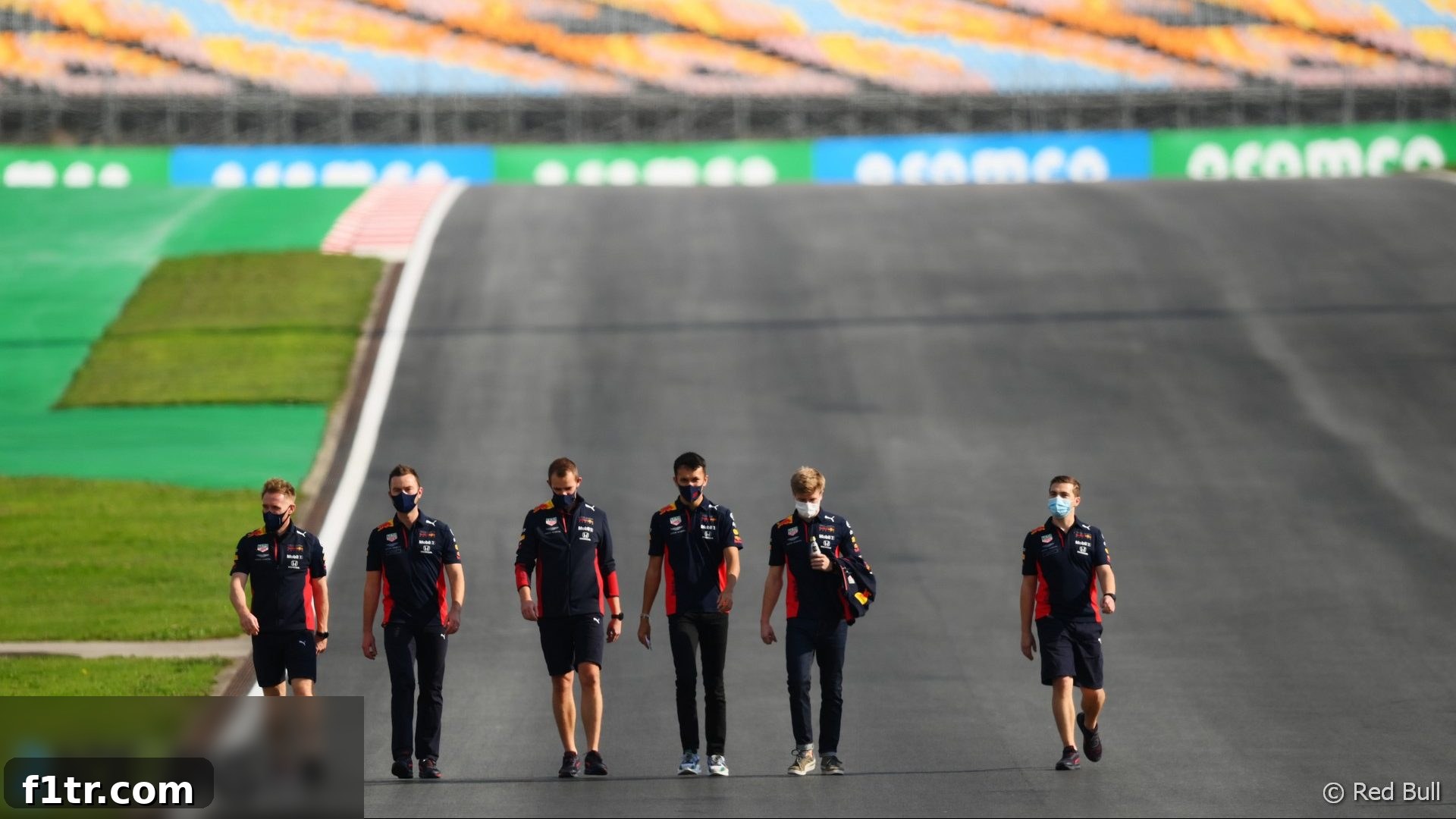
The resurfacing of Istanbul Park, undertaken in preparation for its unexpected return to the Formula 1 calendar, has immediately drawn comparisons to the conditions experienced at Portimão. Drivers, having completed their traditional track walks on Thursday morning, were quick to note the visual similarities and anticipate a repeat of the low-grip environment that defined the Portuguese Grand Prix. This pervasive expectation sets the stage for what promises to be an unpredictable and thrilling Turkish Grand Prix, where managing tire temperatures and finding elusive traction will be paramount to success.
The Grip Enigma: Understanding New Asphalt in Formula 1
The experience at Portimão provided a stark reminder of how dramatically a new track surface can alter the dynamics of a Formula 1 event. Drivers and teams arrived in Portugal expecting a challenging but high-grip circuit, only to be met with an incredibly ‘green’ and low-friction asphalt. This lack of initial grip can be attributed to several factors inherent in newly laid surfaces. Fresh asphalt often leaches oils and bitumen in its early life, creating a film that reduces friction. Furthermore, without the accumulation of rubber from continuous racing activity – a process known as ‘rubbering in’ – the track surface lacks the abrasive qualities that F1 tires rely on for optimal performance. The result is a sensation akin to driving on ice for the high-downforce, high-power machines of Formula 1, exacerbated by the cold temperatures often associated with such events.
At Portimão, the struggle for grip was evident throughout the practice sessions, qualifying, and the race itself. Drivers reported significant sliding, difficulty in generating tire temperature, and challenges in finding a consistent rhythm. The low grip magnified the impact of even slight errors, leading to spectacular saves and intricate car control demonstrations. While it made for compelling viewing, it was undeniably a demanding weekend for everyone involved, pushing the limits of both machinery and human endurance. The expectation now is that Istanbul Park will present a very similar, if not identical, set of circumstances, forcing teams to rapidly adapt their strategies and car setups and potentially leading to a memorable, if chaotic, race.
Drivers’ First Impressions: Istanbul’s Slippery Promise
Among the first to voice his concerns and draw direct comparisons to Portimão was Red Bull Racing’s Alexander Albon. Following his track walk, Albon described the new surface as looking “really, really dirty,” immediately triggering memories of the Portuguese circuit. His observations highlight a common issue with fresh asphalt: its initial appearance can be misleading, often covered in dust, construction debris, or the aforementioned oily residue, all contributing to a treacherous environment for racing tires, especially when combined with the specific characteristics of F1 rubber.
“It kind of reminds me of Portimao a little bit with these newly resurfaced circuits that we’re going to,” Albon remarked, expressing a sentiment shared by many in the paddock. He had hoped that the circuit organizers might have taken proactive measures to ‘bed in’ the new surface, perhaps by running other categories or a designated vehicle to lay down some rubber and clean the track prior to Formula 1’s arrival. “I thought they were going to bed it in because obviously, in Portimao, drivers complained that there was such low grip. So I thought the plan was to drive around a bit before we came here. But I don’t know if they’ve done that because I saw the Safety Car go around this morning and it looked slippery.” This observation from the Safety Car’s reconnaissance lap underscores the severity of the expected conditions, suggesting that little has been done to mitigate the initial lack of grip, setting the stage for a truly challenging weekend.
Carlos Sainz Jnr, the McLaren driver, echoed Albon’s sentiments, also anticipating grip to be at an absolute premium on the freshly-laid track. “It looks very new out there,” Sainz commented, “it looks very slippery again, this new surface.” Despite the challenging surface, Sainz expressed optimism regarding the fundamental layout of the circuit, which remains unchanged from its previous Formula 1 iteration. “But from what I’ve seen on the track, the track layout is obviously still the same. The corners and shapes are still as they were ten years ago and that’s going to make it hopefully the same experience and as fun to watch as it was to allow us to drive.” This continuity in design is a significant silver lining, as drivers can rely on their previous knowledge of the corners, even if the approach and execution will be vastly different due to the drastically altered grip levels.
Renault’s Esteban Ocon, though acknowledging the new Tarmac, seemed slightly more impressed with the overall upkeep of Istanbul Park. “I just walked it the track, it’s very well maintained,” said Ocon, highlighting the circuit’s general condition despite its limited use for major international motorsport events since F1’s last visit nine years ago. “There’s new Tarmac, which could make things interesting as well.” Ocon’s pragmatic view suggests that while the new surface poses a significant challenge, it also opens up opportunities for an unpredictable and potentially thrilling race, where strategy, adaptability, and pure driver talent will play crucial roles in determining success.
Technical and Strategic Implications for the Turkish Grand Prix
The anticipated low-grip conditions at Istanbul Park will have profound technical and strategic implications for all ten Formula 1 teams. Car setup will be a delicate balancing act. Teams will likely opt for higher downforce configurations to compensate for the lack of mechanical grip, although excessive drag could hinder straight-line speed on the circuit’s straights. Finding the sweet spot for suspension settings will be crucial to maximize tire contact patch and absorption of potential bumps on the newly laid surface, which can often be less smooth than a worn track. Tire management, already a complex art in F1, will become an even greater challenge. Generating and maintaining optimal tire temperature on a cold, slippery track is notoriously difficult, potentially leading to graining or blistering if not handled correctly. Teams will need to be agile with their tire strategies, possibly favoring softer compounds to find any available grip, which in turn could lead to more pit stops or greater degradation over a stint, creating intriguing strategic dilemmas.
Driver skill will also be magnified under these circumstances. Smooth throttle application, precise steering inputs, and an acute sense of tire limits will differentiate the top performers from the rest of the pack. Overtaking could prove difficult if drivers struggle to find grip off the racing line, potentially leading to more processionary racing initially, but also increasing the chances of unexpected errors, lock-ups, and therefore, exciting battles as drivers push the absolute limits of adhesion. The potential for Safety Car periods also increases with reduced grip and a higher likelihood of incidents, further complicating race strategies and offering opportunities for those who can react quickly and decisively to changing circumstances, perhaps allowing underdog teams to capitalize.
Istanbul Park: A Resurfaced Classic Returns
Beyond the immediate concerns of the new asphalt, Istanbul Park holds a special place in the hearts of many Formula 1 fans. Designed by the legendary Hermann Tilke, the circuit is renowned for its sweeping curves, elevation changes, and particularly its iconic Turn 8 – a quadruple-apex left-hander that is incredibly demanding on tires, driver stamina, and car balance. Its return to the calendar, albeit under unusual circumstances stemming from the global pandemic, is a welcome development, offering a unique challenge that has been absent for nearly a decade. The fact that the circuit layout remains untouched by the resurfacing is a testament to its original design and promises that the fundamental thrill of conquering its unique corners will persist, even if the method of attack must be completely re-evaluated due to the unprecedented surface changes.
The last Formula 1 race held here in 2011 saw Sebastian Vettel take victory, but over the years, the circuit has produced memorable races and moments, often showcasing drivers’ abilities in challenging conditions. Drivers frequently praise its flow and the opportunities it provides for genuine racing, with its wide track offering multiple lines through many corners. With the added variable of low grip, coupled with potentially cool November temperatures in Turkey, the 2020 Turkish Grand Prix is poised to be an enthralling spectacle, testing the mettle of every driver and team on the grid. It’s a weekend where adaptability, precision, and perhaps a touch of bravery will be key to unlocking performance and achieving a podium finish, promising a truly captivating return to this classic venue.
Browse all 2020 Turkish Grand Prix articles