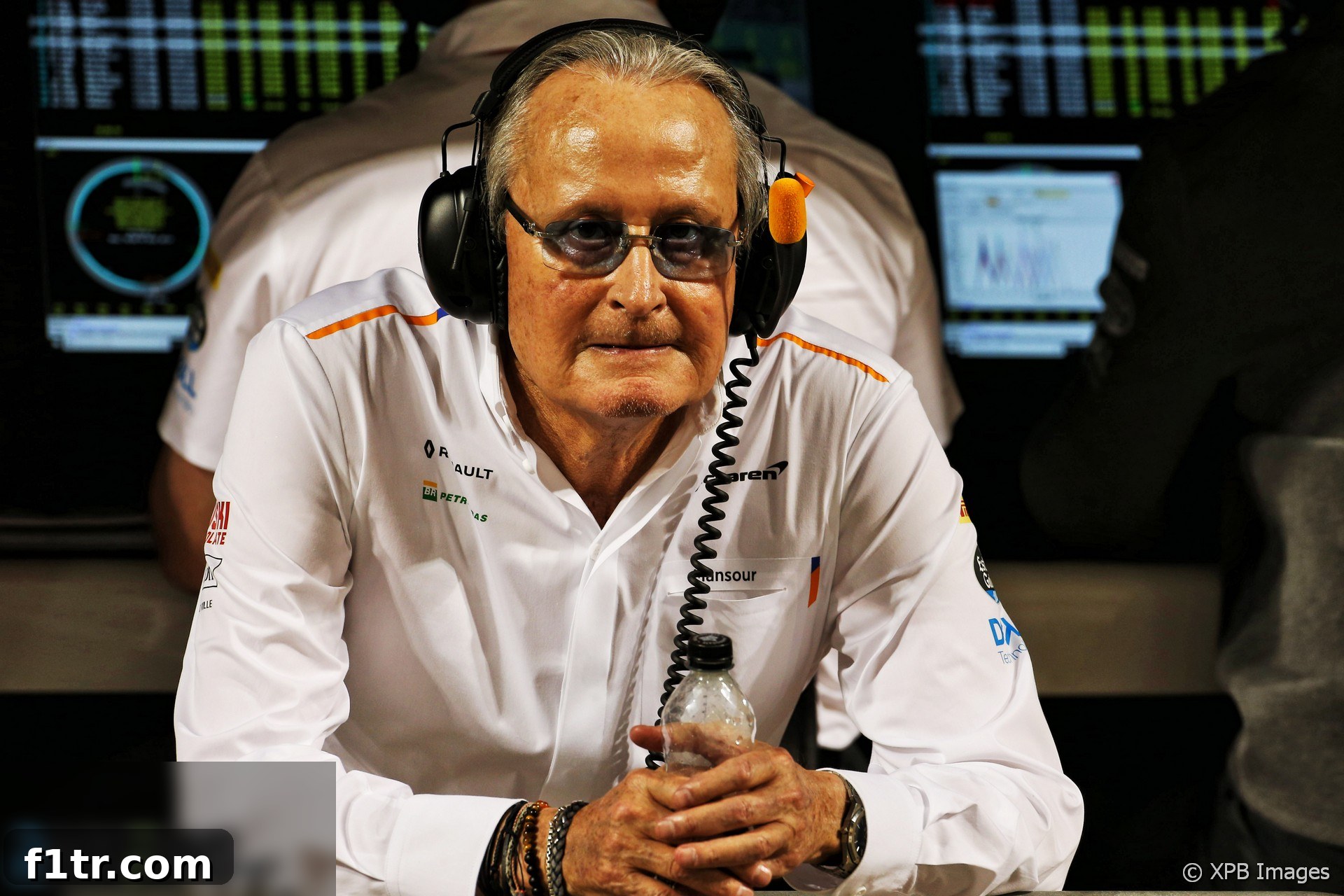
On a poignant Sunday in Baku, the world of Formula 1 paused for a minute’s silence, collectively honouring two remarkable individuals whose contributions, though varied, profoundly shaped the sport: former FIA president Max Mosley and the quietly influential Mansour Ojjeh. While Mosley was a public figure whose presence resonated far beyond the confines of motorsport, Mansour Ojjeh’s name, despite his monumental impact, was primarily known to the most ardent Formula 1 enthusiasts. Yet, this Parisian-born billionaire, who passed away at the age of 68, exerted an immense, enduring influence on Formula 1 from behind the scenes, never seeking the personal acclaim he so unequivocally earned and deserved.
Ojjeh’s journey into the thrilling realm of Formula 1 began in 1978, through an introduction to Frank Williams and his nascent, eponymous racing team. Born into a prominent family, Mansour’s Syrian-born father, Akram Ojjeh, had established a formidable conglomerate, TAG (Techniques d’Avant Garde), operating out of Paris and Luxembourg. This powerful entity traded in a diverse array of commodities, ranging from aviation and arms to real estate, and cultivated close commercial and personal ties with the esteemed House of Saud. It was through these deep-seated relationships that Mansour, despite later relocating to Geneva, found his initial connection to the sport.
When the Saudi royal house agreed to become a crucial sponsor for the then-struggling Williams team, channeling their support via Saudia Airlines, they naturally involved partners with whom they shared significant commercial links. TAG was one such pivotal company, and Mansour Ojjeh became the designated family contact, overseeing their engagement with Williams. This strategic partnership quickly bore fruit, as Williams secured its first Formula 1 World Championship title in 1980. Observing the electrifying atmosphere and high-stakes environment of F1, Ojjeh undoubtedly relished the sport’s unique blend of technological innovation, cutthroat competition, and sheer spectacle, though he consistently chose to remain far from the media spotlight, preferring to operate discreetly in the background.
Advert | Become a Supporter & go ad-free
A Visionary Partnership: The McLaren TAG Turbo Era
The year 1983 marked a pivotal turn in Mansour Ojjeh’s involvement with Formula 1. He received a critical call from Ron Dennis, the ambitious and forward-thinking head of McLaren. Dennis was on a mission to secure a financial backer for a revolutionary V6 turbo engine project, envisioned by McLaren’s brilliant technical director John Barnard and intended to be meticulously built by Porsche. Despite his ongoing sponsorship ties with Williams, Ojjeh, ever the astute businessman with an eye for innovation, recognized the immense potential of Dennis’s proposal. He swiftly agreed to bankroll the entire project, stipulating only that the distinctive TAG Turbo logo proudly adorn the engine covers. This bold decision laid the groundwork for one of Formula 1’s most legendary partnerships.
Just a year later, the powerful TAG Turbo engine propelled Niki Lauda to the first of three consecutive drivers’ titles for McLaren, followed by Alain Prost’s back-to-back championships in the subsequent two years. This period cemented McLaren’s dominance in the turbo era, a testament to the combined genius of Barnard’s design, Porsche’s engineering, Dennis’s leadership, and crucially, Ojjeh’s visionary financial commitment. His willingness to invest in cutting-edge technology, even while associated with a rival team, showcased his profound belief in progress and his discerning judgment for potential champions.
Never content to rest on past achievements, Ojjeh continued to expand his commercial empire and leverage his passion for speed and precision. In 1985, demonstrating his keen business acumen, he acquired the venerable Heuer watch brand, a name already steeped in motorsport history. Under his leadership, the brand was swiftly rebranded as TAG Heuer, seamlessly blending TAG’s high-tech image with Heuer’s heritage of precision timing. This acquisition was a stroke of genius, marrying the worlds of luxury timepieces with the dynamic energy of Formula 1. The brand soon achieved global recognition, largely thanks to a series of iconic commercials featuring the legendary Ayrton Senna, whose intense focus and unparalleled skill perfectly embodied the brand’s enduring strapline: ‘Don’t crack under pressure.’ This campaign not only boosted TAG Heuer’s profile but also inextricably linked it with the golden age of Formula 1, creating a powerful synergy that resonated with fans and consumers worldwide.
From Investor to Co-Owner: Forging the McLaren F1 Legacy
Shortly after the triumphs of the TAG Turbo era, a significant shift occurred within McLaren’s structure. Following John Barnard’s departure, Mansour Ojjeh deepened his commitment to the team, gradually buying into McLaren through a series of nominee companies. His holdings steadily increased, eventually reaching a substantial 50%, making him an equal partner with Ron Dennis. This elevated role allowed Ojjeh to exert even greater influence, not just as a financial patron but as a strategic co-owner, shaping the very future of one of Formula 1’s most iconic outfits. Away from the business of racing, Ojjeh indulged his personal passion for high-performance vehicles, driving a succession of bespoke, powerful cars, including a unique Porsche 911 customized with a road-going version of the legendary TAG Turbo engine. At one point, he even suggested that Williams explore building a road-legal sports car, a venture Frank Williams, ever the purist racer, politely declined.
However, Ojjeh’s vision for a road-going supercar found fertile ground at McLaren. The idea for what would become the legendary McLaren F1 road car was famously conceived during a serendipitous conversation. Stranded at Milan’s Linate Airport after the 1988 Italian Grand Prix, Ojjeh outlined his ambitious plan to Ron Dennis and the team’s new technical director, Gordon Murray. This impromptu meeting sparked the creation of what many still consider to be the greatest supercar ever built. While credit for the McLaren F1’s revolutionary design undoubtedly belongs to Murray’s unparalleled genius and Dennis’s relentless determination in bringing it to fruition, it was Mansour Ojjeh’s initial dream, his unwavering belief, and critically, his substantial funding that transformed an audacious concept into a tangible, modern icon. His financial backing made possible a project that pushed the boundaries of automotive engineering and design, cementing McLaren’s reputation not just as a racing powerhouse but also as a creator of peerless road cars.
Advert | Become a RaceFans supporter andgo ad-free
Weathering Storms: Unseen Support for McLaren’s Survival
With Ojjeh now firmly embedded in its ownership structure, the McLaren racing team entered an unparalleled era of dominance. The 1988 season, powered by Honda engines, saw the team rewrite history, securing an astonishing 15 victories out of 16 Grands Prix. This period was followed by a string of serial titles with legendary drivers Ayrton Senna and Alain Prost, firmly establishing McLaren as the benchmark in Formula 1. Yet, even the most successful teams experience inevitable periods of decline and financial troughs as results fluctuate. It was during these challenging times that Ojjeh’s unwavering funding and resolute belief proved indispensable. His stable financial support acted as a crucial buffer, smoothing over the inevitable downturns that afflict all race teams. McLaren’s remarkable survival and flourishing as Formula 1’s second-oldest and most revered team is, to a very significant extent, a testament to his consistent and silent backing. Despite his immense personal wealth, estimated at a staggering £3 billion, Ojjeh was never one to flaunt his fortune; his contributions were always measured, strategic, and profoundly impactful.
However, Mansour Ojjeh’s most formidable professional challenge awaited him during the infamous “Spygate” scandal. In 2007, McLaren was embroiled in a controversy that saw the team fined an unprecedented $100 million by the FIA, then presided over by Max Mosley, after being found guilty of sporting breaches. It was a crisis that threatened to engulf the very fabric of the team. By this time, Ojjeh and Ron Dennis had diversified McLaren Group’s ownership, having sold a combined 60% stake to Mercedes and Bahrain’s sovereign wealth fund. Ojjeh’s long-standing friendly relations with the royal family of the desert island proved invaluable during this period. It was Mansour Ojjeh, with his quiet diplomacy and deep understanding of both business and motorsport, who expertly steered the McLaren ship through these turbulent diplomatic waters, navigating the complex political landscape with grace and strategic foresight.
The immense pressures of Spygate, however, took a personal toll, leading to a noticeable cooling, and eventually a complete freezing, of relations between Ron Dennis and Mansour Ojjeh. Their bond, once a cornerstone of McLaren’s success, never fully recovered, hinting at a deeply personal and irreconcilable fallout. Despite this profound personal rupture, Ojjeh’s faith in McLaren itself remained absolute and unshaken. His commitment transcended personal relationships, reflecting his profound dedication to the team’s legacy and future. In 2013, Ojjeh faced a severe personal health crisis, undergoing a double lung transplant. According to sources, the first attempt was tragically unsuccessful, necessitating a second, incredibly challenging operation. Yet, with extraordinary resilience, he reappeared in the paddock just a year later, as courteous, polite, and understated as ever, a living embodiment of quiet strength.
Little did he know then that McLaren was about to embark on another disastrous period under Ron Dennis, who had returned to the helm after a spell running the resurrected Automotive division. The team struggled immensely with Honda’s unsuccessful early hybrid power units, leading to years of frustration and poor performance. When Dennis was ultimately ousted, Ojjeh, alongside the Bahraini stakeholders, took decisive action. They restructured the company, primarily by bankrolling a critical switch from Honda to Renault power units, and then, more recently, to Mercedes power. This period showcased Ojjeh’s continued strategic leadership and his willingness to make tough decisions for the long-term health of the team, even when his own health was failing.
The Final Masterstroke: Securing McLaren’s Future
While never officially confirmed, strong sources within the industry suggest it was Mansour Ojjeh himself who meticulously engineered McLaren’s crucial deal to reunite with Mercedes for their power units, after initial overtures to executives at the latter team had been met with refusal. Ojjeh leveraged his extensive network and personal relationships, specifically his acquaintance with Ola Källenius, the esteemed chairman of the board of management of Daimler AG and head of Mercedes-Benz. Their relationship dated back to Källenius’s tenure as a Mercedes nominee director on the McLaren board. Ojjeh appealed directly to Källenius, bypassing conventional channels and employing his characteristic blend of charm and persuasive negotiation. This strategic intervention secured a deal that many believe was absolutely vital for McLaren’s resurgence; without it, the team might still have been languishing with Renault power units, far from their current trajectory of recovery and competitiveness.
As Mansour Ojjeh’s health regrettably declined in his later years, he naturally assumed a less visible role within the company’s day-to-day operations. Yet, his heart and mind remained fully invested in McLaren’s fortunes. One can only begin to imagine the quiet pleasure and immense satisfaction he must have felt as he witnessed McLaren’s determined fight back towards the front of the grid. While true world championships may still lie some distance ahead, the renewed sense of purpose and progress within the team harked back to the early days when TAG first sponsored Williams in 1978, a time when success also seemed a distant dream. Ojjeh had always been a believer in the long game, in the power of sustained effort and strategic investment.
Advert | Become a RaceFans supporter andgo ad-free
A Legacy of Unseen Influence
Though I cannot claim to have known Mansour Ojjeh personally, having merely exchanged handshakes thrice and reciprocated greetings across the McLaren hospitality suite on a few occasions, these brief encounters left a lasting impression. I recall a man whose profound courtesy and impeccable manners evoked a sense of days gone by, a gentleman in the truest sense of the word. Above all, what truly shone through was his undiminished passion for Formula 1 and for McLaren, regardless of the capricious nature of this most demanding of sports and whatever challenges it threw his way. He remained a true enthusiast, dedicated to the core principles of excellence and competition.
Mansour Ojjeh was, to the very end, a stalwart supporter and a visionary force without whom McLaren, as we know it today, would likely have been relegated to the annals of history. His quiet strength, strategic foresight, and unwavering financial bedrock ensured the team’s survival and allowed it to eventually embark on its current path of renewal and ambition. His impact was felt not in grand pronouncements or public accolades, but in the sustained excellence and resilience of the institutions he championed. Rest in peace, Mansour Ojjeh – your profound legacy, intricately woven into the fabric of Formula 1 and McLaren, is truly secure and will continue to inspire generations.
News Focus
- No happy ending for Ricciardo’s made-for-Netflix redemption arc
- No ‘two alphas’ for Red Bull as team forms its longest-running driver line-up
- Will Mercedes come to the rescue of Ocon’s career a third time?
- How the midfield’s hottest team mate rivalry boiled over
- Petty officialdom or deserved decisions? Five drivers stripped of wins in 2024
Browse all News Focus articles